Results by title
7 books match the query '1909-1993'
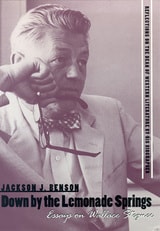
Down By The Lemonade Springs
Essays On Wallace StegnerJackson J. Benson
University of Nevada Press, 2001

Jewish Gangsters of Modern Literature
Rachel Rubin
University of Illinois Press, 2000
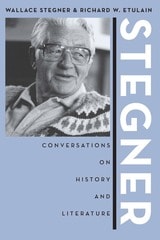
Stegner
Conversations On History And LiteratureWallace Stegner
University of Nevada Press, 1996
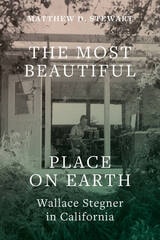
The Most Beautiful Place on Earth
Wallace Stegner in CaliforniaMatthew D. Stewart
University of Utah Press, 2021
This book tells the story of Stegner and his family as they made a home just outside of Palo Alto, California, during its transition from the Valley of Heart’s Delight (known for its rolling hills and orchards) to Silicon Valley. In this thoughtful study of the novels Stegner wrote in California—including his Pulitzer Prize–winning Angle of Repose—readers are invited to consider with Stegner what the practice of place requires in the American West. Specialists in the literature and history of the American West will find new analyses of Stegner and his influential work. Other readers will be guided through Stegner’s work in concrete and accessible prose, and anyone who has longed for home and a sense of place will encounter a powerful, beautiful, and at times tragic attempt to build and preserve it.
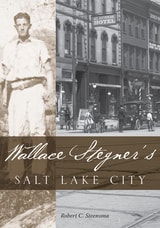
Wallace Stegners Salt Lake City
Robert C. Steensma
University of Utah Press, 2007
As he was later to say in his essay 'At Home in the Fields of the Lord,' he eventually realized that, if he had to have a hometown, it was Salt Lake City. He came to use the 'City of the Saints' for settings in three novels: The Big Rock Candy Mountain, Recapitulation, and The Preacher and the Slave (later retitled Joe Hill). His years in Utah helped develop the environmental ethic he espoused so eloquently in his famous 'Wilderness Letter.'
Robert Steensma has meticulously searched through archival photographs, quotations from Stegner’s writings, and interpretive essays in order to recreate the Salt Lake City of the 1920s and 1930s, the city of Stegner’s youth and young adulthood. This is a book that will appeal to all who have been moved by Stegner’s novels, nonfiction, or his urgent appeals for conservation.
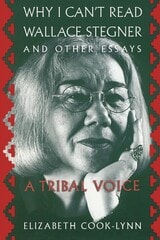
Why I Can't Read Wallace Stegner and Other Essays
A Tribal VoiceElizabeth Cook-Lynn
University of Wisconsin Press, 1996
This provocative collection of essays reveals the passionate voice of a Native American feminist intellectual. Elizabeth Cook-Lynn, a poet and literary scholar, grapples with issues she encountered as a Native American in academia. She asks questions of critical importance to tribal people: who is telling their stories, where does cultural authority lie, and most important, how is it possible to develop an authentic tribal literary voice within the academic community?
In the title essay, “Why I Can’t Read Wallace Stegner,” Cook-Lynn objects to Stegner’s portrayal of the American West in his fiction, contending that no other author has been more successful in serving the interests of the nation’s fantasy about itself. When Stegner writes that “Western history sort of stopped at 1890,” and when he claims the American West as his native land, Cook-Lynn argues, he negates the whole past, present, and future of the native peoples of the continent. Her other essays include discussion of such Native American writers as Michael Dorris, Ray Young Bear, and N. Scott Momaday; the importance of a tribal voice in academia, the risks to American Indian women in current law practices, the future of Indian Nationalism, and the defense of the land.
Cook-Lynn emphasizes that her essays move beyond the narrowly autobiographical, not just about gender and power, not just focused on multiculturalism and diversity, but are about intellectual and political issues that engage readers and writers in Native American studies. Studying the “Indian,” Cook-Lynn reminds us, is not just an academic exercise but a matter of survival for the lifeways of tribal peoples. Her goal in these essays is to open conversations that can make tribal life and academic life more responsive to one another.
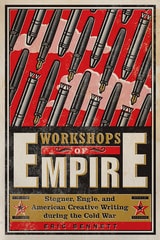
Workshops of Empire
Stegner, Engle, and American Creative Writing during the Cold WarEric Bennett
University of Iowa Press, 2015
Creative writing emerged as a graduate discipline in the United States amid this astonishing swirl of grand conceptions. The early workshops were formed not only at the time of, but in the image of, and under the tremendous urgency of, the postwar imperatives for the humanities. Vivid renderings of personal experience would preserve the liberal democratic soul—a soul menaced by the gathering leftwing totalitarianism of the USSR and the memory of fascism in Italy and Germany.
Workshops of Empire explores this history via the careers of Paul Engle at the University of Iowa and Wallace Stegner at Stanford. In the story of these founding fathers of the discipline, Eric Bennett discovers the cultural, political, literary, intellectual, and institutional underpinnings of creative writing programs within the university. He shows how the model of literary technique championed by the first writing programs—a model that values the interior and private life of the individual, whose experiences are not determined by any community, ideology, or political system—was born out of this Cold War context and continues to influence the way creative writing is taught, studied, read, and written into the twenty-first century.