Results by title
6 books match the query '1910-'
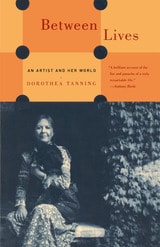
Between Lives
An Artist and Her WorldDorothea Tanning
Northwestern University Press, 2003
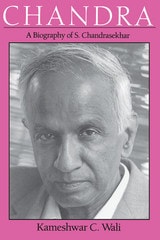
Chandra
A Biography of S. ChandrasekharKameshwar C. Wali
University of Chicago Press, 1992
"Wali has given us a magnificent portrait of Chandra, full of life and color, with a deep understanding of the three cultures—Indian, British, and American—in which Chandra was successively immersed. . . . I wish I had the job of reviewing this book for the New York Times rather than for Physics Today. If the book is only read by physicists, then Wali's devoted labors were in vain."—Freeman Dyson, Physics Today
"An enthralling human document."—William McCrea, Times Higher Education Supplement
"A dramatic, exuberant biography of one of the century's great scientists."—Publishers Weekly
Essays in History
Financial, Economic, PersonalCharles P. Kindleberger
University of Michigan Press, 1999
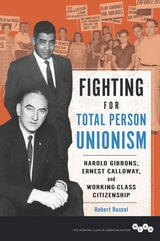
Fighting for Total Person Unionism
Harold Gibbons, Ernest Calloway, and Working-Class CitizenshipRobert Bussell
University of Illinois Press, 2015
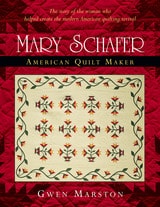
Mary Schafer, American Quilt Maker
Gwen Marston
University of Michigan Press, 2004
Extensively illustrated, with over 100 drawings and 11 unique Mary Schafer patterns, Mary Schafer, American Quilt Maker is a must-have book for anyone passionate about American quilting.
While we take that passion for granted today, author Gwen Marston shows that it wasn't always so; indeed, one woman, Mary Schafer, was largely responsible for the restoration of interest in one of our greatest folk arts -- long before the American bicentennial turned quilting into what seemed like an overnight sensation.
Marston presents Schafer as an unassuming scholar: the anonymous quilter, remaining humble and somewhat retiring. Behind the modest façade, however, Schafer displayed a remarkable devotion to research, historical accuracy, and community through her efforts to make quilting available to as many people as possible.
Nonquilters will find Mary Schafer, American Quilt Maker a welcome addition to their collection of the work of masters of American folk art, while quilting aficionados will appreciate it not only for the story it tells, but for the generous selection of patterns and illustrations it offers.
Gwen Marston is a nationally known quilt maker, teacher, and author. She is the author of over fifteen books on quilting, including Liberated String Quilts, 70 Classic Quilting Patterns, and Amish Quilting Patterns.
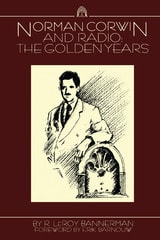
Norman Corwin and Radio
The Golden YearsR. Leroy Bannerman
University of Alabama Press, 1986
Norman Corwin is regarded as the most acclaimed creative artist of radio’s Golden Age (mid 1930s to late 1940s). Corwin worked as a producer for CBS at a time when radio was the centerpiece of American family life. His programs brought high moments to the medium during a period when exceptional creativity and world crisis shaped its character and conviction. Bannerman’s book is more than biography: it is also social history—the story of network radio, its great achievements and ultimate decline. Many of Corwin’s programs are considered radio classics. During World War II his programs energized the people and marshaled morale. We Hold These Truths, commemorating the 150th anniversary of the American Bill of Rights, was broadcast eight days after the attack on Pearl Harbor, and On a Note of Triumph, a VE-Day special for CBS, marked the historic culmination of a momentous conflict. Bannerman’s work is a portrayal of a remarkable man, who led an influential fight for the art and integrity of broadcasting, who endured unfounded accusations during the blacklisting period of the McCarthy era, and who by his dedication accomplished significant programs of historic dimensions.