Results by title
3 books match the query '1914-1945'
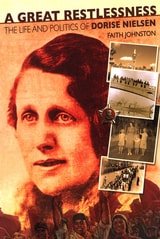
A Great Restlessness
The Life and Politics of Dorise NielsenFaith Johnston
University of Manitoba Press, 2006
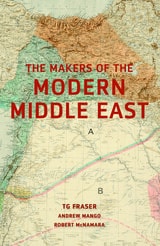
Making the Modern Middle East
Second EditionT.G. Fraser, Andrew Mango, and Robert McNamara
Gingko, 2015
This fully revised and updated second edition of The Makers of the Modern Middle East traces those changes and the ensuing history of the region through the rest of the twentieth century and on to the present. Focusing in particular on three leaders—Emir Feisal, Mustafa Kemal, and Chaim Weizmann—the book offers a clear, authoritative account of the region seen from a transnational perspective, one that enables readers to understand its complex history and the way it affects present-day events.
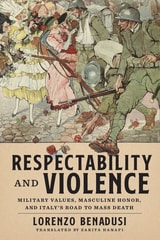
Respectability and Violence
Military Values, Masculine Honor, and Italy’s Road to Mass DeathLorenzo Benadusi
University of Wisconsin Press, 2021
In the aftermath of national unification in the 1860s, the Italian army was tasked with molding generations of men from warring regions and different social strata into obedient citizens of a centralized state. Integrating large numbers of the educated middle classes into the young kingdom’s armed forces proved decisive in establishing the army as the “main school” and backbone for mass nationalization. Lorenzo Benadusi examines the intersection of Italian military and civil society over the last century as they coalesced in the figure of the gentleman-officer—an idealized image of an altruistic, charming, and competent ruling class that could influence the choices, values, and behavior of the “new Italians.”
Respectability and Violence traces the relationship between civic virtues and military values from the post-Risorgimento period through the end of World War I, when the trauma of trench warfare made it necessary to again redefine ideas of chivalry and manliness and to accept violence as a necessary tool in defense of society and state. The language of conflict and attitudes about war forged in these decades—characterized by patriotism, heroism, and sacrifice—shaped the cultured bourgeoise into loyalists who ushered in Italy’s transition to a powerful Fascist political system. This unique study of the officer is crucial for understanding the military, social, and political history of Italy.