Results by title
20 books match the query '1918-'
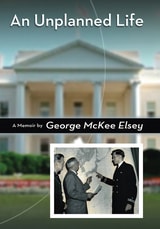
An Unplanned Life
A MemoirGeorge McKee Elsey
University of Missouri Press, 2005
Elsey’s duties continued with Harry Truman’s succession to the presidency. He decoded the famous message from Secretary of War Henry Stimson reporting the dropping of the atomic bomb on Hiroshima and carried it to President Truman. In 1947, he shed his Naval Reserve uniform and joined the White House’s civilian staff as assistant to the special counsel to the president. In 1949, he became administrative assistant to the president, and, in 1952, he became a member of the Mutual Security Agency staff. During those years, he grew very close to Harry Truman, and thus, a major portion of An Unplanned Life relates to his experiences then.
In the first postwar winter, Elsey was frequently the only staff member who accompanied President Truman on the USS Williamsburg. In September 1946, Elsey submitted a report to Truman on U.S.-Soviet relations, which came to be well known as the “Clifford-Elsey Report.” Providing Truman with notes for some two hundred of his “back-of-the-train” informal talks, Elsey played a part in the best remembered feature of the “Whistle-Stop Campaign” that resulted in “the political upset of the century.” In addition to his years at the White House, Elsey also touches on his post–White House years—his time in private industry, his months with Clark Clifford when Clifford was trying unsuccessfully to extricate America from Vietnam, and his long association with the American Red Cross.
An Unplanned Life is a fascinating look at the life of an extraordinary individual who played an important and unprecedented part in two different presidents’ decisions and affected the course of our nation. Anyone with an interest in history will find this memoir fascinating and invaluable.
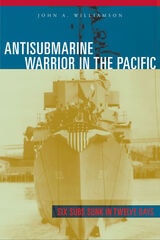
Antisubmarine Warrior in the Pacific
Six Subs Sunk in Twelve DaysJohn A. Williamson
University of Alabama Press, 2005
A commanding firsthand account of the most successful antisubmarine campaign in U.S. Naval History.
The USS England was a 1200-ton, 306-foot, long-hull destroyer escort. Commissioned into service in late 1943 and dispatched to the Pacific the following February, the England and its crew, in one 12-day period in 1944, sank more submarines than any other ship in U.S. naval history: of the six targets attacked, all six were destroyed. For this distinction, legendary in the annals of antisubmarine warfare, the ship and her crew were honored with the Presidential Unit Citation.
After convoying in the Atlantic, John A. Williamson was assigned to the England—first as its executive officer, then as its commanding officer—from the time of her commissioning until she was dry-docked for battle damage repairs in the Philadelphia Naval Yard fifteen months later. Besides being a key participant in the remarkable antisubmarine actions, Williamson commanded the England in the battle of Okinawa, where she was attacked by kamikaze planes.
Williamson narrates his memoir with authority and authenticity, describes naval tactics and weaponry precisely, and provides information gleaned from translations of the orders from the Japanese high command to Submarine Squadron 7. The author details the challenges of communal life aboard ship and explains the intense loyalty that bonds crew members for life. Ultimately, Williamson offers a compelling portrait of himself, an inexperienced naval officer who, having come of age in Alabama during the Depression, rose to become the most successful World War II antisubmarine warfare officer in the Pacific.

Between East and West
Trieste, the United States, and the Cold War, 1941–1954Roberto G. Rabel
Duke University Press, 1988
Rabel explains the causes, significance, and consequences of American involvement in this classic European territorial dispute. The author sees U.S. involvement as closely linked to the larger issues of American participation in World War II and belief in democracy and self-determination, as well as to the subsequent unfolding of the Cold War. After 1945, Rabel asserts, American policy interest shifted to concern for Trieste due to its geographic and symbolic position between the Eastern and Western blocs. U.S. policies toward the Trieste issue were therefore shaped by several factors; a commitment to the principle of self-determination; the exigencies of maintaining stability and effective administration under the occupation; the need for close cooperation with the British; and the larger realities of the Cold War, especially in terms of American perceptions of the changing roles of Italy and Yugoslavia in that conflict. By examining the dynamic interplay of these factors, Between East and West seeks to explain the origins and evolution of U.S. Cold War policy, as well as its impact on the traditional American liberal principles of democracy and self-determination.
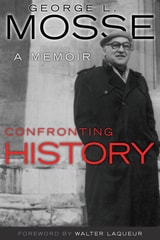
Confronting History
A MemoirGeorge L. Mosse; Foreword by Walter Laqueur
University of Wisconsin Press, 2000
Confronting History describes Mosse's opulent childhood in Weimar Berlin; his exile in Paris and England, including boarding school and study at Cambridge University; his second exile in the U.S. at Haverford, Harvard, Iowa, and Wisconsin; and his extended stays in London and Jerusalem. Mosse discusses being a Jew and his attachment to Israel and Zionism, and he addresses his gayness, his coming out, and his growing scholarly interest in issues of sexuality. This touching memoir—told with the clarity, passion, and verve that entranced thousands of Mosse's students—is guided in part by his belief that "what man is, only history tells" and, most of all, by the importance of finding one's self through the pursuit of truth and through an honest and unflinching analysis of one's place in the context of the times.
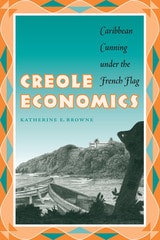
Creole Economics
Caribbean Cunning under the French FlagBy Katherine E. Browne
University of Texas Press, 2004
What do the trickster Rabbit, slave descendants, off-the-books economies, and French citizens have to do with each other? Plenty, says Katherine Browne in her anthropological investigation of the informal economy in the Caribbean island of Martinique. She begins with a question: Why, after more than three hundred years as colonial subjects of France, did the residents of Martinique opt in 1946 to integrate fully with France, the very nation that had enslaved their ancestors? The author suggests that the choice to decline sovereignty reflects the same clear-headed opportunism that defines successful, crafty, and illicit entrepreneurs who work off the books in Martinique today.
Browne draws on a decade of ethnographic fieldwork and interview data from all socioeconomic sectors to question the common understanding of informal economies as culture-free, survival strategies of the poor. Anchoring her own insights to longer historical and literary views, the author shows how adaptations of cunning have been reinforced since the days of plantation slavery. These adaptations occur, not in spite of French economic and political control, but rather because of it. Powered by the "essential tensions" of maintaining French and Creole identities, the practice of creole economics provides both assertion of and refuge from the difficulties of being dark-skinned and French.
This powerful ethnographic study shows how local economic meanings and plural identities help explain work off the books. Like creole language and music, creole economics expresses an irreducibly complex blend of historical, contemporary, and cultural influences.
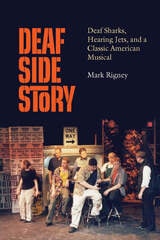
Deaf Side Story
Deaf Sharks, Hearing Jets, and a Classic American MusicalMark Rigney
Gallaudet University Press, 2003
The 1957 classic American musical West Side Story has been staged by countless community and school theater groups, but none more ambitious than the 2000 production by MacMurray College, a small school in Jacksonville, Illinois. Diane Brewer, the new drama head at the college, determined to add an extra element to the usual demands of putting on a show by having deaf students perform half of the parts. Deaf Side Story presents a fascinating narrative of Brewer and the cast’s efforts to mount this challenging play.
Brewer turned to the Illinois School for the Deaf (ISD) to cast the Sharks, the Puerto Rican gang at odds with the Anglo Jets in this musical version of Romeo and Juliet set in the slums of New York. Hearing performers auditioned to be the Jets, and once Brewer had cast her hearing Tony and deaf Maria, then came the challenge of teaching them all to sing/sign and dance the riveting show numbers for which the musical is renowned. She also had to manage a series of sensitive issues, from ensuring the seamless incorporation of American Sign Language into the play to reassuring ISD administrators and students that the production would not be symbolic of any conflict between Deaf and hearing people.
Author Mark Rigney portrays superbly the progress of the production, including the frustrations and triumphs of the leads, the labyrinthine campus and community politics, and the inevitable clashes between the deaf high school cast members and their hearing college counterparts. His representations of the many individuals involved are real and distinguished. The ultimate success of the MacMurray production reverberates in Deaf Side Story as a keen depiction of how several distinct individuals from as many cultures could cooperate to perform a classic American art form brilliantly together.
From Cotton Belt to Sunbelt
Federal Policy, Economic Development, and the Transformation of the South 1938–1980Bruce J. Schulman
Duke University Press, 1994
From the Grassroots to the Supreme Court
Brown v. Board of Education and American DemocracyPeter F. Lau, ed.
Duke University Press, 2004
The contributors illuminate the breadth of developments that led to Brown, from the parallel struggles for social justice among African Americans in the South and Mexican, Asian, and Native Americans in the West during the late nineteenth century to the political and legal strategies implemented by the National Association for the Advancement of Colored People (naacp) in the twentieth century. Describing the decision’s impact on local communities, essayists explore the conflict among African Americans over the implementation of Brown in Atlanta’s public schools as well as understandings of the ruling and its relevance among Puerto Rican migrants in New York City. Assessing the legacy of Brown today, contributors analyze its influence on contemporary law, African American thought, and educational opportunities for minority children.
Contributors
Tomiko Brown-Nagin
Davison M. Douglas
Raymond Gavins
Laurie B. Green
Christina Greene
Blair L. M. Kelley
Michael J. Klarman
Peter F. Lau
Madeleine E. Lopez
Waldo E. Martin Jr.
Vicki L. Ruiz
Christopher Schmidt
Larissa M. Smith
Patricia Sullivan
Kara Miles Turner
Mark V. Tushnet
Gone to the Swamp
Raw Materials for the Good Life in the Mobile-Tensaw DeltaRobert Leslie Smith
University of Alabama Press, 2008
Normal0falsefalsefalseMicrosoftInternetExplorer4Normal0falsefalsefalseMicrosoftInternetExplorer4
To make a living here, one had to be capable, confident, clever and inventive, know a lot about survival, be able to fashion and repair tools, navigate a boat, fell a tree, treat a snakebite, make a meal from whatever was handy without asking too many questions about it, and get along with folks.
This fascinating and instructive book is the careful and unpretentious account of a man who was artful in all the skills needed to survive and raise a family in an area where most people would be lost or helpless. Smith’s story is an important record of a way of life beginning to disappear, a loss not fully yet realized. We are lucky to have a work that is both instructive and warm-hearted and that preserves so much hard-won knowledge.
Growth, Equality, and the Mexican Experience
By Morris Singer
University of Texas Press, 1969
Central to the research that went into the preparation of this monograph is the relationship between economic development and equality. To determine and characterize that relationship Morris Singer focuses on the various components of equality at different stages of development. The author particularly explores the behavior of income distribution, together with its bearing on the components of aggregate demand.
Mexico provided an excellent case to examine in depth because of its impressive growth and the fact that it experienced Latin America’s first successful twentieth-century revolution.
Although the Revolution of 1910 hastened social equality and introduced other changes that stimulated Mexico’s economic growth, it could not prevent a serious increase in the inequality of income distribution. By the early 1960s the government found it necessary to rectify this increasing imbalance through a program of expenditures designed to counteract widespread poverty and weak aggregate demand. To ward off inflation, this program in turn could be implemented only by tax reform.
In discussing the relationship between development and equality in its various dimensions, noneconomic as well as economic, this monograph points out that, at the time of this study, government policies in Mexico were dictated by an elite concerned primarily with the country’s economic advancement. Singer concludes that if programs of government expenditure and tax reform succeed in remedying the inequalities of income distribution, this could gradually make possible the development of a more genuine political as well as economic democracy.
This book reflects Singer’s interest in the relationship between equality and development. It is the result of five months of intensive in-residence study in Mexico, financed in part by a grant from the Social Science Research Council.
Judge Frank Johnson and Human Rights in Alabama
Tinsley E. Yarbrough
University of Alabama Press, 1981
Where courage meets the gavel: One judge’s relentless fight for justice and human rights in Alabama.
Judge Frank M. Johnson, Jr., Chief Judge of the United States District Court for the Middle District of Alabama until his elevation to the Court of Appeals for the Fifth Circuit in 1979, was perhaps President Dwight D. Eisenhower’s most significant appointment to a lower court. His selection to the bench in 1955 followed by only a few months the Supreme Court’s historic decision in Brown vs. Board of Education.
During Judge Johnson’s tenure, his court invalidated segregation and other forms of racial discrimination in Alabama’s transportation facilities, voter registration processes, school and colleges, administrative agencies, system of jury selection, prisons, mental institutions, political parties, and government grant programs. In fact, most of the state’s major racial crises were resolved in his courtroom. However, his impact on human rights policy in Alabama was not confined to a racial context. Among other significant developments, the Middle District Court ordered reapportionment of the state’s governing bodies and invalidated its grossly inequitable property tax systems.
Judge Johnson’s decisions made him one of the most widely respected and controversial trial judges in the country. Until recently, however, his name was anathema to many white Alabamians, and he and his family were subject to ostracism, threats, violence, and verbal abuse.
Yarbrough examines Judge Johnson’s life through the end of the Wallace era and the Judge’s appointment to the Fifth Circuit Court. More broadly, the book is a history of modern human rights reform in Alabama, cast in the biographical idiom. For, in a real sense, the history of the reform and of Judge Johnson’s judicial career have been synonymous.
Leave Me Alone and I'll Make You Rich
How the Bourgeois Deal Enriched the WorldDeirdre Nansen McCloskey and Art Carden
University of Chicago Press, 2020
For readers looking for a distillation of McCloskey’s magisterial work, Leave Me Alone and I’ll Make You Rich is what you’ve been waiting for. In this lively volume, McCloskey and the economist and journalist Carden bring together the trilogy’s key ideas and its most provocative arguments. The rise of the west, and now the rest, is the story of the rise of ordinary people to a dignity and liberty inspiring them to have a go. The outcome was an explosion of innovation after 1800, and a rise of real income by an astounding 3,000 percent. The Great Enrichment, well beyond the conventional Industrial Revolution, did not, McCloskey and Carden show, come from the usual suspects, capital accumulation or class struggle. It came from the idea of economic liberty in Holland and the Anglosphere, then Sweden and Japan, then Italy and Israel and China and India, an idea that bids fair in the next few generations to raise up the wretched of the earth. The original shift to liberalism arose from 1517 to 1789 from theological and political revolutions in northwest Europe, upending ancient hierarchies. McCloskey and Carden contend further that liberalism and “innovism” made us better humans as well as richer ones. Not matter but ideas. Not corruption but improvement.
Leave Me Alone and I’ll Make You Rich draws in entertaining fashion on history, economics, literature, philosophy, and popular culture, from growth theory to the Simpsons. It is the perfect introduction for a broad audience to McCloskey’s influential explanation of how we got rich. At a time when confidence in the economic system is under challenge, the book mounts an optimistic and persuasive defense of liberal innovism, and of the modern world it has wrought.
Making the Weather
Six Politicians Who Changed Modern BritainVernon Bogdanor
Haus Publishing, 2025
Making the Weather is the story of six postwar politicians, all of whom exerted an outsized influence on the political life of the United Kingdom—an influence greater than that of most prime ministers. Vernon Bogdanor’s cast includes three from the political Left—Aneurin “Nye” Bevan, Roy Jenkins, and Tony Benn—and three from the Right—Enoch Powell, Keith Joseph, and Nigel Farage. Each study is a fascinating analysis examining how these men achieved such prominence and influence and how, though very different figures in many ways, they came to dominate the political landscape, often for years.
Each of the six made fundamental contributions to the debate about Britain’s future and to the vibrancy of British democracy. From immigration to Europe, from the National Health Service to devolution, the issues and causes that brought these men to prominence are still relevant.

SELLING OF THE SOUTH
The Southern Crusade for Industrial Development, 1936-90James C. Cobb
University of Illinois Press, 1993

Schneider on Schneider
The Conversion of the Jews and Other Anthropological StoriesDavid M. Schneider, as told to Richard Handler
Duke University Press, 1995
In this work, based on conversations with Richard Handler, Schneider tells the story of his days devoted to anthropology—as a student of Clyde Kluckhohn and Talcott Parsons and as a writer and teacher whose work on kinship and culture theory revolutionized the discipline. With a master’s sense of the telling anecdote, he describes his education at Cornell, Yale, and Harvard, his fieldwork on the Micronesian island of Yap and among the Mescalero Apache, and his years teaching at the London School of Economics, Berkeley, and the University of Chicago. Musing on the current state and the future of anthropology, Schneider’s cast of characters reads like a who’s who of postwar social science. His reflections on anthropological field research and academic politics address some of the most pressing ethical and epistemological issues facing scholars today, while yielding tales of unexpected amusement.
With its humor and irony, its wealth of information and searching questions about the state of anthropology, Schneider on Schneider not only provides an important resource for the history of twentieth-century social science, but also brings to life the entertaining voice of an engaging storyteller.
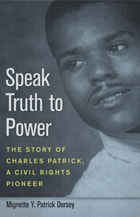
Speak Truth to Power
The Story of Charles Patrick, a Civil Rights PioneerMignette Y. Patrick Dorsey
University of Alabama Press, 2010
"Patrick did not intend to become a civil rights pioneer, but a minor dispute over a parking spot led to his arrest, beating while in custody, and eventual legal tribulations. His daughter's account of his ordeal is well researched, beautifully narrated, and extremely informative." —Journal of Southern History
On December 11, 1954, Charles Patrick drove to downtown Birmingham to buy a Boy Scout uniform for his son. Christmas traffic around the downtown department stores was heavy, and Patrick circled unsuccessfully until at last a streetside spot opened up and he began to pull in. As he did so, he was cut off by a woman who ordered him out of the way, as she was the wife of a city police officer. Patrick pulled away, remarking, "Ma’am, he doesn’t own the streets of Birmingham."
Normal low-level urban hassle? Not in 1954 Birmingham, when the woman was white and Patrick black. The woman reported to her husband that a black man had sassed her, and Patrick was summarily arrested, charged with disorderly conduct, and placed in a cell where he was beaten by the husband and another police officer.
Usually that would have been the end of it, but Patrick was not the sort of man to meekly endure an injustice. He found an attorney, went to court to fight the charges, and brought his assailants to justice--as whites, blacks, politicians and the press offered public support.
This book tells the story of Patrick’s quest for justice in segregated Alabama on the eve of the civil rights movement and represents a telling instance of the growing determination of African Americans to be treated fairly, part of the broadening and deepening stream of resolve that led to the widespread activism of the civil rights movement.
Taking Society's Measure
A Personal History of Survey ResearchHerbert Hyman
Russell Sage Foundation, 1991
Transformative Political Leadership
Making a Difference in the Developing WorldRobert I. Rotberg
University of Chicago Press, 2012
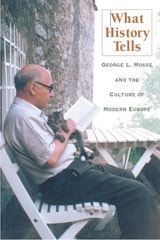
What History Tells
George L. Mosse and the Culture of Modern EuropeEdited by Stanley G. Payne, David J. Sorkin, and John S. Tortorice
University of Wisconsin Press, 2004
The contributors include Walter Laqueur, David Sabean, Johann Sommerville, Emilio Gentile, Roger Griffin, Saul Friedländer, Jay Winter, Rudy Koshar, Robert Nye, Janna Bourke, Shulamit Volkov, and Steven E. Aschheim.

William & Rosalie
A Holocaust TestimonyWilliam Schiff
University of North Texas Press, 2007