Results by title
6 books match the query '1918-2007'
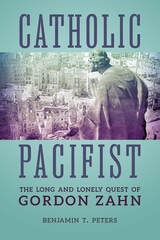
Catholic Pacifist
The Long and Lonely Quest of Gordon ZahnBenjamin Peters
Catholic University of America Press, 2026
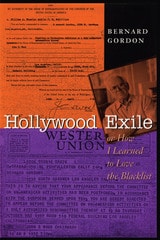
Hollywood Exile, or How I Learned to Love the Blacklist
By Bernard Gordon
University of Texas Press, 2000
The Hollywood blacklist, which began in the late 1940s and ran well into the 1960s, ended or curtailed the careers of hundreds of people accused of having ties to the Communist Party. Bernard Gordon was one of them. In this highly readable memoir, he tells a engrossing insider's story of what it was like to be blacklisted and how he and others continued to work uncredited behind the scenes, writing and producing many box office hits of the era.
Gordon describes how the blacklist cut short his screenwriting career in Hollywood and forced him to work in Europe. Ironically, though, his is a success story that includes the films El Cid, 55 Days at Peking, The Thin Red Line, Krakatoa East of Java, Day of the Triffids, Earth vs. the Flying Saucers, Horror Express, and many others. He recounts the making of many movies for which he was the writer and/or producer, with wonderful anecdotes about stars such as Charlton Heston, David Niven, Sophia Loren, Ava Gardner, and James Mason; directors Nicholas Ray, Frank Capra, and Anthony Mann; and the producer-studio head team of Philip Yordan and Samuel Bronston.
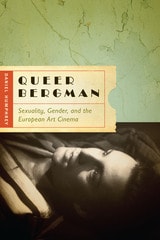
Queer Bergman
Sexuality, Gender, and the European Art CinemaBy Daniel Humphrey
University of Texas Press, 2013
One of the twentieth century’s most important filmmakers—indeed one of its most important and influential artists—Ingmar Bergman and his films have been examined from almost every possible perspective, including their remarkable portrayals of women and their searing dramatizations of gender dynamics. Curiously however, especially considering the Swedish filmmaker’s numerous and intriguing comments on the subject, no study has focused on the undeniably queer characteristics present throughout this nominally straight auteur’s body of work; indeed, they have barely been noted.
Queer Bergman makes a bold and convincing argument that Ingmar Bergman’s work can best be thought of as profoundly queer in nature. Using persuasive historical evidence, including Bergman’s own on-the-record (though stubbornly ignored) remarks alluding to his own homosexual identifications, as well as the discourse of queer theory, Daniel Humphrey brings into focus the director’s radical denunciation of heteronormative values, his savage and darkly humorous deconstructions of gender roles, and his work’s trenchant, if also deeply conflicted, attacks on homophobically constructed forms of patriarchic authority. Adding an important chapter to the current discourse on GLBT/queer historiography, Humphrey also explores the unaddressed historical connections between post–World War II American queer culture and a concurrently vibrant European art cinema, proving that particular interrelationship to be as profound as the better documented associations between gay men and Hollywood musicals, queer spectators and the horror film, lesbians and gothic fiction, and others.
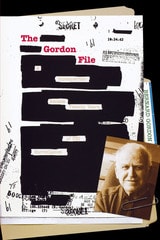
The Gordon File
A Screenwriter Recalls Twenty Years of FBI SurveillanceBy Bernard Gordon
University of Texas Press, 2004
For twenty-six years, the FBI devoted countless hours of staff time and thousands of U.S. taxpayer dollars to the surveillance of an American citizen named Bernard Gordon. Given the lavish use of resources, one might assume this man was a threat to national security or perhaps a kingpin of organized crime—not a Hollywood screenwriter whose most subversive act was joining the Communist Party during the 1940s when we were allied with the USSR in a war against Germany. For this honest act of political dissent, Gordon came to be investigated by the House Committee on Un-American Activities in 1952, blacklisted by the Hollywood film industry, and tailed by the FBI for over two decades.
In The Gordon File, Bernard Gordon tells the compelling, cautionary story of his life under Bureau surveillance. Drawing on his FBI file of over 300 pages, which he obtained under the Freedom of Information Act, he traces how the Bureau followed him from Hollywood to Mexico, Paris, London, Rome, and even aboard a Dutch freighter as he created an unusually successful, albeit uncredited, career as a screenwriter and producer during the blacklist years. Comparing his actual activities during that time to records in the file, he pointedly and often humorously underscores how often the FBI got it wrong, from the smallest details of his life to the main fact of his not being a threat to national security.
Most important, Gordon links his personal experience to the headlines of today, when the FBI is again assuming broad powers to monitor political dissidents it deems a threat to the nation. "Is it possible," he asks, "that books like this will help to move our investigative agencies from the job of blackmailing those who are critical of our imperfect democracy to arresting those who are truly out to destroy us?"
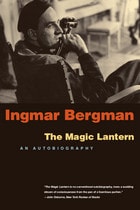
The Magic Lantern
An AutobiographyIngmar Bergman
University of Chicago Press, 1988
“When a film is not a document, it is a dream. . . . At the editing table, when I run the strip of film through, frame by frame, I still feel that dizzy sense of magic of my childhood.” Bergman, who has conveyed this heady sense of wonder and vision to moviegoers for decades, traces his lifelong love affair with film in his breathtakingly visual autobiography, The Magic Lantern.
More grand mosaic than linear account, Bergman’s vignettes trace his life from a rural Swedish childhood through his work in theater to Hollywood’s golden age, and a tumultuous romantic history that includes five wives and more than a few mistresses. Throughout, Bergman recounts his life in a series of deeply personal flashbacks that document some of the most important moments in twentieth-century filmmaking as well as the private obsessions of the man behind them. Ambitious in scope yet sensitively wrought, The Magic Lantern is a window to the mind of one of our era’s great geniuses.
“[Bergman] has found a way to show the soul’s landscape . . . . Many gripping revelations.”—New York Times Book Review
“Joan Tate’s translation of this book has delicacy and true pitch . . . The Magic Lantern is as personal and penetrating as a Bergman film, wry, shadowy, austere.”—New Republic
“[Bergman] keeps returning to his past, reassessing it, distilling its meaning, offering it to his audiences in dazzling new shapes.”—New York Times
“What Bergman does relate, particularly his tangled relationships with his parents, is not only illuminating but quite moving. No ‘tell-all’ book this one, but revealing in ways that much longer and allegedly ‘franker’ books are not.”—Library Journal

The Passion of Ingmar Bergman
Frank Gado
Duke University Press, 1986
Gado concludes that whatever the outward appearance of Bergman's works, they contain an elementary psychic fantasy that links them all, revealing an artist who hoped to be a dramatist, "the new Strindberg," and who saw the camera as an extension of his pen.