Results by title
33 books match the query '1923-'
A Company of Poets
Louis Simpson
University of Michigan Press, 1981
A Personal Country
A. C. Greene
University of North Texas Press, 1998
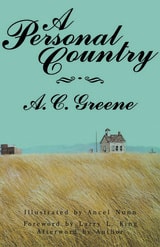
It is a harsh, remote country, where the weather is always very close and the horizon far away. The Brazos country of long-ago Fourth of July fishing expeditions; the grass-grown remains of a way station of the Butterfield Stage Line; the streets of Abilene; the sparse grazing lands under infinite skies-all are made resonant by a native son’s affection and understanding. It is a way of life-resilient and persnickety-that is almost gone.
Above all, it is people: the author’s grandmother, who had a mortal fear of bridges and whose premonitions of unnamed calamities (that as often as not happened), both alarmed and pleased the young boy; Uncle Aubrey, “who married late”; the blacksmith they awakened in the dead of night; the familiar neighbors; the rare and deliciously mysterious strangers.
With humor and strong, unsentimental feeling, A. C. Greene conserves for us the priceless eccentricities of place and person that are being flattened out-almost literally bulldozed away-by the impatient, insatiable onrush of the twentieth century. His West Texas is a very personal country, but what he seeks to share will be familiar to all who take pleasure in the memories that tie them to their own special region of America.
An Underground Life
Memoirs of a Gay Jew in Nazi BerlinGad Beck; written with Frank Heibert, translated by Allison Brown
University of Wisconsin Press, 2000
Battling to the End
Conversations with Benoit ChantreRené Girard
Michigan State University Press, 2010
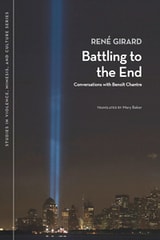
Carl von Clausewitz (1780–1831), the Prussian military theoretician who wrote On War, is known above all for his famous dictum: “War is the continuation of politics by other means.” In René Girard’s view, however, the strategist’s treatise offers up a more disturbing truth to the reader willing to extrapolate from its most daring observations: with modern warfare comes the insanity of tit-for-tat escalation, which political institutions have lost their ability to contain. Having witnessed the Napoleonic Wars firsthand, Girard argues, Clausewitz intuited that unbridled “reciprocal action” could eventually lead foes to total mutual annihilation. Haunted by the Franco-German conflict that was to ravage Europe, in Girard’s account Clausewitz is a prescient witness to the terrifying acceleration of history. Battling to the End issues a warning about the apocalyptic threats hanging over our planet and delivers an authoritative lesson on the mimetic laws of violence.
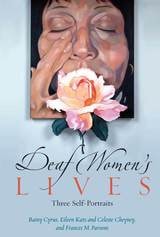
Deaf Women's Lives
Three Self-PortraitsBainy Cyrus
Gallaudet University Press, 2005
Three deaf women with widely varying stories share their experiences in this unique collection, revealing the vast differences in the circumstances of their lives, but also striking similarities. In Bainy Cyrus’s All Eyes, she vividly describes her life as a young child who was taught using the oral method at the Clarke School for the Deaf in Northampton, MA. Her account of the methods used (for example, repeating the same word over and over again, as many as 35 times), animates the extraordinary amount of work performed by deaf children to learn to read and speak. Cyrus also relates the importance of her lifelong friendships with two girls she met at Clarke, and how the different paths that they took influenced her as an adult.
Eileen Katz’s story, as told to Celeste Cheyney, offers a glimpse into a deaf girl’s life a generation before Cyrus. In Making Sense of It All: The Battle of Britain Through a Jewish Deaf Girl’s Eyes, Katz juxtaposes the gradual learning of the words who, what, where, and why with the confusing events of 1938 to 1941. As she and her fellow students grasped the meanings of these questions, they also realized the threat from the Nazi air attacks upon England. Katz also understood the compound jeopardy that she and her classmates faced by being both deaf and Jewish.
In contrast to the predominantly oral orientation of Cyrus and Katz, Frances M. Parsons writes of a year-long journey overseas in 1976 to lecture about Total Communication. Parsons traveled to Iran, India, Ceylon, Thailand, Malaysia, Singapore, Hong Kong, Taipei, the Philippines, Australia, and seven countries in Africa to teach administrators, teachers, and deaf students to communicate using sign, speechreading, writing, and any other means available. Her harrowing and fascinating anecdotes detail visits to ministries of education, schools, hospitals, clinics, palaces, hovels for the poorest of the poor, and all kinds of residential homes and apartments. Taken together, her travels testify to the aptness of her title I Dared!
The combined effect of these three Deaf women’s stories, despite the variation in their experiences, reveals the common thread that weaves through the lives of all deaf individuals.
Disturbing Revelation
Leo Strauss, Eric Voegelin, and the BibleJohn J. Ranieri
University of Missouri Press, 2009
For Decades I Was Silent
A Holocaust Survivor's Journey Back to FaithBaruch G. Goldstein
University of Alabama Press, 2008
A survivor's powerful testament to faith, memory, and the triumph of the human spirit.
A fascinating memoir about a Holocaust survivor's loss of and journey back to faith. In 1939, Baruch Goldstein was a religiously observant adolescent resident of the Jewish community in Mlawa, a town that was then in East Prussia. After war broke out, the Jewish community there was relatively sheltered, as that region was incorporated into the German Reich rather than into the General Government (the German run-fragment of pre-war Poland, where conditions were harsh for everyone). However in 1942, Goldstein was sent to Auschwitz, where he stayed two-and-a-half years. His family was scattered all to their deaths, but he survived the war--barely. For Decades I Was Silent is an account of life in a small Polish-German town and provides information on the religious life of the Jewish citizens. This book creates a direct sense of the random, mystifying personal violence individuals felt at the hands of Germans--not the anonymous industrial death machine, but immediate, face-to-face violence.
After the war, Goldstein drifted as a refugee to UNRR camps in Italy. Over time, young Goldstein had to face the fact that all of his extended family was lost and he had only the possibilities of Palestine or help from distant relatives in the United States as a future. His American relatives urged him to enter the United States as a yeshiva student, and eventually he became a rabbi and started a family. As a young rabbinical student, and then as a rabbi, Goldstein was forced to confront the events of the Holocaust and the damage done to his faith.
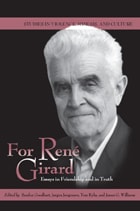
For René Girard
Essays in Friendship and in TruthSandor Goodhart
Michigan State University Press, 2009
In his explorations of the relations between the sacred and violence, René Girard has hit upon the origin of culture—the way culture began, the way it continues to organize itself. The way communities of human beings structure themselves in a manner that is different from that of other species on the planet.
Like Albert Einstein, Sigmund Freud, Émile Durkheim, Martin Buber, or others who have changed the way we think in the humanities or in the human sciences, Girard has put forth a set of ideas that have altered our perceptions of the world in which we function. We will never be able to think the same way again about mimetic desire, about the scapegoat mechanism, and about the role of Jewish and Christian scripture in explaining sacrifice, violence, and the crises from which our culture has been born.
The contributions fall into roughly four areas of interpretive work: religion and religious study; literary study; the philosophy of social science; and psychological studies.
The essays presented here are offered as "essays" in the older French sense of attempts (essayer) or trials of ideas, as indeed Girard has tried out ideas with us. With a conscious echo of Montaigne, then, this hommage volume is titled Essays in Friendship and in Truth.
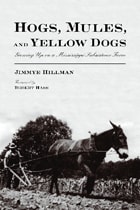
Hogs, Mules, and Yellow Dogs
Growing Up on a Mississippi Subsistence FarmJimmye Hillman; Foreword by Robert Hass
University of Arizona Press, 2012
"It's in the nature of things that whole worlds disappear," writes the poet Robert Hass in the foreword to Jimmye Hillman's insightful memoir. "Their vanishings, more often than not, go unrecorded or pass into myth, just as they slip from the memory of the living."
To ensure that the world of Jimmye Hillman's childhood in Greene County, Mississippi during the Great Depression doesn't slip away, he has gathered together accounts of his family and the other people of Old Washington village. There are humorous stories of hog hunting and heart-wrenching tales of poverty set against a rural backdrop shaded by the local social, religious, and political climate of the time. Jimmye and his family were subsistence farmers out of bare-bones necessity, decades before discussions about sustainability made such practices laudable.
More than just childhood memories and a family saga, though, this book serves as a snapshot of the natural, historical, and linguistic details of the time and place. It is a remarkable record of Southern life. Observations loaded with detail uncover broader themes of work, family loyalty, and the politics of changing times.
Hillman, now eighty-eight, went on to a distinguished career as an economist specializing in agriculture. He realizes the importance of his story as an example of the cultural history of the Deep South but allows readers to discover the significance on their own by witnessing the lives of a colorful cast of characters. Hogs, Mules, and Yellow Dogs is unique, a blend of humor and reflection, wisdom and sympathy—but it's also a hard-nosed look at the realities of living on a dirt farm in a vanished world.
Intimate Domain
Desire, Trauma, and Mimetic TheoryMartha J. Reineke
Michigan State University Press, 2014
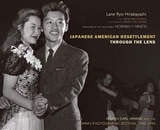
Japanese American Resettlement through the Lens
Hikaru Iwasaki and the WRA's Photographic Section, 1943-1945Lane Ryo Hirabayashi
University Press of Colorado, 2009
In Japanese American Resettlement through the Lens, Lane Ryo Hirabayashi gathers a unique collection of photographs by War Relocation Authority photographer Hikaru Iwasaki, the only full-time WRA photographer from the period still living.
With substantive focus on resettlement - and in particular Iwasaki's photos of Japanese Americans following their release from WRA camps from 1943 to 1945 - Hirabayashi explores the WRA's use of photography in its mission not only to encourage "loyal" Japanese Americans to return to society at large as quickly as possible but also to convince Euro-Americans this was safe and advantageous. Hirabayashi also assesses the relative success of the WRA project, as well as the multiple uses of the photographs over time, first by the WRA and then by students, scholars, and community members in the present day.
Although the photos have been used to illustrate a number of publications, this book is the first sustained treatment addressing questions directly related to official WRA photographs. How and under what conditions were they taken? Where were they developed, selected, and stored? How were they used during the 1940s? What impact did they have during and following the war?
By focusing on the WRA's Photographic Section, Japanese American Resettlement through the Lens makes a unique contribution to the body of literature on Japanese Americans during World War II.
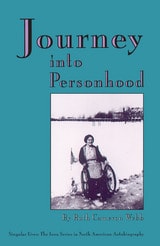
Journey Into Personhood
Ruth Cameron Webb
University of Iowa Press, 1994
In Journey into Personhood Ruth Webb tells the story of an individual born with severe cerebral palsy who struggles to become a person in her own eyes as well as in the opinion of those around her. By developing both the inner ability to learn, live, and work independently and the outer ability to convince others to give her the freedom to do so—physically and emotionally—Webb earned her Ph.D. in counseling and guidance. With that validation of her intelligence and competence, she entered upon a fulfilling career working with mentally retarded people and other people with disabilities.
Latino Urban Ethnography and the Work of Elena Padilla
Merida M. Rua
University of Illinois Press, 2010

Myths about the Powerless
Contesting Social InequalitiesM. Brinton Lykes
Temple University Press, 1996
Nacho Lopez, Mexican Photographer
John Mraz
University of Minnesota Press, 2003
Reveals the career of an influential but under-appreciated photojournalist
Photographer Nacho López was Mexico’s Eugene Smith, fusing social commitment with searing imagery to dramatize the plight of the helpless, the poor, and the marginalized in the pages of glossy illustrated magazines. Even today, López’s photographs forcefully belie the picturesque exoticism that is invariably presented as the essence of Mexico.
In Nacho López, Mexican Photographer, John Mraz offers the first full-length study in English of this influential photojournalist and provides a close visual analysis of more than fifty of López’s most important photographs. Mraz first sets López’s work in the historical and cultural context of the authoritarian presidentialism that characterized Mexican politics in the 1950s, the cult of wealth and celebrity promoted by Mexico’s professional photographers, and the government’s attempts to modernize and industrialize Mexico at almost any cost. Mraz skillfully explores the implications of López's imagery in this setting: the extent to which his photographs might constitute further victimization of his downtrodden subjects, the relationship between them and the middle-class readers of the magazines for which López worked, and the success with which his photographs challenged Mexico's economic and political structures. Mraz contrasts the photos López took with those that were selected by his editors for publication. He also compares López’s images with his theories about documentary photography, and considers López’s photographs alongside the work of Robert Capa, Dorothea Lange, Henri Cartier-Bresson, and Sebastião Salgado. López’s imagery is further analyzed in relation to the Mexican Golden Age cinema inspired by Sergei Eisenstein, the pioneering digital imagery of Pedro Meyer, and the work of Manuel Álvarez Bravo, who Mraz provocatively argues was the first Mexican photographer to take an anti-picturesque stance. The definitive English-language assessment of Nacho López’s career, this volume also explores such broader topics as the nature of the photographic essay and the role of the media in effecting social change.
O Little Town
Remembering Life in a Prairie VillageHarlo L. Jones
University of Manitoba Press, 1995
One Step Ahead
A Jewish Fugitive in Hitler's EuropeAlfred Feldman. Foreword by Susan Zuccotti
Southern Illinois University Press, 2001
Through compelling personal accounts and family correspondence, One Step Ahead documents Alfred Feldman’s harrowing flight into exile as he and his family fled the pogroms that flooded across Nazi-occupied Europe. It is a memoir of horror and hope recounted by a man who survived the organized terror of Hitler’s "Final Solution" as it destroyed entire generations of European Jewish life within ten catastrophic years in the mid-twentieth century. Feldman’s memoir conveys the searing pain that has never left him, while demonstrating the triumphant humanity of a survivor.
Feldman vividly describes the impact of the escalating anti-Semitic hatred and violence in Germany during the 1930s, the impact of the notorious Nuremberg Laws in 1935, and the terrifying Kristallnacht pogrom in 1938. By age sixteen, Feldman was living with his parents and three younger sisters in Antwerp, Belgium, during the 1939 German invasions of Poland, marking the start of World War II. In the face of increasing persecution, Feldman’s extended family scattered over the globe in a desperate attempt to remain one step ahead of their Nazi pursuers.
Recalling his life on the run, Feldman describes what few survivors have chosen to write about: the Vichy raids of August 26, 1942; the French labor brigades; the Comité Dubouchage; and life in super-vised residence in France under the Italians. While in the south of France, Feldman endured food shortages and Nazi anti-Semitic measures, beginning with work camps and culminating in the deportation and ultimate death of his mother and sisters at Auschwitz.
To evade the Germans, Feldman and his father fled into the Italian Alps in September of 1943, hiding between the Allies and the Germans. Aided by local villagers, the Feldmans survived precariously for over a year and a half, along with other Jewish refugees, until that region was liberated. Only then, and only gradually, did Feldman manage to piece together the fate of his surviving family and learn at last of the death of his mother and sisters.
Now, as an adult, Alfred Feldman has retraced his escape and exile, taking his wife and children to his hometown in Germany, the mountains in Italy, and Montagnac, where a plaque commemorates his mother and sisters.

Parity and War
Evaluations and Extensions of The War LedgerJacek Kugler and Douglas Lemke, Editors
University of Michigan Press, 1996
Philadelphia Maestros
Ormandy, Muti, SawallischPhyllis Rodriquez-Peralta
Temple University Press, 2006
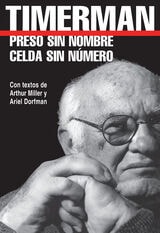
Preso sin Nombre, Celda sin Numero
Jacobo Timerman; Con textos de Arthur Miller y Ariel Dorfman
University of Wisconsin Press, 2004
Wisconsin edition is for sale only in North America.
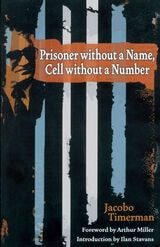
Prisoner Without a Name, Cell Without a Number
Jacobo Timerman
University of Wisconsin Press, 2002
"It ranks with Hannah Arendt's Eichmann in Jerusalem in its examination of the totalitarian mind, the role of anti-Semitism, the silence."—Eliot Fremont-Smith, Village Voice
"It is impossible to read this proud and piercing account of [Timerman's] suffering and his battles without wanting to be counted as one of Timerman's friends."—Michael Walzer, New York Review of Books
"Timerman was a living reminder that real prophets are irritants and not messengers of reassurance. He told it like it is, whether in Argentina, Israel, Europe, or the United States."—Arthur Miller
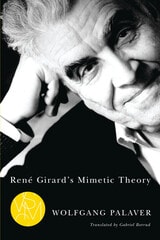
René Girard's Mimetic Theory
Wolfgang Palaver
Michigan State University Press, 2013
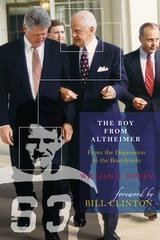
The Boy from Altheimer
From the Depression to the BoardroomWilliam H. Bowen
University of Arkansas Press, 2006
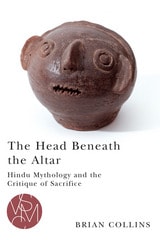
The Head Beneath the Altar
Hindu Mythology and the Critique of SacrificeBrian Collins
Michigan State University Press, 2014
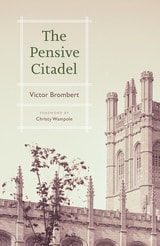
The Pensive Citadel
Victor Brombert
University of Chicago Press, 2023
In The Pensive Citadel, Victor Brombert looks back on a lifetime of learning within a university world greatly altered since he entered Yale on the GI Bill in the 1940s. Yet for all that has changed, much of Brombert’s long experience as a reader and teacher is richly familiar: the rewards of rereading, the joy of learning from students, and most of all the insight to be found in engaging works of literature. The essays gathered here range from meditations on laughter and jealousy to new appreciations of Brombert’s lifelong companions Shakespeare, Montaigne, Voltaire, and Stendhal.
A veteran of D-day and the Battle of the Bulge who witnessed history’s worst nightmares firsthand, Brombert nevertheless approaches literature with a lightness of spirit, making the case for intellectual mobility and openness to change. The Pensive Citadel is a celebration of a life lived in literary study, and of what can be learned from attending to the works that form one’s cultural heritage.
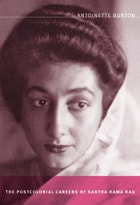
The Postcolonial Careers of Santha Rama Rau
Antoinette Burton
Duke University Press, 2007
Drawing on archival research and interviews with Rama Rau, historian Antoinette Burton opens Rama Rau’s career into an examination of orientalism in the postwar United States, the changing idioms of cosmopolitanism in the postcolonial era, and the afterlife of British colonialism in the American public sphere. Burton describes how Rama Rau’s career was shaped by gendered perceptions of India and “the East” as well as by the shifting relationships between the United States, India, Pakistan, and Great Britain during the Cold War. Exploring how Rama Rau positioned herself as an expert on both India and the British empire, Burton analyzes the correspondence between Rama Rau and her Time-Life editors over the contents of her book The Cooking of India (1969), and Rama Rau’s theatrical adaptation of E. M. Forster’s A Passage to India, which played on Broadway in 1961 and was the basis for David Lean’s 1985 film. Burton assesses the critical reception of Rama Rau’s play as well as her correspondence with Forster and Lean.
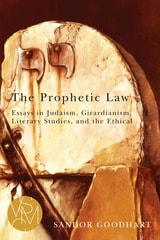
The Prophetic Law
Essays in Judaism, Girardianism, Literary Studies, and the EthicalSandor Goodhart
Michigan State University Press, 2014
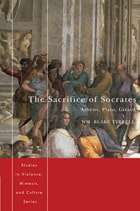
The Sacrifice of Socrates
Athens, Plato, GirardWm. Blake Tyrrell
Michigan State University Press, 2012
When Athenians suffered the shame of having lost a war from their own greed and foolishness, around 404 BCE the public’s blame was directed at Socrates, a man whose unique appearance and behavior, as well as his disapproval of the democracy, made him a ready target. Socrates was subsequently put on trial and sentenced to death. However, as René Girard has pointed out, no individual can be held responsible for a communal crisis. Plato’s Apology depicts Socrates as both the bane and the cure of Greek society, while his Crito shows a sacrificial Socrates, what some might consider a pharmakos figure, the human drug through whom Plato can dispense his philosophical remedies. With tremendous insight and satisfying complexity, this book analyzes classical texts through the lens of Girard’s mimetic mechanism.
The Salt Lake Papers
From the Years in the Earthscapes of UtahEd Lueders
University of Utah Press, 2018
The Salt Lake Papers is divided into two sections by location and time. Book One reflects the central geophysical presence of the Great Salt Lake, in view from Leuders’s home and the University of Utah campus where he studied and taught. Researched and composed during the 1980s, it is published here for the first time. Book Two begins with his retirement to the “earthscapes” of the Torrey–Capitol Reef area of southern Utah and contemplates the Colorado River system. Hydrology thus provides both the physical and the metaphysical basis for the author’s reflective insights and for the natural flow of his advancing thought.
Beautifully written, The Salt Lake Papers, in varied ways, speaks to the necessity of the humanities in the modern age. At its heart, Lueders’s small book of intellectual musings explores place and the ways landscape shapes what is observant in each of us.
Hear Ed Lueders talk about his book on Utah Conversations with Ted Capener on KUED

The Terezín Album of Mariánka Zadikow
Annotated by Debórah Dwork
University of Chicago Press, 2008
An imprisoned bookbinder wrote these words in a small blank book that he had secretly crafted from pilfered materials at the Terezín (Theresienstadt) concentration camp in September 1944. He presented the album to a fellow prisoner, twenty-one-year-old Marianka Zadików. Over the next several months, as the Nazis pressed forward with mass deportations from Terezín to Auschwitz, Marianka began to collect inscriptions and sketches from her fellow inmates.
Marianka Zadików’salbum, presented here in a facsimile edition, is a poignant document from the last months of the Holocaust. The words and images inscribed here—by children and grandparents, factory workers and farmhands, professionals and intellectuals, musicians and artists—reflect both joy and trepidation. They include passages of remembered verse, lovingly executed drawings, and hurried farewells on the eve of transport to Auschwitz. The great German-Jewish scholar Rabbi Leo Baeck, one of the elders of the camp, offers Marianka an inscription about Jewish self-discovery, and participants in Terezín’s now-famous musical performances fill several pages with musical annotation.
Facing-page translations render the book’s multitude of languages into English, while historical and biographical notes give details, where known, of the fates of those whose words are recorded here. An introduction by acclaimed Holocaust scholar Debórah Dwork tells the story of the Terezín camp and how Marianka and her family fared while imprisoned there.
The array of voices and the glimpses into individual lives afforded us by The Terezín Album make it an arresting reminder of the sustaining power of care, community, and hope amid darkness.
Transformative Political Leadership
Making a Difference in the Developing WorldRobert I. Rotberg
University of Chicago Press, 2012
When These Things Begin
Conversations with Michel TreguerRené Girard (Translated by Trevor Cribben Merrill)
Michigan State University Press, 2014
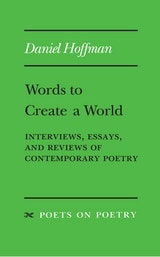
Words to Create a World
Daniel Hoffman
University of Michigan Press, 1993
Between these are discussions of books by and about founding modernists (Pound, Moore, Sitwell, Frost, Graves, Auden) who do not “succumb to the imitative fallacy and gibber at the window because the house is on fire.” Hoffman’s historical imagination elucidates the work of many other contemporary American and British poets, including his own. Words to Create a World will appeal to the reader who enjoys poetry and who hopes for guidance over the sprawling terrain of verse in the twentieth century.