Results by title
4 books match the query '1925-1953'
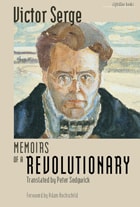
Memoirs of a Revolutionary
Victor Serge
University of Iowa Press, 2002
[more]
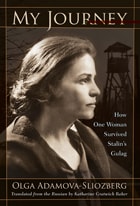
My Journey
How One Woman Survived Stalin's GulagOlga Adamova-Sliozberg
Northwestern University Press, 2011
This is the first English translation of Olga Adamova-Sliozberg’s mesmerizing My Journey, which was not officially published in Russia until 2002. It is among the best known of Gulag memoirs and was one of the first to become widely available in underground samizdat circulation. Alexander Solzhenitsyn relied heavily upon it when writing Gulag Archipelago, and it remains the best account of the daily life of women in the Soviet prison camps.
Arrested along with her husband (who, she would much later learn, was shot the next day) in the great purges of the thirties, Adamova-Sliozberg decided to record her Gulag experiences a year after her arrest, and she “wrote them down in her head” (paper and pencils were not available to prisoners) every night for years. When she returned to Moscow after the war in 1946, she composed the memoir on paper for the first time and then buried it in the garden of the family dacha. After her re-arrest and seven more years of banishment to Kazakhstan, she returned to the dacha to dig up the buried memoir, but could not find it. She sat down and wrote it all over again.
In her later years she also added a collection of stories about her family. Concluding on a hopeful note—Adamova-Sliozberg’s record is cleared, she re-marries a fellow former-prisoner, and she is reunited with her children—this story is a stunning account of perseverance in the face of injustice and unimaginable hardship. This vital primary source continues to fascinate anyone interesting in the tumultuous history of Russia and the Soviet Union in the twentieth century.
[more]
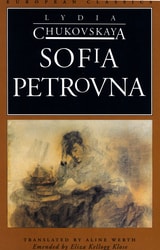
Sofia Petrovna
Lydia Chukovskaya
Northwestern University Press, 1989
Sofia Petrovna is Lydia Chukovskaya's fictional account of the Great Purge. Sofia is a Soviet Everywoman, a doctor's widow who works as a typist in a Leningrad publishing house. When her beloved son is caught up in the maelstrom of the purge, she joins the long lines of women outside the prosecutor's office, hoping against hope for good news. Confronted with a world that makes no moral sense, Sofia goes mad, a madness which manifests itself in delusions little different from the lies those around her tell every day to protect themselves. Sofia Petrovna offers a rare and vital record of Stalin's Great Purges.
[more]
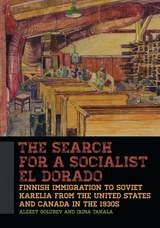
The Search for a Socialist El Dorado
Finnish Immigration to Soviet Karelia from the United States and Canada in the 1930sAlexey Golubev and Irina Takala
Michigan State University Press, 2014
In the 1930s, thousands of Finns emigrated from their communities in the United States and Canada to Soviet Karelia, a region in the Soviet Union where Finnish Communist émigrés were building a society to implement their ideals of socialist Finland. To their new socialist home, these immigrants brought critically needed skills, tools, machines, and money. Educated and skilled, American and Canadian Finns were regarded by Soviet authorities as agents of revolutionary transformations who would not only modernize the economy of Soviet Karelia, but also enlighten its society. North American immigrants, indeed, became active participants of socialist colonization of what Bolshevik leaders perceived as dark, uneducated and backward Soviet ethnic periphery. The Search for a Socialist El Dorado is the first comprehensive account in English of this fascinating story. Using a vast body of documentary sources from archives in Petrozavodsk and Moscow, Russian- and Finnish-language press and literature from the 1930s, oral history interviews and secondary literature, Alexey Golubev and Irina Takala explore in depth the “Karelian fever” among Finnish Americans and Canadians, and the lives of immigrants in the Soviet Union, their contribution to Soviet economy and culture, and their fates in the Great Terror.
[more]