Results by title
3 books match the query '1926-2017'

Bachelors and Bunnies
The Sexual Politics of PlayboyCarrie Pitzulo
University of Chicago Press, 2011
For a lot of people, thoughts about the sexual politics of Playboy run along the lines of what Gloria Steinem reportedly once told Hugh Hefner: “A woman reading Playboy feels a little like a Jew reading a Nazi manual.” Hefner’s magazine celebrates men as swinging bachelors and women as objects of desire; ergo, it’s sexist.
Not so fast, says Carrie Pitzulo. With Bachelors and Bunnies, she delves into the history of the magazine to reveal its surprisingly strong record of support for women’s rights and the modernization of sexual and gender roles. Taking readers behind the scenes of Playboy’s heyday, Pitzulo shows how Hefner’s own complicated but thoughtful perspective on modern manhood, sexual liberation, and feminism played into debates—both in the editorial offices and on the magazine’s pages—about how Playboy’s trademark “girl next door” appeal could accommodate, acknowledge, and even honor the changing roles and new aspirations of women in postwar America. Revealing interviews with Hugh Hefner and his daughter (and later Playboy CEO) Christie Hefner, as well as with a number of editors and even Playmates, show that even as the magazine continued to present a romanticized notion of gender difference, it again and again demonstrated a commitment to equality and expanded opportunities for women.
Offering a surprising new take on a twentieth-century icon, Bachelors and Bunnies goes beyond the smoking jacket and the centerfold to uncover an unlikely ally for the feminist cause.

Jerry Lewis
Chris Fujiwara
University of Illinois Press, 2009
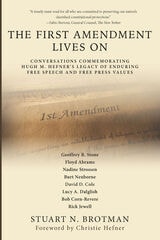
The First Amendment Lives On
Conversations Commemorating Hugh M. Hefner's Legacy of Enduring Free Speech and Free Press ValuesStuart N. Brotman
University of Missouri Press, 2022
Hugh M. Hefner’s legacy of enduring free speech and free press values is embodied in the Hugh M. Hefner First Amendment Awards, established in 1979, which honor leading First Amendment scholars and advocates. Hefner also had a lifelong interest in film censorship issues and supported teaching about them at the University of Southern California for 20 years. His deep commitment to these values was confirmed when the author was granted unrestricted access to over 3,000 personal scrapbooks, which Hefner had kept in order to track free speech and press issues during his lifetime.
The format of the book is an homage to the in-depth conversational interviews Hefner pioneered as the editor and publisher of Playboy magazine. Stuart Brotman conducted in-person conversations with eight persons who in their lifetimes have come to represent a “greatest generation” of free speech and free press scholars and advocates. Notably, these conversations include:
Geoffrey R. Stone
Floyd Abrams
Nadine Strossen
Burt Neuborne
David D. Cole
Lucy A. Dalglish
Bob Corn-Revere
Rick Jewell