Results by title
32 books match the query '1928-'
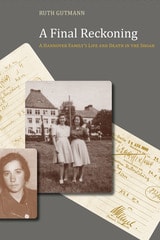
A Final Reckoning
A Hannover Family's Life and Death in the ShoahRuth Gutmann, Foreword by Kenneth Waltzer
University of Alabama Press, 2013
A work of both childhood memory and adult reflection undergirded with scholarly research
Ruth Herskovits Gutmann’s powerful memoir recounts her life not only as a concentration camp inmate and survivor, but also as a sister and daughter. Born in 1928, Gutmann and her twin sister, Eva, escaped the growing Nazi threat in Germany on a Kindertransport to Holland in 1939.
Gutmann’s compelling story captures many facets of the Jewish experience in Nazi Germany. She describes her early life in Hannover as the daughter of a prominent and patriotic member of the Jewish community. Her flight on the Kindertransport offers a vivid, firsthand account of that effort to save the children of Jewish families. Her memories of the camps include coming to the attention of Josef Mengele, who often used twins in human experiments. Gutmann writes with moving clarity and nuance about the complex feelings of survivorship.
A Final Reckoning provides not only insights into Gutmann’s own experience as a child in the midst of the atrocities of the Holocaust, but also a window into the lives of those, like her father, who were forced to carry on and comply with the regime that would ultimately bring about their demise.
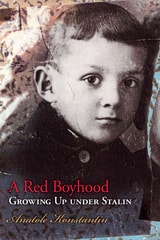
A Red Boyhood
Growing Up Under StalinAnatole Konstantin
University of Missouri Press, 2008
Many children growing up in the Soviet Union before World War II knew the meaning of deprivation and dread. But for the son of an “enemy of the people,” those apprehensions were especially compounded.
When the secret police came for his father in 1938, ten-year-old Anatole Konstantin saw his family plunged into a morass of fear. His memoir of growing up in Stalinist Russia re-creates in vivid detail the daily trials of people trapped in this regime before and during the repressive years of World War II—and the equally horrific struggles of refugees after that conflict.
Evicted from their home, their property confiscated, and eventually forced to leave their town, Anatole’s family experienced the fate of millions of Soviet citizens whose loved ones fell victim to Stalin’s purges. His mother, Raya, resorted to digging peat, stacking bricks, and even bootlegging to support herself and her two children. How she managed to hold her family together in a rapidly deteriorating society—and how young Anatole survived the horrors of marginalization and war—form a story more compelling than any novel.
Looking back on those years from adulthood, Konstantin reflects on both his formal education under harsh conditions and his growing awareness of the contradictions between propaganda and reality. He tells of life in the small Ukrainian town of Khmelnik just before World War II and of how some of its citizens collaborated with the German occupation, lending new insight into the fate of Ukrainian Jews and Nazi corruption of local officials. And in recounting his experiences as a refugee, he offers a new look at everyday life in early postwar Poland and Germany, as well as one of the few firsthand accounts of life in postwar Displaced Persons camps.
A Red Boyhood takes readers inside Stalinist Russia to experience the grim realities of repression—both under a Soviet regime and German occupation. A moving story of desperate people in desperate times, it brings to life the harsh realities of the twentieth century for young and old readers alike.
Agnes Varda
Kelley Conway
University of Illinois Press, 2015
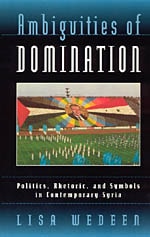
Ambiguities of Domination
Politics, Rhetoric, and Symbols in Contemporary SyriaLisa Wedeen
University of Chicago Press, 1999
Wedeen concludes that Asad's cult acts as a disciplinary device, generating a politics of public dissimulation in which citizens act as if they revered their leader. By inundating daily life with tired symbolism, the regime exercises a subtle, yet effective form of power. The cult works to enforce obedience, induce complicity, isolate Syrians from one another, and set guidelines for public speech and behavior. Wedeen's ethnographic research demonstrates how Syrians recognize the disciplinary aspects of the cult and seek to undermine them. Provocative and original, Ambiguities of Domination is a significant contribution to comparative politics, political theory, and cultural studies.
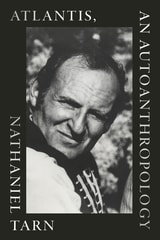
Atlantis, an Autoanthropology
Nathaniel Tarn
Duke University Press, 2022
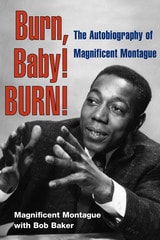
Burn, Baby! BURN!
The Autobiography of Magnificent MontagueMagnificent Montague with Bob Baker
University of Illinois Press, 2009
Like many black disc jockeys of his day, Montague played a role in his community beyond simply spreading the music of James Brown, Otis Redding, Aretha Franklin, and other prominent artists. Montague served as an unofficial spokesman for his black listeners, reflecting their beliefs and acting as a sounding board for their concerns.
Montague was based in Los Angeles in 1965 when the Watts rioters seized on his incendiary slogan, turning the shout of musical appreciation into a rallying cry for racial violence. In Burn, Baby! BURN! Montague recalls these tumultuous times, including the personal struggle he faced over whether to remain true to his listeners or bend to political pressure and stop shouting his suddenly controversial slogan.
Since the mid-1950s Montague had also expressed his passion for African American culture by becoming a zealous collector of artifacts of black history. He has built a monumental collection, taking time out from his collecting to become only the second African American to build his own radio station literally from the ground up.
A compelling account of a rich and varied life, Burn, Baby! BURN! gives an insider's view of half a century of black history, told with on-the-air zest by the DJ/historian who was there to see it unfold.
Coming Close
Forty Essays on Philip LevineMari L'Esperance and Tomas Morin
University of Iowa Press, 2013
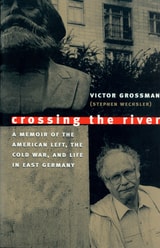
Crossing the River
A Memoir of the American Left, the Cold War, and Life in East GermanyVictor Grossman
University of Massachusetts Press, 2003
What could possibly impel a relatively privileged twenty-four-year-old American-serving in the U.S. Army in Germany in 1952 to swim across the Danube River to what was then referred to as the Soviet Zone? How are we to understand his decision to forsake the land of his birth and build a new life in the still young German Democratic Republic? These are the questions at the core of this memoir by Victor Grossman, who was born Stephen Wechsler but changed his name after defecting to the GDR.
A child of the Depression, Grossman witnessed firsthand the dislocations wrought by the collapse of the U.S. economy during the 1930s. Widespread unemployment and poverty, CIO sit-down strikes, and the fight to save Republican Spain from fascism-all made an indelible impression as he grew up in an environment that nurtured a commitment to left-wing causes. He continued his involvement with communist activities as a student at Harvard in the late 1940s and after graduation, when he took jobs in two factories in Buffalo, New York, and tried to organize their workers.
Fleeing McCarthyite America and potential prosecution, Grossman worked in the GDR with other Western defectors and eventually became, as he notes, the “only person in the world to attend Harvard and Karl Marx universities.” Later, he was able to establish himself as a freelance journalist, lecturer, and author. Traveling throughout East Germany, he evaluated the failures as well as the successes of the GDR's “socialist experiment.” He also recorded his experiences, observations, and judgments of life in East Berlin after reunification, which failed to bring about the post-Communist paradise so many had expected.
Written with humor as well as candor, Crossing the River provides a rare look at the Cold War from the other side of the ideological divide.
Mark Solomon, a distinguished historian of the American left, provides a historical afterword that places Grossman's experiences in a larger Cold War context.
Culture and Identity in Early Modern Europe (1500-1800)
Essays in Honor of Natalie Zemon DavisBarbara B. Diefendorf and Carla Hesse, Editors
University of Michigan Press, 1993
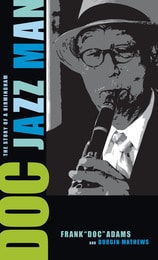
Doc
The Story of a Birmingham Jazz ManFrank "Doc" Adams and Burgin Mathews
University of Alabama Press, 2012
Autobiography of jazz elder statesman Frank “Doc” Adams, highlighting his role in Birmingham, Alabama’s, historic jazz scene and tracing his personal adventure that parallels, in many ways, the story and spirit of jazz itself.
Doc tells the story of an accomplished jazz master, from his musical apprenticeship under John T. “Fess” Whatley and his time touring with Sun Ra and Duke Ellington to his own inspiring work as an educator and bandleader.
Central to this narrative is the often-overlooked story of Birmingham’s unique jazz tradition and community. From the very beginnings of jazz, Birmingham was home to an active network of jazz practitioners and a remarkable system of jazz apprenticeship rooted in the city’s segregated schools. Birmingham musicians spread across the country to populate the sidelines of the nation’s bestknown bands. Local musicians, like Erskine Hawkins and members of his celebrated orchestra, returned home heroes. Frank “Doc” Adams explores, through first-hand experience, the history of this community, introducing readers to a large and colorful cast of characters—including “Fess” Whatley, the legendary “maker of musicians” who trained legions of Birmingham players and made a significant mark on the larger history of jazz. Adams’s interactions with the young Sun Ra, meanwhile, reveal life-changing lessons from one of American music’s most innovative personalities.
Along the way, Adams reflects on his notable family, including his father, Oscar, editor of the Birmingham Reporter and an outspoken civic leader in the African American community, and Adams’s brother, Oscar Jr., who would become Alabama’s first black supreme court justice. Adams’s story offers a valuable window into the world of Birmingham’s black middle class in the days before the civil rights movement and integration. Throughout, Adams demonstrates the ways in which jazz professionalism became a source of pride within this community, and he offers his thoughts on the continued relevance of jazz education in the twenty-first century.
Don't Ask
Philip Levine
University of Michigan Press, 1981

Dreams and Ideas
The Artistry of Costume Designer Winn MortonMyra Walker
University of North Texas Press, 2026
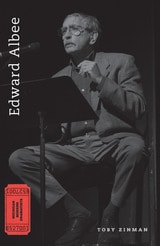
Edward Albee
Toby Zinman
University of Michigan Press, 2008
Edward Albee was a giant in American theater, in the same pantheon with Arthur Miller, Eugene O’Neill, and Tennessee Williams. His prolific career included three Pulitzer Prizes and the 2005 Lifetime Achievement Tony Award.
Albee continued producing major works for the theater into his eighties, including a prequel to The Zoo Story, which shocked the country when it first appeared in 1958—and his plays have seen major revivals on and off Broadway in recent years. Yet even with this resurgence of popularity, no up-to-date treatment of his plays is currently in print.
With engaging discussions of his most famous plays, such as Who’s Afraid of Virginia Woolf and Three Tall Women, as well as his lesser known works, this essential guide reveals the heart of Albee’s drama, highlighting the themes of sex, death, loneliness, and time that have occupied the playwright during his more than fifty years in the theater.
Toby Zinman is the theater critic for the Philadelphia Inquirer. She has written for numerous publications, including Variety,American Theater, and Theatre Journal. She is Professor of English at the University of the Arts, Philadelphia.
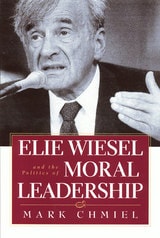
Elie Wiesel and the Politics of Moral Leadership
Mark Chmiel
Temple University Press, 2001
Mark Chmiel's thoroughly researched and penetrating study is the first book to examine both Wiesel's practice of solidarity with suffering people and his silence before Israeli and American power. Drawing on Edward Herman and Noam Chomsky's studies on "worthy and unworthy victims," the author analyzes Wiesel's initiatives of Jewish and universal solidarity with groups ranging from Holocaust survivors and Russian Jews to Vietnamese boat people and Kosovar refugees.
Chmiel also critically engages Wiesel's long-standing defense of the State of Israel as well as his confrontations and collaborations with the U.S. government, including the birth of the U.S. Holocaust Memorial Museum, the 1985 Bitburg affair with President Reagan, and U.S. intervention in the Balkans.
Throughout, the author probes the nuances and ambiguities of Wiesel's human rights activism and shows the various uses to which his Holocaust discourse has been put, both in the Middle East conflict and in issues involving U.S. foreign policy.
Elie Wiesel and the Politics of Moral Leadership provides a provocative view of one of the most acclaimed moralists in recent American history and raises important questions about what it means to be a responsible intellectual in the United States.

Fredrik Barth
An Intellectual BiographyThomas Hylland Eriksen
Pluto Press, 2015
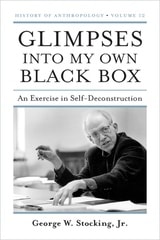
Glimpses into My Own Black Box
An Exercise in Self-DeconstructionGeorge W. Stocking
University of Wisconsin Press, 2010
George W. Stocking, Jr., has spent a professional lifetime exploring the history of anthropology, and his findings have shaped anthropologists’ understanding of their field for two generations. Through his meticulous research, Stocking has shown how such forces as politics, race, institutional affiliations, and personal relationships have influenced the discipline from its beginnings. In this autobiography, he turns his attention to a subject closer to home but no less challenging. Looking into his own “black box,” he dissects his upbringing, his politics, even his motivations in writing about himself. The result is a book systematically, at times brutally, self-questioning.
An interesting question, Stocking says, is one that arouses just the right amount of anxiety. But that very anxiety may be the ultimate source of Stocking’s remarkable intellectual energy and output. In the first two sections of the book, he traces the intersecting vectors of his professional and personal lives. The book concludes with a coda, “Octogenarian Afterthoughts,” that offers glimpses of his life after retirement, when advancing age, cancer, and depression changed the tenor of his reflections about both his life and his work.
This book is the twelfth and final volume of the influential History of Anthropology series.
Goatfoot Milktongue Twinbird
Interviews, Essays, and Notes on Poetry, 1970-76Donald Hall
University of Michigan Press, 1978
Interventions into Modernist Cultures
Poetry from Beyond the Empty ScreenAmie Elizabeth Parry
Duke University Press, 2007
Reading various works by US expatriates Ezra Pound and Gertrude Stein, Parry compares the cultural politics of U.S. canonical modernism with alternative representations of temporality, hybridity, erasure, and sexuality in the work of the Taiwanese writers Yü Kwang-chung and Hsia Yü and the Asian American immigrant author Theresa Hak Kyung Cha. Juxtaposing poems by Pound and Yü Kwang-chung, Parry shows how Yü’s fragmented, ambivalent modernist form reveals the effects of neocolonialism while Pound denies and obscures U.S. imperialism in Asia, asserting a form of nondevelopmental universalism through both form and theme. Stein appropriates discourses of American modernity and identity to represent nonnormative desire and sexuality, and Parry contrasts this tendency with representations of sexuality in the contemporary experimental poetry of Hsia Yü. Finally, Parry highlights the different uses of modernist forms by Pound in his Cantos—which incorporate a multiplicity of decontextualized and ahistorical voices—and by Cha in her 1982 novel Dictee, a historicized, multilingual work. Parry’s sophisticated readings provide a useful critical framework for apprehending how “minor modernisms” illuminate the histories erased by certain canonical modernist texts.
Intrepid Explorer
The Autobiography of the World's Best Mine FinderJ. David Lowell
University of Arizona Press, 2014
An Arizona native with family roots in territorial times, Lowell grew from modest beginnings on a ranch near Nogales to become a major world figure in the fields of minerals, mining, and economic geology. He has personally discovered more copper than anyone in history and has developed multibillion-dollar gold and copper mines that have changed the economies of nations. And although he has consulted for corporations in the field of mining, he has largely operated as an independent agent and explorer, the architect of his own path and success.
His life’s story unfolds in four stages: his early education in his field, on-the-job learning at sites in the United States and Mexico, development of exploration strategies, and finally, the launch of his own enterprises and companies. Recurring themes in Lowell’s life include the strict personal, ethical, and tactical policies he requires of his colleagues; his devotion to his family; and his distaste for being away from the field in a corporate office, even to this day. The magnitude of Lowell’s overall success is evident in his list of mine discoveries, as well as in his scientific achievements and the enormous respect his friends and colleagues have had for him throughout his lengthy career, which he continues to zealously pursue.
Lessons in Laughter
The Autobiography of a Deaf ActorBernard Bragg
Gallaudet University Press, 1989
To succeed as an actor is a rare feat. To succeed as a deaf actor is nothing short of amazing. Lessons in Laughter is the story of Bernard Bragg and his astonishing lifelong achievements in the performing arts.
Born deaf of deaf parents, Bernard Bragg has won international renown as an actor, director, playwright, and lecturer. Lessons in Laughter recounts in stories that are humorous, painful, touching, and outrageous, the growth of his dream of using the beauty of sign language to act. He starred in his own television show “The Quiet Man,” helped found The National Theatre of the Deaf, and traveled worldwide to teach his acting methods.
On the Poetry of Philip Levine
Stranger to NothingChristopher Buckley, Editor
University of Michigan Press, 1990
Readers and critics alike have applauded Philip Levine's poems for their eloquent and elegiac narrative and their vivas for the dignity of the human spirit. In 1987 Levine received the esteemed Ruth Lilly Prize, given by the Modern Poetry Association and the American Council for the Arts in recognition of outstanding poetic achievement. On the Poetry of Philip Levine, the first critical collection to focus on this original and highly acclaimed poet, selects essays and reviews that span three decades. Included are pieces by Richard Howard, Stephen Yenser, Ralph J. Mills, Jr., and Dave Smith.
UNDER DISCUSSION Donald Hall, General Editor

Richard Selzer and the Rhetoric of Surgery
Charles M. Anderson
Southern Illinois University Press, 1989
Anderson provides the context from which Selzer’s writing grows and a concept of language adequate to his purposes and accomplishments. He takes a careful look at Selzer’s writing to demonstrate that these abstract considerations do tell us why a surgeon would write. The works Anderson examines are "Jonah and the Whale" (an important early short story) and the first three essays in Mortal Lessons. These examples show the reader exactly how the symbols of literature interact directly with the world and the everyday communications of both writer and reader. According to Anderson, Mortal Lessons is also Selzer’s most artistic statement of his own sense of why and how he became a writer.
Selzer’s books include Rituals of Surgery, Mortal Lessons, Confessions of a Knife, Letters to a Young Doctor, and Taking the World in for Repairs.
Robert Irwin Getty Garden
Lawrence Weschler
J. Paul Getty Trust, The, 2020
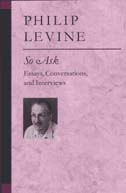
So Ask
Essays, Conversations, and InterviewsPhilip Levine
University of Michigan Press, 2002
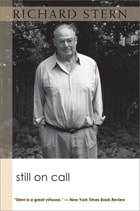
Still on Call
Richard Stern
University of Michigan Press, 2010
"Richard Stern is a literary treasure."
---Scott Turow
"Stern's new miscellany reveals a literary mind of the first order, thinking in elegant prose about dozens of interesting subjects."
---Philip Roth
"Stern is a great virtuoso. . . . [I]n an ailing literary culture, we should be grateful for a work like this and a career, too, spanning the American half-century."
---New York Times Book Review
"Stern's skill gives vitality to everything he treats."
---Edmund White, Los Angeles Times
"Like a gifted dancer in a small space, Stern has tremendous grace and ease on the page, executing dynamic turns and dips with a fine economy of motion and without sacrificing nuance."
---Booklist
Still on Call is the sixth and final collection of critically acclaimed novelist and educator Richard Stern. "Orderly miscellany" is the author's term for this aggregation of reflections, essays, reviews, reportage, commentary, and observations on writing and fellow writers, life, and contemporary culture.
The collection's three sections, Coasting, Posting, and Hosting, contain pieces that range from reflections on becoming a writer in the 1940s to assessments of such major writers and close colleagues as Saul Bellow, and Donald Justice to topical offerings from Stern's popular blog for the New Republic.
This wide-ranging collection is intended as the culmination of sixty years of the writing life but, first and foremost, as provocative entertainment. Stern is a prolific writer, and this selection of some of his highest-quality writing both educates and enthralls.
Richard Stern is the Helen A. Regenstein Emeritus Professor of English and of the Humanities at the University of Chicago and the author of nineteen works of fiction and nonfiction. His books include the novels A Father's Words and Golk, and, most recently, the collection What Is What Was. Stern has been the subject of two books: The Writings of Richard Stern: The Education of an Intellectual Everyman by David Garret Izzo and Richard Stern by James Schiffer.
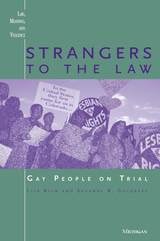
Strangers to the Law
Gay People on TrialLisa Keen and Suzanne B. Goldberg
University of Michigan Press, 2000
Starting with the background of the initiative, the authors tell us about the debates over strategy, the court proceedings, and the impact of each stage of the litigation on the parties involved. The authors explore the meaning of legal protection for gay people and the arguments for and against the Colorado initiative.
This book is essential reading for anyone interested in the development of civil rights protections for gay people and the evolution of what it means to be gay in contemporary American society and politics. In addition, it is a rich story well told, and will be of interest to the general reader and scholars working on issues of civil rights, majority-minority relations, and the meaning of equal rights in a democratic society.
Suzanne Goldberg is an attorney with the Lambda Legal Defense and Education Fund. Lisa Keen is Senior Editor at the Washington Blade newspaper.

The Homeless Of Ironweed
Blossoms On The CragBenedict Giamo
University of Iowa Press, 1997
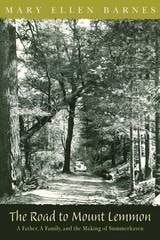
The Road to Mount Lemmon
A Father, A Family, and the Making of SummerhavenMary Ellen Barnes
University of Arizona Press, 2009
The Santa Catalina Mountains first captivated Tony Zimmerman on a 1937 hunting trip. Regard for the alpine beauty must have been in his genes—he was the son of Swiss German immigrants—and by 1940 the Tucson schoolteacher had begun taking his family to Mount Lemmon to spend the summer. Back then, the road up the mountain was a rough two-track dirt road from Oracle, and Summerhaven was nothing but a sleepy cluster of summer cabins. But Tony Zimmerman was to help change all of that.
The Road to Mount Lemmon is a beguiling memoir of the Catalina Mountains told by the daughter of one of the pioneers in the life and development of Mount Lemmon’s communities. Mary Ellen Barnes tells how her father Tony resigned from teaching in 1943 to devote his career to the development of this mountain oasis. He not only sold real estate for long time landowner Randolph Jenks, he even bought the village’s tiny two-room store, installing a sawmill to build a larger store, and built the Mount Lemmon Inn. And as she spins Tony’s personal saga, she also gives readers a glimpse of the Catalinas before Tucson became a boom town, recalling idyllic adventures in wild country and the cowboys, rangers, ranchers, and loggers who worked there.
Barnes tells Tony’s story as if sharing it with family, evoking her father’s personality on every page. The Road to Mount Lemmon is an intimate view of a mountain community over the course of nearly sixty years—a view that few people have shared but one all can appreciate.
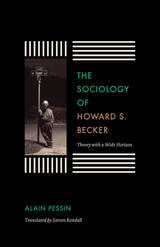
The Sociology of Howard S. Becker
Theory with a Wide HorizonAlain Pessin
University of Chicago Press, 2017
French fame has brought French analysis, including The Sociology of Howard S. Becker, written by Alain Pessin and translated into English by Steven Rendall. The book is an exploration of Becker’s major works as expressions of the freedom of possibility within a world of collaborators. Pessin reads Becker’s work as descriptions and ideas that show how society can embody the possibilities of change, of doing things differently, of taking advantage of opportunities for free action. The book is itself a kind of collaboration—Pessin and Becker in dialogue. The Sociology of Howard S. Becker is a meeting of two cultures via two great sociological minds in conversation.
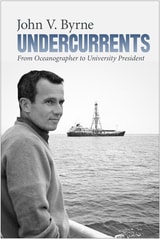
Undercurrents
From Oceanographer to University PresidentJohn V. Byrne
Oregon State University Press, 2018
As president of OSU, John Byrne used the lessons learned in industry and government to guide the university through a period of turbulence caused by severe state budget restrictions. During this period of economic contraction, OSU continued under Byrne’s leadership to grow in programs, facilities, and external funding. Byrne was one of the first to introduce Total Quality Management techniques to higher education. He emphasized the importance of international education and was a supporter of significant academic reform in higher education.
While focusing on his professional career, Byrne’s memoir also shares personal stories of a childhood and youth shaped by the Great Depression and World War II. Undercurrents demonstrates on every page the curiosity, intellect, and humanity that made John Byrne successful as a scientist, educator, and administrator. Anyone pursuing a career in science or academia, and anyone interested in the history and legacy of land grant universities will welcome this richly detailed and warmly written account of Byrne’s career.
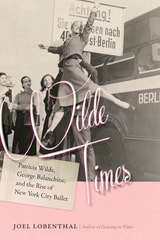
Wilde Times
Patricia Wilde, George Balanchine, and the Rise of New York City BalletJoel Lobenthal
University Press of New England, 2016

Witness and Existence
Essays in Honor of Schubert M. OgdenEdited by Philip E. Devenish and George L. Goodwin
University of Chicago Press, 1989
Witness and Existence pays tribute to Ogden by bringing together essays by eminent scholars in New Testament studies and philosophical theology, two fields which directly reflect his methodological concerns and his substantive contributions. The book honors Ogden precisely by engaging the fundamental issues which Ogden himself has taken so seriously.
The first group of essays presents careful analyses of issues basic to the early Christian witness; the second group examines the credibility of the Christian claim about God in terms of human experience. The editors' introductory essay provides the first comprehensive analysis yet to appear of Ogden's theology. A complete bibliography of his published writings is included as an appendix.