Results by title
27 books match the query '1929-'
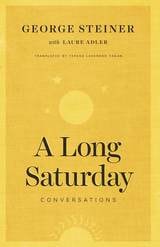
A Long Saturday
ConversationsGeorge Steiner with Laure Adler
University of Chicago Press, 2017
In a stimulating series of conversations, Steiner and journalist Laure Adler discuss a range of topics, including Steiner’s boyhood in Vienna and Paris, his education at the University of Chicago and Harvard, and his early years in academia. Books are a touchstone throughout, but Steiner and Adler’s conversations also range over music, chess, psychoanalysis, the place of Israel in Jewish life, and beyond. Blending thoughts on subjects of broad interest in the humanities—the issue of honoring Richard Wagner and Martin Heidegger in spite of their politics, or Virginia Woolf’s awareness of the novel as a multivocal form, for example—with personal reflections on life and family, Steiner demonstrates why he is considered one of today’s greatest minds. Revealing and exhilarating, A Long Saturday invites readers to pull up a chair and listen in on a conversation with a master.
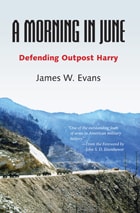
A Morning in June
Defending Outpost HarryJames W. Evans, with a foreword by John S. D. Eisenhower
University of Alabama Press, 2010
Exploring the strategic and human dimensions of the defense of Outpost Harry.
By June 1953 the Korean War, marked at the outset by extremely fluid advances and retreats up and down the peninsula, had settled into position warfare very near the original pre-war demarcation line between North and South Korea. At this point both sides were fighting to win a peace, to achieve incremental advantages that could be translated into gains at the peace negotiations in Panmunjom. The battle at Outpost Harry devolved into hand-to-hand combat during a period of constant, intense fighting that lasted two days. The author, although seriously wounded that night, refused evacuation and remained on the hill to successfully lead his company in defense of the outpost. It wasn’t romantic; it wasn’t chivalrous; and many died or were badly wounded. Some of the survivors never fully overcame the mental and physical damage they suffered during the nightmare.
With this book, one of those scarred by that experience recounts the events of the battle and his lifelong efforts to deal with the residual horrors. The Korean Conflict may be called "the forgotten war" by some, but not by those who were on the front lines.
A Portrait in Four Movements
The Chicago Symphony under Barenboim, Boulez, Haitink, and MutiAndrew Patner
University of Chicago Press, 2019
The Chicago Symphony Orchestra has been led by a storied group of conductors. And from 1994 to 2015, through the best work of Daniel Barenboim, Pierre Boulez, Bernard Haitink, and Riccardo Muti, Andrew Patner was right there. As a classical music critic for the Chicago Sun-Times and WFMT radio, Patner was able to trace the arc of the CSO’s changing repertories, all while cultivating a deep rapport with its four principal conductors.
This book assembles Patner’s reviews of the concerts given by the CSO during this time, as well as transcripts of his remarkable radio interviews with these colossal figures. These pages hold tidbits for the curious, such as Patner’s “driving survey” that playfully ranks the Maestri he knew on a scale of “total comfort” to “fright level five,” and the observation that Muti appears to be a southpaw on the baseball field. Moving easily between registers, they also open revealing windows onto the sometimes difficult pasts that brought these conductors to music in the first place, including Boulez’s and Haitink’s heartbreaking experiences of Nazi occupation in their native countries as children. Throughout, these reviews and interviews are threaded together with insights about the power of music and the techniques behind it—from the conductors’ varied approaches to research, preparing scores, and interacting with other musicians, to how the sound and personality of the orchestra evolved over time, to the ways that we can all learn to listen better and hear more in the music we love. Featuring a foreword by fellow critic Alex Ross on the ethos and humor that informed Patner’s writing, as well as an introduction and extensive historical commentary by musicologist Douglas W. Shadle, this book offers a rich portrait of the musical life of Chicago through the eyes and ears of one of its most beloved critics.
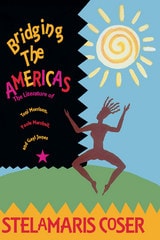
Bridging The Americas
The Literature of Paule Marshall, Toni Morrison, and Gayl JonesStelamaris Coser
Temple University Press, 1994
A literary study of three important black women writers, this book examines the "inter-American" characteristics in the work of Marshall, Morrison, and Jones, including detailed discussions of Morrison's Song of Solomon and Tar Baby, Jones's Corregidora and Song of Anninho, and Marshall's The Chose Place, The Timeless People.
Coser defines the inter-American characteristics in these authors' novels as a connection based on a common African heritage and a shared legacy of colonialism and racism. These three authors redefine the boundaries between the Americas, bridging the "extended Caribbean" that stretches from the U.S. Atlantic coast to Brazil. Their work reinterprets ethnic and sexual identity. Issues of race, class, and nationality overlap. History and identity are reinvented.
To explore the collective forms of resistance and cultural processes in Brazil, the Caribbean, and the United States, Coser also makes provocative connections between the visibility of black women writers and the popularity of male Latin American novelists like Carlos Fuentes and Gabriel Garcia Marquéz.

Cidermaster Of Rio Oscuro
Harvey Frauenglas
University of Utah Press, 2000
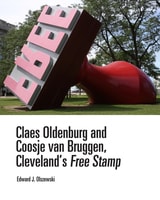
Claes Oldenburg and Coosje van Bruggen, Cleveland’s Free Stamp
Cleveland’s Free StampEdward J. Olszewski
Ohio University Press, 2017
In 1985, the Sohio oil company commissioned Claes Oldenburg and Coosje van Bruggen to design and construct a large outdoor sculpture for its new corporate headquarters in Cleveland, Ohio. The result was Free Stamp, a bold and distinctive installation that captured both a Pop Art sensibility and a connection to the city’s industrial past. Sohio executives approved the design, and work was already underway, when British Petroleum acquired the company. The new owners quickly decided that the sculpture was “inappropriate” for their building and attempted to rid themselves of Free Stamp by donating it to the city of Cleveland—a gift that the city initially had no desire to accept. After much debate and public protest, the sculpture found a home in Willard Park, where it stands today.
This is the first study of any sculpture by Oldenburg and van Bruggen to examine the genesis of their art from conception to installation. Edward J. Olszewski has put together a fascinating narrative based on interviews with the artists, archival material from city records, and in-house corporate memoranda, as well as letters to the editor and political cartoons. He traces the development of the sculpture from the artists’ first sketches and models to the installation of the completed work in its urban environment.
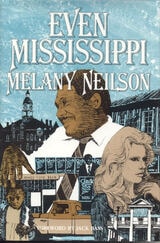
Even Mississippi
Melany Neilson
University of Alabama Press, 1989
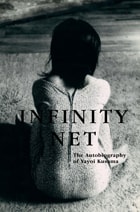
Infinity Net
The Autobiography of Yayoi KusamaYayoi Kusama
University of Chicago Press, 2011
In 1957, encouraged by Georgia O’Keeffe, artist Yayoi Kusama left Japan for New York City to become a star. By the time she returned to her home country in 1973, she had established herself as a leader of New York’s avant-garde movement, known for creating happenings and public orgies to protest the Vietnam War and for the polka dots that had become a trademark of her work. Her sculptures, videos, paintings, and installations are to this day included in major international exhibitions.
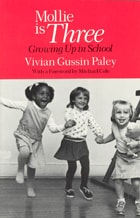
Mollie Is Three
Growing Up in SchoolVivian Gussin Paley
University of Chicago Press, 1986
Mollie Is Three describes a year in the life of a little girl and her preschool classmates in a nursery school classroom run by Vivian Gussin Paley, whose groundbreaking ideas about the best way to teach young children continue to be influential today. We first encounter Mollie on the first day of school, just before her third birthday, and we follow her and her classmates for the next year. Alongside her, we go from confusion and uncertainty in new surroundings to growing understanding and confidence, as patterns emerge and Mollie begins to grasp their significance--and her teacher begins to understand how to track her growth and development.
Rather than offer an account of an idealized, all but imaginary child, Paley presents us with one actual kid, in all their complexity and confusion. The result is a landmark contribution to our understanding of child development and the role early education can play in fostering it.
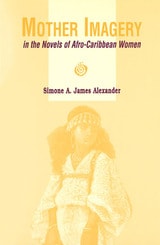
Mother Imagery in the Novels of Afro-Caribbean Women
Simone A. James Alexander
University of Missouri Press, 2000
Focusing on specific texts by Jamaica Kincaid, Maryse Condé, and Paule Marshall, this fascinating study explores the intricate trichotomous relationship between the mother (biological or surrogate), the motherlands Africa and the Caribbean, and the mothercountry represented by England, France, and/or North America. The mother-daughter relationships in the works discussed address the complex, conflicting notions of motherhood that exist within this trichotomy. Although mothering is usually socialized as a welcoming, nurturing notion, Alexander argues that alongside this nurturing notion there exists much conflict. Specifically, she argues that the mother-daughter relationship, plagued with ambivalence, is often further conflicted by colonialism or colonial intervention from the "other," the colonial mothercountry.
Mother Imagery in the Novels of Afro-Caribbean Women offers an overview of Caribbean women's writings from the 1990s, focusing on the personal relationships these three authors have had with their mothers and/or motherlands to highlight links, despite social, cultural, geographical, and political differences, among Afro-Caribbean women and their writings. Alexander traces acts of resistance, which facilitate the (re)writing/righting of the literary canon and the conception of a "newly created genre" and a "womanist" tradition through fictional narratives with autobiographical components.
Exploring the complex and ambiguous mother-daughter relationship, she examines the connection between the mother and the mother's land. In addition, Alexander addresses the ways in which the absence of a mother can send an individual on a desperate quest for selfhood and a home space. This quest forces and forges the creation of an imagined homeland and the re-validation of "old ways and cultures" preserved by the mother. Creating such an imagined homeland enables the individual to acquire "wholeness," which permits a spiritual return to the motherland, Africa via the Caribbean. This spiritual return or homecoming, through the living and practicing of the old culture, makes possible the acceptance and celebration of the mother's land.
Alexander concludes that the mothers created by these authors are the source of diasporic connections and continuities. Writing/righting black women's histories as Kincaid, Condé, and Marshall have done provides a clearing, a space, a mother's land, for black women. Mother Imagery in the Novels of Afro-Caribbean Women will be of great interest to all teachers and students of women's studies, African American studies, Caribbean literature, and diasporic literatures.
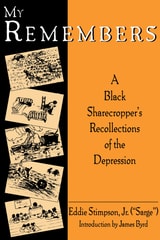
My Remembers
A Black Sharecropper's Recollections of the DepressionEddie Stimpson Jr.
University of North Texas Press, 1996
Our Deep Gossip
Conversations with Gay Writers on Poetry and DesireChristopher Hennessy; Foreword by Christopher Bram
University of Wisconsin Press, 2013
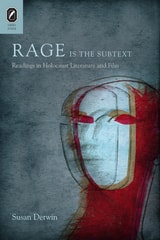
Rage Is the Subtext
Readings in Holocaust Literature and FilmSusan Derwin
The Ohio State University Press, 2012
Rage Is the Subtext charts the internal shifts of Holocaust survivors who tell their stories of suffering, loss, and endurance. Susan Derwin locates the healing effect of literary testimony in its capacity to represent the reactions of survivors to traumatic experience, while concealing other more unsettling responses from view. Beneath the explicit concerns of works by Primo Levi, Saul Friedländer, Binjamin Wilkomirski, Imre Kertész and Liliana Cavani, Derwin uncovers unspoken reserves of rage, which then become legible as formal properties of the text.
Shaping Science with Rhetoric
The Cases of Dobzhansky, Schrodinger, and WilsonLeah Ceccarelli
University of Chicago Press, 2001
In Shaping Science with Rhetoric, Leah Ceccarelli addresses such questions through close readings of three scientific monographs in their historical contexts—Theodosius Dobzhansky's Genetics and the Origin of Species (1937), which inspired the "modern synthesis" of evolutionary biology; Erwin Schrödinger's What Is Life? (1944), which catalyzed the field of molecular biology; and Edward O. Wilson's Consilience (1998), a so far not entirely successful attempt to unite the social and biological sciences. She examines the rhetorical strategies used in each book and evaluates which worked best, based on the reviews and scientific papers that followed in their wake.
Ceccarelli's work will be important for anyone interested in how interdisciplinary fields are formed, from historians and rhetoricians of science to scientists themselves.
Sojourner in the Promised Land
Forty Years among the MormonsJan Shipps
University of Illinois Press, 2001
The Classrooms All Young Children Need
Lessons in Teaching from Vivian PaleyPatricia M. Cooper
University of Chicago Press, 2009
Teacher and author Vivian Paley is highly regarded by parents, educators, and other professionals for her original insights into such seemingly everyday issues as play, story, gender, and how young children think. In The Classrooms All Young Children Need, Patricia M. Cooper takes a synoptic view of Paley’s many books and articles, charting the evolution of Paley’s thinking while revealing the seminal characteristics of her teaching philosophy. This careful analysis leads Cooper to identify a pedagogical model organized around two complementary principles: a curriculum that promotes play and imagination, and the idea of classrooms as fair places where young children of every color, ability, and disposition are welcome.
With timely attention paid to debates about the reduction in time for play in the early childhood classroom, the role of race in education, and No Child Left Behind, The Classrooms All Young Children Need will be embraced by anyone tasked with teaching our youngest pupils.
The Creative Crone
Aging and the Poetry of May Sarton and Adrienne RichSylvia Henneberg
University of Missouri Press, 2010
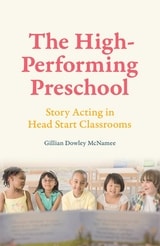
The High-Performing Preschool
Story Acting in Head Start ClassroomsGillian Dowley McNamee
University of Chicago Press, 2015
McNamee outlines how story acting cultivates children’s oral and written language skills. She shows how it creates a crucial opportunity for teachers to guide children inside the interior logic and premises of an idea, and how it fosters the creation of a literary community. Starting with Vygotsky and Paley, McNamee paints a detailed portrait of high-quality preschool teaching, showing how educators can deliver on the promise of Head Start and provide a setting for all young children to become articulate, thoughtful, and literate learners.
The Holocaust as Culture
Imre Kertész
Seagull Books, 2011
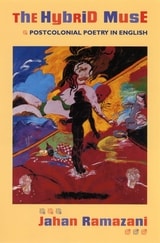
The Hybrid Muse
Postcolonial Poetry in EnglishJahan Ramazani
University of Chicago Press, 2001
In The Hybrid Muse, Jahan Ramazani argues that postcolonial poets have also dramatically expanded the atlas of literature in English, infusing modern and contemporary poetry with indigenous metaphors and creoles. A rich and vibrant poetry, he contends, has issued from the hybridization of the English muse with the long resident muses of Africa, India, and the Caribbean. Starting with the complex case of Ireland, Ramazani closely analyzes the work of leading postcolonial poets and explores key questions about the relationship between poetry and postcolonialism. As inheritors of both imperial and native cultures, poets such as W. B. Yeats, Derek Walcott, Louise Bennett, A. K. Ramanujan, and Okot p'Bitek invent compelling new forms to articulate the tensions and ambiguities of their cultural in-betweeness. They forge hybrid figures, vocabularies, and genres that embody the postcolonial condition.
Engaging an array of critical topics, from the aesthetics of irony and metaphor to the politics of nationalism and anthropology, Ramazani reconceptualizes issues central to our understanding of both postcolonial literatures and twentieth-century poetry. The first book of its kind, The Hybrid Muse will help internationalize the study of poetry, and in turn, strengthen the place of poetry in postcolonial studies.
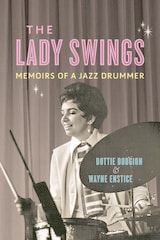
The Lady Swings
Memoirs of a Jazz DrummerDottie Dodgion and Wayne Enstice
University of Illinois Press, 2021
Vivid and always entertaining, The Lady Swings tells Dottie Dodgion's story with the same verve and straight-ahead honesty that powered her playing.
A Variety Best Music Book of 2021
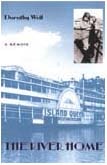
The River Home
A MemoirDorothy Weil
Ohio University Press, 2001
The death of her father begins Dorothy Weil’s search for what causes the family’s “spinning of in all directions like the pieces of Chaos.” She embarks on a river odyssey, traveling the Ohio, Missouri, and Mississippi Rivers by steamboat, towboat, and even an old-fashioned flatboat. The river brings her family back, as she records the stories of her fellow “river rats”: steamboat veterans, deckhands, captains, and cooks.
The River Home takes the reader into a world few ever glimpse, that of America’s riverboats. In the fast-paced narrative, with incisive characterizations and dialogue, the author introduces us to this vivid milieu and a gallery of fascinating people. We meet her father, a “wild river man from the Kentucky hills,” her mother, “a proper girl from a Cincinnati Dutch clan,” and her brother, a fourth-generation river man, as well as the artists and academics she meets in her adult life.
Weil’s voice is clear and wry, as well as poetic, bringing out both the sadness and joys of a family torn by mismatched backgrounds. Her themes speak to all: the confusion brought by family conflict, the strength of family love no matter how troubled the relationships, the mortality we all face, the importance of where we come from and where we go.

The Search for Ancestors
A Swedish-American Family SagaH. Arnold Barton
Southern Illinois University Press, 1979
A metaphor for the Swedish migration to America in the mid-nineteenth century, the Sven Svensson family, traced here by historian H. Arnold Barton, a descendant, provides a model for genealogical research with which all persons interested in ancestors can identify and from which anyone can learn.
The field of migration history has taken on new importance as a result of accelerating interest in ethnicity and genealogical research. Though a family history, and in a sense an inner voyage of self-discovery, the search for ancestors told here reveals the broader contours of Swedish and American history in the nineteenth century.
The Search for Ancestors is a microanalysis of those social, economic, and cultural developments that led to the gradual breakup of an ancient way of life in the Swedish countryside and the migration of growing numbers of Swedish peasants across the Atlantic to America.
Barton’s personal odyssey took him to Gowrie, Iowa, the heart of Swedish America, and to the province of Småland in southern Sweden. Research in the Swedish Statistical Central Bureau in Stockholm, contacts with emigration historians in Stockholm, and search in Swedish provincial and national archives, finally gave him the impressive mass of information and statistical data with which to chart his family’s history—over four centuries, back to the 1530s.
A kind of “history with the works showing” or do-it-yourself genealogical kit, the book will be fascinating as well as informative for general readers as well as students of history.
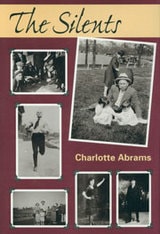
The Silents
Charlotte Abrams
Gallaudet University Press, 1996
The Silents departs from other narratives about deaf parents and hearing children when the family discovers that Abrams’ mother is becoming blind. With resiliency, the family turned the secret, terrifying sorrow their mother felt at losing her only contact with the world into a quest for the best way to bring it back. Should she learn Braille? Should she use a cane? All of the old communication and day-to-day living routines had to be relearned. And through it all, the family and their neighbors, hearing and deaf, worked together to ensure that Abrams’ parents remained the close, vital members of the community that they had always been.
The Unspoken as Heritage
The Armenian Genocide and Its Unaccounted LivesHarry Harootunian
Duke University Press, 2019
Understanding Scientific Prose
Edited by Jack Selzer
University of Wisconsin Press, 1993
Examining science as a rhetorical enterprise, this book seizes upon one scientific essay—"The Spandrels of San Marco and the Panglossian Paradigm: A Critique of the Adaptationist Programme"—and probes it from many angles. Written by prominent evolutionary theorists Stephen Jay Gould and Richard C. Lewontin and first published in the Proceedings of the Royal Society of London in 1979, the "Spandrels" article is both serious science and vivid prose. Applying methods inspired by Louis Althusser, Michel Foucault, Jacques Derrida, Ferdinand de Saussure, and others, the contributors employ a range of interpretive strategies. Stephen Jay Gould adds his own comments, and the full text of the essay "Spandrels" is reproduced as an appendix. Applying methods inspired by Louis Althusser, Michel Foucault, Jacques Derrida, Ferdinand de Saussure, and others, the contributors employ a range of interpretive strategies. Stephen Jay Gould adds his own comments, and the full text of the essay "Spandrels" is reproduced as an appendix.
Where Does It Happen
John Cassavetes And Cinema At The Breaking PointGeorge Kouvaros
University of Minnesota Press, 2004