Results by title
3 books match the query '1931-1939'
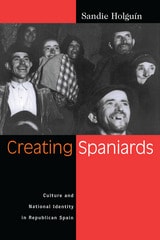
Creating Spaniards
Culture and National Identity in Republican SpainSandie Holguin
University of Wisconsin Press, 2002
Creating Spaniards is a cultural and intellectual history that explains the intersection of politics and culture, and the formation of a national identity, during Spain’s Second Republic and Civil War. It counters recent scholarship claiming that leaders of the Second Republic had no programs for "inventing traditions" to encourage a Spanish national identity.
Focusing on the Second Republic, 1931–1936, Sandie Holguín illustrates how various intellectuals and politicians of the Republican–Socialist coalition used theater, literature, and film to aid the construction of a unified Spanish culture and history. She uses memoirs, journals, newspapers, parliamentary debates, and archival sources in her examination of the impact that cultural reforms had on the transformation of one of Europe’s oldest states.
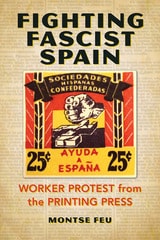
Fighting Fascist Spain
Worker Protest from the Printing PressMontse Feu
University of Illinois Press, 2020
Montse Feu merges España Libre's story with the drama of the Spanish immigrant community's fight against fascism. The periodical emerged as part of a transnational effort to link migrants and new exiles living in the United States to antifascist networks abroad. In addition to showing how workers' culture and politics shaped their antifascism, Feu brings to light creative works that ranged from literature to satire to cartoons to theater. As España Libre opened up radical practices, it encouraged allies to reject violence in favor of social revolution's potential for joy and inclusion.
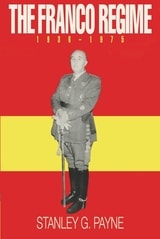
The Franco Regime, 1936–1975
Stanley G. Payne
University of Wisconsin Press, 2011
The history of modern Spain is dominated by the figure of Francisco Franco, who presided over one of the longest authoritarian regimes of the twentieth century. Between 1936 and the end of the regime in 1975, Franco’s Spain passed through several distinct phases of political, institutional, and economic development, moving from the original semi-fascist regime of 1936–45 to become the Catholic corporatist “organic democracy” under the monarchy from 1945 to 1957. Distinguished historian Stanley G. Payne offers deep insight into the career of this complex and formidable figure and the enormous changes that shaped Spanish history during his regime.