Results by title
29 books match the query '1936-'
Another Way Home
The Tangled Roots of Race in One Chicago FamilyRonne Hartfield
University of Chicago Press, 2004
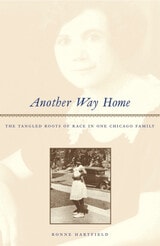
Hartfield begins with the early life of her mother, Day Shepherd. Born to a wealthy British plantation owner and the mixed-race daughter of a former slave, Day negotiates the complicated circumstances of plantation life in the border country of Louisiana and Mississippi and, as she enters womanhood, the quadroon and octoroon societies of New Orleans. Equally a tale of the Great Migration, Another Way Home traces Day's journey to Bronzeville, the epicenter of black Chicago during the first half of the twentieth century. Here, through the eyes of Day and, ultimately, her daughter, we witness the bustling city streets and vibrant middle-class culture of this iconic black neighborhood. We also relive crucial moments in African American history as they are experienced by the author's family and others in Chicago's South Side black community, from the race riots of 1919 and the Great Depression to the murder of Emmett Till and the dawn of the civil rights movement.
Throughout her book, Hartfield portrays mixed-race Americans navigating the challenges of their lives with resilience and grace, making Another Way Home an intimate and compelling encounter with one family's response to our racially charged culture.
Before Amoris Laetitia
The Sources of the ControversyJaroslaw Kupczak
Catholic University of America Press, 2021
Berlusconi's Italy
Mapping Contemporary Italian PoliticsMichael E. Shin and John A. Agnew
Temple University Press, 2008
Deep Mexico, Silent Mexico
An Anthropology of NationalismClaudio Lomnitz
University of Minnesota Press, 2001
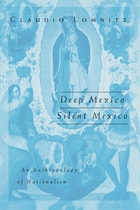
In Mexico, as elsewhere, the national space, that network of places where the people interact with state institutions, is constantly changing. How it does so, how it develops, is a historical process-a process that Claudio Lomnitz exposes and investigates in this book, which develops a distinct view of the cultural politics of nation building in Mexico. Lomnitz highlights the varied, evolving, and often conflicting efforts that have been made by Mexicans over the past two centuries to imagine, organize, represent, and know their country, its relations with the wider world, and its internal differences and inequalities. Firmly based on particulars and committed to the specificity of such thinking, this book also has broad implications for how a theoretically informed history can and should be done.
An exploration of Mexican national space by way of an analysis of nationalism, the public sphere, and knowledge production, Deep Mexico, Silent Mexico brings an original perspective to the dynamics of national cultural production on the periphery. Its blending of theoretical innovation, historical inquiry, and critical engagement provides a new model for the writing of history and anthropology in contemporary Mexico and beyond.
Public Worlds Series, volume 9
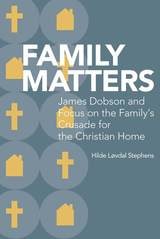
Family Matters
James Dobson and Focus on the Family’s Crusade for the Christian HomeHilde Løvdal Stephens
University of Alabama Press, 2019
James Dobson—child psychologist, author, radio personality, and founder of the Christian conservative organization Focus on the Family—published his first book, Dare to Discipline, in 1970 and quickly became the go-to family expert for evangelical parents across the United States as American evangelicalism rose as a major political force. The family expert became a leading voice in the Reagan Revolution, and played a role in making American evangelicals even more firmly associated with the Republican Party. Dobson’s principle beliefs are that the family is the center of Christian America and that the traditional family must be defended from perceived threats such as gay rights, feminism, abortion, and the secularization of public schools. Dobson and Focus on the Family dominated Christian media through print, radio, and online venues, and their message reached millions of American evangelical households, shaping the cultural sensibilities and political attitudes of evangelical families throughout the culture wars from the 1980s into the 2000s.
Family Matters: James Dobson and Focus on the Family’s Crusade for the Christian Home by Hilde Løvdal Stephens is an insightful history and analysis of James Dobson’s rise to fame, effect on American evangelical culture, and subsequent descent from relevance. Extensively researched, Løvdal Stephens scoured through Dobson’s books, articles, and other materials published by Focus on the Family in order to explore how evangelicals defined and defended the traditional family as an ideal and as a symbol in an ever-changing world.
By contextualizing the history of Dobson’s reign, Løvdal Stephens’s discerning analysis fills an important gap in our understandings of the politics and culture of late twentieth-century conservative Christianity in the United States. She explores complex topics ranging from Dobson’s celebration of what he believes are timeless biblical values, such as maintaining strict and defined gender roles, to the ways Dobson and Focus on the Family balanced their basic ideals with real everyday lives of average American evangelical families, facing the realities of divorce, working mothers, and other perceived threats to the traditional family.
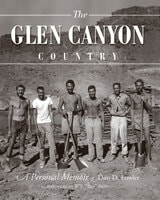
Glen Canyon Country, The
A Personal MemoirDon D Fowler
University of Utah Press, 2011
In his new book, The Glen Canyon Country, archaeologist Don D. Fowler shares the history of a place and the peoples who sojourned there over the course of several thousand years. To tell this story, he weaves his personal experience as a student working on the Glen Canyon Salvage Project with accounts of early explorers, geologists, miners, railroad developers, settlers, river runners, and others who entered this magical place. The book details the canyon’s story via historical and scientific summaries, biographical sketches, personal memoir, and previously unpublished photos of the land and its explorers.
Going Home
Black Representatives and Their ConstituentsRichard F. Fenno
University of Chicago Press, 2003
Fenno follows the careers of four black representatives—Louis Stokes, Barbara Jordan, Chaka Fattah, and Stephanie Tubbs Jones—from their home districts to the halls of the Capitol. He finds that while these politicians had different visions of how they should represent their districts (in part based on their individual preferences, and in part based on the history of black politics in America), they shared crucial organizational and symbolic connections to their constituents. These connections, which draw on a sense of "linked fates," are ones that only black representatives can provide to black constituents.
His detailed portraits and incisive analyses will be important for anyone interested in the workings of Congress or in black politics.
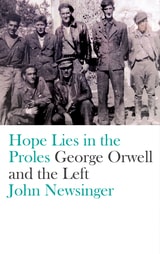
Hope Lies in the Proles
George Orwell and the LeftJohn Newsinger
Pluto Press, 2018
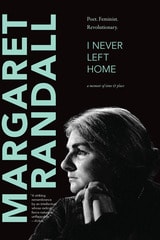
I Never Left Home
Poet, Feminist, RevolutionaryMargaret Randall
Duke University Press, 2020
From living among New York's abstract expressionists in the mid-1950s as a young woman to working in the Nicaraguan Ministry of Culture to instill revolutionary values in the media during the Sandinista movement, the story of Randall's life reads like a Hollywood production. Along the way, she edited a bilingual literary journal in Mexico City, befriended Cuban revolutionaries, raised a family, came out as a lesbian, taught college, and wrote over 150 books. Throughout it all, Randall never wavered from her devotion to social justice.
When she returned to the United States in 1984 after living in Latin America for twenty-three years, the U.S. Immigration and Naturalization Service ordered her to be deported for her “subversive writing.” Over the next five years, and with the support of writers, entertainers, and ordinary people across the country, Randall fought to regain her citizenship, which she won in court in 1989.
As much as I Never Left Home is Randall's story, it is also the story of the communities of artists, writers, and radicals she belonged to. Randall brings to life scores of creative and courageous people on the front lines of creating a more just world. She also weaves political and social analyses and poetry into the narrative of her life. Moving, captivating, and astonishing, I Never Left Home is a remarkable story of a remarkable woman.
In Time
Poets, Poems, and the RestC. K. Williams
University of Chicago Press, 2012
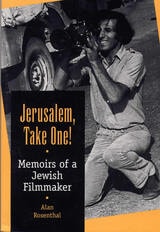
Jerusalem, Take One!
Memoirs of a Jewish FilmmakerAlan Rosenthal
Southern Illinois University Press, 2000
Jerusalem, Take One! Memoirs of a Jewish Filmmaker is a behind-the-scenes look at the life of documentary filmmaker Alan Rosenthal, the maker of over sixty films including Day of Peace, Out of the Ashes, A Nation Is Born, and On the Brink of Peace. As a witness to so much recent Israeli history through a camera’s viewfinder, Rosenthal himself makes as much of an interesting subject as the events he documents.
Born in London in 1936, Rosenthal studied law at Oxford before beginning his work in television directing in Israel and the United States. By the 1960s he was an established young filmmaker who had participated in the filming of the Eichmann trial in Jerusalem in 1961. He returned in 1968, initially for just one year, as part of a team invited by the Israeli government to set up the first television network; that year turned into the thirty-plus years that inspired this book.
The Eichmann trial, the development of Israel Television, the Oslo agreement, the search for the menorah from the Second Temple, the history of Zionism on the television screen, and the Yom Kippur War and Project Renewal are but a few of the recent moments in Israeli history that Rosenthal and his camera have witnessed. As he recalls these events with humor and wit, Rosenthal’s words recapture the emotions and feel of those times as vividly as his lens recorded their passing.
This is a memoir, not a history textbook, and Rosenthal himself is the true subject of the book’s most intensely personal and introspective moments, stories of growth and learning, of England and family, of love and loss, of ideological disappointment and renewed hope. Rosenthal’s tale is one of progress toward the man he wishes to be, the films he feels he must make, and the cultural identity he seeks to develop for himself and all Jewish people.
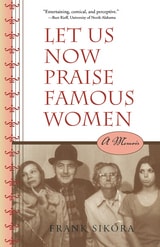
Let Us Now Praise Famous Women
A MemoirFrank Sikora
University of Alabama Press, 2005
An affectionate, humorous account of small town Alabama during the civil rights era.
When Frank Sikora's six-year-old daughter contracted pneumonia in 1962, his wife Millie vowed that would be the last winter she would spend in Ohio. Despite their misgivings about the racial tensions erupting there, they moved their family of six south, where Frank hoped to fulfill his dream of becoming a newspaper reporter. But when those dreams didn't materialize immediately, mounting bills, repossession, and eviction forced them to move in with Millie's parents, Dan and Minnie Belle Helms, in rural Wellington, Alabama.
With even slimmer prospects for employment in impoverished Calhoun County, the Sikoras came to depend heavily upon the Helmses and extended family members and all their lives became closely intertwined. The Helmses were uneducated, unpolished people, but Sikora's narration of his life with them—often humorous but never condescending—provides a compelling portrait of the attitudes and lifestyle of poor whites in Alabama during the second half of the 20th century, just as James Agee's monumental work, Let Us Now Praise Famous Men, illuminated the Depression years in Hale County, Alabama. Sikora illustrates how resourceful, southern women, in particular, held their families together through trying times.
Interwoven with this commentary on rural white culture in the Deep South is the story of Sikora's developing career as a newsman. Determined to succeed, he finally lands a job with the Gadsden Times reporting the news of black citizens. From that introduction to journalism, Sikora becomes one of Alabama's most acclaimed chroniclers of the civil rights movement, eventually writing some of the acknowledged masterpieces about the subject. Like his landmark book, Selma, Lord, Selma, Sikora's newest work tells the stories of ordinary Alabamians and their perspectives on extraordinary times.
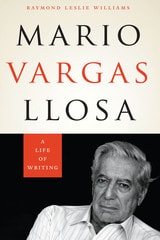
Mario Vargas Llosa
A Life of WritingBy Raymond Leslie Williams
University of Texas Press, 2014
Awarded the Nobel Prize in 2010 at the age of seventy-four, Peruvian writer Mario Vargas Llosa has held pivotal roles in the evolution and revolutions of modern Latin American literature. Perhaps surprisingly, no complete history of Vargas Llosa’s works, placed in biographical and historical context, has been published—until now. A masterwork from one of America’s most revered scholars of Latin American fiction, Mario Vargas Llosa: A Life of Writing provides a critical overview of Vargas Llosa’s numerous novels while reinvigorating debates regarding conventional interpretations of the work.
Weaving analysis with discussions of the writer’s political commentary, Raymond Leslie Williams traces the author’s youthful identity as a leftist student of the 1960s to a repudiation of some of his earlier ideas beginning in the 1980s. Providing a unique perspective on the complexity, nuance, and scope of Vargas Llosa’s lauded early novels and on his passionate support of indigenous populations in his homeland, Williams then turns his eye to the recent works, which serve as a bridge between the legacies of the Boom and the diverse array of contemporary Latin American fiction writers at work today. In addition, Williams provides a detailed description of Vargas Llosa’s traumatic childhood and its impact on him—seen particularly in his lifelong disdain for authority figures—as well as of the authors who influenced his approach, from Faulkner to Flaubert. Culminating in reflections drawn from Williams’s formal interviews and casual conversations with the author at key phases of both men’s careers, this is a landmark publication that will spark new lines of inquiry into an intricate body of work.
Mario Vargas Llosa
Public Intellectual in Neoliberal Latin AmericaJuan E. De Castro
University of Arizona Press, 2011
The idea of a sitting president debating a novelist may seem surprising to readers unfamiliar with Latin American politics, but Vargas Llosa has enjoyed considerable influence in the political arena, thanks in no small part to his run for the Peruvian presidency in 1990. Though he was awarded the Nobel Prize in 2010 for his literary achievements, he is as well known in the Spanish-speaking world for his political columns as he is for his novels. In his widely syndicated political pieces, Vargas Llosa asserts a position he calls “liberal” in the classical sense of affirming the importance of a free market and individual rights, though as De Castro argues, he has often aligned himself with groups that emphasize the former at the expense of the latter.
What makes Vargas Llosa’s rise to political prominence compelling is “not only that he is still a vibrantly active writer, but that he was at the time of the beginning of his rise to literary fame, and throughout the 1960s, a staunch defender of the Cuban Revolution.” While his early literary output seemed to proclaim an allegiance with the Left, Vargas Llosa was soon to take a right turn that De Castro argues was anticipatory and representative of the Latin American embrace of the free market in the 1990s. Understanding Vargas Llosa’s political thought is thus of more than biographical interest. It is a key to understanding the social and cultural shifts that have taken place not only in Peru but throughout Latin America.
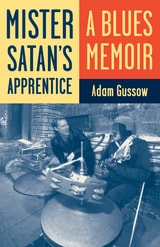
Mister Satan's Apprentice
A Blues MemoirAdam Gussow
University of Minnesota Press, 1998
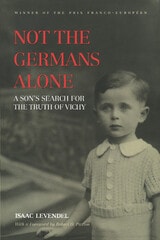
Not the Germans Alone
A Son's Search for the Truth of VichyIsaac Levendel
Northwestern University Press, 2000
On the eve of D-Day, Isaac Levendel's mother left her hiding place on a farm in southern France and never returned. After 40 years of silence and torment, he returned to France in 1990 determined to find out what had happened. This is the story of how, with perseverance, luck, and official help, he gained access to secret wartime documents laying bare the details of French collaboration-and the truth about his mother's fate.
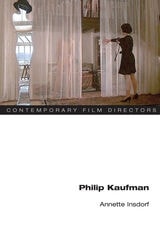
Philip Kaufman
Annette Insdorf
University of Illinois Press, 2012
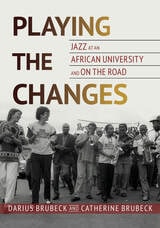
Playing the Changes
Jazz at an African University and on the RoadDarius Brubeck and Catherine Brubeck
University of Illinois Press, 2024
Catherine and Darius Brubeck’s 1983 move to South Africa launched them on a journey that helped transform jazz education. Blending biography with storytelling, the pair recount their time at the University of KwaZulu-Natal, where they built a pioneering academic program in jazz music and managed and organized bands, concerts, and tours around the world.
The Brubecks and the musicians faced innumerable obstacles, from the intensification of apartheid and a lack of resources to the hardscrabble lives that forced even the most talented artists to the margins. Building a program grounded in multi-culturalism, Catherine and Darius encouraged black and white musicians to explore and expand the landscape of South African jazz together Their story details the sometimes wily, sometimes hilarious problem-solving necessary to move the institution forward while offering insightful portraits of South African jazz players at work, on stage, and providing a soundtrack to the freedom struggle and its aftermath.
Frank and richly detailed, Playing the Changes provides insiders’ accounts of how jazz intertwined with struggle and both expressed and resisted the bitter unfairness of apartheid-era South Africa.
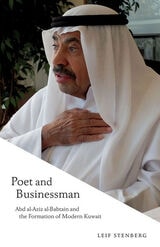
Poet and Businessman
Abd al-Aziz al-Babtain and the Formation of Modern KuwaitLeif Stenberg
Gingko, 2022
This book reviews and analyzes the modern history of Kuwait through the life of Abd al-Aziz Sa‘ud al-Babtain, a wealthy businessman, philanthropist, and poet. He is the head of a large, influential international cultural foundation based in Kuwait City. Abd al-Aziz’s life story tightly interweaves with modern discussions on the history of the state of Kuwait. There are very few books taking a collective grip on the history of the state of Kuwait. Likewise, there are very few studies about the generation of Gulf individuals who experienced, benefitted from, and even suffered from the discovery of oil, and who has been a crucial part of socioeconomic and cultural developments in countries like Kuwait in recent history. By constructing a cohesive overview of the modern history of Kuwait enriched by the life of an individual that has lived through the better part of that particular history, this book fills a lacuna in contemporary scholarship on the Middle East, and especially the Arabian or the Persian Gulf.
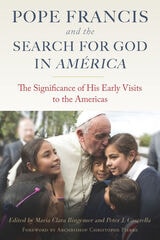
Pope Francis and the Search for God in America
The Significance of His Early Visits to the AmericasMaria Clara Bingemer
Catholic University of America Press, 2021
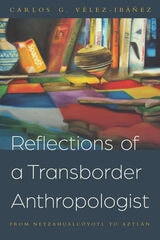
Reflections of a Transborder Anthropologist
From Netzahualcóyotl to AztlánCarlos G. Vélez-Ibáñez
University of Arizona Press, 2020
In each chapter, Vélez-Ibáñez revisits a critical piece of his written work, providing a new introduction and discussion of ideas, sources, and influences for the piece. These are followed by the work, chosen because it accentuates key aspects of his development and formation as an anthropologist. By returning to these previously published works, Vélez-Ibáñez offers insight not only into the evolution of his own thinking and conceptualization but also into changes in the fields in which he has been so influential. Throughout his career, Vélez-Ibáñez has addressed why he does the work that he does, and in this volume he continues to address the personal and intellectual drives that have brought him from Netzahualcóyotl to Aztlán.
Reflections of a Transborder Anthropologist shows how both Vélez-Ibáñez and anthropology have changed and formed over a fifty-year period. Throughout, he has worked to understand how people survive and thrive against all odds. Vélez-Ibáñez has been guided by the burning desire to understand inequality, exploitation, and legitimacy, and, most importantly, to provide platforms for the voiceless to narrate their own histories.
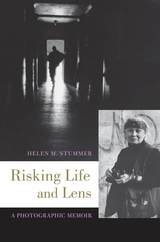
Risking Life and Lens
A Photographic MemoirHelen M. Stummer
Temple University Press, 2017
For more than forty years, Helen M. Stummer has captured images depicting the dignity, humanity, and suffering of people living in conditions of poverty. Her efforts taught her to understand firsthand the resilience of people living in insufferable conditions. In her inspiring memoir, Risking Life and Lens, Stummer recounts her experiences as a socially-concerned documentary photographer whose passion for her work overcame her fears.
Stummer’s images, from the mean streets of Manhattan and Newark, New Jersey, to the back woods of Maine and the mountains of Guatemala, expose the myths of poverty and serve as a metaphor for her challenges in her own life. The 159 photographs reproduced here recount Stummer’s journey as an artist and her personal quest for truth.
Risking Life and Lens shares Stummer’s work and educational efforts and it provides valuable insights about race, class, and social justice—issues that continue to divide the country and the world. Her work has created change in both her own life and the lives of those who view it.
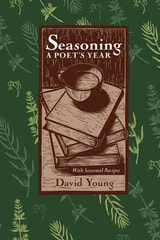
SEASONING
A Poet’s Year, with Seasonal RecipesDavid Young
The Ohio State University Press, 1999
Set in northeastern Ohio, where the author has lived and worked for close to forty years, Seasoning demonstrates that an “unremarkable” place—no grand scenery, no special claims to beauty—can be the perfect setting in which to learn about animals, plants, food, geology, history, weather, and time. Coming to terms with place and time, and connecting them, the author suggests, may be our true task in life.
Among the many distinctive features of this lovely book are the recipes, arranged seasonally and revealing Young’s preference for natural foods prepared with care.
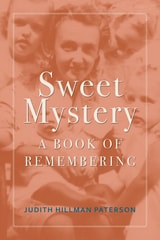
Sweet Mystery
A Book of RememberingJudith Hillman Paterson
University of Alabama Press, 2020
Judith Paterson was just nine years old in 1946 when her mother died of a virulent combination of alcoholism and mental illness at the age of 31. Sweet Mystery: A Book of Remembering is Paterson’s harrowing account of the memories of her mother, told with eloquence and understanding. Set largely in Montgomery, Alabama, the story plays out against a backdrop of relatives troubled almost as much by southern conflicts over race and class as by the fallout from a long family history of drinking, denial, and mental illness.
While rich in the details and flavor of small-town life in the South during the 1940s, Sweet Mystery transcends time and regionalism to evoke universal American themes. Ultimately, it confirms the damaging effects of early trauma on children as well as the innate and familial strengths that enable some children to survive, grow up, and heal.
Originally published in 1996 to critical acclaim in the national media, Sweet Mystery was called “a beautifully written, excruciating collision of form and emotion, joy and pain, willpower and self-examination, control and surrender” by the Washington Post. This edition contains a new afterword written by the author as well as a list of suggested readings.
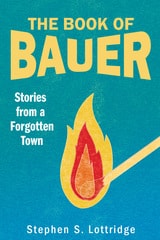
The Book of Bauer
Stories from a Forgotten TownStephen S. Lottridge
University of Utah Press, 2023
Graffiti-covered industrial concrete ruins are all that remain today to remind us of the lives, adventures, and human relationships that once animated Bauer, Utah. Located just south of Tooele, across the Oquirrh Mountains west of the Salt Lake Valley, Bauer was abandoned in 1979 and declared a toxic waste site. The Book of Bauer: Stories from a Forgotten Town brings it back to life, evoking mid-twentieth century family and community in that company town as seen through the eyes of an observant adolescent boy.
Presenting a dramatic snapshot of life in Bauer in narrative autobiographical form, the book recalls the fate of hundreds of derelict mining towns throughout the mountain and sagebrush West. With vivid prose and intimate observation, The Book of Bauer offers an unparalleled memoir of small-town life in Utah and the Great Basin.
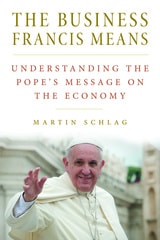
The Business Francis Means
Understanding the Pope's Message on the EconomyMartin Schlag
Catholic University of America Press, 2017
The Business Francis Means aims to break through these walls, showing that Pope Francis has something to say to all Christians. His message, taken as a whole, keeps us from dividing the “seamless garment” of Christ: he reminds the conservatives of the problems of inequality and poverty, and the liberals that social justice is not enough – the Church is the bride of Christ, not a social institution or an NGO.
Monsignor Martin Schlag summarizes and explains the message of Pope Francis on business and the economy in this compact volume. The Business Francis Means will be of great interest to the Catholic layperson, especially one involved in political or economic life.
The Pale Light of Sunset
Scattershots and Hallucinations in an Imagined LifeLee Maynard
West Virginia University Press, 2009
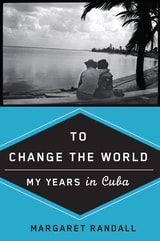
To Change the World
My Years in CubaRandall, Margaret
Rutgers University Press, 2009
Randall gives readers an inside look at her children's education, the process through which new law was enacted, the ins and outs of healthcare, employment, internationalism, culture, and ordinary people's lives. She explores issues of censorship and repression, describing how Cuban writers and artists faced them. She recounts one of the country's last beauty pageants, shows us a night of People's Court, and takes us with her when she shops for her family's food rations. Key figures of the revolution appear throughout, and Randall reveals aspects of their lives never before seen.
More than fifty black and white photographs, most by the author, add depth and richness to this astute and illuminating memoir. Written with a poet's ear, depicted with a photographer's eye, and filled with a feminist vision, To Change the Worldùneither an apology nor gratuitous attackùadds immensely to the existing literature on revolutionary Cuba.
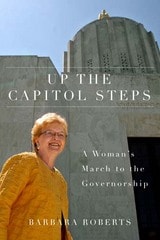
Up the Capitol Steps
A Woman's March to the GovernorshipBarbara Roberts
Oregon State University Press, 2011