Results by title
35 books match the query '1937-'

A Doctor in Galilee
The Life and Struggle of a Palestinian in IsraelHatim Kanaaneh
Pluto Press, 2008
Hatim Kanaaneh is a Palestinian doctor who has struggled for over 35 years to bring medical care to Palestinians in Galilee, against a culture of anti-Arab discrimination. This is the story of how he fought for the human rights of his patients and overcame the Israeli authorities' cruel indifference to their suffering.
Kanaaneh is a native of Galilee, born before the creation of Israel. He left to study medicine at Harvard, before returning to work as a public health physician with the intention of helping his own people. He discovered a shocking level of disease and malnutrition in his community and a shameful lack of support from the Israeli authorities. After doing all he could for his patients by working from inside the system, Kanaaneh set up The Galilee Society, an NGO working for equitable health, environmental and socio-economic conditions for Palestinian Arabs in Israel.
This is a brilliant memoir that shows how grass roots organisations can loosen the Zionist grip upon Palestinian lives.

Adventures in Africa
Gianni Celati
University of Chicago Press, 2000
In 1997 the celebrated Italian novelist and essayist Gianni Celati accompanied his friend, filmmaker Jean Talon, on a journey to West Africa which took them from Mali to Senegal and Mauritania. The two had been hoping to research a documentary about Dogon priests, but frustrated by red tape, their voyage became instead a touristic adventure. The vulnerable, prickly, insightful Celati kept notebooks of the journey, now translated by Adria Bernardi as Adventures in Africa. Celati is the privileged traveler, overwhelmed by customs he doesn't understand, always at the mercy of others who are trying to sell him something he doesn't want to buy, and aware of himself as the Tourist who is always a little disoriented and at the center of the continual misadventures that are at the heart of travel.
Celati's book is both a travelogue in the European tradition and a trenchant meditation on what it means to be a tourist. Celati learns to surrender to the chaos of West Africa and in the process produces a work of touching and comic descriptions, in the lucid and ironic prose that is his hallmark. Hailed as one of the best travelogues on Africa ever written and awarded the first Zerilli-Marimó prize, Adventures in Africa is a modest yet profound account of the utter discombobulation of travel.

Alex and the Hobo
A Chicano Life and StoryBy José Inez Taylor and James M. Taggart
University of Texas Press, 2003
When a ten-year-old boy befriends a mysterious hobo in his southern Colorado hometown in the early 1940s, he learns about evil in his community and takes his first steps toward manhood by attempting to protect his new friend from corrupt officials. Though a fictional story, Alex and the Hobo is written out of the life experiences of its author, José Inez (Joe) Taylor, and it realistically portrays a boy's coming-of-age as a Spanish-speaking man who must carve out an honorable place for himself in a class-stratified and Anglo-dominated society.
In this innovative ethnography, anthropologist James Taggart collaborates with Joe Taylor to explore how Alex and the Hobo sprang from Taylor's life experiences and how it presents an insider's view of Mexicano culture and its constructions of manhood. They frame the story (included in its entirety) with chapters that discuss how it encapsulates notions that Taylor learned from the Chicano movement, the farmworkers' union, his community, his father, his mother, and his religion. Taggart gives the ethnography a solid theoretical underpinning by discussing how the story and Taylor's account of how he created it represent an act of resistance to the class system that Taylor perceives as destroying his native culture.
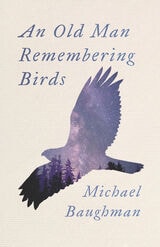
An Old Man Remembering Birds
Michael Baughman
Oregon State University Press, 2021
Birders are dedicated and passionate, and, like anglers, they all have their stories. But Baughman tells more than simple accounts of birds spotted in the field. He reflects on human-animal relations, why humans seek closeness with nature, how a dedicated birder can also be a dedicated hunter. He explores how environmental change has altered the rhythms of bird life: the ospreys that resurged after DDT was banned, the waxwings and juncos that appear rarely now as climate change takes a toll on bird populations. Baughman also describes encounters with wildfires and smoke and discusses how they shape the landscape and wildlife of contemporary Oregon.
In his eighty-plus years around birds, Michael Baughman has learned one immutable lesson: as long as you remain alive and human, the closer you get to birds, and the more time you spend among them, the more you love them.
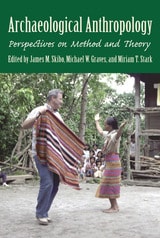
Archaeological Anthropology
Perspectives on Method and TheoryEdited by James M. Skibo, Michael W. Graves, and Miriam T. Stark
University of Arizona Press, 2014
In this collection of twelve new chapters, four generations of Longacre protégés show how they are building upon and developing but also modifying the theoretical paradigm that remains at the core of Americanist archaeology. The contributions focus on six themes prominent in Longacre’s career: the intellectual history of the field in the late twentieth century, archaeological methodology, analogical inference, ethnoarchaeology, cultural evolution, and reconstructing ancient society.
More than a comprehensive overview of the ideas developed by one of the most influential scholars in the field, however, Archaeological Anthropology makes stimulating contributions to contemporary research. The contributors do not unequivocally endorse Longacre’s ideas; they challenge them and expand beyond them, making this volume a fitting tribute to a man whose robust research and teaching career continues to resonate.
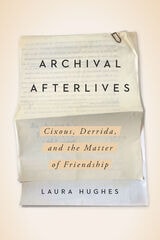
Archival Afterlives
Cixous, Derrida, and the Matter of FriendshipLaura Hughes
Northwestern University Press, 2024
A capacious analysis of a legendary intellectual friendship and the material legacies it left behind
Over the course of their decades-long friendship, Hélène Cixous and Jacques Derrida assembled overlapping archives of written experiments and exchanges that document a shared interest in their literary afterlives. In this incisive account, Laura Hughes shows how pushing against the limits of writing and of life itself means not only imagining but manifesting a community of future readers.
Archival Afterlives: Cixous, Derrida, and the Matter of Friendship examines the embodied nature of literary creation, taking letters, fragments, notes, and other ephemera as objects of critical analysis and care. Combining close readings of key texts and previously unexamined archival materials, Hughes traces critical connections between Cixous and Derrida, between the theoretical and the autobiographical, and between life writing and its limits. In putting deconstruction into dialogue with new material analyses and archive studies, Archival Afterlives positions this historical and intellectual relationship as a lens through which to reexamine the legacy of critical theory itself.

Bicycles
Vintage People on Photo PostcardsTom Phillips
Bodleian Library Publishing, 2011
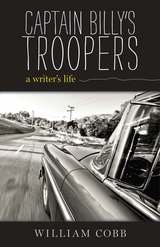
Captain Billy's Troopers
A Writer's LifeWilliam Cobb
University of Alabama Press, 2015
Captain Billy’s Troopers is a frank, literary memoir about William Cobb’s life as a southern writer—his struggles with addiction and illness, his career as a teacher and novelist, and his hard‑won return to creative life.
In this audacious memoir, William Cobb reveals the tumultuous creative life of a distinguished practitioner of southern and Alabama storytelling. As poignant and inspiring as his own fiction, Captain Billy’s Troopers traces Cobb’s early life, education, and struggles with alcohol and the debilitating condition normal pressure hydrocephalus (NPH).
Like a curving river, the broad sweep of Cobb’s turbulent life includes both startling cataracts and desultory eddies, leading sometimes into shadows or opening into unexpected sunlight. With unsentimental clarity, Cobb recounts coming of age in his native Demopolis in the churning middle years of the twentieth century. It’s there he has his first tantalizing tastes of alcohol and begins to drink habitually. Readers then travel with Cobb to Livingston University (now the University of West Alabama) and then on to Vanderbilt University. Along the way, readers relish his first experiences of love and success as a writer, leading to a career as a professor of writing at Alabama College (now the University of Montevallo) in 1963.
From there Cobb’s struggles with alcohol and depression lead to elongated years of tumbling creative output and the collapse of his marriage. The summer of 1984 found Cobb in rehab, the first step in his path to recovery. His unflinching memoir narrates both the milestones and telling details of his intense therapy and years in Alcoholics Anonymous (AA). In the sober thirty years since, Cobb has published a string of critically praised novels and a prize-winning collection of short stories. The capstone of his comeback was winning the Harper Lee Award in 2007 for distinguished fiction writing.
In 2000, shortly after retiring, Cobb developed NPH, which upset his sense of balance and triggered dementia symptoms and other maladies. Nine years later in 2009, brain surgery brought Cobb a dramatic recovery, which began the third act in his writing career. Vital, honest, and entertaining, Captain Billy’s Troopers captures the life of an Alabama original.
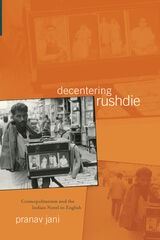
Decentering Rushdie
Cosmopolitanism and the Indian Novel in EnglishPranav Jani
The Ohio State University Press, 2010
Interrogating current theories of cosmopolitanism, nationalism, and aesthetics in Postcolonial Studies, Decentering Rushdie offers a new perspective on the Indian novel in English. Since Salman Rushdie’s Midnight’s Children won the Booker Prize in 1981, its postmodern style and postnational politics have dominated discussions of postcolonial literature. As a result, the rich variety of narrative forms and perspectives on the nation that constitute the field have been obscured, if not erased altogether.
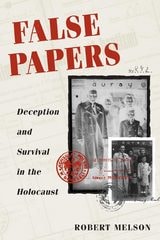
False Papers
DECEPTION AND SURVIVAL IN THE HOLOCAUSTRobert Melson
University of Illinois Press, 2000
Armed with their new lives and their new pasts, the Count and Countess Zamojski and their son, Count Bobi, took shelter in the very shadow of the Nazi machine, hiding day after day in plain sight behind a façade of elegant good manners and cultivated self-assurance, even arrogance: "you had to shout [the Gestapo] down or they would kill you." Melson's father took advantage of his flawless German to build a lucrative business career while working for a German businessman of the Schindler type. The Zamojskis acquired beautiful homes in the German quarter of Krakow and in Prague, where they had maids and entertained Nazi officials. Their masquerade enabled them to save not only themselves and their son but also an uncle and three Jewish women, one of whom became part of the family.
False Papers is a candid, sometimes funny account of a stylish couple who dazzled the Nazis with flamboyant theatrics then gradually, tragically fell apart after the war. Particularly arresting is Melson himself, who was just a child when his family embarked on their grand charade. A resilient boy who had to negotiate bewildering shifts of identify–-now Catholic, now Jewish; now European aristocrat, now penniless refugee who becomes an American college student--Melson closes each chapter of his parents' recollections with his childhood perceptions of the same events.
Against the totalizing, flattening, unrelenting Nazi behemoth, Melson says, "I wished to pit our very bodies, our quirky, sexy, funny, wicked, frail, ordinary selves." By balancing the adults' maneuvering with the perspective of a child, Melson crafts an account of the Holocaust that is at once poignant, entertaining, and troubling.
Finished from the Start and Other Plays
Juan Radrigan
Northwestern University Press, 2007
This collection of plays comes from one of Chile’s finest voices of the voiceless: Juan Radrigán. A history marked by personal and political hardship has equipped Radrigán to tell the stories of those his nation left behind. Seven years old when his father abandoned his family, he was forced to work from an early age. As an adult, he worked as a manual laborer during a very dark time for Chile: the demise of Salvador Allende and the rise of General Augusto Pinochet. In a time of torture, exile, and political “disappearances,” his plays stood as quietly powerful anti-regime statements that mourned the country’s loss. Translator Ana Elena Puga’s introduction places Radrigán’s work in its historical and cultural context and provides ample background for the six pieces.
The first work, Testimonies to the Deaths of Sabina, features a fruit seller who may lose her livelihood after she is accused of some mysterious infraction; but she doesn’t know what she has done—if she has truly done anything. The Beasts tells the story of three sisters living in the wilderness who, fearing they have been completely abandoned, devise a means of ultimate escape. Funeral Drums for Lambs and Wolves comes in three parts: Isabel Banished in Isabel, a monologue of a woman left to go mad alone; Without Apparent Motive, a monologue by a murderer who laments the spread of violence; and the dialogue The Guest, a confrontational piece that speaks directly to the spectators, implicating them in their silent, passive tolerance of Pinochet. The title play, Radrigán’s 1981 masterpiece, speaks directly to the specter of the many “disappeared” victims of the military regime.

Hanoi Jane
Lembcke Jerry
University of Massachusetts Press, 2010

Hanoi Jane
War, Sex, and Fantasies of BetrayalJerry Lembcke
University of Massachusetts Press, 2010
From Aristophanes' Lysistrata to the notorious Mata Hari and the legendary Tokyo Rose, stories of female betrayal during wartime have recurred throughout human history. The myth of Hanoi Jane, Jerry Lembcke argues, is simply the latest variation on this enduring theme. Like most of the iconic femmes fatales who came before, it is based on a real person, Jane Fonda. And also like its predecessors, it combines traces of fact with heavy doses of fiction to create a potent symbol of feminine perfidy—part erotic warrior-woman Barbarella, part savvy antiwar activist, and part powerful entrepreneur.
Hanoi Jane, the book, deconstructs Hanoi Jane, the myth, to locate its origins in the need of Americans to explain defeat in Vietnam through fantasies of home-front betrayal and the emasculation of the national will-to-war. Lembcke shows that the expression “Hanoi Jane” did not reach the eyes and ears of most Americans until five or six years after the end of the war in Vietnam. By then, anxieties about America's declining global status and deteriorating economy were fueling a populist reaction that pointed to the loss of the war as the taproot of those problems. Blaming the antiwar movement for undermining the military's resolve, many found in the imaginary Hanoi Jane the personification of their stab-in-the- back theories.
Ground zero of the myth was the city of Hanoi itself, which Jane Fonda had visited as a peace activist in July 1972. Rumors surrounding Fonda's visits with U.S. POWs and radio broadcasts to troops combined to conjure allegations of treason that had cost American lives. That such tales were more imagined than real did not prevent them from insinuating themselves into public memory, where they have continued to infect American politics and culture.
Hanoi Jane is a book about the making of Hanoi Jane by those who saw a formidable threat in the Jane Fonda who supported soldiers and veterans opposed to the war they fought, in the postcolonial struggle of the Vietnamese people to make their own future, and in the movements of women everywhere for gender equality.
In Search of Our Warrior Mothers
Women Dramatists of the Black Arts MovementLa Donna L. Forsgren
Northwestern University Press, 2018
The Black Arts Movement (1965–76) consisted of artists across the United States deeply concerned with the relationship between politics and the black aesthetic. In Search of Our Warrior Mothers examines the ways in which black women playwrights in the movement advanced feminist and womanist perspectives from within black nationalist discourses. La Donna L. Forsgren recuperates the careers, artistic theories, and dramatic contributions of four leading playwrights: Martie Evans-Charles, J.e. Franklin, Sonia Sanchez, and Barbara Ann Teer. Using original interviews, production recordings, playbills, and unpublished manuscripts, she investigates how these women, despite operating within a context that equated the collective well-being of black people with black male agency, created works that validated black women's aspirations for autonomy and explored women's roles in the struggle for black liberation.
In Search of Our Warrior Mothers demonstrates the powerful contributions of women to the creation, interpretation, and dissemination of black aesthetic theory, thus opening an interdisciplinary conversation at the intersections of theater, performance, feminist, and African American studies and identifying and critiquing the gaps and silences within these fields.
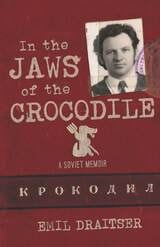
In the Jaws of the Crocodile
A Soviet MemoirEmil Draitser
University of Wisconsin Press, 2021
In this captivating memoir, Draitser explores what it means to be a satirist in a country lacking freedom of expression. His experience provides a window into the lives of a generation of artists who were allowed to poke fun and make readers laugh, as long as they toed a narrow, state-approved line. In the Jaws of the Crocodile also includes several of Draitser’s wry pieces translated into English for the first time.
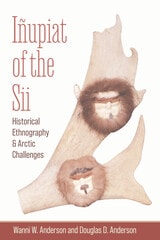
Iñupiat of the Sii
Historical Ethnography and Arctic ChallengesWanni W. Anderson
University of Alaska Press, 2024
This fascinating book records, preserves, and contributes to the knowledge of the history and cultural lifeways of the Siilaviŋmiut people using contextual and ethnographic writing styles that apply community-based, lived-experience, and sense-of-place approaches. The authors, who have remained in contact with Selawikers since the original research period, center Iñupiaq elders’ and local Iñupiaq historians’ continued commitments to historical knowledge about the past, their ancestors, and their vast repertoire of traditional cultural and environmental knowledge. They portray the particularity of Iñupiaq life as it was lived, sensed, and felt by Selawikers themselves and as experienced by researchers. Quoted observations, conversations, and comments eloquently acknowledge Iñupiaq insiders’ narrative voices.
Providing one of only a few ethnographic reviews of an Alaska Native village, Iñupiat of the Sii will appeal to general readers interested in learning about Iñupiaq lifeways and the experiences of anthropologists in the field. It will also be useful to instructors teaching college-level students how anthropological field research should be conducted, analyzed, and reported.
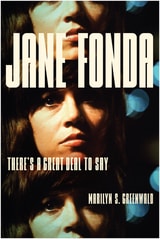
Jane Fonda
There's a Great Deal to SayMarilyn S. Greenwald
Rutgers University Press, 0
Since the late 1960s, Jane Fonda has identified as an activist first and an actor second, using her celebrity as a vehicle to convey her views and her advocacy. Few stars of her stature have been as simultaneously acclaimed and vilified as Fonda. Even as she won two Academy Awards and was a major box office draw of the 1970s and 1980s, she received reams of hate mail for her political activism and antiwar stances. This book explores Fonda’s devotion to movement politics—sometimes at the expense of her career and her personal safety.
Digging deep into rare material from cinema archives and Fonda’s own personal papers, journalist Marilyn Greenwald tells the story of how Fonda came to view acting as a “side gig” that gives her a worldwide platform to convey her personal and political views. Charting the evolution of her activism and the merging of her acting and producing with her advocacy, Greenwald focuses on the years from 1968—when she was jarred out of complacency by the Vietnam War—to 1980, after the release of The China Syndrome and the advent of the Three Mile Island nuclear crisis, which brought to light the possible dangers of nuclear energy. Greenwald details how three of her films—Klute (1971), Coming Home (1978), and The China Syndrome (1979)—were designed to further her personal beliefs. She also considers how Fonda has weathered changes in the entertainment industry and public tastes to produce and star in decades' worth of socially conscious projects. Charting Fonda’s personal and professional growth while offering a candid account of her struggles, this book shows how Fonda viewed movies as an influential storytelling tool that can influence public opinion, change minds, and trigger social change.

Jurek Becker
A Life in Five WorldsSander L. Gilman
University of Chicago Press, 2003
In the first biography of this fascinating figure, Sander Gilman tells the story of Becker's life in five worlds: the Polish-Jewish middle-class neighborhood where Becker was born; the Warsaw ghetto and the concentration camps where Becker spent his childhood; the socialist order of the GDR, which Becker idealized, resisted, and finally was forced to leave; the isolated world of West Berlin, where he settled down to continue his writing; and the new, reunified Germany, for which Becker served as both conscience and inspiration.
Gilman was close friends with Becker for nearly thirty years, and his biography is based on unprecedented access to both the man and his papers. As Gilman reveals, Becker's story encapsulates the fractured experience of life in twentieth-century Europe, a time and place in which political systems and national borders were constantly in flux. The life of Becker, we learn, was one of great literary achievement and notoriety, but it was also one of profound cultural dislocation. An important theme in the book is Becker's struggle with his Jewishness, an identity he repressed in socialist East Germany, but embraced after reunification, when he found himself at the center of Jewish culture and literature.
Sander Gilman's story of Jurek Becker is biography of the highest order, a portrait of an extraordinarily gifted artist whose hope and courage are manifested in his legacy as one of the greatest German writers of the past century.

Living the Faith
A Life of Tom MonaghanJames Leonard
University of Michigan Press, 2012
Who is Tom Monaghan?
Is he the four-year-old kid whose father died on Christmas Eve and whose mother sent him to an orphanage and then a juvenile detention home?
Is he the entrepreneurial genius who built Domino's Pizza from a hole-in-the-wall pizzeria in Michigan into an American brand as world-conquering as Ford or Coke?
Is he the religious visionary who sold Domino's for $1 billion to create an orthodox Catholic university, law school, and special interest law firm with the goal of transforming America to reflect his conservative values?
He's all that and more. With extensive interviews with friends and enemies plus unprecedented access to the man himself, but wholly without his authorization, Living the Faith illuminates Tom Monaghan, the man and the myth.
Living the Faithis the much-needed, definitive biography of one of the most fascinating and controversial figures in the realms of American business and religion. Through eighteen hard-boiled chapters, journalist James Leonard follows Monaghan on his path from a heartbroken kid who climbed into his father's coffin to the business tycoon who purchased the world-champion Detroit Tigers and spent a fortune on his own air force, navy, and island to the religious visionary who founded a university to make saints and a public interest law firm to overturn evolution.
A sympathetic but critical perspective of the man and his works, this book is for believers, nonbelievers, and agnostics; for conservatives, liberals, and independents; for the rich, the poor, and the shrinking middle class. Mainly, however, this book is for those who want the facts about Tom Monaghan—and the truth about the effect religion had on one man and the effect that man had on the world.
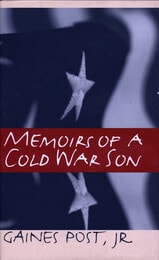
Memoirs Of A Cold War Son
Post, Gaines, Jr.
University of Iowa Press, 2000
In 1951 Gaines Post was a gangly, bespectacled, introspective teenager preparing to spend a year in Paris with his professorial father and older brother; his mother, who suffered from extreme depression, had been absent from the family for some time. Ten years later, now less gangly but no less introspective, he was finishing a two-year stint in the army in West Germany and heading toward Oxford on a Rhodes scholarship, having narrowly escaped combat in the Berlin crisis of 1961. His quietly intense coming-of-age story is both self-revealing and reflective of an entire generation of young men who came to adulthood before the Cuban Missile Crisis and the Vietnam War.
Post's experiences in high school in Madison, Wisconsin, and Paris, his Camus-influenced undergraduate years at Cornell University, and his army service in Germany are set very effectively against the events of the Cold War. McCarthyism and American crackdowns on dissidents, American foreign and military policy in Western Europe in the nuclear age, French and German life and culture, crises in Paris and Berlin that nearly bring the West to war and the Post family to dissolution—these are the larger scenes and subjects of his self-disclosure as a contemplative, conflicted "Cold War agnostic."
His intelligent, talented mother and her fragile health hover over Post's narrative, informing his hesitant relationships with women and his acutely questioning sense of self-worth. His story is strongly academic and historical as well as political and military; his perceptions and judgments lean toward no ideological extreme but remain true to the heroic ideals of his boyhood during the Second World War.
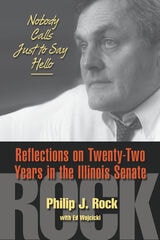
Nobody Calls Just to Say Hello
Reflections on Twenty-Two Years in the Illinois SenatePhilip J. Rock, with Ed Wojcicki
Southern Illinois University Press, 2011
A native of Chicago's West Side, Rock became one of the most influential politicians in Illinois during the 1970s and 1980s. As a senator in the 1970s and senate president from 1979 to 1993, he sponsored historic legislation to assist abused and neglected children and victims of domestic violence, ushered the state through difficult income tax increases and economic development decisions, shepherded an unruly and fragmented Democratic senate caucus, and always was fair to his Republican counterparts. Covering in great detail a critical period in Illinois political history for the first time, Rock explains how making life better for others drove his decisions in office, while also espousing the seven principles he advocates for effective leadership and providing context for how he applied those principles to the legislative battles of the era.
Unlike many Illinois politicians, Rock, a former seminarian, was known for having a greater interest in issues than in partisan politics. Considered a true statesman, he also was known as a skilled orator who could silence a busy floor of legislators with his commentary on important issues and as a devoted public servant who handled tens of thousands of bills and sponsored nearly five hundred of them himself.
Nobody Calls Just to Say Hello, which takes its title from the volume of calls and visits to elected officials from constituents in need of help, perfectly captures Rock's profound reverence for the institutions of government, his respect for other government offices, and his reputation as a problem solver who, despite his ardent Democratic beliefs, disavowed political self-preservation to cross party lines and make government work for the people. Taking readers through his legislative successes, bipartisan efforts, and political defeats-including a heartbreaking loss in the U.S. Senate primary to Paul Simon in 1984-Rock passionately articulates his belief that government's primary role is to help people, offering an antidote to the current political climate with the simple legislative advice, "Just try to be fair, give everyone a chance, and everything else comes after that."

Old Riot, New Ranger
Captain Jack Dean, Texas Ranger and U.S. MarshalBob Alexander
University of North Texas Press, 2018

Our Perfect Wild
Ray & Barbara Bane's Journeys and the Fate of Far NorthKaylene Johnson-Sullivan with Ray Bane
University of Alaska Press, 2016
This book tells their story, a tale of dedication and tireless labor in the face of suspicion, resistance, and even violence. At a time when Alaska’s natural bounty remains under threat, Our Perfect Wild shows us an example of the commitment—and love—that will be required to preserve it.

Portrait of a Young Painter
Pepe Zuniga and Mexico City's Rebel GenerationMary Kay Vaughan
Duke University Press, 2015
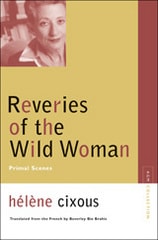
Reveries of the Wild Woman
Primal ScenesHelene Cixous
Northwestern University Press, 2006
I dreamt of one day arriving in Algeria.
Born in Oran, Algeria, Hélène Cixous spent her childhood in France's former colony. Reveries of the Wild Woman is her visceral memoir of a preadolescence that shaped her with intense feelings of alienation, yet also contributed, in a paradoxically essential way, to her development as a writer and philosopher.
Born to a French father and an Austro-German mother, both Jews, Cixous experienced a childhood fraught with racial and gender crisis. In her moving story she recounts how small events--a new dog, the gift of a bicycle--reverberate decades later as symbols filled with social and psychological meaning. She and her family endure a double alienation, by Algerians for being French and by the French for being Jewish, and Cixous builds her story on the themes of isolation and exclusion she felt in particular under the Vichy government and during the Algerian Civil War. Yet she also concedes that memories of Algeria awaken in her a longing for her home country, and ponders how that stormy relationship has influenced her life and thought.
A meditation on postcolonial identity and gender, Reveries of the Wild Woman is also a poignant recollection of how a girl's childhood is, indeed, author to the woman.
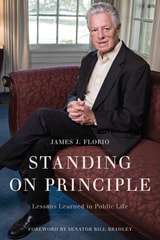
Standing on Principle
Lessons Learned in Public LifeFlorio, James J
Rutgers University Press, 2018
This political memoir tells the remarkable story of how Florio, a high school dropout who left to join the Navy as a teenager, went on to become an attorney, a state assemblyman, a congressman, and a governor. A passionate defender of the environment, Florio played a crucial role in the enactment of 1980s-era Superfund laws, which helped to clean up toxic waste sites in New Jersey and around the country. As governor, he fought for the groundbreaking Clean Water Enforcement Act. But his reforms quite literally came at a cost, as he raised New Jersey sales taxes and income taxes to balance the state budget. Florio reflects upon the challenges of meeting the state’s budgetary needs while keeping his tax-averse constituents happy.
Standing on Principle reveals a politician who has never been afraid to take a progressive stand—including a firm stance against semiautomatic weapons that led gun lobbyists to bankroll his opponent. His story is sure to inspire readers from New Jersey and across the nation.
Published in cooperation with the Center on the American Governor, Eagleton Institute of Politics, Rutgers University
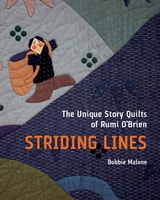
Striding Lines
The Unique Story Quilts of Rumi O'BrienBobbie Malone
University of Wisconsin Press, 2019
Bobbie Malone reaches beyond the quilts to tell O'Brien's own story, from her initial foray into the quilting world to her developed dedication to the craft. Contributions from leaders in the art, textile and quilting community, including Melanie Herzog and Marin Hanson, contextualize O'Brien's work in the greater community of quiltmakers and artists. This book celebrates the life and ingenuity of a Japanese-born American immigrant whose oeuvre is equally Japanese and Wisconsinite—and entirely distinctive.

The Adventures of a Cello
Revised Edition, with a New EpilogueBy Carlos Prieto
University of Texas Press, 2011
In 1720, Antonio Stradivari crafted an exquisite work of art—a cello known as the Piatti. Over the next three centuries of its life, the Piatti cello left its birthplace of Cremona, Italy, and resided in Spain, Ireland, England, Italy, Germany, and the United States. In 1978, the Piatti became the musical soul mate of world-renowned cellist Carlos Prieto, with whom it has given concerts around the world.
In this delightful book, Mr. Prieto recounts the adventurous life of his beloved "Cello Prieto," tracing its history through each of its previous owners from Stradivari in 1720 to himself. He then describes his noteworthy experiences of playing the Piatti cello, with which he has premiered some eighty compositions. In this part of their mutual story, Prieto gives a concise summary of his own remarkable career and his relationships with many illustrious personalities, including Igor Stravinsky, Dmitry Shostakovich, Pablo Casals, Mstislav Rostropovich, Yo-Yo Ma, and Gabriel García Márquez. A new epilogue, in which he describes recent concert tours in Moscow, Siberia, and China and briefer visits to South Korea, Taiwan, and Venezuela, as well as recent recitals with Yo-Yo Ma, brings the story up to 2009.
To make the story of his cello complete, Mr. Prieto also provides a brief history of violin making and a succinct review of cello music from Stradivari to the present. He highlights the work of composers from Latin America, Spain, and Portugal, for whose music he has long been an advocate and principal performer.
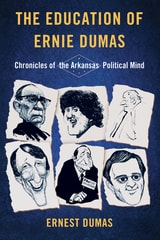
The Education of Ernie Dumas
Chronicles of the Arkansas Political MindErnest Dumas
Butler Center for Arkansas Studies, 2019
Beginning with the defeat of Governor Francis Cherry by the son of a hillbilly socialist at the end of the Joe McCarthy era, Dumas traces the development of a modernist political cast that eventually produced Arkansas’s first president of the United States. It follows the seed from 1978 that would germinate into the second impeachment of an American president.
Dumas has written for newspapers and about politics for sixty-three years, since 1954, the year that the stolid Cherry fell to Orval Eugene Faubus. The book is a political memoir that describes not only his education in the ways of politicians but the politicians’ own education and miseducation in how you win voters and then how you get things done.
It is mostly a collection of untold stories, often deeply personal, that reveal the inner struggles and sometimes the tribulations of the state’s leaders—Cherry, Faubus, Winthrop Rockefeller, Dale Bumpers, David Pryor, John McClellan, J. William Fulbright, Bill Clinton, Jim Guy Tucker, and others.
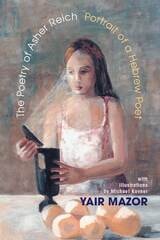
The Poetry of Asher Reich
Portrait of a Hebrew PoetYair Mazor
University of Wisconsin Press, 2004
Asher Reich’s poetry has been characterized as vivid, vibrant, passionate, and expressionistic. Dominated by themes of stormy sensuality and frank sexuality, his dramatic imagery and metaphors interweave Mishnaic, Talmudic, and Biblical references in a colorful, complex poetic texture. The beautiful simplicity of Kovner’s drawings—depicting female figures and natural landscapes—resonates throughout the book. Tender, stark, and striking, the drawings illustrate life’s fragility and grace with a subtlety and dignity that complements Reich’s sensitive style.
Presenting contemporary Hebrew poetry, modern Israeli art, and informed literary commentary in an engaging format, this book promises to delight a broad audience of readers.
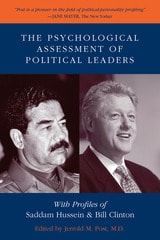
The Psychological Assessment of Political Leaders
With Profiles of Saddam Hussein and Bill ClintonJerrold M. Post, Editor
University of Michigan Press, 2005
In an age when world affairs are powerfully driven by personality, politics require an understanding of what motivates political leaders such as Hussein, Bush, Blair, and bin Laden. Through exacting case studies and the careful sifting of evidence, Jerrold Post and his team of contributors lay out an effective system of at-a-distance evaluation. Observations from political psychology, psycholinguistics and a range of other disciplines join forces to produce comprehensive political and psychological profiles, and a deeper understanding of the volatile influences of personality on global affairs.
Even in this age of free-flowing global information, capital, and people, sovereign states and boundaries remain the hallmark of the international order -- a fact which is especially clear from the events of September 11th and the War on Terrorism.
Jerrold M. Post, M.D., is Professor of Psychiatry, Political Psychology, and International Affairs, and Director of the Political Psychology Program at George Washington University. He is the founder of the CIA's Center for the Analysis of Personality and Political Behavior.
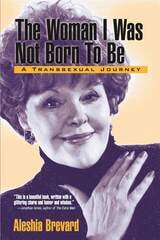
The Woman I Was Not Born To Be
A Transsexual JourneyAleshia Brevard
Temple University Press, 2001
Under the stage name Lee Shaw, Brevard worked as a drag queen at Finocchio's, a San Francisco club, doing Marilyn Monroe impersonations. (Like Marilyn, she sought romance all the time and had a string of entanglements with men.) Later, she worked as a stripper in Reno and as a Playboy Bunny at the Sunset Strip hutch.
After playing opposite Don Knotts in the movie The Love God, Brevard appeared in other films and broke into TV as a regular on the Red Skelton Show. She created the role of Tex on the daytime soap opera One Life To Live. As a woman, Brevard returned to teach theater at East Tennessee State, the same university she had attended as a boy.
This memoir is a rare pre-Women's Movement account of coming to terms with gender identity. Brevard writes frankly about the degree to which she organized her life around pleasing men, and how absurd it all seems to her now.

Twelve Views from the Distance
Mutsuo Takahashi
University of Minnesota Press, 2012
From one of the foremost poets in contemporary Japan comes this entrancing memoir that traces a boy’s childhood and its intersection with the rise of the Japanese empire and World War II. Originally published in 1970, this translation is the first available in English.
In twelve chapters that visit and revisit critical points in his boyhood, Twelve Views from the Distance presents a vanished time and place through the eyes of an accomplished poet. Recounting memories from his youth, Mutsuo Takahashi captures the full range of his internal life as a boy, shifting between his experiences and descriptions of childhood friendships, games, songs, and school. With great candor, he also discusses the budding awareness of his sexual preference for men, providing a rich exploration of one man’s early queer life in a place where modern, Western-influenced models of gay identity were still unknown.
Growing up poor in rural southwestern Japan, far from the urban life that many of his contemporaries have written about, Takahashi experienced a reality rarely portrayed in literature. In addition to his personal remembrances, the book paints a vivid portrait of rural Japan, full of oral tradition, superstition, and remnants of customs that have quickly disappeared in postwar Japan. With profuse local color and detail, he re-creates the lost world that was the setting for his beginnings as a gay man and poet.

Walter's Perspective
A Memoir of Fifty Years in Chicago TV NewsWalter Jacobson, Foreword by Bill Kurtis
Southern Illinois University Press, 2012
This highly readable book provides a unique glimpse into the rough-and-tumble Chicago news business as seen through the eyes of one of its legendary players. From his first news job working as a legman for Daily News columnist Jack Mabley in the 1950s to his later role as a news anchor and political commentator at CBS-owned WBBM, Walter Jacobson battled along the front lines of an industry undergoing dramatic changes. While it is ultimately Jacobson’s story, a memoir of a long and distinguished (and sometimes highly controversial) career, it is also an insider’s account of the inner workings of Chicago television news, including the ratings games, the process of defining news and choosing stories, the media’s power and its failures, and the meddling by corporate and network executives.
As a reporter, Jacobson was regularly contentious and confrontational. He was fired on a number of occasions and was convicted of libeling tobacco company Brown and Williamson, resulting in a multimillion-dollar federal court judgment against him and CBS. Yet it was this gutsy attitude that put him at the top of the news game. With an engaging writing style, Jacobson recollects his interactions with Chicago mayors Richard J. and Richard M. Daley, Jane Byrne, Harold Washington, and Rahm Emanuel; recounts his coverage of such fascinating news stories as the violent 1968 Democratic National Convention and the execution of convicted mass murderer John Wayne Gacy; and recalls his reporting on and interviews with Louis Farrakhan, governors George Ryan and Rod Blagojevich, and Barack Obama. More than a memoir, Walter’s Perspective is the extraordinary journey of one reporter whose distinctive career followed the changing face of Chicago’s local news.
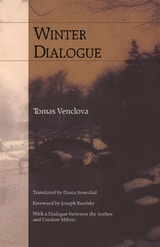
Winter Dialogue
Tomas Venclova
Northwestern University Press, 1999