Results by title
26 books match the query '1938-'
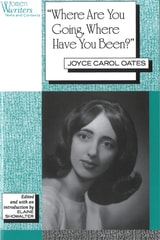
'Where Are You Going, Where Have You Been?'
Joyce Carol OatesShowalter, Elaine
Rutgers University Press, 1994
Joyce Carol Oates’s prize-winning story “Where Are You Going, Where Have You Been?” takes up troubling subjects that continue to occupy her in her fiction: the romantic longings and limited options of adolescent women; the tensions between mothers and daughters; the sexual victimization of women; and the American obsession with violence. Inspired by a magazine story about a serial killer, its remarkable portrait of the dreamy teenager Connie has made it a feminist classic. Connie’s life anticipates the emergence of American society from the social innocence of the fifties into the harsher contemporary realities of war, random violence, and crime. The story was the basis for the movie Smooth Talk, which became the subject of much feminist debate.
This casebook includes an introduction by the editor, a chronology of Oates’s life, an authoritative text of “Where Are You Going, Where Have You Been,” an essay by Oates on Smooth Talk, the original Life article about the serial killer, ten critical essays (including two about the film), and a bibliography.
The contributors are Brenda O. Daly, Christina Marsden Gillis, Don Moser, Tom Quirk, B. Ruby Rich, R.J.R. Rockwood, Larry Rubin, Gretchen Schulz, Marie Mitchell Oleson Urbanski, Joyce M. Wegs, Marilyn C. Wesley, and Joan D. Winslow.
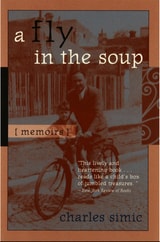
A Fly in the Soup
MemoirsCharles Simic
University of Michigan Press, 2003
A Holocaust Controversy
The Treblinka Affair in Postwar FranceSamuel Moyn
Brandeis University Press, 2005
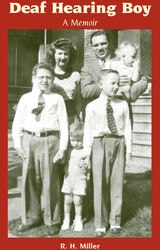
Deaf Hearing Boy
A MemoirR.H. Miller
Gallaudet University Press, 2004
Born in 1938, R. H. Miller was the oldest of four hearing boys with deaf parents in Defiance, Ohio, a small agricultural community. Deaf Hearing Boy is Miller’s compelling account of the complex dynamics at work in his family, including the inter-generational conflicts in which he found himself, the oldest child of deaf adults (CODA), caught in the middle.
In 1942, Miller’s family moved to Toledo so that his father could find work. There, they fared well during World War II because his father worked in manufacturing as a member of Roosevelt’s “civilian army.” Miller’s mother loved urban life, where she and the family could immerse themselves in the Toledo Deaf community, especially at the Toledo Silent Club. The end of the war marked the end of prosperity for the Miller family. Returning soldiers displaced all of the deaf workers, who then had to scrape for a living. The Millers, close to destitution, returned to the family farm in Defiance.
Miller depicts the return to farm life as one of tremendous hardship, both economically and psychologically. They lived off the land from hand to mouth. He also describes his grandparents’ distrust of his parents because they were deaf, and he writes candidly of his role as an unwilling agent in the misunderstandings between them. Miller also portrays the bias he endured in school and town. Parents of girlfriends would force their daughters to stop dating him for fear that his family’s deafness would be passed down.
In the early 1950s, Miller’s grandparents sold the farm and his parents returned to industrial work. Miller excelled at school, and eventually left home for college and life in academia. His later reflections reveal a deep, abiding respect for his parents, despite his early difficulties. Deaf Hearing Boy presents an intimate depiction of a changing time for hearing and deaf Americans alike, when the family farm disappeared and the isolation of Deaf people also began to fade. In witnessing this transformation of society through his family’s life, Miller adds an important chapter to the collective narrative of Deaf people, one made all the more poignant and vivid as told by their Deaf Hearing boy.
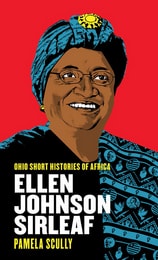
Ellen Johnson Sirleaf
Pamela Scully
Ohio University Press, 2016
In this timely addition to the Ohio Short Histories of Africa series, Pamela Scully takes us from the 1938 birth of Nobel Peace Prize winner and two-time Liberian president Ellen Johnson through the Ebola epidemic of 2014–15. Charting her childhood and adolescence, the book covers Sirleaf’s relationship with her indigenous grandmother and urban parents, her early marriage, her years studying in the United States, and her career in international development and finance, where she developed her skill as a technocrat. The later chapters cover her years in and out of formal Liberian politics, her support for women’s rights, and the Ebola outbreak.
Sirleaf’s story speaks to many of the key themes of the twenty-first century. Among these are the growing power of women in the arenas of international politics and human rights; the ravaging civil wars in which sexual violence is used as a weapon; and the challenges of transitional justice in building postconflict societies. Ellen Johnson Sirleaf is an astute examination of the life of a pioneering feminist politician.
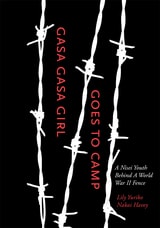
Gasa Gasa Girl Goes to Camp
A Nisei Youth Behind A World War II FenceLily Yuriko Nakai Havey
University of Utah Press, 2014
In this creative memoir, Lily Havey combines storytelling, watercolor, and personal photographs to recount her youth in two Japanese-American internment camps during World War II. In short vignettes snapshots of people, recreated scenes and events a ten-year-old girl develops into a teenager while confined. Vintage photographs reveal the historical, cultural, and familial contexts of that growth and of the Nakais’ dislocation. The paintings and her animated writing together pull us into a turbulent era when America disgracefully incarcerated, without due process, thousands of American citizens because of their race.
These stories of love, loss, and discovery recall a girl balancing precariously between childhood and adolescence. In turn wrenching, funny, touching, and biting but consistently engrossing, they elucidate the daily challenges of life in the camp and the internees’ many adaptations.
Winner of the Evans Biography Award.
Selected by the American Library Association as one the Best of the Best from University Presses.
Finalist in the cover design category in the Southwest Book Design and Production Awards.
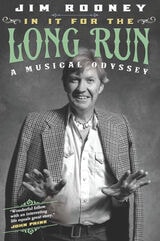
In It for the Long Run
A Musical OdysseyJim Rooney
University of Illinois Press, 2014
Inspired by the Hank Williams and Leadbelly recordings he heard as a teenager growing up outside of Boston, Jim Rooney began a musical journey that intersected with some of the biggest names in American music including Bob Dylan, James Taylor, Bill Monroe, Muddy Waters, and Alison Krauss. In It for the Long Run: A Musical Odyssey is Rooney's kaleidoscopic first-hand account of more than five decades of success as a performer, concert promoter, songwriter, music publisher, engineer, and record producer.
As witness to and participant in over a half century of music history, Rooney provides a sophisticated window into American vernacular music. Following his stint as a "Hayloft Jamboree" hillbilly singer in the mid-1950s, Rooney managed Cambridge's Club 47, a catalyst of the ‘60’s folk music boom. He soon moved to the Newport Folk Festival as talent coordinator and director where he had a front row seat to Dylan "going electric."
In the 1970s Rooney's odyssey continued in Nashville where he began engineering and producing records. His work helped alternative country music gain a foothold in Music City and culminated in Grammy nominations for singer-songwriters John Prine, Iris Dement, and Nanci Griffith. Later in his career he was a key link connecting Nashville to Ireland's folk music scene.
Writing songs or writing his memoir, Jim Rooney is the consummate storyteller. In It for the Long Run: A Musical Odyssey is his singular chronicle from the heart of Americana.
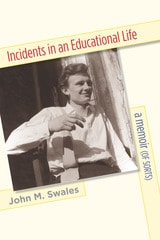
Incidents in an Educational Life
A Memoir (of Sorts)John M. Swales
University of Michigan Press, 2009
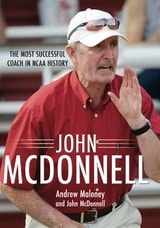
John McDonnell
The Most Successful Coach in NCAA HistoryAndrew Maloney
University of Arkansas Press, 2013
Knuth par Knuth
Donald E. Knuth
CSLI, 2020
Living in a Law Transformed
Encounters with the Works of James Boyd WhiteJulen Etxabe and Gary Watt, eds.
Michigan Publishing Services, 2014
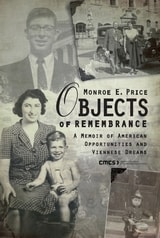
Objects of Remembrance
A Memoir of American Opportunities and Viennese DreamsMonroe E. Price
Central European University Press, 2009
This is a memoir about the power of American assimilation and opportunity in the face of persisting refugee realities. Like Isaac Bashevis Singer, Monroe Price recounts the continuing impact of European identities as families, cast from their homes by the rise of Hitler and the Third Reich, struggle to find their way in a new and challenging environment.
In a series of reflections, Price, who was born to a Jewish family in Vienna in 1938 and left when he was seven months old, seeks to create the Vienna of his infancy, including Jewish life, anti-Semitism, the Anschluss, and Kristallnacht (during which his father was arrested). He shifts to scenes of American socialization in the places he moved with his parents:: Macon, Georgia, Cincinnati, Ohio, and the experience of New York City. Through these reflections, Price illuminates ideas about family, religion, friends and schooling as well as deeply personal issues such as home, food and intimacy.
Price’s memoir weaves complicated strands—his Viennese origins, campaigns to distribute Jewish refugees away from New York City, the special qualities of Midwestern Ohio life in the 1950s—and the contrasting patterns of adjustment by different generations in his family in the American landscape. As he traces the particular path of his own life, Price reveals a more universal story of adjustment, and the relationship between a marginal community and the drama of American citizenship.
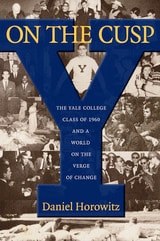
On the Cusp
The Yale College Class of 1960 and a World on the Verge of ChangeDaniel Horowitz
University of Massachusetts Press, 2015
How did the 1950s become “The Sixties”? This is the question at the heart of Daniel Horowitz's On the Cusp. Part personal memoir, part collective biography, and part cultural history, the book illuminates the dynamics of social and political change through the experiences of a small, and admittedly privileged, generational cohort.
A Jewish “townie” from New Haven when he entered Yale College in fall 1956, Horowitz reconstructs the undergraduate career of the class of 1960 and follows its story into the next decade. He begins by looking at curricular and extracurricular life on the all-male campus, then ranges beyond the confines of Yale to larger contexts, including the local drama of urban renewal, the lingering shadow of McCarthyism, and decolonization movements around the world. He ponders the role of the university in protecting the prerogatives of class while fostering social mobility, and examines the growing significance of race and gender in American politics and culture, spurred by a convergence of the personal and the political. Along the way he traces the political evolution of his classmates, left and right, as Cold War imperatives lose force and public attention shifts to the civil rights movement and the war in Vietnam.
Throughout Horowitz draws on a broad range of sources, including personal interviews, writings by classmates, reunion books, issues of the Yale Daily News, and other undergraduate publications, as well as his own letters and college papers. The end product is a work consistent with much of Horowitz's previously published scholarship on postwar America, further exposing the undercurrent of discontent and dissent that ran just beneath the surface of the so-called Cold War consensus.
On the True Sense of Art
A Critical Companion to the Transfigurements of John SallisEdited by Jason M. Wirth, Michael Schwartz, and David Jones
Northwestern University Press, 2016
On the True Sense of Art collects essays by philosophers responding to John Sallis’s Transfigurements: On the True Sense of Art as well as his other works on the philosophy of art, including Force of Imagination and Logic of Imagination.
Each of the chapters, by some of the leading thinkers in Continental philosophy, engages Sallis’s work on both ancient and new senses of aesthetics—a transfiguration of aesthetics—as a beginning that is always beginning again. With a responsive essay by Sallis himself, On the True Sense of Art forms a critical introduction to the thought of this generation’s most important aesthetician.
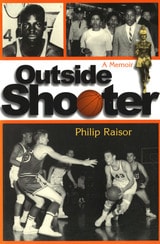
Outside Shooter
A MemoirPhilip Raisor
University of Missouri Press, 2003
Philip Raisor was on the losing side in two of the most storied basketball games ever played. He started at guard for the Muncie Central Bearcats, who fell in the 1954 Indiana state final to tiny Milan, the David-over-Goliath event that inspired the movie Hoosiers. On a basketball scholarship to the University of Kansas, he watched his Wilt Chamberlain–led Jayhawks lose the 1957 NCAA championship in triple overtime to North Carolina. In Outside Shooter, Raisor recounts the hard knocks and hard-won triumphs of a basketball odyssey across 1950s America, from Indiana to Kansas to Louisiana, and from adolescence to adulthood.
This was an era in which a racially divided society was taking halting steps toward integration, and few places held more tension than the sports arena. Raisor saw firsthand the toll of racism in the inner rage and sorrow of Muncie’s star player, John Casterlow, whose life followed a trajectory from playing the legendary Oscar Robertson to a draw—almost—to death in the streets of Detroit at age twenty-three. Later, at Louisiana State University after having transferred from Kansas, Raisor, spurred by the memory of Casterlow, would join in hazardous early attempts to integrate the LSU campus. From Indiana to Louisiana, he sees the ordeal of racism reveal character—including his own—at depths beyond the illumination even of competitive sport.
Devoted though Raisor was to basketball, Outside Shooter captures the period of his life in which he gradually stopped defining himself in terms of the game. As the rise and fall of his fortunes on the basketball court become overshadowed by the shifting patterns of his larger life—the competing measures of acceptance and expectation from his family and companions; the courage and challenge offered by a young woman equally bent on accomplishment; his struggles with failure and doubt juxtaposed with his awakening intellect and conscience—he discovers the sense of purpose that will carry him beyond his playing days and into adulthood as a budding writer.
RE-FORMING THE PAST
HISTORY, THE FANTASTIC, & THE POSTMODERN SLAVE NARRATIVEA. Timothy Spaulding
The Ohio State University Press, 2005
In their rejection of mimetic representation and traditional historiography, Spaulding contextualizes postmodern slave narrative. By addressing both literary and popular African American texts, Re-Forming the Past expands discussions of both the African American literary tradition and postmodern culture.
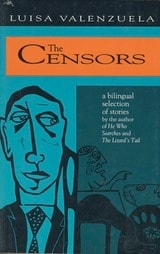
The Censors
A Bilingual Selection of StoriesLuisa Valenzuela
Northwestern University Press, 1995
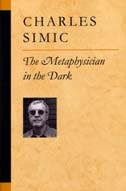
The Metaphysician in the Dark
Charles Simic
University of Michigan Press, 2003
Often, he addresses poetry itself. Among the pieces here are appreciations of Mark Strand, James Merrill, John Ashbery, and James Tate, each evaluated with a keen eye tempered by a generous spirit. Other essays discuss Joseph Brodsky, Czeslaw Milosz, and Vasko Popa; to these writers he brings the understanding available only to those who can read them in the original. In considering Brodsky's translations, for instance, he offers insights regarding not only the poet himself but the very nature of language. Elsewhere, he peers into poetry's past and its future: as a vessel of memory, a witness to history, and a mirror of human experience.
But perhaps the greatest pleasures afforded by The Metaphysician in the Dark, as he styles himself with a beguiling mix of modesty and irony, appear when Simic goes further afield. His look at the deadpan comedy of Buster Keaton is as revealing of the author as of the actor and his craft; his perusal of a Heironymous Bosch altarpiece captures both the painter's sense of apocalypse and a riotous joy in the piling of detail upon detail; his review of a book on Joseph Cornell examines how obsession becomes art. He is fluently familiar with subjects as diverse as Saul Bellow's novels and Aberlardo Morell's extraordinary camera obscura photographs. Yet when he takes the gloves off, as in two essays on the Serbia of Slobodan Milosevic, his outrage is as forceful as his pride is strong in his own Serbian heritage.
Each of the two dozen essays here reflects a sophistication irresistible in its simplicity; taken together, they display a questing intelligence and a panorama of life and art.
Charles Simic is an acclaimed poet, novelist, essayist and teacher. Winner of a MacArthur Fellowship and a Pulitzer Prize, he is the author of more than twenty volumes of poetry and six books of prose, as well as numerous translations. He is Distinguished University Professor of English at the University of New Hampshire, where he has taught since 1973.
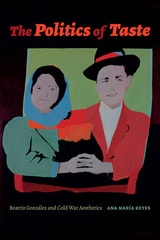
The Politics of Taste
Beatriz González and Cold War AestheticsAna María Reyes
Duke University Press, 2019
The Thought of John Sallis
Phenomenology, Plato, ImaginationBernard Freydberg
Northwestern University Press, 2012
Sallis’s work possesses an intrinsic power and originality, as well as deep interpretive insight. This book is a descriptive and critical journey through his thought, providing an overview for readers who wish to gain a sense of its sweep, along with discrete sections on particular philosophical disciplines for readers whose interests are more specific. It grapples with the challenges Sallis’s thought presents, making them explicit and opening them up to further consideration. And it attempts to locate his thought within both contemporary continental philosophy and philosophy as a whole. Essential for any student of continental philosophy, The Thought of John Sallis expounds on his work in a manner that increases access, honors its depth, and opens up unexplored possibilities for philosophy.
Tilted Arc Controversy
Dangerous PrecedentHarriet F. Senie
University of Minnesota Press, 2001
A comprehensive look at a controversy that continues to fuel debates about the role of public art in America.
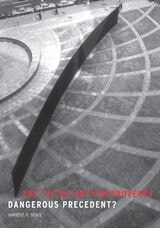
Since its installation at and subsequent removal from New York City’s Federal Plaza, noted sculptor Richard Serra’s Tilted Arc has been a touchstone for debates over the role of public art. Installed in 1981, the 10-foot-high, 120-foot-long curved wall of Cor-Ten self-rusting steel instantly became a magnet for criticism. Art critics in the New York Times and the Village Voice labeled it the city’s worst public sculpture, and many denounced it as an example of the elitism associated with art and as an obstacle to the use and enjoyment of the plaza.
Harriet F. Senie explores the history of Tilted Arc, including its 1979 commission and the heated public hearings that eventually led to its removal in 1989 (it was dismantled and is currently stored in a government warehouse in Maryland). Analyzing the archive of popular opinion, Senie shows how the sculpture was caught in an avalanche of shifting local and national discussions about public funding for the arts. She examines the tactics of those opposed to the sculpture and the media’s superficial and sensational coverage of the controversy, reframing the dialogue in terms of public art, public space, and public policy instead of the question of whether the removal of Tilted Arc was poetic justice or a dangerous precedent. Senie provides an enlightening history and analysis of a controversy that will continue to inform our discussions about public art for years to come.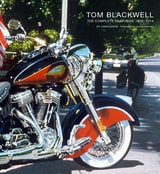
Tom Blackwell
The Complete Paintings, 1970–2014Tom Blackwell
The Artist Book Foundation, 2018
Tom Blackwell (1938–2020) is primarily known for his work in Photorealism, a stylistic movement noted for its ardent embrace of photographic source material. In 1969, he began a series of brashly beautiful motorcycle paintings that established him as one of the founders and foremost artists of the movement. The myriad painterly possibilities of urban store windows became another abiding interest. In his store-window paintings, Blackwell captures the counterpoint between the idealized reality within the store display and the bustling urban life reflected in the glass. As author Linda Chase remarks, "The magic of these paintings resides in the artist's ability to transform the arbitrary photographic information into dynamic and complex artistic compositions, revealing and clarifying the image while preserving its mystery."
In conjunction with his Photorealist paintings, Blackwell has produced a related body of work that is allegorical in its perpective. Combining photo-derived images, he addresses themes such as the passage of time, the fragility of nature, and the continuity that weaves through human history. The paintings, rich in symbolism and interpretive possibilities, fascinate and impress viewers with the breadth of Blackwell's abilities. "As a painter, I have been interested in dealing with the formal issues involved in juxtaposed and overlapping images," he explains. "In my Photorealism work, my goal is to reveal something about the actual world and to explore our photo-mediated perceptions of it."
Blackwell, born in Chicago in 1938, has deftly captured the vibrancy and visual excitement of urban street life for the past four decades and has had solo exhibitions across the United States and abroad. Tom Blackwell: The Complete Paintings, 1970–2014 is a comprehensive study of the artist's work as well as his artistic development and process, and includes a compilation of his early paintings through to his most recent works.
Uncertainty and Plenitude
Five Contemporary PoetsPeter Stitt
University of Iowa Press, 1997
Stitt's interest in these five poets is intellectual and aesthetic. As he states, “I chose these particular writers because their work continues to interest me deeply, both intellectually and formally, even after years of familiarity.” He uses his understanding of the philosophical implications inherent in modern physics, as they apply to both content and form, as the basis for his close analysis.
Stitt attends to the poets' writerly strategies so that we may discover in their poetry where “surface form” intersects and complements meaning and thus becomes, in John Berryman's terms, “deep form.” He explains what these poets say and how they say it and what relationships lie between. He also shows how humor plays a part in some of their work.
Wonderful Words, Silent Truth
Essays on Poetry and a MemoirCharles Simic
University of Michigan Press, 1990

Writing Women in Central America
Gender and the Fictionalization of HistoryLaura Barbas-Rhoden
Ohio University Press, 2003
What is the relationship between history and fiction in a place with a contentious past? And of what concern is gender in the telling of stories about that past?
Writing Women in Central America explores these questions as it considers key Central American texts. This study analyzes how authors appropriate history to confront the rhetoric of the state, global economic powers, and even dissident groups within their own cultures. Laura Barbas-Rhoden winds a common thread in the literary imaginations of Claribel Alegría, Rosario Aguilar, Gioconda Belli, and Tatiana Lobo and shows how these writers offer provocative supplements to the historical record.
Writing Women in Central America considers more than a dozen narratives in which the authors craft their own interpretations of history to make room for women, indigenous peoples, and Afro-Latin Americans. Some of the texts reveal silences in the narratives of empire- and nation-building. Others reinterpret events to highlight the struggle of marginalized peoples for dignity and humanity in the face of oppression. All confront the ways in which stories have been told about the past.
Yet ultimately, Professor Barbas-Rhoden asserts, all concern the present and the future. As seen in Writing Women in Central America, though their fictions are historical, the writers direct their readers beyond the present toward a more just future for all who live in Central America.
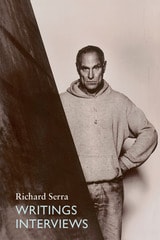
Writings/Interviews
Richard Serra
University of Chicago Press, 1994