Results by title
3 books match the query '1938-1945'
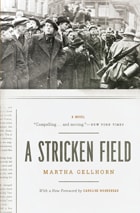
A Stricken Field
A NovelMartha Gellhorn
University of Chicago Press, 2011
Martha Gellhorn was one of the first—and most widely read—female war correspondents of the twentieth century. She is best known for her fearless reporting in Europe before and during WWII and for her brief marriage to Ernest Hemingway, but she was also an acclaimed novelist.
In 1938, before the Munich pact, Gellhorn visited Prague and witnessed its transformation from a proud democracy preparing to battle Hitler to a country occupied by the German army. Born out of this experience, A Stricken Field follows a journalist who returns to Prague after its annexation and finds her efforts to obtain help for the refugees and to convey the shocking state of the country both frustrating and futile. A convincing account of a people under the brutal oppression of the Gestapo, A Stricken Field is Gellhorn’s most powerful work of fiction.
“[A] brave, final novel. Its writing is quick with movement and with sympathy; its people alive with death, if one can put it that way. It leaves one with aching heart and questing mind.”—New York Herald Tribune
“The translation of [Gellhorn’s] personal testimony into the form of a novel has . . . force and point.”—Times Literary Supplement
[more]
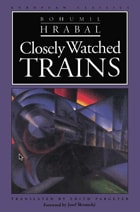
Closely Watched Trains
Bohumil Hrabal
Northwestern University Press, 1995
Hrabal's postwar classic about a young man's coming of age in German-occupied Czechoslovakia is among his most popular works. Milos Hrma is a timid railroad apprentice who insulates himself with fantasy against a reality filled with cruelty and grief. After receiving acclaim as a novel, Closely Watched Trains was made into a successful film that won the Academy Award for Best Foreign Film of 1967.
[more]
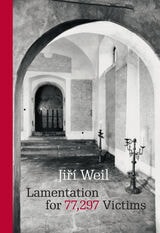
Lamentation for 77,297 Victims
Jirí Weil
Karolinum Press, 2020
“Smoke from nearby factories shrouds a countryside as flat as a table, a countryside stretching off to infinity. Covering it are the ashes of millions of dead. Scattered throughout are fine pieces of bone that ovens were not able to burn. When the wind comes, ashes rise to the heavens, bone fragments remain on the ground. And rain falls on the ashes, and rain turns them to good fertile soil, as befits the ashes of martyrs. And who can find the ashes of those from my native land, of whom there were 77,297? I gather some ashes with my hand, for only a hand can touch them, and I pour them into a linen sack, just as those who once left for a foreign country would gather their native soil so as never to forget, so as always to return to it.”
So begins Jiří Weil’s unforgettable prose poem, Lamentation for 77, 297 Victims, his literary monument to the Czech Jews killed during the Holocaust. A Czech-Jewish writer who worked at Prague’s Jewish Museum both during and after the Nazi Occupation—he survived the Holocaust by faking his own death and hiding out until the war had ended—Weil wrote Lamentation while he served as the museum’s senior librarian in the 1950s. This remarkable literary experiment presents a number of innovative approaches to writing about a horror many would deem indescribable, combining a narrative account of the Shoah with newspaper-style reportage on a handful of the lives ended by the Holocaust and quotes from the Hebrew Bible to create a specific and powerful portrait of loss and remembrance. Translated by David Lightfoot, Lamentation for 77,297 Victims is a startling and singular introduction to a writer whose works have been acclaimed by Philip Roth, Michiko Kakutani, and Siri Hustvedt.
So begins Jiří Weil’s unforgettable prose poem, Lamentation for 77, 297 Victims, his literary monument to the Czech Jews killed during the Holocaust. A Czech-Jewish writer who worked at Prague’s Jewish Museum both during and after the Nazi Occupation—he survived the Holocaust by faking his own death and hiding out until the war had ended—Weil wrote Lamentation while he served as the museum’s senior librarian in the 1950s. This remarkable literary experiment presents a number of innovative approaches to writing about a horror many would deem indescribable, combining a narrative account of the Shoah with newspaper-style reportage on a handful of the lives ended by the Holocaust and quotes from the Hebrew Bible to create a specific and powerful portrait of loss and remembrance. Translated by David Lightfoot, Lamentation for 77,297 Victims is a startling and singular introduction to a writer whose works have been acclaimed by Philip Roth, Michiko Kakutani, and Siri Hustvedt.
[more]