Results by title

5 books match the query '1939 - 1945'
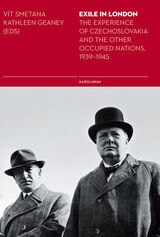
cover of Exile in London: The Experience of Czechoslovakia and the Other Occupied Nations, 1939–1945

Exile in London

The Experience of Czechoslovakia and the Other Occupied Nations, 1939–1945

Edited by Vít Smetana and Kathleen Brenda Geaney

Karolinum Press, 2018
During World War II, London experienced not just the Blitz and the arrival of continental refugees, but also an influx of displaced foreign governments. Drawing together renowned historians from nine countries—the United Kingdom, Germany, the Netherlands, Belgium, Poland, the former Yugoslavia, the Czech Republic, and Slovakia—this book explores life in exile as experienced by the governments of Czechoslovakia and other occupied nations who found refuge in the British capital. Through new archival research and fresh historical interpretations, chapters delve into common characteristics and differences in the origin and structure of the individual governments-in-exile in an attempt to explain how they dealt with pressing social and economic problems at home while abroad; how they were able to influence crucial Allied diplomatic negotiations; the relative importance of armies, strategic commodities, and equipment that particular governments-in-exile were able to offer to the allied war effort; important wartime propaganda; and early preparations for addressing postwar minority issues.
[more]
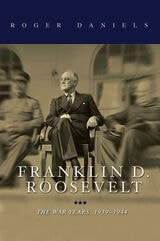
cover of Franklin D. Roosevelt: The War Years, 1939-1945

Franklin D. Roosevelt

The War Years, 1939-1945

Roger Daniels

University of Illinois Press, 2016
Having guided the nation through the worst economic crisis in its history, Franklin Delano Roosevelt by 1939 was turning his attention to a world on the brink of war. The second part of Roger Daniels's biography focuses on FDR's growing mastery in foreign affairs. Relying on FDR's own words to the American people and eyewitness accounts of the man and his accomplishments, Daniels reveals a chief executive orchestrating an immense wartime effort. Roosevelt had effective command of military and diplomatic information and unprecedented power over strategic military and diplomatic affairs. He simultaneously created an arsenal of democracy that armed the Allies while inventing the United Nations intended to ensure a lasting postwar peace. FDR achieved these aims while expanding general prosperity, limiting inflation, and continuing liberal reform despite an increasingly conservative and often hostile Congress. Although fate robbed him of the chance to see the victory he had never doubted, events in 1944 assured him that the victory he had done so much to bring about would not be long delayed. A compelling reconsideration of Roosevelt the president and campaigner, The War Years, 1939-1945 provides new views and vivid insights about a towering figure--and six years that changed the world.
[more]
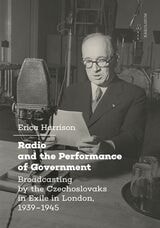
cover of Radio and the Performance of Government: Broadcasting by the Czechoslovaks in Exile in London, 1939–1945

Radio and the Performance of Government

Broadcasting by the Czechoslovaks in Exile in London, 1939–1945

Erica Harrison

Karolinum Press, 2023

An original study of radio propaganda in Czechoslovakia.

Between 1939 and 1945, Czechoslovakia disappeared from the maps, existing only as an imagined ‘free republic’ on the radio waves. Following the German invasion and annexation of Bohemia and Moravia and the declaration of independence by Slovakia on 15 March 1939, the Czechoslovak Republic was gone. From their position in exile in wartime London, former Czechoslovak President Edvard Beneš and the government that formed around him depended on radio to communicate with the public they strove to represent. The broadcasts made by government figures in London enabled a performance of authority to impress their hosts, allies, occupying enemies, and claimed constituents.

This book examines this government program for the first time, making use of previously unstudied archival sources to examine how the exiles understood their mission and how their propaganda work was shaped by both British and Soviet influences. This study assesses the strengths, weaknesses, and limitations of the government’s radio propaganda as they navigated the complexities of exile, with chapters examining how they used the radio to establish their authority, how they understood the past and future of the Czechoslovak nation, and how they struggled to include Slovakia and Subcarpathian Ruthenia within it.
[more]
cover of The Ethics of Witnessing: The Holocaust in Polish Writers' Diaries from Warsaw, 1939-1945

The Ethics of Witnessing

The Holocaust in Polish Writers' Diaries from Warsaw, 1939-1945

Rachel Feldhay Brenner

Northwestern University Press, 2014

Winner, 2015 USC Book Award in Literary and Cultural Studies, for outstanding monograph published on Russia, Eastern Europe or Eurasia in the fields of literary and cultural studies

The Ethics of Witnessing investigates the reactions of five important Polish diaristswriters—Jaroslaw Iwaszkiewicz, Maria Dabrowska, Aurelia Wylezynska, Zofia Nalkowska, and Stanislaw Rembek—during the period when the Nazis persecuted and murdered Warsaw’s Jewish population. The responses to the Holocaust of these prominent prewar authors extended from insistence on empathic interaction with victims to resentful detachment from Jewish suffering. Whereas some defied the dehumanization of the Jews and endeavored to maintain intersubjective relationships with the victims they attempted to rescue, others selfdeceptively evaded the Jewish plight. The Ethics of Witnessing examines the extent to which ideologies of humanism and nationalism informed the diarists’ perceptions, proposing that the reality of the Final Solution exposed the limits of both orientations and ultimately destroyed the ethical landscape shaped by the Enlightenment tradition, which promised the equality and fellowship of all human beings.
 
[more]
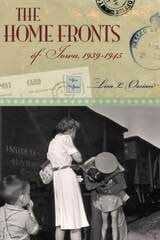
cover of The Home Fronts of Iowa, 1939-1945

The Home Fronts of Iowa, 1939-1945

Lisa L. Ossian

University of Missouri Press, 2018

As Americans geared up for World War II, each state responded according to its economy and circumstances—as well as the disposition of its citizens. This book considers the war years in Iowa by looking at activity on different home fronts and analyzing the resilience of Iowans in answering the call to support the war effort.
With its location in the center of the country, far from potentially threatened coasts, Iowa was also the center of American isolationism—historically Republican and resistant to involvement in another European war. Yet Iowans were quick to step up, and Lisa Ossian draws on historical archives as well as on artifacts of popular culture to record the rhetoric and emotion of their support.
Ossian shows how Iowans quickly moved from skepticism to overwhelming enthusiasm for the war and answered the call on four fronts: farms, factories, communities, and kitchens. Iowa’s farmers faced labor and machinery shortages, yet produced record amounts of crops and animals—even at the expense of valuable topsoil. Ordnance plants turned out bombs and machine gun bullets. Meanwhile, communities supported war bond and scrap drives, while housewives coped with rationing, raised Victory gardens, and turned to home canning.
The Home Fronts of Iowa, 1939–1945 depicts real people and their concerns, showing the price paid in physical and mental exhaustion and notes the heavy toll exacted on Iowa’s sons who fell in battle. Ossian also considers the relevance of such issues as race, class, and gender—particularly the role of women on the home front and the recruitment of both women and blacks for factory work—taking into account a prevalent suspicion of ethnic groups by the state’s largely homogeneous population.
The fact that Iowans could become loyal citizen soldiers—forming an Industrial and Defense Commission even before Pearl Harbor—speaks not only to the patriotism of these sturdy midwesterners but also to the overall resilience of Americans. In unraveling how Iowans could so overwhelmingly support the war, Ossian digs deep into history to show us the power of emotion—and to help us better understand why World War II is consistently remembered as “the Good War.”
[more]