Results by title
5 books match the query '1941 - 1945'
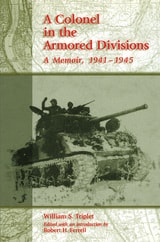
A Colonel in the Armored Divisions
A Memoir, 1941-1945William S. Triplet, Edited by Robert H. Ferrell
University of Missouri Press, 2001
In this fascinating memoir William S. Triplet continues the saga begun in his earlier book, A Youth in the Meuse-Argonne: A Memoir, 1917-1918. After serving in World War I, Triplet chose to become a career military man and entered West Point. Upon graduation in 1924, his assignments were routine—to regiments in the Southwest and in Panama or as an officer in charge of Reserve Officers' Training Corps units or of men sent to a tank school. All this changed, however, when a new war opened in Europe.
From 1940 to1942, Triplet was assigned to the Infantry Board at Fort Benning, Georgia, where he engaged in testing new weapons and machines for the expanding army. He became a full colonel in December 1942. After leaving Benning he received posts with four armored forces: the Thirteenth Armored Division forming in the United States, an amphibious tank and troop carrier group training at Fort Ord, California, and the Second and Seventh Armored Divisions in Europe. His extraordinary abilities as a tank commander became evident in the Seventh Armored, where he took over a four-thousand-man unit known as Combat Command A. He was soon moving from triumph to triumph as he led his unit into Germany. Here was much room for professional judgment and decision, and the colonel was in his element. In the war's last days Triplet and his men fought their way to the Baltic, preventing many German troops from joining in the defense of Berlin against the advancing Soviet army.
Although Triplet was recommended for brigadier general, Dwight D. Eisenhower believed the U.S. Army had enough generals to finish the war; thus, the indomitable Triplet served out the few remaining years of his career as a colonel. After retiring in 1954, Triplet moved to Leesburg, Virginia, where he soon began to mull over his military experiences. Fascinated by the history he had witnessed, engaged by the attraction of writing about it, he recorded his memories with a combination of verve, thoughtfulness, and harsh judgments concerning ranking officers he considered incompetent— generals not excluded.
Through his annotations, Robert H. Ferrell provides the historical context for Triplet's experiences. Well written and completely absorbing, A Colonel in the Armored Divisions provides readers the rare opportunity to see firsthand what a real professional in the U.S. Army thought about America's preparation for and participation in the war against Germany and Japan.
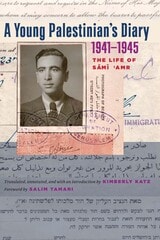
A Young Palestinian's Diary, 1941–1945
The Life of Sami 'AmrTranslated, annotated, and with an introduction by Kimberly Katz
University of Texas Press, 2009
Writing in his late teens and early twenties, Sāmī ‘Amr gave his diary an apt subtitle: The Battle of Life, encapsulating both the political climate of Palestine in the waning years of the British Mandate as well as the contrasting joys and troubles of family life. Now translated from the Arabic, Sāmī's diary represents a rare artifact of turbulent change in the Middle East.
Written over four years, these ruminations of a young man from Hebron brim with revelations about daily life against a backdrop of tremendous transition. Describing the public and the private, the modern and the traditional, Sāmī muses on relationships, his station in life, and other universal experiences while sharing numerous details about a pivotal moment in Palestine's modern history. Making these never-before-published reflections available in translation, Kimberly Katz also provides illuminating context for Sāmī's words, laying out biographical details of Sāmī, who kept his diary private for close to sixty years. One of a limited number of Palestinian diaries available to English-language readers, the diary of Sāmī ‘Amr bridges significant chasms in our understanding of Middle Eastern, and particularly Palestinian, history.
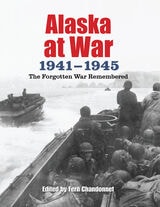
Alaska at War, 1941-1945
The Forgotten War RememberedEdited by Fern Chandonnet
University of Alaska Press, 2007
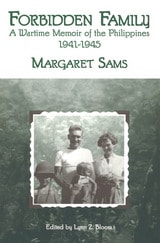
Forbidden Family
Wartime Memoir of the Philippines, 1941-1945Margaret Sams
University of Wisconsin Press, 1997
Written just five years after the end of World War II, this is Margaret Sams’s moving testimony of life in a Japanese internment camp—the can of Spam hoarded for Christmas dinner, the clandestine radio hidden in her sewing kit, the beheading of other prisoners for transgressions. With her husband held elsewhere as a prisoner of war and with a small son to protect, Margaret broke the rules both of society and of her captors to fall in love and bear a child with a kind and daring fellow internee, Jerry Sams.
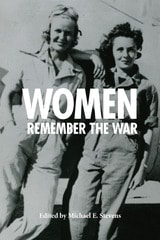
Women Remember the War, 1941-1945
Michael E. Stevens
Wisconsin Historical Society Press, 1993
Women Remember the War, 1941-1945 offers a brief introduction to the experiences of Wisconsin women in World War II through selections from oral history interviews in which women addressed issues concerning their wartime lives.
In this volume, more than 30 women describe how they balanced their more traditional roles in the home with new demands placed on them by the biggest global conflict in history. This book provides a rich mix of insights, incorporating the perspectives of workers in factories, in offices, and on farms as well as those of wives and mothers who found their work in the home. In addition, the volume contains accounts by women who served overseas in the military and the Red Cross. These accounts provide readers with a vivid picture of how women coped with the stresses created by their daily lives and by the additional burden of worrying about loved ones fighting overseas.