Results by title
46 books match the query '1942-'
A Lasting Gift
Sandra L. Cronk
QuakerPress, 2009
A Portrait in Four Movements
The Chicago Symphony under Barenboim, Boulez, Haitink, and MutiAndrew Patner
University of Chicago Press, 2019
The Chicago Symphony Orchestra has been led by a storied group of conductors. And from 1994 to 2015, through the best work of Daniel Barenboim, Pierre Boulez, Bernard Haitink, and Riccardo Muti, Andrew Patner was right there. As a classical music critic for the Chicago Sun-Times and WFMT radio, Patner was able to trace the arc of the CSO’s changing repertories, all while cultivating a deep rapport with its four principal conductors.
This book assembles Patner’s reviews of the concerts given by the CSO during this time, as well as transcripts of his remarkable radio interviews with these colossal figures. These pages hold tidbits for the curious, such as Patner’s “driving survey” that playfully ranks the Maestri he knew on a scale of “total comfort” to “fright level five,” and the observation that Muti appears to be a southpaw on the baseball field. Moving easily between registers, they also open revealing windows onto the sometimes difficult pasts that brought these conductors to music in the first place, including Boulez’s and Haitink’s heartbreaking experiences of Nazi occupation in their native countries as children. Throughout, these reviews and interviews are threaded together with insights about the power of music and the techniques behind it—from the conductors’ varied approaches to research, preparing scores, and interacting with other musicians, to how the sound and personality of the orchestra evolved over time, to the ways that we can all learn to listen better and hear more in the music we love. Featuring a foreword by fellow critic Alex Ross on the ethos and humor that informed Patner’s writing, as well as an introduction and extensive historical commentary by musicologist Douglas W. Shadle, this book offers a rich portrait of the musical life of Chicago through the eyes and ears of one of its most beloved critics.
Adiós Muchachos
A Memoir of the Sandinista RevolutionSergio Ramírez
Duke University Press, 2012
Derek Jarman and Lyric Film
The Mirror and the SeaBy Steven Dillon
University of Texas Press, 2004
Derek Jarman was the most important independent filmmaker in England during the 1980s. Using emblems and symbols in associative contexts, rather than conventional, cause-and-effect narrative, he created films noteworthy for their lyricism and poetic feeling and for their exploration of the gay experience. His style of filmmaking also links Jarman with other prominent directors of lyric film, including Pier Paolo Pasolini, Andrei Tarkovsky, Jean Cocteau, and Jean Genet.
This pathfinding book places Derek Jarman in the tradition of lyric film and offers incisive readings of all eleven of his feature-length films, from Sebastiane to Blue. Steven Dillon looks at Jarman and other directors working in a similar vein to establish how lyric films are composed through the use of visual imagery and actual poetry. He then traces Jarman's use of imagery (notably mirrors and the sea) in his films and discusses in detail the relationship between cinematic representations and sexual identity. This insightful reading of Jarman's work helps us better understand how films such as The Last of England and The Garden can be said to cohere and mean without being reduced to clear messages. Above all, Dillon's book reveals how truly beautiful and brilliant Jarman's movies are.
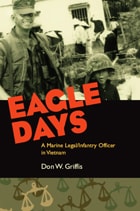
Eagle Days
A Marine Legal/Infantry Officer in VietnamDonald W. Griffis
University of Alabama Press, 2007
A rare Vietnam memoir from the crossroads of combat and military justice.
Much has been written about America’s war in Vietnam, and an enduring and troubling subtext is the composition of the body of soldiers that made up the U.S. troop deployment: from the initially well-trained and disciplined group of largely elite units that served in the mid-sixties to what has been termed an “armed mob” by the end of that decade and into the early 1970s. Drug use, insubordination, racial antagonism that often became violent, theft and black market dealing, and even “fragging” (murder of officers and senior noncoms by disgruntled troops) marred the record of the U.S. military presence. Don Griffis served in the twin roles of legal officer charged at various times with the task of both defending and prosecuting servicemen, while at the same time leading combat patrols in “search and destroy” missions against the Viet Cong and North Vietnamese enemy. Eagle Days is a remarkable account of Griffis’ personal record of experiencing what the military should do best—meet, engage, and defeat the enemy—and what it becomes when esprit de corps, discipline, and a sense of purpose decay.
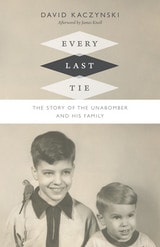
Every Last Tie
The Story of the Unabomber and His FamilyDavid Kaczynski
Duke University Press, 2016
Every Wrong Direction
An Emigré’s MemoirDan Burt
Rutgers University Press, 2023
Every Wrong Direction recreates and dissects the bitter education of Dan Burt, an American émigré who never found a home in America. It begins in the row homes of Jewish immigrants and working-class Italians on the mean streets of 1950s South Philadelphia. Every Wrong Direction follows the author from the rough, working-class childhood that groomed him to be a butcher or charter boat captain, through America, Britain and Saudi Arabia as student, lawyer, spy, culture warrior, and expatriate, ending with a photo of his college rooms at St John’s College, Cambridge. Between this beginning and end, through a Philadelphia commuter college, to Cambridge, then Yale Law School, across the working to upper classes, three countries, and seven cities over 43 years, it maps his pursuit of, realization, disillusionment with and abandonment of America and the American Dream.
Praise for Dan Burt's previous memoir, You Think It Strange:
“Burt’s early life was indeed a triumph of wit and will. He managed to escape a world filled with violence and a culture that valued street smarts over book smarts, all the while knowing that just about everyone around him thought little of his prospects. That he made it out at all is extraordinary. That he became a successful lawyer and writer is virtually unimaginable.” —Commonweal
“Dan Burt is a fine poet, and this memoir has all the sensitivity and vigilance you might expect from a writer with such a background. But his prose also has a robustness and documentary power that continually startles and engages. As it combines these things, You Think It Strange catches the strangeness of the world and makes it familiar.”
—Sir Andrew Motion, Poet Laureate of the United Kingdom, 1999-2009
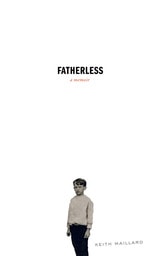
Fatherless
A MemoirKeith Maillard
West Virginia University Press, 2019
This story begins with a phone call out of the blue: a lawyer tells a writer that his ninety-six-year-old father, with whom he has had no contact since the age of three and whom he has twice tried to find without success, has just died, leaving him nothing. Half-reluctant, half-fascinated, both angry and curious, Keith Maillard begins to research his father’s life. The result is a suspenseful work of historical reconstruction—a social history often reading like a detective story—as well as a psychologically acute portrait of the impact of a father’s absence. Walking a tightrope between the known and the unknown, and following a trail that takes him from Vancouver to Montreal to his native Wheeling, West Virginia, Keith Maillard has pulled off a book that only a novelist of his stature could write.
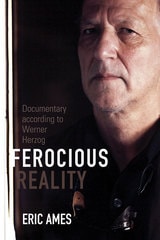
Ferocious Reality
Documentary according to Werner HerzogEric Ames
University of Minnesota Press, 2012
Over the course of his career Werner Herzog, known for such visionary masterpieces as Aguirre: The Wrath of God (1972) and The Enigma of Kaspar Hauser (1974), has directed almost sixty films, roughly half of which are documentaries. And yet, in a statement delivered during a public appearance in 1999, the filmmaker declared: “There are deeper strata of truth in cinema, and there is such a thing as poetic, ecstatic truth. It is mysterious and elusive, and can be reached only through fabrication and imagination and stylization.” Ferocious Reality is the first book to ask how this conviction, so hostile to the traditional tenets of documentary, can inform the work of one of the world’s most provocative documentarians.
Herzog, whose Cave of Forgotten Dreams was perhaps the most celebrated documentary of 2010, may be the most influential filmmaker missing from major studies and histories of documentary. Examining such notable films as Lessons of Darkness (1992) and Grizzly Man (2005), Eric Ames shows how Herzog dismisses documentary as a mode of filmmaking in order to creatively intervene and participate in it. In close, contextualized analysis of more than twenty-five films spanning Herzog’s career, Ames makes a case for exploring documentary films in terms of performance and explains what it means to do so. Thus his book expands the field of cinema studies even as it offers an invaluable new perspective on a little studied but integral part of Werner Herzog’s extraordinary oeuvre.
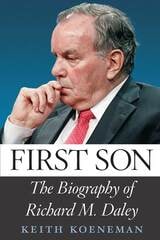
First Son
The Biography of Richard M. DaleyKeith Koeneman
University of Chicago Press, 2013
"Mayor Richard M. Daley dropped the bomb at a routine news conference at City Hall on Tuesday. With no prelude or fanfare, Mr. Daley announced that he would not seek re-election when his term expires next year. 'Simply put, it's time,' he said." New York Times, September 7, 2010
With those four words, an era ended. After twenty-two years, the longest-serving and most powerful mayor in the history of Chicago—and, arguably, America—stepped down, leaving behind a city that was utterly transformed, and a complicated legacy we are only beginning to evaluate.
With Koeneman as our guide, we follow young Daley from his beginnings as an average Bridgeport kid thought to lack his father's talent and charisma to his unlikely transformation into an iron-fisted leader. Daley not only escaped the giant shadow of his father but also transformed Chicago from a gritty, post-industrial Midwestern capital into a beautiful, sophisticated global city widely recognized as a model for innovative metropolises throughout the world.
But in spite of his many accomplishments, Richard M. Daley's record is far from flawless. First Son sets the dramatic improvement of certain parts of the city against the persistent realities of crime, financial stress , failing public housing, and dysfunctional schools. And it reveals that while in many ways Daley broke with the machine politics of his father, he continued to reward loyalty with favors, use the resources of city government to overwhelm opponents, and tolerate political corruption.
A nuanced portrait of a complex man, First Son shows Daley to be sensitive yet tough, impatient yet persistent, a street-smart fighter and detail-driven policy expert who not only ran Chicago, but was Chicago.
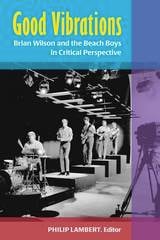
Good Vibrations
Brian Wilson and the Beach Boys in Critical PerspectivePhilip Lambert, Editor
University of Michigan Press, 2016
The book joins a growing body of literature on the popular music of the 1960s, in general, and on Brian Wilson and the Beach Boys in particular. But Good Vibrations extends the investigation further and deeper than it has gone before, not only offering new understanding and insights into individual songs and albums, but also providing close examination of compositional techniques and reflections on the group’s place in American popular culture.
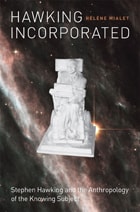
Hawking Incorporated
Stephen Hawking and the Anthropology of the Knowing SubjectHélène Mialet
University of Chicago Press, 2012
These days, the idea of the cyborg is less the stuff of science fiction and more a reality, as we are all, in one way or another, constantly connected, extended, wired, and dispersed in and through technology. One wonders where the individual, the person, the human, and the body are—or, alternatively, where they stop. These are the kinds of questions Hélène Mialet explores in this fascinating volume, as she focuses on a man who is permanently attached to assemblages of machines, devices, and collectivities of people: Stephen Hawking.
Drawing on an extensive and in-depth series of interviews with Hawking, his assistants and colleagues, physicists, engineers, writers, journalists, archivists, and artists, Mialet reconstructs the human, material, and machine-based networks that enable Hawking to live and work. She reveals how Hawking—who is often portrayed as the most singular, individual, rational, and bodiless of all—is in fact not only incorporated, materialized, and distributed in a complex nexus of machines and human beings like everyone else, but even more so. Each chapter focuses on a description of the functioning and coordination of different elements or media that create his presence, agency, identity, and competencies. Attentive to Hawking’s daily activities, including his lecturing and scientific writing, Mialet’s ethnographic analysis powerfully reassesses the notion of scientific genius and its associations with human singularity. This book will fascinate anyone interested in Stephen Hawking or an extraordinary life in science.
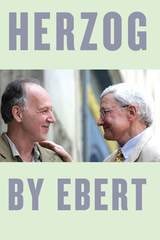
Herzog by Ebert
Roger Ebert
University of Chicago Press, 2017
Herzog by Ebert is a comprehensive collection of Ebert’s writings about the legendary director, featuring all of his reviews of individual films, as well as longer essays he wrote for his Great Movies series. The book also brings together other essays, letters, and interviews, including a letter Ebert wrote Herzog upon learning of the dedication to him of “Encounters at the End of the World;” a multifaceted profile written at the 1982 Cannes Film Festival; and an interview with Herzog at Facet’s Multimedia in 1979 that has previously been available only in a difficult-to-obtain pamphlet. Herzog himself contributes a foreword in which he discusses his relationship with Ebert.
Brimming with insights from both filmmaker and film critic, Herzog by Ebert will be essential for fans of either of their prolific bodies of work.
I've Learned Some Things
By Ataol Behramoğlu
University of Texas Press, 2008
I've Learned Some Things allows English-language readers the rare opportunity to experience the work of Ataol Behramoğlu, one of Turkey's most celebrated poets. The sixty-six poems in this collection span the author's extraordinary career and are stunning examples of the intense emotional quality of his work. Behramoğlu celebrates the rich fabric of everyday life by exploring both personal and social struggles, sometimes employing a whimsical tone.
Walter G. Andrews's skillful translation conveys the vibrancy of Behramoğlu's work to an English-language audience, and this bilingual edition allows Turkish-language readers to follow the original text.
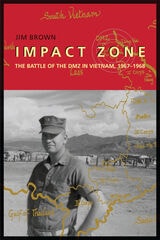
Impact Zone
The Battle of the DMZ in Vietnam, 1967–1968Jim Brown
University of Alabama Press, 2004
In the heart of the DMZ, one Marine faced the war—and the truth behind it.
Impact Zone documents Marine First Lieutenant James S. Brown's intense battle experiences, including those at Khe Sanh and Con Thien, throughout his thirteen months of service on the DMZ during 1967-68. This high-action account also reflects Brown's growing belief that the Vietnam War was mis-fought due to the unproductive political leadership of President Johnson and his administration. Brown's naiveté developed into hardening skepticism and cynicism as he faced the harsh realities of war, though he still managed to retain a sense of honor, pride, and patriotism for his country.
Impact Zone is a distinctive book on the Vietnam War because it is told from the perspective of an artilleryman, and the increasingly dangerous events gain momentum as they progress from one adventure to the next. Impact Zone is not only an important historical document of the Vietnam conflict, but also a moving record of the personal and emotional costs of war.
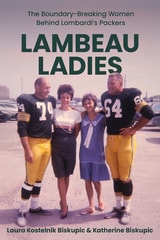
Lambeau Ladies
The Boundary-Breaking Women Behind Lombardi’s PackersLaura Kostelnik Biskupic
Wisconsin Historical Society Press, 2026
A book for anyone who thinks they know everything there is to know about the Green Bay Packers!
Long before NFL players had teams of trainers, nutritionists, therapists, agents, and other specialists, the dynastic Green Bay Packers of the 1960s relied on a different kind of support staff: their wives. In Lambeau Ladies, mother and daughter Laura Kostelnik Biskupic and Katherine Biskupic tell the remarkable, largely untold story of the women who helped to keep the Lombardi-era Packers performing at a championship level. From preparing game-day sandwiches, nursing injuries, and reviewing game film to managing households, hosting social gatherings, and providing emotional strength to their spouses, these women were a driving force behind one of the greatest teams in football history.
Through intimate interviews and vivid storytelling, the authors bring to life the experiences of Cherry Starr, Vicky Aldridge, Barbara Gregg, Ruth Pitts, Peggy Kostelnik, and many other wives who formed deep friendships and carved out lives of meaning far from their hometowns, often in the face of social and racial barriers. With humor and candor, they describe making ends meet on modest salaries, feeding hungry young players who wandered into their kitchens, boosting their husbands’ confidence, and coming up with ingenious strategies for staying warm—and stylish—on the sidelines during Green Bay’s frigid winters.
Their stories reach far beyond football. Some of these women helped integrate Green Bay during the civil rights movement. One became one of the district’s first Black teachers; another was half of one of the NFL’s first interracial marriages. Others made contributions in their own singular ways—fostering children, launching a business and a community organization, becoming a voice in local media. And at the center of it all was Marie Lombardi, the coach’s wife and the de facto mentor of the entire wives’ cohort, whose influence extended from locker-room culture to community life.
Lambeau Ladies paints a rich portrait of midcentury Green Bay—a place where championship football, small-town rhythms, and national social change converged—and reveals how the Packers’ dynasty was shaped as much in living rooms, kitchens, and carpool lanes as on the frozen turf of Lambeau Field.
Warm, funny, and deeply inspiring, Lambeau Ladies celebrates the extraordinary women who helped build a dynasty—and, in the process, changed their town, their team, and each other.
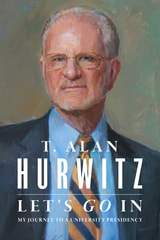
Let’s Go In
My Journey to a University PresidencyT. Alan Hurwitz
Gallaudet University Press, 2020
Additional images, videos, and supplemental readings are available at the Gallaudet University Press/Manifold online platform.
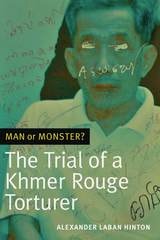
Man or Monster?
The Trial of a Khmer Rouge TorturerAlexander Laban Hinton
Duke University Press, 2016
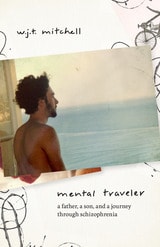
Mental Traveler
A Father, a Son, and a Journey through SchizophreniaW. J. T. Mitchell
University of Chicago Press, 2020
Gabriel Mitchell was diagnosed with schizophrenia at age twenty-one and died by suicide eighteen years later. He left behind a remarkable archive of creative work and a father determined to honor his son’s attempts to conquer his own illness. Before his death, Gabe had been working on a film that would show madness from inside and out, as media stereotype and spectacle, symptom and stigma, malady and minority status, disability and gateway to insight. He was convinced that madness is an extreme form of subjective experience that we all endure at some point in our lives, whether in moments of ecstasy or melancholy, or in the enduring trauma of a broken heart. Gabe’s declared ambition was to transform schizophrenia from a death sentence to a learning experience, and madness from a curse to a critical perspective.
Shot through with love and pain, Mental Traveler shows how Gabe drew his father into his quest for enlightenment within madness. It is a book that will touch anyone struggling to cope with mental illness, and especially for parents and caregivers of those caught in its grasp.
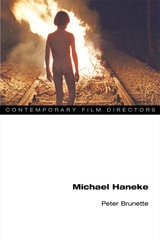
Michael Haneke
Peter Brunette
University of Illinois Press, 2010
Michael Haneke
The Intermedial VoidChristopher Rowe
Northwestern University Press, 2017
Muhammad Ali
The Making of an IconMichael Ezra
Temple University Press, 2009
Muhammad Ali (born Cassius Clay) has always engendered an emotional reaction from the public. From his appearance as an Olympic champion to his iconic status as a national hero, his carefully constructed image and controversial persona has always been intensely scrutinized. In Muhammad Ali, Michael Ezra considers the boxer who calls himself “The Greatest” from a new perspective. He writes about Ali’s pre-championship bouts, the management of his career and his current legacy, exploring the promotional aspects of Ali and how they were wrapped up in political, economic, and cultural “ownership.”
Ezra’s incisive study examines the relationships between Ali’s cultural appeal and its commercial manifestations. Citing examples of the boxer’s relationship to the Vietnam War and the Nation of Islam—which serve as barometers of his “public moral authority”—Muhammad Ali analyzes the difficulties of creating and maintaining these cultural images, as well as the impact these themes have on Ali’s meaning to the public.

My Life with President Kennedy
Christopher Clausen
University of Iowa Press, 1994
As its title implies, this book reflects in varying ways the experiences and attitudes of one who came of age in the first half of that now mythical decade, the 1960s. In an unusual combination of history, criticism, and autobiography, one of our best literary and cultural critics explores life and death in the late twentieth century and some of the older worlds that made American culture what it is today.
Sixties survivors, as Christopher Clausen points out, do not necessarily hold more beliefs or tastes in common than any other group. Nevertheless they may be more likely than most people born earlier or later to consider the relations between public and private life—the political and the personal—a problem, sometimes even an unresolvable problem. While this is not primarily a book about the 1960s, most of it occupies the noisy crossroads where public worlds intersect the private, mysterious lives of individuals and families, where ordinary people pursue their own destinies and desires while submitting consciously or unconsciously to the pressures of the public sphere—a set of demands or aspirations common to people in a particular time and place.
In modern America, where most of these essays are set, any individual is likely to live in several worlds at any given moment, as well as to pass through several more over a lifetime. Because of rapid transitions in public life and culture while they were still at an impressionable age, members of the “Kennedy generation” became almost morbidly conscious of the persistence of the past in the present. The often unpredictable effect on individual lives of historical forces is the main subject of Clausen's fascinating account.
Of Walking in Ice
Munich-Paris, 23 November–14 December 1974Werner Herzog
University of Minnesota Press, 2015
In late November 1974, filmmaker Werner Herzog received a phone call from Paris delivering some terrible news. German film historian, mentor, and close friend Lotte Eisner was seriously ill and dying. Herzog was determined to prevent this and believed that an act of walking would keep Eisner from death. He took a jacket, a compass, and a duffel bag of the barest essentials, and wearing a pair of new boots, set off on a three-week pilgrimage from Munich to Paris through the deep chill and snowstorms of winter.
Of Walking in Ice is Herzog’s beautifully written, much-admired, yet often-overlooked diary account of that journey. Herzog documents everything he saw and felt on his quest to his friend’s bedside, from poetic descriptions of the frozen landscape and harsh weather conditions to the necessity of finding shelter in vacant or abandoned houses and the intense loneliness of his solo excursion.
Includes, for the first time, Werner Herzog’s 1982 “Tribute to Lotte Eisner” upon her receipt of the Helmut Käutner Prize
Over the Waves and Other Stories / Sobre las olas y otros cuentos
A Bilingual EditionInés María Martiatu
Swan Isle Press, 2009
The history of the Caribbean, as part of the African diaspora, is reflected in the textures of life in Cuba, its music, rituals and myths, the Church and Santería, past and present. While race is unquestionably fundamental to the stories, they are at the same time rooted in the universality of the human experience. The vantage is that of an unflinching, yet compassionate observer of society—one who simultaneously turns an introspective mirror on the complicated layers of self.
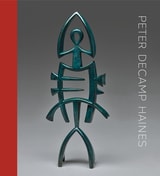
Peter DeCamp Haines
Sculpture, 1975–2024Peter DeCamp Haines
The Artist Book Foundation, 2025
The first major monograph on Peter DeCamp Haines, this title explores how the sculptor's interest in psychology and anthropology deeply informed his art.
This book is the first major monograph on the work of Peter DeCamp Haines (March 27, 1942–October 25, 2024), which builds on the evolution of Modernism as much as it harkens back to the Bronze Age. The clearest expression of this is a series of 1,000 elemental bronze “artifacts” he created over the course of nearly fifty years, to which he contributed yearly, ranging from palm-size pieces to colossal outdoor works. He called this output “a personal archaeology,” or “an archaeology of the subconscious,” referencing ancient tools, animal and human shapes, and the synchronicity of antique forms with the purely abstract.
Haines’s interest in psychology and anthropology deeply informed his art. Working in a Modernist tradition, his career pursued a continuing exploration of the formal attributes of sculpture: form, scale, negative space, and composition. As Haines saw it, one of the satisfactions of sculpture is that ideas such as wholeness, beauty, and timelessness can be expressed without words and one of the critical elements of this wordless communication is negative space. Thus, the doorways, windows, and silhouettes of his sculptures can suggest an area larger than the sculpture itself.
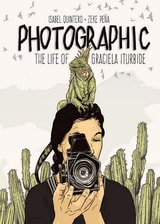
Photographic
The Life of Graciela IturbideIsabel Quintero
J. Paul Getty Trust, The, 2021
Renowned Mexican photographer Graciela Iturbide was born in Mexico City in 1942, the oldest of thirteen children. When tragedy strikes Graciela as a young mother, she turns to photography for solace and understanding.
From then on Graciela embarks on a photographic journey that takes her throughout her native Mexico, from the Sonora Desert to Juchitán to Frida Kahlo’s bathroom, and then to the United States, India, and beyond.
Photographic is a symbolic, poetic, and deeply personal graphic biography of this iconic photographer. Graciela’s journey will excite young adults and budding photographers, who will be inspired by her resolve, talent, and curiosity.
Ages twelve and up
Politics, Metaphysics, and Death
Essays on Giorgio Agamben's Homo SaceAndrew Norris, ed.
Duke University Press, 2005
The contributors analyze Agamben’s thought from the perspectives of political theory, philosophy, jurisprudence, and the history of law. They consider his work not only in relation to that of his major interlocutors—Hannah Arendt, Michel Foucault, Carl Schmitt, Walter Benjamin, and Martin Heidegger—but also in relation to the thought of Plato, Pindar, Heraclitus, Descartes, Kafka, Bataille, and Derrida. The essayists’ approaches are varied, as are their ultimate evaluations of the cogency and accuracy of Agamben’s arguments. This volume also includes an original essay by Agamben in which he considers the relation of Benjamin’s “Critique of Violence” to Schmitt’s Political Theology. Politics, Metaphysics, and Death is a necessary, multifaceted exposition and evaluation of the thought of one of today’s most important political theorists.
Contributors: Giorgio Agamben, Andrew Benjamin, Peter Fitzpatrick, Anselm Haverkamp, Paul Hegarty, Andreas Kalyvas, Rainer Maria Kiesow , Catherine Mills, Andrew Norris, Adam Thurschwell, Erik Vogt, Thomas Carl Wall
Prairie Reunion
Barbara J. Scot
University of Iowa Press, 2000
Prolegomena to Any Future Materialism
A Weak Nature AloneAdrian Johnston
Northwestern University Press, 2019
Adrian Johnston’s trilogy Prolegomena to Any Future Materialism aims to forge a thoroughly materialist yet antireductive theory of subjectivity. In this second volume, A Weak Nature Alone, Johnston focuses on the philosophy of nature required for such a theory. This volume is guided by a fundamental question: How must nature be rethought so that human minds and freedom do not appear to be either impossible or inexplicable within it? Asked differently: How must the natural world itself be structured such that sapient subjects in all their distinctive peculiarities emerged from and continue to exist within this world?
In A Weak Nature Alone, Johnston develops his transcendental materialist account of nature through engaging with and weaving together five main sources of inspiration: Hegelian philosophy, Marxist materialism, Freudian-Lacanian metapsychology, Anglo-American analytic neo-Hegelianism, and evolutionary theory and neurobiology. Johnston argues that these seemingly (but not really) strange bedfellows should be brought together so as to construct a contemporary ontology of nature. Through this ontology, nonnatural human subjects can be seen to arise in an immanent, bottom-up fashion from nature itself.
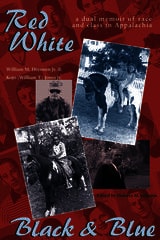
Red, White, Black, and Blue
A Dual Memoir of Race and Class in AppalachiaWilliam M. Drennen Jr., Kojo (William T.) Jones Jr.
Ohio University Press, 2004
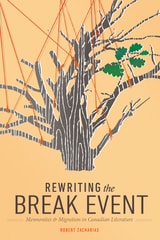
Rewriting the Break Event
Mennonites and Migration in Canadian LiteratureRobert Zacharias
University of Manitoba Press, 2013
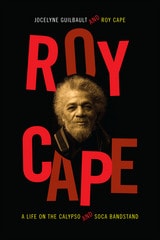
Roy Cape
A Life on the Calypso and Soca BandstandJocelyne Guilbault and Roy Cape
Duke University Press, 2014
The Black Aesthetic Unbound
Theorizing the Dilemma of Eighteenth-Century African American LiteratureApril C. E. Langley
The Ohio State University Press, 2007
Consequently, this book has three aims: to locate the eighteenth century as the genesis of the cultural and historical movements which mark twentieth-century black aestheticism—known as the Black Aesthetic; to analyze problematic associations of African identity as manifested in an essentialized Afro-America; and to study the relationship between specific West African modes of thought and expression and the emergence of a black aesthetic in eighteenth-century North America. By exploring how Senegalese, Igbo, and other West African traditions provide striking new lenses for reading poetry and prose by six significant writers, Langley offers a fresh perspective on this important era in our literary history. Ultimately, the author confronts the difficult dilemma of how to use diasporic, syncretic, and vernacular theories of Black culture to think through the massive cultural transformations wrought by the Middle Passage.
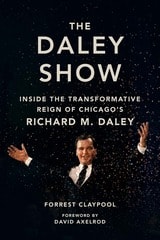
The Daley Show
Inside the Transformative Reign of Chicago's Richard M. DaleyForrest Claypool; Foreword by David Axelrod
University of Illinois Press, 2024
American cities once had mayors who actually governed.
For twenty-two years, Richard M. Daley ran Chicago with the type of authority that is unthinkable today. He reshaped downtown, triggered a jobs boom, delivered the iconic Millennium Park, turned around troubled public schools, and slashed violent crime to 40-year lows. He outfoxed Republican legislators to retain control of O’Hare Airport and expand it into the nation’s premier international aviation hub. Leveraging carefully built national political ties, he sidelined a powerful nemesis to tear down Chicago’s infamous public housing projects.
Rebuilding parts of his father’s legendary political machine through brazen (and illegal) patronage deals, he centralized power to a remarkable degree, cut deals behind closed doors, racked up piles of debt, and made long-term bets whose consequences are still unfolding.
This is not simply a biography. It is a challenge to contemporary urban orthodoxy:
Do cities thrive because of strong, decisive leaders—or despite them?
Through vivid storytelling, this book exposes how Daley consolidated power, aligned business and labor, navigated crises, survived damaging scandals, and imposed discipline on a sprawling city. It dares readers to reconsider what kind of leadership modern American cities truly need.
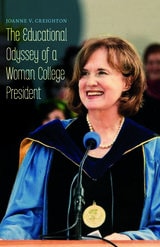
The Educational Odyssey of a Woman College President
Joanne V. Creighton
University of Massachusetts Press, 2018
In her autobiography, The Educational Odyssey of a Woman College President, Creighton situates her tenure at Mount Holyoke within a life and career that have traversed breathtaking changes in higher education and social life. Having held multiple roles in academia spanning undergraduate, professor, and president, Creighton served at small colleges and large public universities and experienced the dramatic changes facing women across the academy. From her girlhood in Wisconsin to the presidency of a storied women's college, she bears witness to the forces that have reshaped higher education for women and continues to advocate for the liberal arts and sciences.
The Nude Beach Notebook
Barbara J. Scot
Oregon State University Press, 2014
Scot uses long, meditative walks on the “clothing optional” beach of the idyllic Sauvie Island near Portland, Oregon, to explore family responsibility, time’s passage, and faith. She weaves entries from her notebook—a record of the island’s wildlife, descriptions of the “Odd Ones” she encounters on the beach, and stories about the native people who once lived on the river—with the main narrative, tracing her search for her brother, her close friendship with a fellow writer, and daily life on the houseboat moorage where she lives.
The Nude Beach Notebook highlights the importance of place as a means for exploring and interpreting one’s own story. In the end, Scot’s walks on Sauvie Island lead to her own redemptive journey. She considers the uses of fiction and non-fiction in memory and in writing, the brevity and beauty of human existence, and the inscrutable, enduring mystery of death.
The Pãltinis Diary
A Paideic Model in Humanist CultureGabriel Liiceanu
Central European University Press, 2000
The intellectual resistance to totalitarian regimes can take many forms. This remarkable volume portrays one such story of resistance in Romania during the reign of Ceauşescu: that of Constantin Noica, one of the country’s foremost intellectuals.
Noica was an original thinker belonging to the remarkable intellectual generation of important figures such as Mircea Eliade, E. M. Cioran and Eugene Ionescu, but he chose to stay in Romania after the communist takeover when many others fled. Harassed and jailed for six years, Noica retreated to the mountains and gathered around him some brilliant young minds and future talent to challenge and nurture them in a time when communism denied them the materials of true intellectual importance.
This group of students withdrew to Noica’s retreat for intensive philosophical sessions to debate the works of Kant, Plato, Heidegger and discuss humanistic values. The author of this volume Liiceanu, himself a brilliant philosopher, was Noica’s closest disciple and during every meeting he noted every conversation in a diary which came to be known as The Păltiniş Diary. These conversations were secretly published and quickly devoured by intellectuals in Romania who were prepared to sacrifice part of their food provisions to acquire the book. The Păltiniş Diary sold out within a matter of days and because of Secret Police censorship, was not published again in Romania until 1991 by which time Noica had died and the group had disbanded to help with the reconstruction of post-Ceauşescu Romania.
The Păltiniş Diary is a wonderful homage to an intellectual master and to the power of intellect and freedom. The book will be of interest to philosophers, non-philosophers alike, and to anyone who seeks to grasp the true meaning of survival under totalitarian conditions.
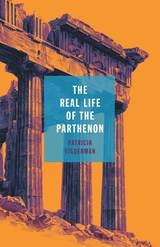
The Real Life of the Parthenon
Patricia Vigderman
The Ohio State University Press, 2018
Ownership battles over the marbles removed from the Parthenon by Lord Elgin have been rumbling into invective, pleading, and counterclaims for two centuries. The emotional temperature around them is high, and steering across the vast past to safe anchor in a brilliant heritage is tricky. The stories around antiquities become distorted by the pull of ownership, and it is these stories that urge Patricia Vigderman into her own exploration of their inspiring legacy in her compelling extended essay, The Real Life of the Parthenon.
Vigderman’s own journey began at the Parthenon, but curiosity edged her further onto the sea between antiquity and the present. She set out to seek the broken temples and amphorae, the mysterious smiles of archaic sculpture, and the finely hammered gold of a funeral wreath among the jumbled streets of modern Athens, the fertile fields of Sicily, the mozzarella buffalo of Paestum. Guided along the way toward the enduring landscapes and fractured history by archeologists, classicists, historians, and artists—and by the desire they inspire—she was caught by ongoing, contemporary local life among the ruins. Gathering present meaning and resonance for the once and future remains of vanished glory, The Real Life of the Parthenon illuminates an important but shadowy element of our common cultural life: the living dynamic between loss and delight.
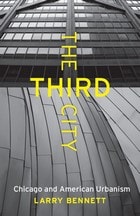
The Third City
Chicago and American UrbanismLarry Bennett
University of Chicago Press, 2010
Our traditional image of Chicago—as a gritty metropolis carved into ethnically defined enclaves where the game of machine politics overshadows its ends—is such a powerful shaper of the city’s identity that many of its closest observers fail to notice that a new Chicago has emerged over the past two decades. Larry Bennett here tackles some of our more commonly held ideas about the Windy City—inherited from such icons as Theodore Dreiser, Carl Sandburg, Daniel Burnham, Robert Park, Sara Paretsky, and Mike Royko—with the goal of better understanding Chicago as it is now: the third city.
Bennett calls contemporary Chicago the third city to distinguish it from its two predecessors: the first city, a sprawling industrial center whose historical arc ran from the Civil War to the Great Depression; and the second city, the Rustbelt exemplar of the period from around 1950 to 1990. The third city features a dramatically revitalized urban core, a shifting population mix that includes new immigrant streams, and a growing number of middle-class professionals working in new economy sectors. It is also a city utterly transformed by the top-to-bottom reconstruction of public housing developments and the ambitious provision of public works like Millennium Park. It is, according to Bennett, a work in progress spearheaded by Richard M. Daley, a self-consciously innovative mayor whose strategy of neighborhood revitalization and urban renewal is a prototype of city governance for the twenty-first century. The Third City ultimately contends that to understand Chicago under Daley’s charge is to understand what metropolitan life across North America may well look like in the coming decades.
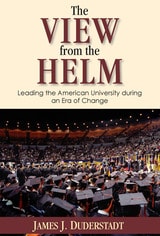
The View from the Helm
Leading the American University during an Era of ChangeJames J. Duderstadt
University of Michigan Press, 2009
Widely regarded as one of the most active and publicly engaged university presidents in modern academia, Duderstadt—who led the University of Michigan from 1988 to 1996—presided over a period of enormous change, not only for his institution, but for universities across the country. His presidency was a time of growth and conflict: of sweeping new affirmative-action and equal-opportunity programs, significant financial expansion, and reenergized student activism on issues from apartheid to codes of student conduct.
Under James Duderstadt’s stewardship, Michigan reaffirmed its reputation as a trailblazer among universities. Part memoir, part history, part commentary, The View from the Helm extracts general lessons from his experiences at the forefront of change in higher education, offering current and future administrators a primer on academic leadership and venturing bold ideas on how higher education should be steered into the twenty-first century.
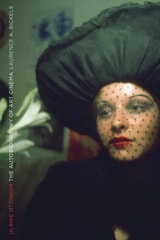
Ulrike Ottinger
The Autobiography of Art CinemaLaurence A. Rickels
University of Minnesota Press, 2008
Since 1974, German filmmaker Ulrike Ottinger has created a substantial body of films that explore a world of difference defined by the tension and transfer between settled and nomadic ways of life. In many of her films, including Exile Shanghai, an experimental documentary about the Jews of Shanghai, and Joan of Arc of Mongolia, in which passengers on the Trans-Siberian Express are abducted by Mongolian bandits, she also probes the encounter with the other, whether exotic or simply unpredictable.
In Ulrike Ottinger Laurence A. Rickels offers a series of sensitive and original analyses of Ottinger’s films, as well as her more recent photographic artworks, situated within a dazzling thought experiment centered on the history of art cinema through the turn of the twenty-first century. In addition to commemorating the death of a once-vital art form, this book also affirms Ottinger’s defiantly optimistic turn toward the documentary film as a means of mediating present clashes between tradition and modernity, between the local and the global.
Widely regarded as a singular and provocative talent, Ottinger’s conspicuous absence from critical discourse is, for Rickels, symptomatic of the art cinema’s demise. Incorporating interviews he conducted with Ottinger and illustrated with stunning examples from her photographic oeuvre, this book takes up the challenges posed by Ottinger’s filmography to interrogate, ultimately, the very practice-and possibility-of art cinema today.
Laurence A. Rickels is professor of German and comparative literature at the University of California, Santa Barbara, and the author of several books, including The Case of California, The Vampire Lectures, and the three-volume Nazi Psychoanalysis (all published by Minnesota). He is a recognized art writer whose reflections on contemporary visual art appear regularly in numerous exhibition catalogues as well as in Artforum, artUS, and Flash Art.
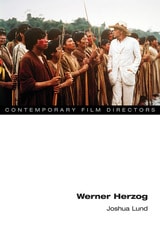
Werner Herzog
Joshua Lund
University of Illinois Press, 2020
Joshua Lund offers the first systematic interpretation of Werner Herzog's Americas-themed works, illuminating the director's career as a political filmmaker—a label Herzog himself rejects. Lund draws on materialist and post-colonial approaches to argue that Herzog's American work confronts us with the circulation, distribution, accumulation, application, and negotiation of power that resides, quietly, at the center of his films. By operating beyond conventional ideological categories, Herzog renders political ideas in radically unfamiliar ways while fearlessly confronting his viewers with questions of world-historical significance. His maddeningly opaque viewpoint challenges us to rethink discovery and conquest, migration and exploitation, resource extraction, slavery, and other foundational traumas of the contemporary human condition.
What I Saw, Heard, Learned . . .
Giorgio Agamben
Seagull Books, 2023
What can the senses of an attentive philosopher see, hear, and learn that can, in turn, teach us about living better lives? Perhaps it’s less a matter of asking what and more a matter of asking how. These latest reflections from Italy’s foremost philosopher form a sort of travelogue that chronicles Giorgio Agamben’s profound interior journey. Here, with unprecedented immediacy, Agamben shares his final remarks, late-life observations, and reflections about his life that flashed before his eyes. What did he see in that brief flash? What did he stay faithful to? What remains of all those places, friends, and teachers?
What's My Name
Black Vernacular IntellectualsGrant Farred
University of Minnesota Press, 2003
Whom does society consider an intellectual and on what grounds? Antonio Gramsci’s democratic vision of intelligence famously suggested that “all men are intellectuals,” yet within academic circles and among the general public, intellectuals continue to be defined by narrow, elite criteria.
In this study of four celebrated citizens of the African diaspora—American boxer Muhammad Ali, West Indian Marxist critic C. L. R. James, British cultural theorist Stuart Hall, and Jamaican musician Bob Marley—Grant Farred develops a new category of engaged thinker: the vernacular intellectual. Extending Gramsci’s concept of the organic intellectual, Farred conceives of vernacular intellectuals as individuals who challenge social injustice from inside and outside traditional academic or political spheres. Muhammad Ali, for example, is celebrated as much for his dazzling verbal skills and courageous political stands as for his pugilistic talents; Bob Marley’s messages of liberation are as central to his popularity as his lyrical and melodic sophistication. Neither man is described as an intellectual, yet both perform crucial intellectual functions: shaping how people see the world, oppose hegemony, and understand their own history. In contrast, the careers of C. L. R. James and Stuart Hall reflect a dynamic blend of the traditional and the vernacular. Conventionally trained and situated, James and Hall examine racism, history, and the lasting impact of colonialism in ways that draw on both established scholarship and more popular cultural experiences.
Challenging existing paradigms, What’s My Name offers an expansive and inclusive vision of intellectual activity that is as valid and meaningful in the boxing ring, the press conference, and the concert hall as in academia.
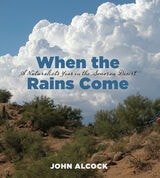
When the Rains Come
A Naturalist’s Year in the Sonoran DesertJohn Alcock
University of Arizona Press, 2009
John Alcock knows the Sonoran Desert better than just about anyone else, and in this book he tracks the changes he observes in plant and animal life over the course of a drought year. Combining scientific knowledge with years of exploring the desert, he describes the variety of ways in which the wait for rain takes place—and what happens when it finally comes.
The desert is a land of five seasons, featuring two summers—hot, dry months followed by monsoon—and Alcock looks at the changes that take place in an entire desert community over the course of all five. He describes what he finds on hikes in the Usery Mountains near Phoenix, where he has studied desert life over three decades and where frequent visits have enabled him to notice effects of seasonal variation that might escape a casual glance.
Blending a personal perspective with field observation, Alcock shows how desert ecology depends entirely on rainfall. He touches on a wide range of topics concerning the desert’s natural history, noting the response of saguaro flowers to heat and the habits of predators, whether soaring red-tailed hawk or tiny horned lizard. He also describes unusual aspects of insects that few desert hikers will have noticed, such as the disruptive color pattern of certain grasshoppers that is more effective than most camouflage.
When the Rains Come is brimming with new insights into the desert, from the mating behaviors of insects to urban sprawl, and features photographs that document changes in the landscape as drought years come and go. It brings us the desert in the harshest of times—and shows that it is still teeming with life.