Results by title
4 books match the query '1944-1989'

Soviet Occupation of Romania, Hungary, and Austria 1944/45–1948/49
László Borhi
Central European University Press, 2015
This book compares the various aspects – political, military economic – of Soviet occupation in Austria, Hungary and Romania. Using documents found in Austrian, Hungarian, Romanian and Russian archives the authors argue that the nature of Soviet foreign policy has been misunderstood. Existing literature has focused on the Soviet foreign policy from a political perspective; when and why Stalin made the decision to introduce Bolshevik political systems in the Soviet sphere of influence. This book will show that the Soviet conquest of East-Central Europe had an imperial dimension as well and allowed the Soviet Union to use the territory it occupied as military and economic space. The final dimension of the book details the tragically human experiences of Soviet occupation: atrocities, rape, plundering and deportations.
[more]
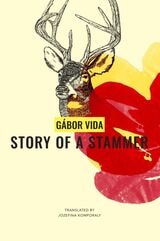
Story of a Stammer
Gábor Vida
Seagull Books, 2022
A novel of growing up a Hungarian in Romania under Communism.
In the novel Story of a Stammer, Gábor Vida asks a fundamental question: Where does stammering come from? In the process of answering this question, he discovers that an entire historical period and an entire world have been stammering, too. Through Vida’s eyes, we see that stammering comprises all the lies accumulated over time and over generations because nobody had ever articulated what they felt or thought, nor done what they really wanted. Nobody, Vida shows, had ever told the truth.
Describing life in the 1970s and ’80s under Romanian Communist dictator Nicolae Ceauçescu’s authoritarian regime, Vida writes with disarming honesty, breaking taboos and chronicling the ways in which tyranny and exploitation seep into family relationships. The novel charts the first two decades of a young Hungarian man’s life in Romania, telling a story of coming to terms with a stammer, loneliness, and an unstimulating environment where religion, alcoholism, and suicide are the most common escape strategies. A Bildungsroman, a novel about Transylvania, a chronicle of minority life, a sociological analysis of cultural identity, and ultimately a deeply personal account of a historical era, Story of a Stammer is a major contribution to contemporary Hungarian literature—an unfailingly serious yet humorously delightful witness to a turbulent period in recent history.
[more]
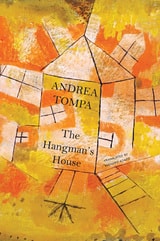
The Hangman's House
Andrea Tompa
Seagull Books, 2020
Set in the 1970s and ’80s, The Hangman’s House narrates the life and times of a Hungarian family in Romania. Those were extraordinary times of oppression, poverty and hopelessness, and Andrea Tompa’s latest novel depicts everyday life under the brutal communist dictatorship of Nicolae Ceaușescu, referred to by the narrator as an unnamed “one-eared hangman.” Ceaușescu is omnipresent throughout the story—in portraits in classrooms and schoolbooks, in the empty food stores, in TV programs, in obligatory Party demonstrations. Most insidiously, he is present in the dreams and nightmares of common people, who, in this cruel period of history, become cruel to one another, just like the dictator.
Our narrator, a teenage “Girl,” observes life through tangled, almost interminable sentences, trying to understand and process the many questions in her life: why her family is falling apart; why her mother has three jobs; why her father becomes an alcoholic; why her grandmother dreams of “Hungarian times”; and, most troubling, why there is persecution all around. Brutal though the times are, Girl’s narration is far from a mere indictment. It is suffused with love, tenderness and irony.
Written by a woman and featuring a young woman narrator, The Hangman's House focuses intently on how women play the principal roles in holding together the resilient fabric of society. Evocative of the celebrated wry humor that distinguishes the best of Hungarian literature, Tompa’s novel is a tour de force that will introduce a brilliant writer to English-language readers.
[more]

The Land of Green Plums
Herta Muller
Northwestern University Press, 1998
[more]