Results by title
4 books match the query '1945 - 1949'
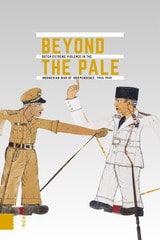
Beyond the Pale
Dutch Extreme Violence in the Indonesian War of Independence, 1945-1949Kon. Inst. v. Taal-, Land- en Volkenkunde (KITLV)
Amsterdam University Press, 2022
On 17 August 1945, two days after the Japanese surrender that also brought an end to the Second World War in Asia, Indonesia declared its independence. The declaration was not recognized by the Netherlands, which resorted to force in its attempt to take control of the inevitable process of decolonization. This led to four years of difficult negotiations and bitter warfare.
In 2005, the Dutch government declared that the Netherlands should never have waged the war. The government’s 1969 position on the violence used by the Dutch armed forces during the war remained unchanged, however: although there had been ‘excesses’, on the whole the armed forces had behaved ‘correctly’. As the indications of Dutch extreme violence mounted, this official position proved increasingly difficult to maintain. In 2016, the Dutch government therefore decided to fund a broad study on the dynamics of the violence. The most important conclusions of that research programme are summarized in this book. The authors show that the Dutch armed forces used extreme violence on a structural basis, and that this was concealed both at the time and for many years after the war by the Dutch government and by society more broadly. All of this – like the entire colonial history – is at odds with the rose-tinted self-image of the Netherlands.
In 2005, the Dutch government declared that the Netherlands should never have waged the war. The government’s 1969 position on the violence used by the Dutch armed forces during the war remained unchanged, however: although there had been ‘excesses’, on the whole the armed forces had behaved ‘correctly’. As the indications of Dutch extreme violence mounted, this official position proved increasingly difficult to maintain. In 2016, the Dutch government therefore decided to fund a broad study on the dynamics of the violence. The most important conclusions of that research programme are summarized in this book. The authors show that the Dutch armed forces used extreme violence on a structural basis, and that this was concealed both at the time and for many years after the war by the Dutch government and by society more broadly. All of this – like the entire colonial history – is at odds with the rose-tinted self-image of the Netherlands.
[more]
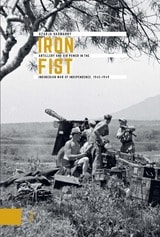
Iron Fist
Artillery and Air Power in the Indonesian War of Independence, 1945-1949Azarja Harmanny
Amsterdam University Press, 2026
In the Netherlands, the Indonesian War of Independence has long been referred to in veiled terms such as ‘police actions’. In reality, it was a proper war fought with modern weapons. The Dutch armed forces wielded an iron fist in order to crush the Indonesian ‘rebellion’, widely deploying artillery, attack aircraft and naval guns. What were the consequences of such bombing and shelling in a war fought amongst the population? In what situations did the Dutch deploy these means and to what extent did they attempt to minimize civilian casualties? Now, for the first time, the use of artillery and air power in the struggle for independence has been systematically researched. Iron Fist offers both statistical overviews as well as analyses of battles where heavy weapons were used on a large scale. The relation between the deployment of fire support and the use of force in general is also examined. This book embodies a vital contribution to our knowledge of the nature and extent of violent transgressions by Dutch forces in the Indonesian War of Independence.
[more]
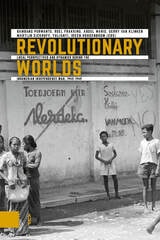
Revolutionary Worlds
Local Perspectives and Dynamics during the Indonesian Independence War, 1945-1949Bambang Purwanto
Amsterdam University Press, 2023
Revolutionary Worlds looks at the Indonesian revolution (1945-1949) from a local and regional perspective. With seventeen contributions, Indonesian and Dutch researchers bring to life the revolutionary world from widely differing perspectives. The authors explain how Indonesian, Chinese, Indian and Eurasian civilians, fighters, farmers and officials experienced and shaped the often volatile period between 1945 and 1950. The book focuses on different ideas of independence, survival strategies, mobilization, minorities, contestation of authority and the use of force against the backdrop of Indonesian and Dutch authorities’ efforts to gain or maintain control.
Bringing together two national historiographical traditions which have long remained largely separate, Revolutionary Worlds is the result of a collaboration between the Indonesian research project Proklamasi Kemerdekaan, Revolusi dan Perang di Indonesia ('Proclamation of Independence, Revolution and War in Indonesia', Universitas Gadjah Mada, Yogyakarta) and the Dutch research group of the Regional Studies project, under the umbrella of the research programme Independence, Decolonization, Violence and War in Indonesia, 1945-1950.
The authors of this book – Taufik Ahmad, Galuh Ambar Sasi, Maarten van der Bent, Martijn Eickhoff, Farabi Fakih, Roel Frakking, Apriani Harahap, Anne-Lot Hoek, Sarkawi B. Husain, Julianto Ibrahim, Gerry van Klinken, Erniwati, Mawardi Umar, Anne van der Veer, Abdul Wahid, Tri Wahyuning M. Irsyam, and Muhammad Yuanda Zara – work with various universities and research institutes in Indonesia and the Netherlands.
[more]
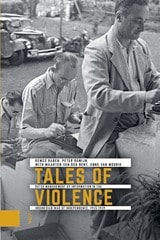
Tales of Violence
Dutch Management of Information in the Indonesian War of Independence, 1945-1949Remco Raben
Amsterdam University Press, 2027
Although it has long been known that the Indonesian War of Independence was far more violent than generally assumed by the Dutch public, for a long time the tendency to downplay, ignore, or justify the scale and nature of this violence dominated. Tales of Violence examines how politicians and administrators in both the Netherlands and Indonesia have dealt with this large-scale violence and poses painful questions.
How were the violence of war and the numerous excesses between 1945-1949 discussed, concealed, passed on, manipulated, and used politically? What did Dutch, colonial, and Indonesian politicians and administrators know about the nature of the actions of their own and enemy troops?
Why did investigations into specific scandals grind to a halt or were their outcomes hidden from the public? What did those in charge do with their knowledge and how did communications influence public support for warfare? The authors argue that the way the war in Indonesia has long been viewed has its origins partly in the language and manipulation of information during the conflict.
[more]