Results by title
6 books match the query '1945 - 1995'
Black Internationalist Feminism
Women Writers of the Black Left, 1945-1995Cheryl Higashida
University of Illinois Press, 2013
Getting Right With God
Southern Baptists and Desegregation, 1945-1995Mark Newman
University of Alabama Press, 2001
This groundbreaking study finds Southern Baptists more diverse in their attitudes toward segregation than previously assumed
Focusing on the eleven states of the old Confederacy, Getting Right with God examines the evolution of Southern Baptists’ attitudes toward African Americans during a tumultuous period of change in the United States. Mark Newman not only offers an in-depth analysis of Baptist institutions from the Southern Baptist Convention (SBC) and state conventions to colleges and churches but also probes beyond these by examining the response of pastors and lay people to changing race relations.The SBC long held that legal segregation was in line with biblical teachings, but after the Supreme Court's 1954 Brown vs. Board of Education decision in favor of desegregating public institutions, some Southern Baptists found an inconsistency in their basic beliefs. Newman identifies three major blocs of Baptist opinion about race relations: a hard-line segregationist minority that believed God had ordained slavery in the Bible; a more moderate majority that accepted the prevailing social order of racial segregation; and a progressive group of lay people, pastors, and denominational leaders who criticized and ultimately rejected discrimination as contrary to biblical teachings.
According to Newman, the efforts of the progressives to appeal to Baptists’ primary commitments and the demise of de jure segregation caused many moderate and then hard-line segregationists to gradually relinquish their views, leading to the 1995 apology by the SBC for its complicity in slavery and racism. Comparing Southern Baptists with other major white denominations, Newman concludes that lay Baptists differed little from other white southerners in their response to segregation.
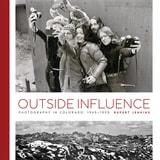
Outside Influence
Photography in Colorado, 1945–1995Rupert Jenkins
University Press of Colorado, 2025
Outside Influence: Photography in Colorado, 1945–1995 is the first detailed account of the state’s history of post–World War II expressive photography. The title “Outside Influence” alludes to the historic presence of the natural landscape as subject and to the transformative impact of out-of-state artists and educators. Their arrival in Colorado beginning in the 1960s galvanized interpretive photography by introducing innovative concepts, nontraditional materials, and emergent digital technologies to students, peers, and their audience-at-large.
Throughout the book’s nine chapters, Rupert Jenkins contextualizes Colorado photography’s postwar development with a social, political, and cultural abstract that encompasses national events and trends, the emerging presence of women and photographers of color, and institutional leadership. Drawing from more than 120 personal interviews, he identifies the medium’s principal in-state creators, mentors, and advocates from the modernist era of film processing to the emergence of interdisciplinary digital practice. Jenkins answers fundamental questions about the people and work of this era: Who generated this significant body of innovative, noncommercial photographic work? Where did they come from? Who inspired them, and who in turn did they inspire?
As Eric Paddock, curator of photography at the Denver Art Museum, discusses in his foreword, by looking at the schools, workshops, galleries, and museums that supported these artists, Jenkins stresses the importance of collaboration and community to any successful venture. Crucially, in examining the lives and careers of photographers like Robert Adams, Walter Chappell, Albert Chong, Cherie Hiser, Barbara Houghton, Winter Prather, Mark Sink, Melanie Walker, Myron Wood, and numerous others, Outside Influence seeks to affirm the medium’s legacy within Colorado’s fine arts canon.

Reel Rituals
Ritual Occasions from Baptisms to Funerals in Hollywood Films, 1945-1995Parley Ann Boswell and Paul Loukides
University of Wisconsin Press, 1999
The Greenlining of Staten Island
Environmental Preservation and Racial Segregation, 1945–1995Patrick D. Nugent
University of Chicago Press, 2026
Illuminates how borough residents, urban planners, and politicians used environmental policy to cement a racially restrictive landscape.
Though it was once home to the world’s largest landfill, today Staten Island boasts thousands of acres of parklands, dozens of public-private conservation arrangements, and four ecological zoning districts. In this book, Patrick D. Nugent details the political forces that gave rise to this wealth of greenery in a famously dense city. He demonstrates how postwar economic and political trajectories intersected in the 1960s with the rising consciousness of environmentalism to create a distinctive laboratory in Staten Island, where white communities and politicians heeded the rising call for the preservation of green space—but often as a tool to maintain racial segregation. Ecological zoning, public-private park management, conservation easement, environmental litigation, and other strategies created a lush, discriminatory landscape. Nugent refers to these policies as greenlining.
The Greenlining of Staten Island shows that the political and environmental history of Staten Island is key to understanding how environmentalism has been used to reinforce racial discrimination, not just in New York City, but nationwide. By the mid-1970s, conservationists had embraced urban planning that preserved low-density housing districts and bolstered the sprawling and segregated landscape that took shape in metropolitan America over the coming decades. In exploring the gap between the modern environmental movement’s ambitious goals and its tangible outcomes, Nugent excavates important lessons for contemporary city dwellers debating zoning reform and planning for climate change’s impending effects.
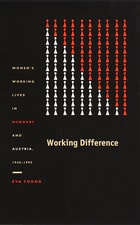
Working Difference
Women's Working Lives in Hungary and Austria, 1945-1995Éva Fodor
Duke University Press, 2003
Fodor brings qualitative and quantitative analyses to bear, combining statistical analyses of survey data, interviews with women managers in both countries, and archival materials including those from the previously classified archives of the Hungarian communist party and transcripts from sessions of the Austrian Parliament. She shows how women's access to power varied in degree and operated through different principles and mechanisms in accordance with the stratification systems of the respective countries. In Hungary women's mobility was curtailed by political means (often involving limited access to communist party membership), while in Austria women's professional advancement was affected by limited access to educational institutions and the labor market. Fodor discusses the legacies of Austria's and Hungary's "gender regimes" following the demise of state socialism and during the process of integration into the European Union.