Results by title
7 books match the query '1945-1975'
A World Transformed
The Politics of Culture in Revolutionary Vietnam, 1945-1965Kim N. B. Ninh
University of Michigan Press, 2002
The study covers the period from the Vietnamese communists' initial ascent to power in 1945 to the beginning of the escalation of the American involvement in the country's conflict in 1965, by which time a full-fledged socialist state had been in place in North Vietnam for eleven years. Through a nuanced examination of critical intellectual works, A World Transformed presents a complex view of a period fraught with contradictory possibilities and tensions that continue to resonate in Vietnam today. The extensive use of Vietnamese-language materials, access to archival data never before available, and innovative incorporation of literary and historical sources combine to make this study an invaluable depiction of the Vietnamese revolution.
Kim N. B. Ninh is Assistant Director of the Governance, Law, and Civil Society Programs, The Asia Foundation, San Francisco.
Beyond the Quagmire
New Interpretations of the Vietnam WarGeoffrey W. Jensen
University of North Texas Press, 2019
Going Indochinese
Christopher E. Goscha
National University of Singapore Press, 2012

South Vietnam Trial and Experience
A Challenge for DevelopmentAng Tuan Nguyen
Ohio University Press, 1987
Dr. Nguyen Anh Tuan, former Minister of Finance of the Republic of South Vietnam, addresses a common perception of Vietnam: that South Vietnam was a fragmented society which did not deserve to succeed because of its internal weaknesses. According to Tuan, however, South Vietnam in the last decade of its life developed considerable governmental cohesion and internal social strength. Before the final failure of will, the South and its defenders were well on the way to becoming a viable society that had managed with American assistance to lift itself by its bootstraps to the point to economic take-off. Tuan argues that South Vietnam’s fall was not inevitable. This controversial book will be of great interest to all those concerned with the Vietnamese experience during the period 1954-1975.
Tours of Vietnam
War, Travel Guides, and MemoryScott Laderman
Duke University Press, 2009
Tracing a history of ideological assertions embedded in travel discourse, Laderman analyzes the use of tourism in the Republic of Vietnam as a form of Cold War cultural diplomacy by a fledgling state that, according to one pamphlet published by the Vietnamese tourism authorities, was joining the “family of free nations.” He chronicles the evolution of the Defense Department pocket guides to Vietnam, the first of which, published in 1963, promoted military service in Southeast Asia by touting the exciting opportunities offered by Vietnam to sightsee, swim, hunt, and water-ski. Laderman points out that, despite historians’ ongoing and well-documented uncertainty about the facts of the 1968 “Hue Massacre” during the National Liberation Front’s occupation of the former imperial capital, the incident often appears in English-language guidebooks as a settled narrative of revolutionary Vietnamese atrocity. And turning to the War Remnants Museum in Ho Chi Minh City, he notes that, while most contemporary accounts concede that the United States perpetrated gruesome acts of violence in Vietnam, many tourists and travel writers still dismiss the museum’s display of that record as little more than “propaganda.”
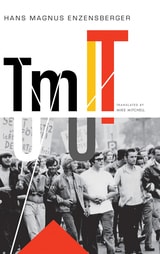
Tumult
Hans Magnus Enzensberger
Seagull Books, 2016
Hans Magnus Enzensberger, widely regarded as Germany’s greatest living poet, was already well known in the 1960s, the tempestuous decade of which Tumult is an autobiographical record. Derived from old papers, notes, jottings, photos, and letters that the poet stumbled upon years later in his attic, the volume is not so much about the man, but rather the many places he visited and people whom he met on his travels through the Soviet Union and Cuba during the 1960s. The book is made up of four long-form pieces written from 1963 to 1970, each episode concluding with a poem and postscript written in 2014. Translated by Mike Mitchell, the book is a lively and deftly written travelogue offering a glimpse into the history of leftist thought. Dedicated to “those who disappeared,” Tumult is a document of that which remains one of humanity’s headiest times.
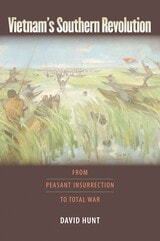
Vietnam's Southern Revolution
From Peasant Insurrection to Total WarDavid Hunt
University of Massachusetts Press, 2009
In Vietnam, the American government vowed to win the “hearts and minds” of the people. On the other side, among those who led and sympathized with the insurgents, the term “people's war” gained a wide currency. Yet while much has been written about those who professed to speak for the Vietnamese population, we know surprisingly little about the everyday life of the peasants who made up the bulk of the country's inhabitants. This book illuminates that subject. Drawing on a wide range of sources, including interviews conducted by the Rand Corporation with informants from My Tho Province in the Mekong Delta, David Hunt brings to light the daily experience of villagers in the midst of war and revolution.
The peasants of southern Vietnam were neither onlookers nor mere victims as fighting raged throughout their country. From the “concerted uprising” in 1959–1960 to the Tet Offensive of 1968, the revolutionary movement they created was in fact the driving force within the war. Known as the “Viet Cong” to their adversaries, the rebels called themselves the “Liberation Front.” They demanded an end to landlordism and an egalitarian distribution of the means of subsistence as well as a democratization of relations between town and countryside, parents and children, men and women. They hoped the Vietnamese people would achieve a fuller sense of their place in the world and of the power they possessed to fashion their own destinies, without reliance on supernatural forces.In the first half of the book, Hunt analyzes this cultural revolution. As fighting spread and became more destructive, especially after the U.S. escalation in 1965, villagers were driven from their homes, the rural infrastructure collapsed, and customary notions of space and time lost purchase on an increasingly chaotic world. In the second half of the book, Hunt shows how peasants, who earlier had aspired to a kind of revolutionary modernism, now found themselves struggling to survive and to cope with the American intruders who poured into My Tho, and how they managed to regroup and spearhead the Tet Offensive that irrevocably altered the course of the war.