Results by title
13 books match the query '1945-1991'
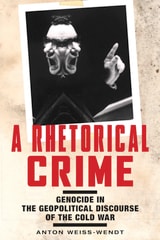
A Rhetorical Crime
Genocide in the Geopolitical Discourse of the Cold WarWeiss-Wendt, Anton
Rutgers University Press, 2018
A Rhetorical Crime shows how genocide morphed from a legal concept into a political discourse used in propaganda battles between the United States and the Soviet Union. Over the course of the Cold War era, nearly eighty countries were accused of genocide, and yet there were few real-time interventions to stop the atrocities committed by genocidal regimes like the Cambodian Khmer Rouge.
Renowned genocide scholar Anton Weiss-Wendt employs a unique comparative approach, analyzing the statements of Soviet and American politicians, historians, and legal scholars in order to deduce why their moral posturing far exceeded their humanitarian action.
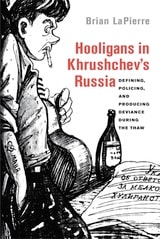
Hooligans in Khrushchev's Russia
Defining, Policing, and Producing Deviance during the ThawBrian LaPierre
University of Wisconsin Press, 2012
Hooligans in Khrushchev's Russia offers the first comprehensive study of how Soviet police, prosecutors, judges, and ordinary citizens during the Khrushchev era (1953–64) understood, fought against, or embraced this catch-all category of criminality. Using a wide range of newly opened archival sources, it portrays the Khrushchev period—usually considered as a time of liberalizing reform and reduced repression—as an era of renewed harassment against a wide range of state-defined undesirables and as a time when policing and persecution were expanded to encompass the mundane aspects of everyday life. In an atmosphere of Cold War competition, foreign cultural penetration, and transatlantic anxiety over "rebels without a cause," hooliganism emerged as a vital tool that post-Stalinist elites used to civilize their uncultured working class, confirm their embattled cultural ideals, and create the right-thinking and right-acting socialist society of their dreams.
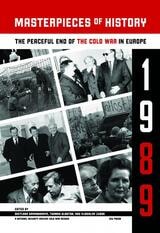
Masterpieces of History
The Peaceful End of the Cold War in Europe, 1989The National Security Archive Savranskaya
Central European University Press, 2010

Military Occupation and Diplomacy
Soviet Troops in Romania, 1944–1958Sergiu Verona
Duke University Press, 1992
Drawing on declassified archival material in the United States and the United Kingdom, the author considers Khrushchev’s reversal of Stalinist expansionism by examining the motivation, function, and operation of the initial occupation of Romania; the complex involvement of Soviet diplomacy and its perception by the United States and other Western powers; the process by which Khrushchev decided to withdraw Soviet troops from that country; and the impact of this decision on Soviet policy. Verona extends his analysis, providing comparisons between Khrushchev’s and Gorbachev’s approaches to Eastern Europe, noting that similarities exist not only in domestic policies but in the realm of foreign policy as well.
My Odyssey Through the Underground Press
Michael Kindman
Michigan State University Press, 2011
Peripheral Visions
Deterrence Theory and American Foreign Policy in the Third World, 1965-1990Ted Hopf
University of Michigan Press, 1994
Soviet Occupation of Romania, Hungary, and Austria 1944/45–1948/49
László Borhi
Central European University Press, 2015

The Hot 'Cold War'
The USSR in Southern AfricaVladimir Shubin
Pluto Press, 2008
This book analyses the causes of armed conflicts in Southern Africa during the Cold War. It examines the influence of the various external forces in the region during this period and their relationship to local movements and governments.
The book focuses on states experiencing violent internal conflict and foreign intervention, that is Angola, Mozambique, Namibia , South Africa and Zimbabwe.
The author provides an unique history of the key part that the Soviet Union played in these developments. Spanning 30 years, the book explores how each country struggled for genuine independence against colonialism and apartheid and their place in the wider conflicts encompassed by the Cold War.
The KGB and the Vatican
Secrets of the Mitrokhin FilesSean Brennan
Catholic University of America Press, 2022
The Soviet Union and the Gutting of the UN Genocide Convention
Anton Weiss-Wendt
University of Wisconsin Press, 2017
Based on extensive archival research, Anton Weiss-Wendt reveals in detail how the political aims of the superpowers rendered the convention a weak instrument for addressing abuses against human rights. The Kremlin viewed the genocide treaty as a political document and feared repercussions. What the Soviets wanted most was to keep the subjugation of Eastern Europe and the vast system of forced labor camps out of the genocide discourse. The American Bar Association and Senate Committee on Foreign Relations, in turn, worried that the Convention contained vague formulations that could be used against the United States, especially in relation to the plight of African Americans. Sidelined in the heated discussions, Weiss-Wendt shows, were humanitarian concerns for preventing future genocides.

Three-Way Street
Strategic Reciprocity in World PoliticsJoshua S. Goldstein and John R. Freeman
University of Chicago Press, 1990
The authors demonstrate that three major schools of international relations theory—all game-theoretic, psychological, and quantitative-empirical approaches—have all advocated a strategy that employs cooperative initiatives and reciprocal responses in order to elicit cooperation from other countries. Critics have questioned whether such approaches can model how countries actually behave, but Goldstein and Freeman provide a wealth of detailed empirical evidence showing the existence and effectiveness of strategic reciprocity among the three countries between 1948 and 1989. Specifically, they establish that relations among the three countries have improved in recent decades through a "two steps forward, one step back" pattern. Their innovative and remarkably accessible synthesis of leading theoretical perspectives brilliantly illuminates the nature and workings of international cooperation.
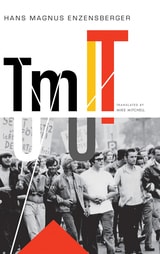
Tumult
Hans Magnus Enzensberger
Seagull Books, 2016
Hans Magnus Enzensberger, widely regarded as Germany’s greatest living poet, was already well known in the 1960s, the tempestuous decade of which Tumult is an autobiographical record. Derived from old papers, notes, jottings, photos, and letters that the poet stumbled upon years later in his attic, the volume is not so much about the man, but rather the many places he visited and people whom he met on his travels through the Soviet Union and Cuba during the 1960s. The book is made up of four long-form pieces written from 1963 to 1970, each episode concluding with a poem and postscript written in 2014. Translated by Mike Mitchell, the book is a lively and deftly written travelogue offering a glimpse into the history of leftist thought. Dedicated to “those who disappeared,” Tumult is a document of that which remains one of humanity’s headiest times.
Understanding and Teaching the Cold War
Edited by Matthew Masur
University of Wisconsin Press, 2016
Teaching the Cold War is both necessary and challenging. Understanding and Teaching the Cold War is designed to help collegiate and high school teachers navigate the complexity of the topic, integrate up-to-date research and concepts into their classes, and use strategies and tools that make this important history meaningful to students.
The volume opens with Matthew Masur’s overview of models for approaching the subject, whether in survey courses or seminars. Two prominent historians, Carole Fink and Warren Cohen, offer accounts of their experience as longtime scholars and teachers of the Cold War from European and Asian perspectives. Sixteen essays dig into themes including the origins and end of the conflict, nuclear weapons, diplomacy, propaganda, fear, popular culture, and civil rights, as well as the Cold War in Eastern Europe, Western Europe, East Asia, Africa, Latin America, and the nonaligned nations. A final section provides practical advice for using relevant, accessible primary sources to implement the teaching ideas suggested in this book.