Results by title

11 books match the query '1949-1976'
cover of Between Two Plenums: China’s Intraleadership Conflict, 1959–1962

Between Two Plenums

China’s Intraleadership Conflict, 1959–1962

Ellis Joffe

University of Michigan Press, 1975
The origins of the Cultural Revolution are still shrouded in uncertainty. Crucial questions either remain unanswered or have been given answers which derive from conflicting interpretations. To what period can the direct origins of the Cultural Revolution be traced? What issues, if any, divided the leadership, and how deep were these divisions? What was the state of power relations and what was Mao’s position? Why did developments in the period preceding the Cultural Revolution reach a climax in such a convulsion?
Between Two Plenums examines these questions as they apply to the years 1959–1962. At base, the perspective of pre-Cultural Revolution politics adopted therein is that of “conflict” rather than “consensus.” From this vantage point, the Eighth and Tenth Plenums loom in retrospect as important watersheds in the development of the intraleadership conflict which culminated in the great upheaval.
[more]
cover of Central Documents and Politburo Politics in China

Central Documents and Politburo Politics in China

Kenneth Lieberthal, with the assistance of James Tong and Sai-cheung Yeung

University of Michigan Press, 1978
Virtually every analysis of Chinese politics views the Politburo as the nerve center of the system, but questions abound as to how this center governs itself and how it interacts with the system around it. Specifically, how much consultation occurs during the drafting of major Politburo documents, and who is brought into this process? How is information channeled up to this body, and what are the rules that govern the access of the Politburo members themselves to data generated by the bureaucracies? How are the political strategies of individual leaders and political factions attuned to this system of information channeling? What types of decisions are reached by the Politburo? To whom are they communicated? How rigidly must they be followed? How institutionalized is this entire decision making system, and has it become more—or less—institutionalized over the years? How has the factional legacy of the Cultural Revolution affected its mode of operations? Indeed, in the wake of the Cultural Revolution, how much in control of the system has the Politburo itself been?
Central Documents in Politburo Politics in China seeks to better understand these questions by analyzing a particular stream of largely bureaucratic communications in the Chinese system: the so-called “Central Documents” (CDs). This is a series of documents through which the top Party leadership directly communicates with the rest of the political system. [1]
[more]
cover of Chang Ch’un-ch’iao and Shanghai’s January Revolution

Chang Ch’un-ch’iao and Shanghai’s January Revolution

Andrew G. Walder

University of Michigan Press, 1977
Shanghai’s January Revolution was a highly visible and, by all accounts, crucially important event in China’s Cultural Revolution. Its occurrence, along with the subsequent attempt to establish a “commune” form of municipal government, has greatly shaped our understanding both of the goals originally envisaged for the Cultural Revolution by its leaders and of the political positions held by the new corps of Party leaders thrust upward during its course—most notably Chang Ch’un ch’iao. At this interpretive level, the events in Shanghai seem to embody in microcosm the issues and conflicts in Chinese politics during the Cultural Revolution as a whole, while at the same time shaping our conception of what these larger issues and conflicts were. At the more general, theoretical level, however, the events in Shanghai provide us with an unusual opportunity (thanks to Red Guard raids on Party offices) to view the internal workings of the Party organization under a period of stress and to observe unrestrained interest group formation and mass political conflict through the press accounts provided by these unofficial groups themselves. The January Revolution thus provides us with an opportunity to develop better our more abstract, theoretical understanding of the functioning of the Chinese political system and the dynamics of the social system in which it operates. [1]
[more]
cover of China's Economic Development: The Interplay of Scarcity and Ideology

China's Economic Development

The Interplay of Scarcity and Ideology

Alexander Eckstein

University of Michigan Press, 1975
China's Economic Development: The Interplay of Scarcity and Ideology by Alexander Eckstein provides a comprehensive analysis of China's economic growth and transformation from a socialist economy. Eckstein examines the unique challenges China faced in addressing its economic backwardness, such as scarcity of resources and ideological constraints, and compares its industrialization to other countries. The book explores how Maoist ideology and policy initiatives impacted the country's economic strategies, leading to a fluctuating development pattern characterized by rapid expansion in the 1950s and stagnation in the 1960s. Key themes include the dichotomy between scarcity and ideology, the influence of historical factors on economic structures, and the adaptation to Soviet models. Eckstein sheds light on how China navigated its unique size, population pressures, and low per capita income, arguing that understanding these dynamics is crucial for both development theory and policy design. This volume, part of the Michigan Studies on China series, compiles essays and research that contribute to a nuanced understanding of China's economic systems, with particular focus on the tensions between ideological aspirations and economic realities.
[more]
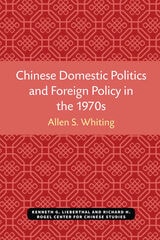
cover of Chinese Domestic Politics and Foreign Policy in the 1970s

Chinese Domestic Politics and Foreign Policy in the 1970s

Allen S. Whiting

University of Michigan Press, 1979
Chinese Domestic Politics and Foreign Policy in the 1970s undertakes a systematic examination of selected aspects of Peking’s foreign policy, using content analysis, both quantitative and qualitative, of the media. The first study treats media images of the United States and Taiwan in 1976–77; the second analyzes domestic politics and foreign trade, 1971–1976. [1, 2]
[more]
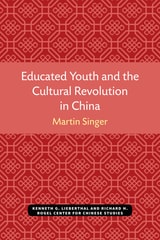
cover of Educated Youth and the Cultural Revolution in China

Educated Youth and the Cultural Revolution in China

Martin Singer

University of Michigan Press, 1971
The Cultural Revolution was an emotionally charged political awakening for the educated youth of China. Called upon by aging revolutionary Mao Tse-tung to assume a “vanguard” role in his new revolution to eliminate bourgeois revisionist influence in education, politics, and the arts, and to help to establish proletarian culture, habits, and customs, in a new Chinese society, educated young Chinese generally accepted this opportunity for meaningful and dramatic involvement in Chinese affairs. It also gave them the opportunity to gain recognition as a viable and responsible part of the Chinese polity. In the end, these revolutionary youths were not successful in proving their reliability. Too “idealistic” to compromise with the bourgeois way, their sense of moral rectitude also made it impossible for them to submerge their factional differences with other revolutionary mass organizations to achieve unity and consolidate proletarian victories. Many young revolutionaries were bitterly disillusioned by their own failures and those of other segments of the Chinese population and by the assignment of recent graduates to labor in rural communes.
Educated Youth and the Cultural Revolution in China reconstructs the events of the Cultural Revolution as they affected young people. Martin Singer integrates material from a range of factors and effects, including the characteristics of this generation of youths, the roles Mao called them to play, their resentment against the older generation, their membership in mass organizations, the educational system in which they were placed, and their perception that their skills were underutilized. To most educated young people in China, Singer concludes, the Cultural Revolution represented a traumatic and irreversible loss of political innocence, made yet more tragic by its allegiance to the unsuccessful campaign of an old revolutionary to preserve his legacy from the inevitable storms of history.
[more]
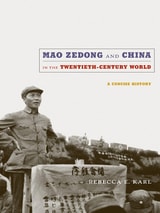
cover of Mao Zedong and China in the Twentieth-Century World: A Concise History

Mao Zedong and China in the Twentieth-Century World

A Concise History

Rebecca E. Karl

Duke University Press, 2010
Throughout this lively and concise historical account of Mao Zedong’s life and thought, Rebecca E. Karl places the revolutionary leader’s personal experiences, social visions and theory, military strategies, and developmental and foreign policies in a dynamic narrative of the Chinese revolution. She situates Mao and the revolution in a global setting informed by imperialism, decolonization, and third worldism, and discusses worldwide trends in politics, the economy, military power, and territorial sovereignty. Karl begins with Mao’s early life in a small village in Hunan province, documenting his relationships with his parents, passion for education, and political awakening during the fall of the Qing dynasty in late 1911. She traces his transition from liberal to Communist over the course of the next decade, his early critiques of the subjugation of women, and the gathering force of the May 4th movement for reform and radical change. Describing Mao’s rise to power, she delves into the dynamics of Communist organizing in an overwhelmingly agrarian society, and Mao’s confrontations with Chiang Kaishek and other nationalist conservatives. She also considers his marriages and romantic liaisons and their relation to Mao as the revolutionary founder of Communism in China. After analyzing Mao’s stormy tenure as chairman of the People’s Republic of China, Karl concludes by examining his legacy in China from his death in 1976 through the Beijing Olympics in 2008.
[more]
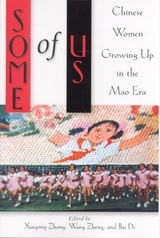
cover of Some of Us: Chinese Women Growing Up in the Mao Era

Some of Us

Chinese Women Growing Up in the Mao Era

Zhong, Xueping

Rutgers University Press, 2001

What does it mean to have grown up female in the Mao era? How can the remembered details of everyday life help shed light upon those turbulent times?

Some of Us is a collection of memoirs by nine Chinese women who grew up during the Mao era. All hail from urban backgrounds and all have obtained their Ph.D.s in the United States; thus, their memories are informed by intellectual training and insights that only distance can allow. Each of the chapters—arranged by the age of the author—is crafted by a writer who reflects back to that time in a more nuanced manner than has been possible for Western observers. The authors attend to gender in a way that male writers have barely noticed and reflect on their lives in the United States.

The issues explored here are as varied as these women’s lives: The burgeoning rebellion of a young girl in northeast China. A girl’s struggles to obtain for herself the education her parents inspired her to attain. An exploration of gender and identity as experienced by two sisters.

Some of Us offers insight into a place and time when life was much more complex than Westerners have allowed. These eloquent writings shatter our stereotypes of persecution, repression, victims, and victimizers. Together, these multi-faceted memoirs offer the reader new perspectives as they daringly explore difficult—and fascinating—issues.
[more]
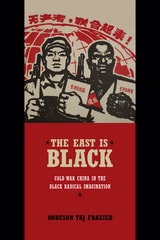
cover of The East Is Black: Cold War China in the Black Radical Imagination

The East Is Black

Cold War China in the Black Radical Imagination

Robeson Taj Frazier

Duke University Press, 2015
During the Cold War, several prominent African American radical activist-intellectuals—including W.E.B. and Shirley Graham Du Bois, journalist William Worthy, Marxist feminist Vicki Garvin, and freedom fighters Mabel and Robert Williams—traveled and lived in China. There, they used a variety of media to express their solidarity with Chinese communism and to redefine the relationship between Asian struggles against imperialism and black American movements against social, racial, and economic injustice. In The East Is Black, Taj Frazier examines the ways in which these figures and the Chinese government embraced the idea of shared struggle against U.S. policies at home and abroad. He analyzes their diverse cultural output (newsletters, print journalism, radio broadcasts, political cartoons, lectures, and documentaries) to document how they imagined communist China’s role within a broader vision of a worldwide anticapitalist coalition against racism and imperialism.
[more]
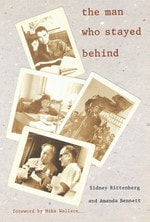
cover of The Man Who Stayed Behind

The Man Who Stayed Behind

Sidney Rittenberg and Amanda Bennett

Duke University Press, 2001

The Man Who Stayed Behind is the remarkable account of Sidney Rittenberg, an American who was sent to China by the U.S. military in the 1940s. A student activist and labor organizer who was fluent in Chinese, Rittenberg became caught up in the turbulence that engulfed China and remained there until the late 1970s. Even with access to China’s highest leaders as an American communist, however, he was twice imprisoned for a total of sixteen years.
Both a memoir and a documentary history of the Chinese revolution from 1949 through the Cultural Revolution, The Man Who Stayed Behind provides a human perspective on China’s efforts to build a new society. Critical of both his own mistakes and those of the Communist leadership, Rittenberg nevertheless gives an even-handed account of a country that is now free of internal war for the first time in a hundred years.
[more]
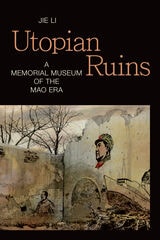
cover of Utopian Ruins: A Memorial Museum of the Mao Era

Utopian Ruins

A Memorial Museum of the Mao Era

Jie Li

Duke University Press, 2020

In Utopian Ruins Jie Li traces the creation, preservation, and elision of memories about China's Mao era by envisioning a virtual museum that reckons with both its utopian yearnings and its cataclysmic reverberations. Li proposes a critical framework for understanding the documentation and transmission of the socialist past that mediates between nostalgia and trauma, anticipation and retrospection, propaganda and testimony. Assembling each chapter like a memorial exhibit, Li explores how corporeal traces, archival documents, camera images, and material relics serve as commemorative media. Prison writings and police files reveal the infrastructure of state surveillance and testify to revolutionary ideals and violence, victimhood and complicity. Photojournalism from the Great Leap Forward and documentaries from the Cultural Revolution promoted faith in communist miracles while excluding darker realities, whereas Mao memorabilia collections, factory ruins, and memorials at trauma sites remind audiences of the Chinese Revolution's unrealized dreams and staggering losses.
[more]