Results by title
37 books match the query '1950-'

A Two-Spirit Journey
The Autobiography of a Lesbian Ojibwa-Cree ElderMa-Nee Chacaby
University of Manitoba Press, 2016
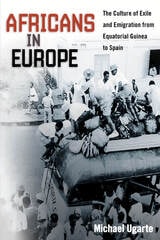
Africans in Europe
The Culture of Exile and Emigration from Equatorial Guinea to SpainMichael Ugarte
University of Illinois Press, 2013
Based on personal stories of people forced to leave and those who left of their own accord, Africans in Europe captures the nuanced realities and widespread impact of mobile populations. By focusing on the geographical, emotional, and intellectual dynamics of Equatorial Guinea's human movements, readers gain an inroad to "the consciousness of an age" and an understanding of the global realities that will define the cultural, economic, and political currents of the twenty-first century.
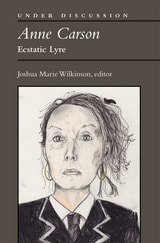
Anne Carson
Ecstatic LyreJoshua Marie Wilkinson, editor
University of Michigan Press, 2015
Between Two Worlds
My Life as a Child of Deaf AdultsDavid Sorensen
Gallaudet University Press, 2019
Sorensen relays the dynamics of his family life; he had a strained relationship with his father, who was an active leader and role model in the Deaf community and the Mormon Church, yet struggled to bond with his own son. Sorensen rebelled as a youth and left home as a teenager, completely detaching from the Deaf community. After struggling to establish himself as an independent adult, he discovered that he wanted to return to the Deaf world and use his ASL fluency and cultural understanding as a mental health therapist and community advocate. Now he considers himself an ambassador between the Deaf and hearing worlds, as well as between the older and younger generations of Deaf people. Between Two Worlds: My Life as a Child of Deaf Adults shares the unique experiences of a coda and passes on the rich cultural past shared by the American Deaf community.

Black Women’s Health in the Age of Hip Hop and HIV/AIDS
A Narrative RemixNghana tamu Lewis
The Ohio State University Press, 2025

Blood in the Tracks
The Minnesota Musicians behind Dylan's MasterpiecePaul Metsa
University of Minnesota Press, 2023
The story of the Minneapolis musicians who were unexpectedly summoned to re-record half of the songs on Bob Dylan's most acclaimed album
When Bob Dylan recorded Blood on the Tracks in New York in September 1974, it was a great album. But it was not the album now ranked by Rolling Stone as one of the ten best of all time. “When something’s not right, it’s wrong,” as Dylan puts it in “You’re Gonna Make Me Lonesome When You Go”—and something about that original recording led him to a studio in his native Minnesota to re-record five songs, including “Idiot Wind” and “Tangled Up in Blue.” Six Minnesota musicians participated in that two-night recording session at Sound 80, bringing their unique sound to some of Dylan’s best-known songs—only to have their names left off the album and their contribution unacknowledged for more than forty years. This book tells the story of those two nights in Minneapolis, introduces the musicians who gave the album so much of its ultimate form and sound, and describes their decades-long fight for recognition.
Blood in the Tracks takes readers behind the scenes with these “mystery” Minnesota musicians: twenty-one-year-old mandolin virtuoso Peter Ostroushko; drummer Bill Berg and bass player Billy Peterson, the house rhythm section at Sound 80; progressive rock keyboardist Gregg Inhofer; guitarist Chris Weber, who owned The Podium guitar shop in Dinkytown; and Kevin Odegard, whose own career as a singer-songwriter had paralleled Dylan’s until he had to take a job as a railroad brakeman to make ends meet. Through in-depth interviews and assiduous research, Paul Metsa and Rick Shefchik trace the twists of fate that brought these musicians together and then set them on different paths in its wake: their musical experiences leading up to the December 1974 recording session, the divergent careers that followed, and the painstaking work required to finally obtain the official credit that they were due.
A rare look at the making—or remaking—of an all-time great album, and a long overdue recognition of the musicians who made it happen, Blood in the Tracks brings to life a transformative moment in the history of rock and roll, for the first time in its true context and with its complete cast of players.

Bookmarks
A Companion Text for Like Water for ChocolateJanet Giannotti
University of Michigan Press, 1999
A Companion TextforLike Water for Chocolate is made up of six units, each covering two chapters in the novel. Every unit contains a preview section, free writing exercises, a short glossary (to help with Spanish words), comprehension quizzes, vocabulary exercises and summarizing exercises, a section devoted to response journals, and topics for discussion. The "Beyond the Novel" section includes facts about U.S. and Mexican history and folk tales. Illustrations throughout the book help to engage students and offer visual support for reading comprehension.
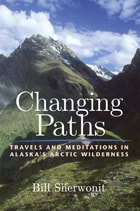
Changing Paths
Travels and Meditations in Alaska's Arctic WildernessBill Sherwonit
University of Alaska Press, 2009
Changing Paths: Travels and Meditations in Alaska’s Arctic Wilderness is an autobiographical exploration of author Bill Sherwonit’s relationship with the Alaska wilderness. Written in three parts, it first describes Sherwonit’s introduction to the Brooks Range and his years as an exploration geologist. Taking a step back, the author then takes us into the past to explore his childhood roots in rural Connecticut and his recognition of wild nature as a refuge. He concludes with his emergence as a nature writer and wilderness advocate.
An engrossing, fascinating, and eye-opening tale of one man’s life and of wilderness conceptions, this vivid description of an area of Alaska that few people get to experience is authentic and enlightening. It is an extraordinary contribution to the literature of place from one of Alaska’s most accomplished nature writers.

Chicago Heights
Little Joe College, the Outfit, and the Fall of Sam GiancanaCharles Hager with David T. Miller, Foreword by Louis Corsino, Afterword by Ashleigh D'Andrea
Southern Illinois University Press, 2018
In this riveting true story of coming of age in the Chicago Mob, Charles “Charley” Hager is plucked from his rural West Virginia home by an uncle in the 1960s and thrown into an underworld of money, cars, crime, and murder on the streets of Chicago Heights.
Street-smart and good with his hands, Hager is accepted into the working life of a chauffeur and “street tax” collector, earning the moniker “Little Joe College” by notorious mob boss Albert Tocco. But when his childhood friend is gunned down by a hit man, Hager finds himself a bit player in the events surrounding the mysterious, and yet unsolved, murder of mafia chief Sam Giancana.
Chicago Heights is part rags-to-riches story, part murder mystery, and part redemption tale. Hager, with author David T. Miller, juxtaposes his early years in West Virginia with his life in crime, intricately weaving his own experiences into the fabric of mob life, its many characters, and the murder of Giancana.
Fueled by vivid recollections of turf wars and chop shops, of fix-ridden harness racing and the turbulent politics of the 1960s, Chicago Heights reveals similarities between high-level organized crime in the city and the corrupt lawlessness of Appalachia. Hager candidly reveals how he got caught up in a criminal life, what it cost him, and how he rebuilt his life back in West Virginia with a prison record.
Based on interviews with Hager and supplemented by additional interviews and extensive research by Miller, the book also adds Hager’s unique voice to the volumes of speculation about Giancana’s murder, offering a plausible theory of what happened on that June night in 1975.

Collective Action
A Bad Subjects AnthologyEdited by Megan Shaw Prelinger and Joel Schalit
Pluto Press, 2004
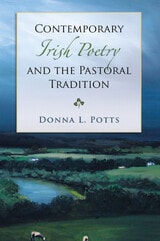
Contemporary Irish Poetry and the Pastoral Tradition
Donna L. Potts
University of Missouri Press, 2011
In Contemporary Irish Poetry and the Pastoral Tradition, Donna L. Potts closely examines the pastoral genre in the work of six Irish poets writing today. Through the exploration of the poets and their works, she reveals the wide range of purposes that pastoral has served in both Northern Ireland and the Republic: a postcolonial critique of British imperialism; a response to modernity, industrialization, and globalization; a way of uncovering political and social repercussions of gendered representations of Ireland; and, more recently, a means for conveying environmentalism’s more complex understanding of the value of nature.
In an important distinction from other studies of Irish poetry, Potts moves beyond the influence of history and politics on contemporary Irish pastoral poetry to consider the relatively recent influence of ecology. Contemporary Irish poets often rely on the motif of the pastoral retreat to highlight various environmental threats to those retreats—whether they be high-rises, motorways, global warming, or acid rain. Potts concludes by speculating on the future of pastoral in contemporary Irish poetry through her examination of more recent poets—including Moya Cannon and Paula Meehan—as well as other genres such as film, drama, and fiction.
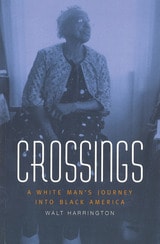
Crossings
A White Man's Journey Into Black AmericaWalt Harrington
University of Missouri Press, 1999
One day in the dentist's office journalist Walt Harrington heard a casual racist joke that left him enraged. Married to a black woman, Harrington is the father of two biracial children. His experience in the dentist's office made him realize not only that the joke was about his own children but also that he really knew very little about what it was like to be a black person in America.
After this rude awakening, Harrington set off on a twenty- five-thousand-mile journey through black America, talking with scores of black and white people along the way, including an old sharecropper, a city police chief, a jazz trumpeter, a convicted murderer, a welfare mother, and a corporate mogul. In Crossings, winner of the Gustavus Myers Award for the Study of Human Rights, he relates what he learned as he listened.

Enchanted by Prairie
Bill Witt
University of Iowa Press, 2009
Witt gives us close-ups of pasque flower shoots covered with ice in spring, coneflowers dancing in a summer breeze, and prairie dropseed in its autumn colors as well as such prairie companions as sandhill cranes, northern harriers, and bison. His panoramic visions of prairie landscapes in all seasons focus on the personal pleasure and spiritual sustenance that connecting with prairies, even small and neglected ones, can bring us. Osha Davidson’s essay compares today’s prairie remnants with yesterday’s expanses and calls for us to restore balance to this damaged landscape. Altogether, Enchanted by Prairie celebrates today’s prairie landscape and encourages us, in Davidson’s words, to restore its “beauty and scents and textures and sounds.”
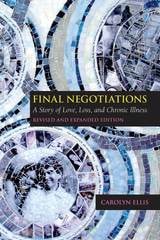
Final Negotiations
A Story of Love, Loss, and Chronic IllnessCarolyn Ellis
Temple University Press, 2018
Taking an autoethnographic perspective, Ellis focuses on her feeling and thinking self in relationships, narrating particular lived experiences that offer a gateway into understanding interpersonal and cultural life. In her new epilogue, “From New Endings to New Beginnings,” Ellis describes her changed identity and how Final Negotiations informs her life and her understanding of how she and her current partner grow older together. She hopes her book provides companionship and comfort to readers who also will suffer loss in their lives.

Final Negotiations
A Story of Love, and Chronic IllnessCarolyn Ellis
Temple University Press, 1995
When Carolyn Ellis, a graduate student, and Gene Weinstein, her Professor, fell in love, he was experiencing the first stages of emphysema. As he became increasingly disabled and immobile, these two intensely connected partners fought to maintain their love and to live a meaningful life. They learned to negotiate their daily lives in a way that enabled each of them to feel sufficiently autonomous—him not always like a patient and her not always like a caretaker. Writing as a sociologist, Ellis protrays their life together as a way to understand the complexities of romance, of living with a progressive illness, and, in the final negotiation and reversal of positions, of coping with the loss of a loved one.
This rare memoir full of often raw details and emotions becomes an intimate conversation about the intricacies of feeling and relating in a relationship. What Ellis calls experimental ethnography is a finely crafted, forthright, and daring story framed by the author's reflections on writing about and analyzing one's own life. Casting off the safe distance of most social science inquiry, she surrenders the private shroud of a complex relationship to bring sociology closer to literature.
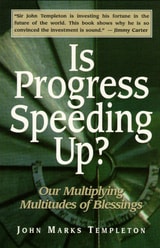
Is Progress Speeding Up
Multiplying Multitudes Of BlessingsJohn Marks Templeton
Templeton Press, 1998
This book is a thought-provoking view of the progress of humankind in the last century. In spite of the pessimism that prevails in the media, people are better fed, better clothed, better housed, and better educated than at any previous time.
The facts within the book provide documentation for a positive outlook toward our nutrition and health, living standards and working conditions, political and economic freedoms, educational facilities, ability to communicate, ease of movement, increasing leisure, and, most important, our ability to get along with one another and with our Creator. The statistics, charts, and photographs that illustrate this book enhance the reassuring and uplifting view of the state of the world and where it is going.
“His analysis gives us a refreshing balance to the negative, sometimes cynical, views in the media that tend to portray the worst rather than the best in human civilization.” —Jimmy Carter
“After reading Sir John Templeton's latest book, I believe more than ever that we are living in the most exciting time in history. Despite the challenges we face, his demonstration of mankind's progress gives all of us great hopes and high expectations for our next century and the new millennium.” —Jack Kemp, former HUD secretary, director of Empower America
Jorie Graham
Essays on the PoetryEdited by Thomas Gardner
University of Wisconsin Press, 2005
These essays identify three broad concerns that run through each of her strikingly different volumes of poems: the movement of the mind in action, the role of the body in experiencing the world, and the pressures of material conditions on mind and body alike. Gardner both shows how Graham is being read at the moment and charts new areas of investigation likely to dominate thinking about her over the next decade. This collection is sure to become the crucial first step for all future work on Graham and on American poetry of the last two decades.
Modernity At Large
Cultural Dimensions of GlobalizationArjun Appadurai
University of Minnesota Press, 1996
Examines the role of imagination in the cultural development of our shrinking world.
The world is growing smaller. Every day we hear this idea expressed and witness its reality in our lives-through the people we meet, the products we buy, the foods we eat, and the movies we watch. In this bold look at the cultural effects of a shrinking world, leading cultural theorist Arjun Appadurai places these challenges and pleasures of contemporary life in a broad global perspective.
Offering a new framework for the cultural study of globalization, Modernity at Large shows how the imagination works as a social force in today's world, providing new resources for identity and energies for creating alternatives to the nation-state, whose era some see as coming to an end. Appadurai examines the current epoch of globalization, which is characterized by the twin forces of mass migration and electronic mediation, and provides fresh ways of looking at popular consumption patterns, debates about multiculturalism, and ethnic violence. He considers the way images-of lifestyles, popular culture, and self-representation-circulate internationally through the media and are often borrowed in surprising (to their originators) and inventive fashions.
Appadurai simultaneously explores and explodes boundaries-between how we imagine the world and how that imagination influences our self-understanding, between social institutions and their effects on the people who participate in them, between nations and peoples that seem to be ever more homogeneous and yet ever more filled with differences. Modernity at Large offers a path to move beyond traditional oppositions between culture and power, tradition and modernity, global and local, pointing out the vital role imagination plays in our construction of the world of today-and tomorrow.
My Way
Speeches and PoemsCharles Bernstein
University of Chicago Press, 1998
In My Way, (in)famous language poet and critic Charles Bernstein deploys a wide variety of interlinked forms—speeches and poems, interviews and essays—to explore the place of poetry in American culture and in the university. Sometimes comic, sometimes dark, Bernstein's writing is irreverent but always relevant, "not structurally challenged, but structurally challenging."
Addressing many interrelated issues, Bernstein moves from the role of the public intellectual to the poetics of scholarly prose, from vernacular modernism to idiosyncratic postmodernism, from identity politics to the resurgence of the aesthetic, from cultural studies to poetry as a performance art, from the small press movement to the Web. Along the way he provides "close listening" to such poets as Charles Reznikoff, Laura Riding, Susan Howe, Ezra Pound, Allen Ginsberg, and Gertrude Stein, as well as a fresh perspective on L=A=N=G=U=A=G=E, the magazine he coedited that became a fulcrum for a new wave of North American writing.
In his passionate defense of an activist, innovative poetry, Bernstein never departs from the culturally engaged, linguistically complex, yet often very funny writing that has characterized his unique approach to poetry for over twenty years. Offering some of his most daring work yet—essays in poetic lines, prose with poetic motifs, interviews miming speech, speeches veering into song—Charles Bernstein's My Way illuminates the newest developments in contemporary poetry with its own contributions to them.
"The result of [Bernstein's] provocative groping is more stimulating than many books of either poetry or criticism have been in recent years."—Molly McQuade, Washington Post Book World
"This book, for all of its centrifugal activity, is a singular yet globally relevant perspective on the literary arts and their institutions, offered in good faith, yet cranky and poignant enough to not be easily ignored."—Publishers Weekly
"Bernstein has emerged as postmodern poetry's sous-chef of insouciance. My Way is another of his rich concoctions, fortified with intellect and seasoned with laughter."—Timothy Gray, American Literature
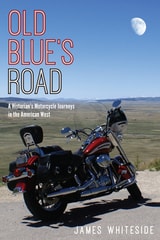
Old Blue's Road
A Historian's Motorcycle Journeys in the American WestJames Whiteside
University Press of Colorado, 2014
In 2005, Whiteside bought a Harley Davidson Heritage Softail, christened it “Old Blue,” and set off on a series of far-reaching motorcycle adventures. Over six years he traveled more than 15,000 miles. Part travelogue and part historical tour, this book takes the reader along for the ride. Whiteside’s travels to the Pacific Northwest, Yellowstone, Dodge City, Santa Fe, Wounded Knee, and many other locales prompt consideration of myriad topics—the ongoing struggle between Indian and mainstream American culture, the meaning of community, the sustainability of the West's hydraulic society, the creation of the national parks system, the Mormon experience in Utah, the internment of Japanese Americans during World War II, and more.
Delightfully funny and insightful, Old Blue’s Road links the colorful history and vibrant present from Whiteside’s unique vantage point, recognizing and reflecting on the processes of change that made the West what it is today. The book will interest the general reader and western historian alike, leading to new appreciation for the complex ways in which the American West's past and present come together.

Phenomenological Approaches to Popular Culture
Michael T. Carroll
University of Wisconsin Press, 2000
The fifteen essays in this volume demonstrate the way in which phenomenological approaches can illuminate popular culture studies, and in so doing they take on the entire range of popular culture.
Postmodernism and the Other
New Imperialism of Western CultureZiauddin Sardar
Pluto Press, 1997

Rattler One-Seven
A Vietnam Helicopter Pilot's War StoryChuck Gross
University of North Texas Press, 2004
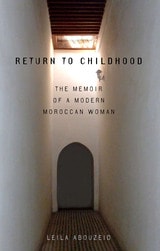
Return to Childhood
The Memoir of a Modern Moroccan WomanBy Leila Abouzeid
University of Texas Press, 1998
Leila Abouzeid, whose novel Year of the Elephant has gone through six reprintings, has now translated her childhood memoir into English. Published in Rabat in 1993 to critical acclaim, the work brings to life the interlocking dramas of family ties and political conflict.
Against a background of Morocco's struggle for independence from French colonial rule, Abouzeid charts the development of personal relationships, between generations as well as between husbands and wives. Abouzeid's father is a central figure; as a strong advocate of Moroccan nationalism, he was frequently imprisoned by the French and his family forced to flee the capital. Si Hmed was a public hero, but the young daughter's memories of her famous father and of the family's plight because of his political activities are not so idyllic.
The memoir utilizes multiple voices, especially those of women, in a manner reminiscent of the narrative strategies of the oral tradition in Moroccan culture. Return to Childhood may also be classified as an autobiography, a form only now gaining respect as a valid literary genre in the Middle East. Abouzeid's own introduction and Elizabeth Fernea's foreword discuss this new development in Arabic literature.
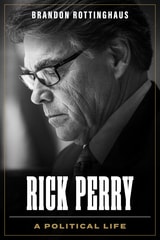
Rick Perry
A Political LifeBrandon Rottinghaus
University of Texas Press, 2024
How Rick Perry navigated and shaped Texas politics as the state’s longest serving governor.
Rick Perry, the charming rancher, pilot, and politician from West Texas who was governor from 2000 to 2015, is one of the most important but polarizing figures in the state's history. Over the nearly forty years he spent in the political arena, his political instincts served as a radar primed to sense future political opportunities. Hugging the arc of Texas political change, he shifted from a rural, “blue dog” Democrat to one of the most conservative politicians the state had elected up to that time, overseeing the enactment of controversial redistricting, voting, and abortion measures. Yet his evolution was complicated and incomplete, as his stands on such topics as immigration, vaccine requirements, and the use of state funds to attract business ran into opposition from a growing and ever-more conservative wing of the Republican Party in Texas—and the nation.
Rick Perry is both a biography of Perry as a politician and a study of the shifts in state politics that took place during his time in office. Demonstrating that Perry ranks among the most consequential governors in Texas history, Brandon Rottinghaus chronicles the profound ways he accumulated power and shaped the governorship.

River Fever
Adventures on the Mississippi, 1969-1972Will Bagley
Signature Books, 2019
Beginning in the spring of 1969, Huckleberry Finn inspired a question: Could you build a raft, float down the Mississippi River to New Orleans, and on the way learn something about America and its peoples? Will Bagley, a vagrant longhair and future prize-winning western historian, and his friends could, and did. Now, a half century after the adventure, Bagley tells his story.
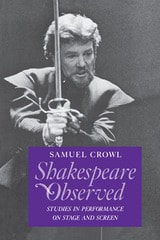
Shakespeare Observed
Studies in Performance on Stage and ScreenSamuel Crowl
Ohio University Press, 1993
Crowl’s study demonstrates the surprising resonances between Roman Polanski's 1971 film of Macbeth and Adrian Noble's heralded recent production of the play for The Royal Shakespeare Company; argues that Orson Welles's films of Othello and Cabins at Midnight are not only brilliant remaining of Shakespeare in another art form but make a powerful contribution to our contemporary understanding of performance as interpretation; and chronicles the impact of Peter Hall's creation of the Royal Shakespeare Company in 1960 on performance approaches to Shakespeare in the past thirty years.
Shakespeare Observed provides full interpretative readings of key recent Shakespeare productions in England and includes an intimate behind-the-scenes glimpse into the rehearsal process which produced Ron Daniels's emotionally charged version of Romeo and Juliet for the RSC in 1980. The final chapter uses Kenneth Branagh's highly successful film of Henry V as a summary example of the trends and influences Crowl's study traces, seeing the film as gathering its interpretative energies from both Olivier's famous film version of the play and Adrian Noble's stage production featuring Branagh as the king.
Written in a style which places a premium on capturing the vivid and often dazzling moments of stage and film performances of Shakespeare, Crowl's study will be of interest to the avid film and theatergoer as well as to the scholar and student. Shakespeare Observed joins a growing list of recent critical works which have significantly expanded and redefined the boundaries of Shakespeare studies in our time.
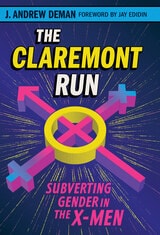
The Claremont Run
Subverting Gender in the X-MenJ. Andrew Deman; Foreword by Jay Edidin
University of Texas Press, 2023
Winner — 2024 Will Eisner Comic Industry Awards in Best Academic/Scholarly Work, announced at San Diego Comic-Con International (2024)
A data-driven deep dive into a legendary comics author’s subversion of gender norms within the bestselling comic of its time.
By the time Chris Claremont’s run as author of Uncanny X-Men ended in 1991, he had changed comic books forever. During his sixteen years writing the series, Claremont revitalized a franchise on the verge of collapse, shaping the X-Men who appear in today’s Hollywood blockbusters. But, more than that, he told a new kind of story, using his growing platform to articulate transgressive ideas about gender nonconformity, toxic masculinity, and female empowerment.
J. Andrew Deman’s investigation pairs close reading and quantitative analysis to examine gender representation, content, characters, and story structure. The Claremont Run compares several hundred issues of Uncanny X-Men with a thousand other Marvel comics to provide a comprehensive account of Claremont’s sophisticated and progressive gender politics. Claremont’s X-Men upended gender norms: where female characters historically served as mere eye candy, Claremont’s had leading roles and complex, evolving personalities. Perhaps more surprisingly, his male superheroes defied and complicated standards of masculinity. Groundbreaking in their time, Claremont’s comics challenged readers to see the real world differently and transformed pop culture in the process.
The Condition of Digitality
A Post-Modern Marxism for the Practice of Digital LifeRobert Hassan
University of Westminster Press, 2020
David Harvey’s The Condition of Postmodernity rationalised capitalism’s transformation during an extraordinary year: 1989. It gave theoretical expression to a material and cultural reality that was just then getting properly started – globalisation and postmodernity – whilst highlighting the geo-spatial limits to accumulation imposed by our planet.
However this landmark publication, author Robert Hassan argues, did not address the arrival of digital technology, the quantum leap represented by the move from an analogue world to a digital economy and the rapid creation of a global networked society. Considering first the contexts of 1989 and Harvey’s work, then the idea of humans as analogue beings he argues this arising new human condition of digitality leads to alienation not only from technology but also the environment. This condition he suggests, is not an ideology of time and space but a reality stressing that Harvey’s time-space compression takes on new features including those of ‘outward’ and ‘inward’ globalisation and the commodification of all spheres of existence.
Lastly the author considers culture’s role drawing on Rahel Jaeggi’s theories to make the case for a post-modern Marxism attuned to the most significant issue of our age. Stimulating and theoretically wide-ranging The Condition of Digitality recognises post-modernity’s radical new form as a reality and the urgent need to assert more democratic control over digitality.
The Ethics of Swagger
Prizewinning African American Novels, 1977–1993Michael DeRell Hill
The Ohio State University Press, 2013

The Fear of Barbarians
Beyond the Clash of CivilizationsTzvetan Todorov
University of Chicago Press, 2010
The relationship between Western democracies and Islam, rarely entirely comfortable, has in recent years become increasingly tense. A growing immigrant population and worries about cultural and political assimilation—exacerbated by terrorist attacks in the United States, Europe, and around the world—have provoked reams of commentary from all parts of the political spectrum, a frustrating majority of it hyperbolic or even hysterical.
In The Fear of Barbarians, the celebrated intellectual Tzvetan Todorov offers a corrective: a reasoned and often highly personal analysis of the problem, rooted in Enlightenment values yet open to the claims of cultural difference. Drawing on history, anthropology, and politics, and bringing to bear examples ranging from the murder of Theo van Gogh to the French ban on headscarves, Todorov argues that the West must overcome its fear of Islam if it is to avoid betraying the values it claims to protect. True freedom, Todorov explains, requires us to strike a delicate balance between protecting and imposing cultural values, acknowledging the primacy of the law, and yet strenuously protecting minority views that do not interfere with its aims. Adding force to Todorov's arguments is his own experience as a native of communist Bulgaria: his admiration of French civic identity—and Western freedom—is vigorous but non-nativist, an inclusive vision whose very flexibility is its core strength.
The record of a penetrating mind grappling with a complicated, multifaceted problem, The Fear of Barbarians is a powerful, important book—a call, not to arms, but to thought.
The Making of a Black Scholar
From Georgia to the Ivy LeagueHorace A. Porter
University of Iowa Press, 2003
The Making of a Black Scholar is structured around schools. Porter attends Georgia's segregated black schools until he enters the privileged world of Amherst College. He graduates (spending one semester at Morehouse College) and moves on to graduate study at Yale. He starts his teaching career at Detroit's Wayne State University and spends the 1980s at Dartmouth College and the 1990s at Stanford University.
The Mountains of Paris
How Awe and Wonder Rewrote My LifeDavid Oates
Oregon State University Press, 2019
The present tense of the book takes place during the seasons he spends in Paris, sharing an artist’s residency. It is a rare opportunity to consider what it means to be human, through time-stopping moments with music, art, and deep history. The past tense of the book offers memories that intrude into the bustle of Paris life: a Billy Graham crusade at age thirteen, a mountain pass, a love, a loss.
In long years of mountaineering Oates fought the self-loathing which had infused him as the gay kid in the Baptist pew. In The Mountains of Paris, he ascends to a place of wonder through intense, personal narrative encounter with the strangeness of being alive. In his searching, luminous, and inimitable prose, Oates invites readers to share the sense of awe awakened by a Vermeer painting, or the night sky, or the echoing strains of music fading down a Paris street, lifting the curtain on a cosmos filled with a terrifying yet beautiful rightness.
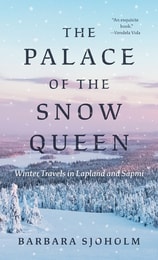
The Palace of the Snow Queen
Winter Travels in Lapland and SápmiBarbara Sjoholm
University of Minnesota Press, 2023
An exploration of the winter wonders and entangled histories of Scandinavia’s northernmost landscapes—now back in print with a new afterword by the author
After many years of travel in the Nordic countries—usually preferring to visit during the warmer months—Barbara Sjoholm found herself drawn to Lapland and Sápmi one winter just as mørketid, the dark time, set in. What ensued was a wide-ranging journey that eventually spanned three winters, captivatingly recounted in The Palace of the Snow Queen.
From observing the annual construction of the Icehotel in Jukkasjärvi, Sweden, to crossing the storied Finnmark Plateau in Norway, to attending a Sámi film festival in Finland, Sjoholm dives deep into the rich traditions and vibrant creative communities of the North. She writes of past travelers to Lapland and contemporary tourists in Sápmi, as well as of her encounters with Indigenous reindeer herders, activists, and change-makers. Her new afterword bears witness to the perseverance of the Sámi in the face of tourism, development, and climate change.
Written with keen insight and humor, The Palace of the Snow Queen is a vivid account of Sjoholm’s adventures and a timely investigation of how ice and snow shape our imaginations and create a vision that continues to draw visitors to the North.
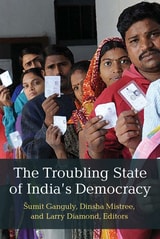
The Troubling State of India's Democracy
Šumit Ganguly, Dinsha Mistree, and Larry Diamond, Editors
University of Michigan Press, 2024
Despite this rich tradition, India’s democracy faces an unprecedented threat with the rise of Narendra Modi and his Hindu nationalist party, the Bharatiya Janata Party. After decisively winning general elections in 2014, Modi and the BJP have pursued a range of anti-democratic policies in which the state and society are used to undermine the opposition, to stifle free speech, and to harass religious minorities. The Troubling State of India’s Democracy brings together leading scholars from around the world to assess the conditions of India’s democracy across three important dimensions: politics, specifically the state of political parties and the party system; the state, including the condition of federalism and the health of various institutions; and society, including NGOs, ethnic and religious tensions, and control of the media. Even though elements of India’s democracy seem to function—like its commitment to elections—the contributors document a disturbing trajectory, one that not only threatens to undermine India’s own stability, but could also affect the global order.
Utopia Limited
The Sixties and the Emergence of the PostmodernMarianne DeKoven
Duke University Press, 2004
DeKoven rigorously analyzes a broad array of cultural and political texts important in the sixties—from popular favorites such as William S. Burroughs’s Naked Lunch to political manifestoes including The Port Huron Statement, the founding document of SDS (Students for a Democratic Society). She examines texts that overtly discuss the conflict in Vietnam, Black Power, and second-wave feminism—including Frances FitzGerald’s Fire in the Lake, James Baldwin’s The Fire Next Time, and Shulamith Firestone’s The Dialectic of Sex; experimental pieces such as The Living Theatre’s Paradise Now; influential philosophical works including Roland Barthes’s Mythologies and Herbert Marcuse’s One-Dimensional Man; and explorations of Las Vegas, the prime location of postmodernity. Providing extensive annotated bibliographies on both the sixties and postmodernism, Utopia Limited is an invaluable resource for understanding the impact of that tumultuous decade on the present.
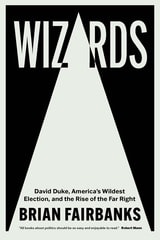
Wizards
David Duke, America's Wildest Election, and the Rise of the Far RightBrian Fairbanks
Vanderbilt University Press, 2022
A surging Republican populist.
The Democrat, hounded by corruption allegations; the Republican, dogged by business failures and ties to white supremacists.
The Republican turned out thousands of screaming supporters for speeches blaming illegal immigrants and crime on the Democrats, and the Democrat plummeted in the polls.
Sound familiar?
The '91 Louisiana Governor's race was supposed to be forgettable. But when former KKK Grand Wizard David Duke shocked the nation by ousting incumbent Republican Governor Buddy Roemer in the primary, the world took notice. Democrat Edwin Edwards, a former three-term governor and two-time corruption defendant, was left alone to face Duke in the general election—and he was going to lose.
Then a little-known state committeewoman stepped in with evidence of Duke's nefarious past. Could her evidence be enough to sway the minds of fired-up voters, or would Louisiana welcome a far-right radical into the highest office in the state?
Journalist Brian Fairbanks explores how the final showdown between Duke and Edwards in November 1991 led to a major shift in our national politics, as well as the rise of the radical right and white supremacist groups, and how history repeated itself in the 2016 presidential election. The story of these political "wizards," almost forgotten by history, remains eerily prescient and disturbingly relevant, and a compulsive page-turner.