Results by title
32 books match the query '1952-'
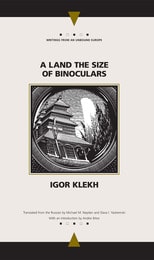
A Land the Size of Binoculars
Igor Klekh
Northwestern University Press, 2004
Throughout, Klekh studies landscapes as intimate as the terrain between fathers and sons and as broad as the wild, mysterious Carpathian Mountains. His work has been compared to that of Borges, Eco, and the magical realists, and celebrated for its synthesis of numerous literary traditions, its use of esoteric knowledge, and its breathtaking prose.
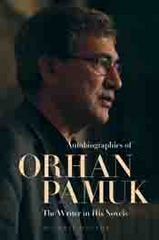
Autobiographies of Orhan Pamuk
The Writer in His NovelsMichael McGaha
University of Utah Press, 2008
"Pamuk is a writer who shares my reverence for the great art of the novel. He takes the novel seriously in a way that is perhaps no longer possible for Western writers, boldly describing it as European civilization’s greatest invention."—Michael McGaha
Turkish novelist Orhan Pamuk is a prominent voice in Turkish literature, speaking to the country’s history, culture, and politics. In 2006, he became the first Turkish writer to receive the Nobel Prize for Literature.
Autobiographies of Orhan Pamuk is the first book-length study of the life and writings of Pamuk. It provides both a historical and cultural context that will help readers better understand and appreciate both the man and his work. It begins with a brief biography, outlines Pamuk’s contributions to Turkish literature and history, examines how his art has evolved over the past thirty years, and discusses some of the writers who provided inspiration. Though his books deal with specifically Turkish issues, like all great literature the themes they explore are universal. In addition to a thorough analysis of his seven published novels, including Snow and My Name is Red, an entire chapter is devoted to his first two novels, Cevdet Bey and Sons and The Silent House, which have yet to be translated into English.
This is a comprehensive examination of the Nobel laureate’s work, free of jargon and of interest to anyone who enjoys good literature.
Colonial Debts
The Case of Puerto RicoRocío Zambrana
Duke University Press, 2021
Contemporary Irish Poetry and the Pastoral Tradition
Donna L. Potts
University of Missouri Press, 2011
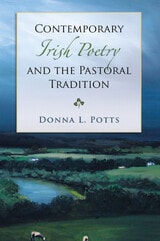
In Contemporary Irish Poetry and the Pastoral Tradition, Donna L. Potts closely examines the pastoral genre in the work of six Irish poets writing today. Through the exploration of the poets and their works, she reveals the wide range of purposes that pastoral has served in both Northern Ireland and the Republic: a postcolonial critique of British imperialism; a response to modernity, industrialization, and globalization; a way of uncovering political and social repercussions of gendered representations of Ireland; and, more recently, a means for conveying environmentalism’s more complex understanding of the value of nature.
In an important distinction from other studies of Irish poetry, Potts moves beyond the influence of history and politics on contemporary Irish pastoral poetry to consider the relatively recent influence of ecology. Contemporary Irish poets often rely on the motif of the pastoral retreat to highlight various environmental threats to those retreats—whether they be high-rises, motorways, global warming, or acid rain. Potts concludes by speculating on the future of pastoral in contemporary Irish poetry through her examination of more recent poets—including Moya Cannon and Paula Meehan—as well as other genres such as film, drama, and fiction.
D-Passage
The Digital WayTrinh T. Minh-ha
Duke University Press, 2013

Dread Poetry and Freedom
Linton Kwesi Johnson and the Unfinished RevolutionDavid Austin
Pluto Press, 2018
Standing at the forefront of political poetry since the 1970s, Linton Kwesi Johnson has been fighting neo-fascism, police violence and promoting socialism while putting pen to paper to refute W.H. Auden's claim that 'poetry makes nothing happen'. For Johnson, only the second living poet to have been published in the Penguin Modern Classics series, writing has always been 'a political act' and poetry 'a cultural weapon'.
In Dread Poetry and Freedom - the first book dedicated to the work of this 'political poet par excellence' - David Austin explores the themes of poetry, political consciousness and social transformation through the prism of Johnson's work. Drawing from the Bible, reggae and Rastafari, and surrealism, socialism and feminism, and in dialogue with Aime Cesaire and Frantz Fanon, C.L.R. James and Walter Rodney, and W.E.B. Du Bois and the poetry of d'bi young anitafrika, Johnson's work becomes a crucial point of reflection on the meaning of freedom in this masterful and rich study.
In the process, Austin demonstrates why art, and particularly poetry, is a vital part of our efforts to achieve genuine social change in times of dread.

Family Bible
Melissa J. Delbridge
University of Iowa Press, 2008
"Swimming and sex seemed a lot alike to me when I was growing up. You took off most of your clothes to do them and you only did them with people who were the same color as you. As your daddy got richer, you got to do them in fancier places." Starting with her father, who never met a whitetail buck he couldn't shoot, a whiskey bottle he couldn't empty, or a woman he couldn't charm, and her mother, who "invented road rage before 1960," Melissa Delbridge introduces us to the people in her own family bible. Readers will find elements of Southern Gothic and familiar vernacular characters, but Delbridge endows each with her startling and original interpretation. In this disarmingly unguarded and unapologetic memoir, she shows us what really happened in the "stew of religion and sex" that was 1960s Tuscaloosa.

Feminist Accused of Sexual Harassment
Jane Gallop
Duke University Press, 1997
Comparing “still new” feminism—as she first encountered it in the early 1970s—with the more established academic discipline that women’s studies has become, Gallop makes a case for the intertwining of learning and pleasure. Refusing to acquiesce to an imperative of silence that surrounds such issues, Gallop acknowledges—and describes—her experiences with the eroticism of learning and teaching. She argues that antiharassment activism has turned away from the feminism that created it and suggests that accusations of harassment are taking aim at the inherent sexuality of professional and pedagogic activity rather than indicting discrimination based on gender—that antiharassment has been transformed into a sensationalist campaign against sexuality itself.
Feminist Accused of Sexual Harassment offers a direct and challenging perspective on the complex and charged issues surrounding the intersection of politics, sexuality, feminism, and power. Gallop’s story and her characteristically bold way of telling it will be compelling reading for anyone interested in these issues and particularly to anyone interested in the ways they pertain to the university.
Fighting Monsters in the Abyss
The Second Administration of Colombian President Álvaro Uribe Vélez, 2006–2010Harvey F. Kline
University of Alabama Press, 2015
Studies the complex constraints and trade-offs the second administration of Colombian President Uribe (2006–2010) encountered as it attempted to resolve that nation’s violent Marxist insurrection and to have a more efficient judicial system
Fighting Monsters in the Abyss offers a deeply insightful analysis of the efforts by the second administration of Colombian President Álvaro Uribe Vélez (2006–2010) to resolve a decades-long Marxist insurgency in one of Latin America’s most important nations. Continuing work from his prior books about earlier Colombian presidents and yet written as a stand-alone study, Colombia expert Harvey F. Kline illuminates the surprising successes and setbacks in Uribe’s response to this existential threat.
In State Building and Conflict Resolution in Colombia, 1986–1994, Kline documented and explained the limited successes of Presidents Virgilio Barco and César Gaviria in putting down the revolutionaries while also confronting challenges from drug dealers and paramilitary groups. The following president Andrés Pastrana then boldly changed course and attempted resolution through negotiations, an effort whose failure Kline examines in Chronicle of a Failure Foretold. In his third book, Showing Teeth to the Dragons, Kline shows how in his first term President Álvaro Uribe Vélez more successfully quelled the insurrection through a combination of negotiated demobilization of paramilitary groups and using US backing to mount more effective military campaigns.
Kline opens Fighting Monsters in the Abyss with a recap of Colombia’s complex political history, the development of Marxist rebels and paramilitary groups and their respective relationships to the narcotics trade, and the attempts of successive Colombian presidents to resolve the crisis. Kline next examines the ability of the Colombian government to reimpose rule in rebel-controlled territories as well as the challenges of administering justice. He recounts the difficulties in the enforcement of the landmark Law of Justice and Peace as well as two significant government scandals, that of the “false positives” (“falsos positivos”) in which innocent civilians were killed by the military to inflate the body counts of dead insurgents and a second scandal related to illegal wiretapping.
In tracing Uribe’s choices, strategies, successes, and failures, Kline also uses the example of Colombia to explore a dimension quite unique in the literature about state building: what happens when some members of a government resort to breaking rules or betraying their societies’ values in well-intentioned efforts to build a stronger state?
From Puerto Rico To Philadelphia
Puerto Rican Workers and Postwar EconomiesCarmen Whalen
Temple University Press, 2001
Puerto Rican migration to the mainland following World War II took place for a range of reasons -- globalization of the economy, the colonial relationship between the United States and Puerto Rico, state policies, changes in regional and local economies, social networks, and, not least, the decisions made by individual immigrants. In this wide-ranging book, Carmen Whalen weaves them all into a tapestry of Puerto Rican immigration to Philadelphia.
Like African Americans and Mexicans, Puerto Ricans were recruited for low-wage jobs, only to confront racial discrimination as well as economic restructuring. As Whalen shows, they were part of that wave of newcomers who came from areas in the Caribbean, Latin America, and Asia characterized by a heavy U.S. military and economic presence, especially export processing zones looking for a new life in depressed urban environments already populated by earlier labor migrants. But Puerto Rican in-migration was also unique, especially in its regional and gender dimensions. Many migrants came as part of contract labor programs shaped by competing agendas.
By the 1990s, economic conditions, government policies, and racial ideologies had transformed Puerto Rican labor migrants into what has been called "the other underclass." The author analyzes this continuation of "culture and poverty" interpretations and contrasts it with the efforts of Philadelphia's Puerto Ricans to recreate their communities and deal with the impact of economic restructuring and residential segregation in the City of Brotherly Love.
I Am Here You Are Not I Love You
Andrew Topolski, Cindy Suffoletto, and Their Life in the ArtsAidan Ryan
University of Iowa Press, 2025
The book presents a critical reexamination of Andrew Topolski, an overlooked luminary of intermedia and postminimalism. In repositioning Topolski’s legacy and vast body of work, Ryan makes compelling findings about the interplay of talent, luck, and community support in the making or breaking of artistic careers. At the same time, the story shares the significant and never-before-seen body of work by Cindy Suffoletto, a talented and inventive artist little shown and never cataloged during her short life. Ultimately, Ryan argues that the time is right for both to take up a privileged place among the great artists of their generation.
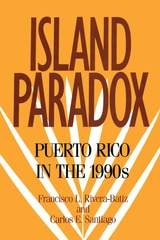
Island Paradox
Puerto Rico in the 1990sFrancisco Rivera-Batiz
Russell Sage Foundation, 1996
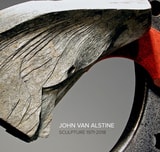
John Van Alstine
Sculpture, 1971–2018John Van Alstine
The Artist Book Foundation, 2019
For nearly fifty years, John Van Alstine has created abstract sculptures forged from steel and stone. In John Van Alstine: Sculpture, 1971–2018, three notable essayists explore the sculptor's abstract landscapes that reveal the complex synergy between natural foces and man-made elements; by grappling with the challenges of balancing stone and steel, Van Alstine's indoor, outdoor, and site-specific sculptures are measured and calculated, yet simultaneously poetic; their swooping angular lines create expansive spaces beyond the limits of their stone-and-steel frames to unveil our collective history and imagination, illuminating a deft interplay of natural energies and the human experience.
The artist weaves into his works elements of mythology, celestial navigation, implements, human figures, movement, urban forms, and found objects, while using motion, balance, and intertia to incorporate the eternal forces of gravity, tension, and erosion. In an essay on his drawings, Van Alstine details the critical role they play in the initiation and planning of his projects, offering the reader a firsthand perspective on the artist's creative process. The Artist Book Foundation is gratified to publish this lavishly illustrated monograph on an esteemed and prolific contemporary artist.
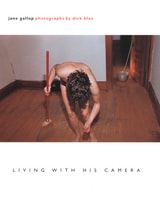
Living with His Camera
Jane Gallop
Duke University Press, 2003
Living with His Camera is Gallop’s nuanced meditation on photography and the place it has in her private life and in her family. A reflection on family, it attempts—like Blau’s photographs themselves—to portray the realities of family life beyond the pieties of conventional representations. Living with His Camera is about some of the most pressing issues of visuality and some of the most basic issues of daily life. Gallop considers intimate photographs of moments both dramatic and routine: of herself giving birth to son Max or crying in the midst of an argument with Blau, pouring herself cereal as Max colors at the breakfast table, or naked, sweeping the floor. With her trademark candor, humor, and critical acumen, Gallop mixes personal reflection with close readings of Roland Barthes’s Camera Lucida, Susan Sontag’s On Photography, Kathryn Harrison’s novel Exposure, and Pierre Bourdieu’s Photography.
Presenting his photographs and her text, Living with His Camera is a portrait of a couple whose professional activity is part of their private lives and whose private life is viewed through their professional gazes. While most of us set aside rigorous thought when we turn to the sentimental realm of home life, Gallop and Blau look at each other not only with great affection but also with the keen focus of a sharp, critical gaze.
Native Intelligence
Aesthetics, Politics, and Postcolonial LiteratureDeepika Bahri
University of Minnesota Press, 2003
A compelling reclamation of the place of aesthetics in postcolonial literature
Literature though it may be, postcolonial literature is studied and understood largely—and often solely—in social and political terms. In neglecting its aesthetic dimension, as this book forcefully demonstrates, we are overlooking not only an essential aspect of this literature but even a critical perspective on its sociopolitical function and value. In Native Intelligence, Deepika Bahri focuses on postcolonial literature’s formal and aesthetic negotiations with sociopolitical concerns.
How, Bahri asks, do aesthetic considerations contest the social function of postcolonial literature? In answering, her book takes on two tasks: First, it identifies the burden of representation borne by postcolonial literature through its progressive politicization. Second, it draws on Frankfurt School critical theory to reclaim a place for aesthetics in literary representation by closely engaging works of Rohinton Mistry, Salman Rushdie, and Arundhati Roy. Throughout, Bahri shows how attention to the aesthetic innovations and utopian impulses of postcolonial works uncovers their complex and uneven relationship to ideology, reanimating their potential to make novel contributions to the larger project of social liberation.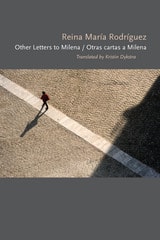
Other Letters to Milena / Otras cartas a Milena
Reina María Rodríguez
University of Alabama Press, 2014
A parallel translation of a mixed-genre work by acclaimed Cuban writer Reina María Rodríguez in which poetry merges into creative nonfiction, culminating in a series of essays.
Published in Spanish as Otras cartas a Milena, Other Letters to Milena shows Rodríguez confronting pressing issues at the turn of the twenty-first century. These involve a new post-Soviet world and the realities of diasporic existence, which have a profound effect even on people like Rodríguez who have not migrated but continue to live and work in their home nation. The book’s title references Franz Kafka, whose Letters to Milena was published after his death in 1952. This signals that Rodríguez participates in her city’s long cosmopolitan tradition asserted by Cuban writers and scholars of Cuban literature. Rodríguez’s youngest daughter, featured most prominently in the letters making up the collection’s centerpiece, “A Girl’s Story,” was named after Milena Jesenská, the recipient of Kafka’s letters.
With the poems provided in a bilingual format, the collection will be of interest both to English readers in general (this will be the first English translation of a complete Rodríguez collection not excerpted from a larger work) and to Spanish readers unable to obtain the collection in any form, given the difficulty of distributing Cuban literature outside that country.
As an introduction to the book, Dykstra has included a critical commentary. It clarifies many of the author’s references, such as details pertaining to her family history—items Dykstra learned during lengthy discussions with the author about her work—and influences about her choices in the translation.
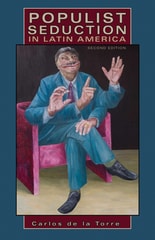
Populist Seduction in Latin America
Carlos de la Torre
Ohio University Press, 2010
Is Latin America experiencing a resurgence of leftwing governments, or are we seeing a rebirth of national-radical populism? Are the governments of Hugo Chávez, Evo Morales, and Rafael Correa becoming institutionalized as these leaders claim novel models of participatory and direct democracy? Or are they reenacting older traditions that have favored plebiscitary acclamation and clientelist distribution of resources to loyal followers? Are we seeing authentic forms of expression of the popular will by leaders who have empowered those previously disenfranchised? Or are these governments as charismatic, authoritarian, and messianic as their populist predecessors?
This new and expanded edition of Populist Seduction in Latin America explores the ambiguous relationships between democracy and populism and brings de la Torre’s earlier work up to date, comparing classical nationalist, populist regimes of the 1940s, such as those of Juan Perón and José María Velasco Ibarra, with their contemporary neoliberal and radical successors. De la Torre explores their similarities and differences, focusing on their discourses and uses of political symbols and myths.
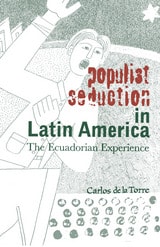
Populist Seduction in Latin America
The Ecuadorian ExperienceCarlos De La Torre
Ohio University Press, 2000
earlier work up to date, comparing classical nationalist, populist regimes of the 1940s, such as those of Juan Perón and José María Velasco Ibarra, with their contemporary neoliberal and radical successors. De la Torre explores their similarities and differences, focusing on their discourses and uses of political symbols and myths.
Puerto Rican Jam
Rethinking Colonialism and NationalismNegron-Muntaner, Frances
University of Minnesota Press, 1997
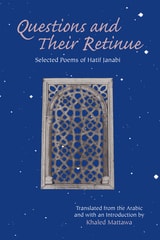
Questions and Their Retinue
Selected Poems of Hatif JanabiHatif Janabi
University of Arkansas Press, 1996
Hatif Janabi’s poems are passionate, jolting, apocalyptic, and painful. They deal with war and death, perception and truth, drawing from his family life, his exile in Poland, the Gulf War, violence in Iraq, and his experience in the United States.
The speaker in many of Janabi’s poems moves from a confrontational stance to one of resigned desperation, and from coyness to deep longing, where, occasionally, hope surfaces. The associative processes and the often bizarre surreal imagery he employs are very effective in expressing his profound sense of political and spiritual alienation. Janabi is among a generation of Arab poets who, because of censorship, can speak only obliquely about the harsh reality of their lives. In these poems he has created symbolic landscapes that attempt to reveal the political, social, and psychological stresses with which suffering people live.
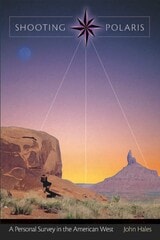
Shooting Polaris
A Personal Survey in the American WestJohn Hales
University of Missouri Press, 2005
Showing Teeth to the Dragons
State-building by Colombian President Álvaro Uribe Vélez, 2002–2006Harvey F. Kline
University of Alabama Press, 2009
Kline argues that the first administration of Colombian President Álvaro Uribe Vélez marks a decisive break in a seemingly endless cycle of civil war. Not only were the levels of homicide and kidnapping dramatically reduced, but the state took the offensive against the insurgents, strengthening the armed forces which in turn demonstrated clear support for the president's policy.
The civil war in Colombia has waxed and waned for sixty years, with shifting goals, programs, and tactics among the contending parties. Bursts of appalling violence are punctuated by uneasy truces, cease-fires, and attempts at reconciliation. Varieties of Marxism, the economics of narco-trafficking, peasant land hunger, poverty, and oppression mix together in a toxic stew that has claimed the uncounted lives of peasants, conscript soldiers, and those who simply got in the way.
Kline believes that the changes of the President, although dramatic, are not necessarily permanent. He discusses what challenges must be overcome for the permanent reduction of organized violence in this war-torn nation.
That Self-Forgetful Perfectly Useless Concentration
Alan Shapiro
University of Chicago Press, 2016
In this book, Shapiro brings his characteristic warmth, humor, and many years as both poet and teacher to bear on questions surrounding two preoccupations: the role of conventions—of literary and social norms—in how we fashion our identities on and off the page, and how suffering both requires and resists self-expression. He sketches affectionate portraits of his early teachers, revisits the deaths of his brother and sister, and examines poems that have helped him navigate troubled times. Integrating storytelling and literary analysis so seamlessly that art and life become extensions of each other, Shapiro embodies in his lively prose the very qualities he celebrates in the poems he loves.
Brimming with wit and insight, this is a book for poets, students and scholars of poetry, teachers of literature, and everyone who cares about the literary arts and how they illuminate our personal and public lives.
That Which Roots Us
Environmental Issues in the Pacific Northwest & BeyondMarion Dresner
University of Nevada Press, 2023
A work of natural and environmental history.
That Which Roots Us is a work of natural and environmental history that explores the origins of and resolutions to some of the United States’ environmental problems. Marion Dresner discusses the roots of Euro-American environmental exploitative action, starting with the environmental consequences of having treated Pacific Northwest forests as commodities. She shares her experiences visiting sites where animal-centered ice age culture changed to human-centered culture thousands of years ago with the advent of farming. The book explores the origins of the romantic philosophical movement, which arose out of the debilitating conditions of the industrial era. Those romantic attitudes toward nature inspired the twentieth-century preservation movement and America’s progressively modern conservation attitudes.
The book is centered around environmental issues in the Pacific Northwest, contrasting utilitarian views of nature with Native American practices of respect and reciprocity. The elements that make That Which Roots Us a truly unique and important contribution to environmental literature are the author’s personal recollections and interactions with the landscape. Ultimately, Dresner offers hope for a new stewardship of the land and a focus on science literacy and direct experience in the natural world as the most grounded way of knowing the planet.
The Black Rock Desert
Text by William L. Fox; Photographs by Mark Klett
University of Arizona Press, 2002
The Breakaway
The Inside Story of the Wirtz Family Business and the Chicago BlackhawksBryan Smith
Northwestern University Press, 2018
When Rocky Wirtz took over the Wirtz Corporation in 2007, including management of the Chicago Blackhawks, the fiercely beloved hockey team had fallen to a humiliating nadir. As chronic losers playing to a deserted stadium, they were worse than bad—they were irrelevant. ESPN named the franchise the worst in all of sports. Rocky's resurrection of the team's fortunes was—publicly, at least—a feel-good tale of shrewd acumen. Behind the scenes, however, it would trigger a father, son, and brother-against-brother drama of Shakespearean proportions. The Breakaway reveals that untold story.
Arthur Wirtz founded the family's business empire during the Depression. From roots in real estate, "King Arthur" soon expanded into liquor and banking, running his operations with an iron hand and a devotion to profit that earned him the nickname Baron of the Bottom Line. His son Bill further expanded the conglomerate, taking the helm of the Blackhawks in 1966. "Dollar Bill" Wirtz demanded unflinching adherence to Arthur's traditions and was notorious for an equally fierce temperament.
Yet when Rocky took the reins of the business after Bill's death, it was an organization out of step with the times and financially adrift. The Hawks weren't only failing on the ice—the parlous state of the team's finances imperiled every facet of the Wirtz empire. To save the team and the company, Rocky launched a radical turnaround campaign. Yet his modest proposal to televise the Hawks' home games provoked fierce opposition from Wirtz family insiders, who considered any deviation from Arthur and Bill's doctrines to be heresy.
Rocky's break with the edicts of his grandfather and father led to a reversal for the ages—three Stanley Cup championships in six years, a feat Fortune magazine called "the greatest turnaround in sports business history." But this resurrection came at a price, a fracturing of Rocky's relationships with his brother and other siblings. In riveting prose that recounts a story spanning three generations, The Breakaway reveals an insider's view of a brilliant but difficult Chicago business and sports dynasty and the inspiring story of perseverance and courage in the face of intense family pressures.
The Eternal Son
Cristovão Tezza
Tagus Press, 2013
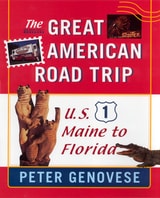
The Great American Road Trip
U.S. 1, Maine to FloridaGenovese, Peter
Rutgers University Press, 1999
Take an unforgettable road trip down one of America’s most fascinating highways, U.S.
On what highway can you find the headquarters of the FBI, Dow Jones Interactive, and the National Enquirer? What road is home to the Bronx Zoo, the Okefenokee Swamp, and Flipper? On the side of what freeway can you find the Super Duper Weenie Wagon, Larry’s Redneck Bar, and the Big Chicken Barn? Peter Genovese found them all, along with about a million other fascinating and bizarre attractions, on U.S. 1, ‘the best damn highway in America,” as he calls it. Join him for the road trip of a lifetime The Great American Road Trip: A Journey Down U.S. 1.
U.S. 1 may not be America’s scenic highway, but it’s certainly the most colorful. It runs through Boston, New York, Baltimore, Washington, D.C., and Miami, in addition to Caribou, Maine, Quonochontaug, Rhode Island, and Alma, Georgia. It zig-zags along the wild and beautiful Maine coast and soars over the Atlantic Ocean as the Overseas Highway, one of the most spectacular stretches of road anywhere. The Star-Spangled Banner is on U.S. 1. Madonna lived on U.S. 1 (until she sold her house to Rosie O'Donnell). U.S. 1 is Main Street and the Miracle Mile, two-lane blacktop and six-lane expressway, straight as an arrow in some places and twistier than a Philadelphia soft pretzel in others.
Genovese spent two years on U.S. 1, talking to everyone from doughnut makers, dolphin trainers, and swamp guides to real Miami vice cops and the keeper of the national parasite collection. His resulting book is the most complete portrait of an American highway ever written. With his unerring eye for detail, sense of humor, and understanding of human nature, Genovese takes readers on a sometimes funny, sometimes sad, always illuminating 2,450-mile journey from Fort Kent, Maine to Key West, Florida.
Ride along with Genovese and grab a drink at the Last Resort Bar or the Last Chance Saloon, then pick up a paperback at the Banned Bookstore. Visit Oscar, the biggest gator in the Okefenokee Swamp, have dinner at Hog Heaven, and take in a Portland Seadogs baseball game. Tour a Budweiser brewery and go into the pit at a NASCAR race. Looking for someplace to stay? How about the world’s only underwater hotel, the Jules’ Undersea Lodge, or in a cabin made entirely from one pine tree at the Maine Idyll Motor Court? If it’s culture you seek, the highway boasts dozens of museums. While you may have heard of the Museum of Natural History and the National Museum of American Art, how about the Blacks in Wax Museum, Tragedy in the United States Museum, and the Mushroom Museum? There’s something for everyone on U.S. 1, and Genovese has written about it all in The Great American Road Trip.
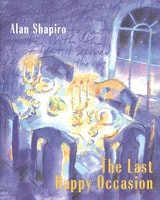
The Last Happy Occasion
Alan Shapiro
University of Chicago Press, 1996
A refreshingly honest, lovingly crafted work, The Last Happy Occasion is a treasure map for anyone interested in exploring the intersections of life and art.
"The Last Happy Occasion is touching and intelligent, emotionally satisfying and eloquent testimony to the power of poetry to instruct, heal and inspire."—Emily Barton, New York Times Book Review
"Shapiro, not unlike Auden, doses his wordplay with a certain sly irony. . . . We come away from Shapiro's book with an intimate appreciation of the little subversions that poetry can work in one's life."—Jonathan Kirsch, Los Angeles Times
"He is an acute observer of moments, people, art and language. And he packs even seemingly simple stories with many layers of meaning. . . . He shows us the power and importance of transformative art in life."—Publishers Weekly, starred review
"The literary criticism is sharp, but what enthralls the reader more is Shapiro's humorous but honest perspective on his younger self, a perspective that is critical without being condescending."—Heller McAlpin, Newsday
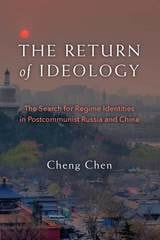
The Return of Ideology
The Search for Regime Identities in Postcommunist Russia and ChinaCheng Chen
University of Michigan Press, 2016
As a nation makes the transition from communism to democracy or another form of authoritarianism, its regime must construct not only new political institutions, but also a new political ideology that can guide policy and provide a sense of mission. The new ideology is crucial for legitimacy at home and abroad, as well as the regime’s long-term viability. In The Return of Ideology, Cheng Chen compares post-communist regimes, with a focus on Russia under Putin and post-Deng China, investigating the factors that affect the success of an ideology-building project and identifies the implications for international affairs.
Successful ideology-building requires two necessary—but not sufficient—conditions. The regime must establish a coherent ideological repertoire that takes into account the nation’s ideological heritage and fresh surges of nationalism. Also, the regime must attract and maintain a strong commitment to the emerging ideology among the political elite.
Drawing on rich primary sources, including interviews, surveys, political speeches, writings of political leaders, and a variety of publications, Chen identifies the major obstacles to ideology-building in modern Russia and China and assesses their respective long-term prospects. Whereas creating a new regime ideology has been a protracted and difficult process in China, it has been even more so in Russia. The ability to forge an ideology is not merely a domestic concern for these two nations, but a matter of international import as these two great powers move to assert and extend their influence in the world.
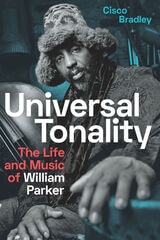
Universal Tonality
The Life and Music of William ParkerCisco Bradley
Duke University Press, 2021
Vigil
Alan Shapiro
University of Chicago Press, 1997
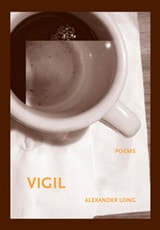
In Vigil, Shapiro chronicles with heart-wrenching lyricism the final four weeks of Beth's life in a hospice, attended by her parents, brothers, husband, daughter and friends. One by one, as loved ones arrive to visit Beth, Shapiro reveals fragments of their personal history, bringing to life a troubled and poignant past. A visit from their brother David triggers the memory of a searing betrayal—the parents disowned Beth after learning from David that she was secretly dating a black man; a visit from the parents recalls their bitter quarrels over Beth's radical politics; a visit from Beth's black husband brings the painful memory of their wedding and her parents' refusal to attend. These recollections and feelings that surface with each visit evoke the unresolved, deeply disturbing issues that kept the Shapiro family estranged for so long, making the reconciliation that Beth's death brings to her family all the more extraordinary.
Shapiro gives an unconventionally honest account of our responses—horror, relief, impatience, exhaustion, exhilaration, projection, fear, self-criticism, and a sense of fulfillment—in the presence of the dying. Concluding with a selection of moving poems, Shapiro affirms the astonishing link between creativity and healing, and provides a coda to the whole experience. The price of human connection may be great, but human connection, in the end, has the power to redeem even the most painful of human experiences.