Results by title
9 books match the query '1959-1990'

Fidel's Ethics of Violence
The Moral Dimension of the Political Thought of Fidel CastroDayan Jayatilleka
Pluto Press, 2007
This book makes a timely intervention into the question of Castro's historical role and contribution. The author argues that Castro's doctrine of armed struggle is the logical development of his idea of the ethical liberation fighter. At its core is an unremitting emphasis on the ethical use of violence.
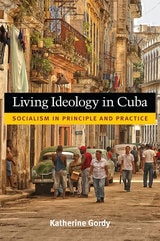
Living Ideology in Cuba
Socialism in Principle and PracticeKatherine A. Gordy
University of Michigan Press, 2015
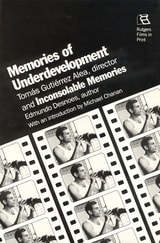
Memories Of Underdevelopment
Chanan, Michael
Rutgers University Press, 1990
This double volume includes the complete continuity script of Memories, as well as the complete novel, Inconsolable Memories, upon which the film is based. An interview with Alea is reproduced here, as well as documentation of the political controversy that surrounded the film in this country. Michael Chanan's introduction places the film in the context of Cuban political and cultural history. The volume also includes a biographical sketch of Alea, a chronology of the Cuban Revolution, reviews, commentary, a filmography, and a bibliography.Michael Chanan lives in England, where he teaches and writes on film. He is the author of The Cuban Image: Cinema and Cultural Politics in Cuba.
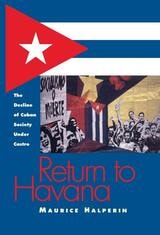
Return to Havana
The Decline of Cuban Society Under CastroMaurice Halperin
Vanderbilt University Press, 1994
The Cuban Revolution in the 21st Century
George Lambie
Pluto Press, 2010
While most books and articles on Cuba seek to analyse the island’s socialist experiment from the perspective of internal dynamics or international relations, this book attempts to understand the revolutionary process as part of a counter-current against neoliberal globalisation.
Rather than presenting Cuba as a socialist survivor, whose performance must be measured against the standards set by the ‘international community’, George Lambie judges Cuban socialism on the goals which the revolution sets for itself. He shows that despite Cuba’s isolation in the ‘New World Order’, and the enormous pressures it has faced to ‘conform’, its faith in an alternative socialist project has continued and grown.
Now that neoliberalism is in crisis, Cuba’s promotion of socialist values is finding a renewed relevance. In this fascinating study Lambie argues that Cuba is again becoming a symbol, and practical example, of socialism in action. This book is essential reading for students of politics and Latin American studies.
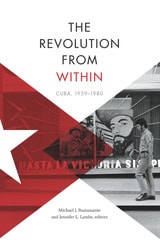
The Revolution from Within
Cuba, 1959–1980Michael J. Bustamante and Jennifer L. Lambe, editors
Duke University Press, 2019
Contributors. Michael J. Bustamante, María A. Cabrera Arús, María del Pilar Díaz Castañón, Ada Ferrer, Alejandro de la Fuente, Reinaldo Funes Monzote, Lillian Guerra, Jennifer L. Lambe, Jorge Macle Cruz, Christabelle Peters, Rafael Rojas, Elizabeth Schwall, Abel Sierra Madero
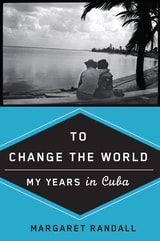
To Change the World
My Years in CubaRandall, Margaret
Rutgers University Press, 2009
Randall gives readers an inside look at her children's education, the process through which new law was enacted, the ins and outs of healthcare, employment, internationalism, culture, and ordinary people's lives. She explores issues of censorship and repression, describing how Cuban writers and artists faced them. She recounts one of the country's last beauty pageants, shows us a night of People's Court, and takes us with her when she shops for her family's food rations. Key figures of the revolution appear throughout, and Randall reveals aspects of their lives never before seen.
More than fifty black and white photographs, most by the author, add depth and richness to this astute and illuminating memoir. Written with a poet's ear, depicted with a photographer's eye, and filled with a feminist vision, To Change the Worldùneither an apology nor gratuitous attackùadds immensely to the existing literature on revolutionary Cuba.
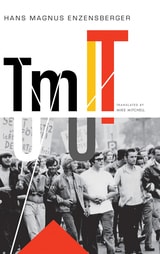
Tumult
Hans Magnus Enzensberger
Seagull Books, 2016
Hans Magnus Enzensberger, widely regarded as Germany’s greatest living poet, was already well known in the 1960s, the tempestuous decade of which Tumult is an autobiographical record. Derived from old papers, notes, jottings, photos, and letters that the poet stumbled upon years later in his attic, the volume is not so much about the man, but rather the many places he visited and people whom he met on his travels through the Soviet Union and Cuba during the 1960s. The book is made up of four long-form pieces written from 1963 to 1970, each episode concluding with a poem and postscript written in 2014. Translated by Mike Mitchell, the book is a lively and deftly written travelogue offering a glimpse into the history of leftist thought. Dedicated to “those who disappeared,” Tumult is a document of that which remains one of humanity’s headiest times.
Voices From the Other Side
An Oral History of Terrorism Against CubaKeith Bolender
Pluto Press, 2010
Keith Bolender brings to bear the enormous impact that terrorism has had on Cuba’s civilian population, with over 1,000 documented incidents resulting in more than 3,000 deaths and 2,000 injuries. Bolender allows the victims to articulate the atrocities the Cuban people have suffered - which largely originate from Cuban counter-revolutionaries based in the US, often with the active help of the CIA.
Voices From The Other Side includes first-person interviews with more than 75 Cuban citizens who have been victims of these terrorist acts, or have had family members or close friends die from the attacks. It is a unique resource for activists, journalists and students interested in Cuba's torrid relationship with the US.