Results by title
64 books match the query '1960-' and 13 start with a
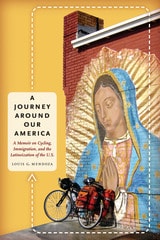
A Journey Around Our America
A Memoir on Cycling, Immigration, and the Latinoization of the U.S.By Louis G. Mendoza
University of Texas Press, 2012
Immigration and the growing Latino population of the United States have become such contentious issues that it can be hard to have a civil conversation about how Latinoization is changing the face of America. So in the summer of 2007, Louis Mendoza set out to do just that. Starting from Santa Cruz, California, he bicycled 8,500 miles around the entire perimeter of the country, talking to people in large cities and small towns about their experiences either as immigrants or as residents who have welcomed—or not—Latino immigrants into their communities. He presented their enlightening, sometimes surprising, firsthand accounts in Conversations Across Our America: Talking About Immigration and the Latinoization of the United States.
Now, in A Journey Around Our America, Mendoza offers his own account of the visceral, emotional, intellectual, and spiritual dimensions of traveling the country in search of a deeper, broader understanding of what it means to be Latino in the United States in the twenty-first century. With a blend of first- and second-person narratives, blog entries, poetry, and excerpts from conversations he had along the way, Mendoza presents his own aspirations for and critique of social relations, political ruminations, personal experiences, and emotional vulnerability alongside the stories of people from all walks of life, including students, activists, manual laborers, and intellectuals. His conversations and his experiences as a Latino on the road reveal the multilayered complexity of Latino life today as no academic study or newspaper report ever could.
A Mouth Sweeter Than Salt
An African MemoirToyin Falola
University of Michigan Press, 2005
-Ama Ata Aidoo
"A splendid coming-of-age story so full of vivid color and emotion, the words seem to dance off the page. But this is not only Falola's memoir; it is an account of a new nation coming into being and the tensions and negotiations that invariably occur between city and country, tradition and modernity, men and women, rich and poor. A truly beautiful book."
-Robin D. G. Kelley
"More than a personal memoir, this book is a rich minihistory of contemporary Nigeria recorded in delicious detail by a perceptive eyewitness who grew up at the crossroads of many cultures."
-Bernth Lindfors
"The reader is irresistibly drawn into Falola's world. The prose is lucid. There is humor. This work is sweet. Period."
-Ngugi wa Thiongo'o
A Mouth Sweeter Than Salt gathers the stories and reflections of the early years of Toyin Falola, the grand historian of Africa and one of the greatest sons of Ibadan, the notable Yoruba city-state in Nigeria.
Redefining the autobiographical genre altogether, Falola miraculously weaves together personal, historical, and communal stories, along with political and cultural developments in the period immediately preceding and following Nigeria's independence, to give us a unique and enduring picture of the Yoruba in the mid-twentieth century. This is truly a literary memoir, told in language rich with proverbs, poetry, song, and humor.
Falola's memoir is far more than the story of one man's childhood experiences; rather, he presents us with the riches of an entire culture and community-its history, traditions, pleasures, mysteries, household arrangements, forms of power, struggles, and transformations.
AIDS Doesn't Show Its Face
Inequality, Morality, and Social Change in NigeriaDaniel Jordan Smith
University of Chicago Press, 2014
Drawing on twenty years of fieldwork in Nigeria, Smith tells a story of dramatic social changes, ones implicated in the same inequalities that also factor into local perceptions about AIDS—inequalities of gender, generation, and social class. Nigerians, he shows, view both social inequality and the presence of AIDS in moral terms, as kinds of ethical failure. Mixing ethnographies that describe everyday life with pointed analyses of public health interventions, he demonstrates just how powerful these paired anxieties—medical and social—are, and how the world might better alleviate them through a more sensitive understanding of their relationship.

African Democracies and African Politics
M. A. Mohamed Salih
Pluto Press, 2001
African Political Parties
Evolution, Institutionalisation and GovernanceEdited by M. A. Mohamed Salih
Pluto Press, 2003
Themes include the evolution and institutionalisation of African political parties; the unique historical, political and social circumstances that shaped their structures and functions.Morten Bøås In the governance trajectory, the authors question the relationship between African political parties and government; political parties and representation; political parties and electoral systems; and political parties and parliament. Case studies include Ethiopia, Ghana, Kenya, Botswana, Namibia, South Africa, Tanzania, Zambia, Zimbabwe and many others.
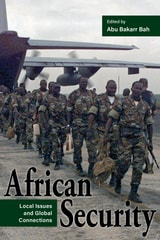
African Security
Local Issues and Global ConnectionsAbu Bakarr Bah
Ohio University Press, 2024
Aid to Africa
So Much To Do, So Little DoneCarol Lancaster
University of Chicago Press, 1999
This balanced but tough-minded analysis does not reject the potential usefulness of foreign aid but does offer recommendations for fundamental changes in how governments and multilateral aid agencies can operate more effectively.
American Mainline Religion
Its Changing Shape and FutureWade Clark Roof and William McKinney
Rutgers University Press, 1987
"American Mainline Religion" provides a new "mapping" of the families of American religion and the underlying social, cultural, and demographic forces that will reshape American religion in the century to come. Going beyond the headlines in daily newspapers, Roof and McKinney document the decline of the Protestant establishment, the rise of a more assimilated and public-minded Roman Catholicism, the place of black Protestantism and Judaism, and the resurgence of conservative Protestantism as a religious and cultural force.
An American (Homeless) in Paris
Chris Ames
University of Utah Press, 2017
Ames circles serious questions, rarely losing a sense of irony, bewilderment, or amusement, especially at his circumstances, with their inherent discomforts, risks, and not-so-reassuring self-revelation. As readers see him stumble into renewed social bonds, his skewed searching and unconventional existence will engage and sometimes befuddle them.
“I’m not saying become homeless, but do understand it opens many doors, and helps us appreciate the doors we can close.”—from the introduction
Winner of the Nonfiction Award in the Utah Division of Arts and Museums Original Writing Competition
Interview with Tom Williams at Access Utah
Anxiety in and about Africa
Multidisciplinary Perspectives and ApproachesAndrea Mariko Grant
Ohio University Press, 2021
How does anxiety impact narratives about African history, culture, and society?
This volume demonstrates the richness of anxiety as an analytical lens within African studies. Contributors call attention to ways of thinking about African spaces—physical, visceral, somatic, and imagined—as well as about time and temporality. Through a multidisciplinary approach, the volume also brings histories of anxiety in colonial settings into conversation with work on the so-called negative emotions in disciplines beyond history. While anxiety has long been acknowledged for its ability to unsettle colonial narratives, to reveal the vulnerability of the colonial enterprise, this volume shows it can equally complicate contemporary narratives, such as those of sustainable development, migration, sexuality, and democracy. These essays therefore highlight the need to take emotions seriously as contemporary realities with particular histories that must be carefully mapped out.
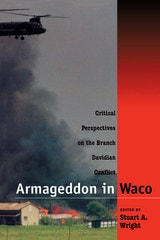
Armageddon in Waco
Critical Perspectives on the Branch Davidian ConflictEdited by Stuart A. Wright
University of Chicago Press, 1996
Could the tragedy have been prevented? Was it necesary for the BATF agents to do what they did? What could have been done differently? Armageddon in Waco offers the most detailed, wide-ranging analysis of events surrounding Waco. Leading scholars in sociology, history, law, and religion explore all facets of the confrontation in an attempt to understand one of the most confusing government actions in American history.
The book begins with the history of the Branch Davidians and the story of its leader, David Koresh. Chapters show how the Davidians came to trouble authorities, why the group was labeled a "cult," and how authorities used unsubstantiated allegations of child abuse to strengthen their case against the sect.
The media's role is examined next in essays that considering the effect on coverage of lack of time and resources, the orchestration of public relations by government officials, the restricted access to the site or to countervailing evidence, and the ideologies of the journalists themselves. Several contributors then explore the relation of violence to religion, comparing Waco to Jonestown.
Finally, the role played by "experts" and "consultants" in defining such conflicts is explored by two contributors who had active roles as scholarly experts during and after the siege The legal and consitutional implications of the government's actions are also analyzed in balanced, clearly written detail.
Artifactual
Forensic and Documentary KnowingElizabeth Anne Davis
Duke University Press, 2023
Atom Egoyan
Emma Wilson
University of Illinois Press, 2009
In this study, Emma Wilson closely analyzes the range of Egoyan's films and their visual textures, emotional control, and perverse beauty. Offering a full-scale chronological overview of Egoyan's work on films up to and including Where the Truth Lies, Wilson shows the persistence and development of certain structures and themes in Egoyan's cinema: questions of exile and nostalgia, trauma and healing, the family and sexuality. While drawing on ideas about intercultural cinema, Wilson also sets Egoyan's films in the context of contemporary Canadian cinema and European art-house cinema. Egoyan's own comments on his films thread throughout Wilson's analyses, and the book features a recent interview with the director.