Results by title
3 books match the query '1960-1997'
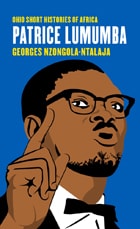
Patrice Lumumba
Georges Nzongola-Ntalaja
Ohio University Press, 2014
Patrice Lumumba was a leader of the independence struggle in what is today the Democratic Republic of the Congo, as well as the country’s first democratically elected prime minister. After a meteoric rise in the colonial civil service and the African political elite, he became a major figure in the decolonization movement of the 1950s. Lumumba’s short tenure as prime minister (1960–1961) was marked by an uncompromising defense of Congolese national interests against pressure from international mining companies and the Western governments that orchestrated his eventual demise.
Cold war geopolitical maneuvering and well-coordinated efforts by Lumumba’s domestic adversaries culminated in his assassination at the age of thirty-five, with the support or at least the tacit complicity of the U.S. and Belgian governments, the CIA, and the UN Secretariat. Even decades after Lumumba’s death, his personal integrity and unyielding dedication to the ideals of self-determination, self-reliance, and pan-African solidarity assure him a prominent place among the heroes of the twentieth-century African independence movement and the worldwide African diaspora.
Georges Nzongola-Ntalaja’s short and concise book provides a contemporary analysis of Lumumba’s life and work, examining both his strengths and his weaknesses as a political leader. It also surveys the national, continental, and international contexts of Lumumba’s political ascent and his swift elimination by the interests threatened by his ideas and practical reforms.
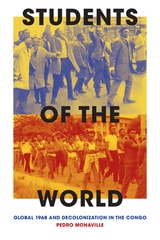
Students of the World
Global 1968 and Decolonization in the CongoPedro Monaville
Duke University Press, 2022
The Rise and Decline of the Zairian State
Crawford Young and Thomas Edwin Turner
University of Wisconsin Press, 1985