Results by title
20 books match the query '1965-'
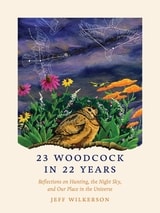
23 Woodcock in 22 Years
Reflections on Hunting, the Night Sky, and Our Place in the UniverseJeff Wilkerson
University of Iowa Press, 2024
As Wilkerson’s thoughts soar to the stars that produced the chemical elements that form us and all the land and its creatures, simple reflections on going afield to harvest a woodcock for a special holiday meal ground him. What emerges is a love story about a bird, the land, and all of creation from atomic nuclei to the farthest reaches of the universe, and a reminder to acknowledge the gentle flow of time while cherishing the everyday existence around us.
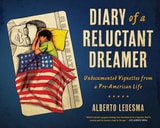
Diary of a Reluctant Dreamer
Undocumented Vignettes from a Pre-American LifeAlberto Ledesma
The Ohio State University Press, 2017
Exploring Ledesma’s experiences from immigrant to student to academic, Diary of a Reluctant Dreamer presents a humorous, gritty, and multilayered portrait of undocumented immigrant life in urban America. Ledesma’s vignettes about life in the midst of ongoing social trauma give voice to a generation that has long been silent about its struggles. Delving into the key moments of cultural transition throughout his childhood and adulthood—police at the back door waiting to deport his family, the ex-girlfriend who threatens to call INS and report him, and the interactions with law enforcement even after he is no longer undocumented—Ledesma, through his art and his words, provides a glimpse into the psychological and philosophical concerns of undocumented immigrant youth who struggle to pinpoint their identity and community.
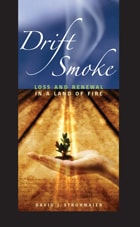
Drift Smoke
Loss and Renewal in a Land of FireDavid J. Strohmaier
University of Nevada Press, 2009
David Strohmaier’s long career as a firefighter has given him intimate knowledge of wildfire and its complex role in the natural world of the American West. It has also given him rare understanding of the painful losses that are a consequence of fire. Strohmaier addresses our ambivalence about fire and the realities of loss to it—of life, human and animal, of livelihoods, of beloved places. He also examines the process of renewal that is yet another consequence of fire, from the infusion of essential nutrients into the soil, to the sprouting of seeds that depend on fire for germination, to the renewal of species as the land restores itself. Ultimately, according to Strohmaier, living with fire is a matter of choices, of “seeing the connection between loss on a personal scale and loss on a landscape scale: in relationship with persons, and in relationship to and with the land.” We must cultivate a longer perspective, he says, accepting that loss is a part of life and that “humility and empathy and care are not only core virtues between humans but are also essential virtues in our attitudes and actions toward the earth.” Drift Smoke is a powerful and moving meditation on wildfire by someone who has seen it in all its terror and beauty, who has lost colleagues and beloved terrain to its ferocity, and who has also seen the miracle of new life sprouting in the ashes. The debate over the role and control of fire in the West will not soon end, but Strohmaier’s contribution to the debate will help all of us better appreciate both the complexity of the issues and the possibilities of hitherto unconsidered solutions that will allow us to inhabit a place where fire is a natural, and needed, part of life.
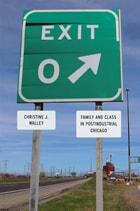
Exit Zero
Family and Class in Postindustrial ChicagoChristine J. Walley
University of Chicago Press, 2012
In 1980, Christine J. Walley’s world was turned upside down when the steel mill in Southeast Chicago where her father worked abruptly closed. In the ensuing years, ninety thousand other area residents would also lose their jobs in the mills—just one example of the vast scale of deindustrialization occurring across the United States. The disruption of this event propelled Walley into a career as a cultural anthropologist, and now, in Exit Zero, she brings her anthropological perspective home, examining the fate of her family and that of blue-collar America at large.
This book is part of a project that also includes a documentary film.
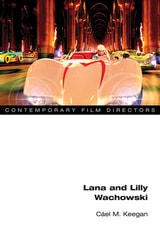
Lana and Lilly Wachowski
Cael M. Keegan
University of Illinois Press, 2018
Cáel M. Keegan views the Wachowskis' films as an approach to trans* experience that maps a transgender journey and the promise we might learn "to sense beyond the limits of the given world." Keegan reveals how the filmmakers take up the relationship between identity and coding (be it computers or genes), inheritance and belonging, and how transgender becoming connects to a utopian vision of a post-racial order. Along the way, he theorizes a trans* aesthetic that explores the plasticity of cinema to create new social worlds, new temporalities, and new sensory inputs and outputs. Film comes to disrupt, rearrange, and evolve the cinematic exchange with the senses in the same manner that trans* disrupts, rearranges, and evolves discrete genders and sexes.
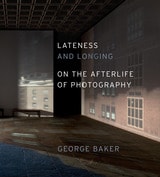
Lateness and Longing
On the Afterlife of PhotographyGeorge Baker
University of Chicago Press, 2023
Beginning in the 1990s, a series of major artists imagined the expansion of photography, intensifying its ideas and effects while abandoning many of its former medium constraints. Simultaneous with this development in contemporary art, however, photography was moving toward total digitalization.
Lateness and Longing presents the first account of a generation of artists—focused on the work of Zoe Leonard, Tacita Dean, Sharon Lockhart, and Moyra Davey—who have collectively transformed the practice of photography, using analogue technologies in a dissident way and radicalizing signifiers of older models of feminist art. All these artists have resisted the transition to the digital in their work. Instead—in what amounts to a series of feminist polemics—they return to earlier, incomplete, or unrealized moments in photography’s history, gravitating toward the analogue basis of photographic mediums. Their work announces that photography has become—not obsolete—but “late,” opened up by the potentially critical forces of anachronism.
Through a strategy of return—of refusing to let go—the work of these artists proposes an afterlife and survival of the photographic in contemporary art, a formal lateness wherein photography finds its way forward through resistance to the contemporary itself.
No Such Country
Essays toward HomeElmar Lueth
University of Iowa Press, 2002
Place, Language, and Identity in Afro-Costa Rican Literature
Dorothy E. Mosby
University of Missouri Press, 2003
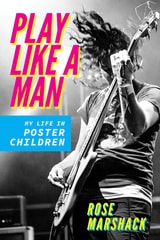
Play Like a Man
My Life in Poster ChildrenRose Marshack
University of Illinois Press, 2023
An inside look at a scene and a career, Play Like a Man is the evocative and humorous tale of one woman’s life in the trenches and online.
Rendering unto Caesar
The Catholic Church and the State in Latin AmericaAnthony Gill
University of Chicago Press, 1997
Return of the Gar
Mark Spitzer
University of North Texas Press, 2015
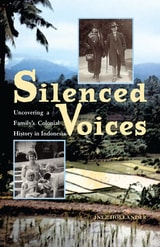
Silenced Voices
Uncovering a Family’s Colonial History in IndonesiaInez Hollander
Ohio University Press, 2008
Like a number of Netherlanders in the post–World War II era, Inez Hollander only gradually became aware of her family’s connections with its Dutch colonial past, including a Creole great-grandmother. For the most part, such personal stories have been, if not entirely silenced, at least only whispered about in Holland, where society has remained uncomfortable with many aspects of the country’s relationship with its colonial empire.
Unlike the majority of memoirs that are soaked in nostalgia for tempo dulu, Hollander’s story sets out to come to grips with her family’s past by weaving together personal records with historical and literary accounts of the period. She seeks not merely to locate and preserve family memories, but also to test them against a more disinterested historical record. Hers is a complicated and sometimes painful personal journey of realization, unusually mindful of the ways in which past memories and present considerations can be intermingled when we seek to understand a difficult past. Silenced Voices is an important contribution to the literature on how Dutch society has dealt with its recent colonial history.
The Church Confronts Modernity
Leslie Woodcock Tentler
Catholic University of America Press, 2007
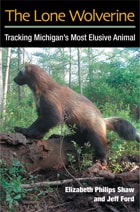
The Lone Wolverine
Tracking Michigan's Most Elusive AnimalElizabeth Philips Shaw and Jeff Ford
University of Michigan Press, 2012
It began in late winter of 2004. Almost 100 years had passed since the last spotting of a wild wolverine in Michigan when coyote hunters caught a glimpse of one of the animals in a frozen farm field in the northern thumb region. For the next six years, Jeff Ford, a local science teacher and amateur naturalist, devoted himself to locating and filming the wolverine that had unexpectedly and inexplicably appeared in the Wolverine State. By the time hikers found the animal dead in early 2010, Ford had taken hundreds of rare live action photos and shot numerous hours of video, with the story of the "Wolverine Guy" attracting national attention through countless newspaper and magazine articles and appearances on Animal Planet and PBS Nature.
This is the tale of Ford's quest as he uncovered answers to mysteries surrounding the animal's territory and movement patterns, while sparking a flurry of controversy surrounding the elusive predator's origin, much of which remains unresolved today. It's an intimate look at research in the raw, from DNA samples stuck on barbed wire to a sophisticated, motion-sensing infrared camera unit strategically placed to observe nocturnal behavior.
The Lone Wolverine brings to vivid life this unforgettable piece of American wildlife lore, using candid interviews, public records, and Ford's own vast storehouse of notes, personal writings, correspondence, and images, offering an extraordinary chronicle of a wild wolverine in its natural habitat, at play and in fierce competition for food and survival. This is a wildlife detective story, recounting years of study and fierce debate as researchers pondered the riddles of Michigan's last wolverine---her origins, habits, and ultimately the cause of her untimely death.
The Man Who Painted the Universe
The Story of a Planetarium in the Heart of the North WoodsRon Legro
Wisconsin Historical Society Press, 2015
The Man Who Painted the Universe: The Story of a Planetarium in the Heart of the North Woods introduces readers to the mild-mannered astronomy enthusiast whose creativity, ingenuity, fervor, and endurance realized a dream of galactic proportions. The story of this stargazer from Wisconsin’s North Woods so inspired two newspapermen, authors Ron Legro and Avi Lank, that they sought to document the story of the Kovac Planetarium for a new generation of stargazers and dreamers.
The Nearest Thing to Life
James Wood
Brandeis University Press, 2015
The Promise of Failure
One Writer's Perspective on Not SucceedingJohn McNally
University of Iowa Press, 2018
The Promise of Failure is part memoir of the writing life, part advice book, and part craft book; sometimes funny, sometimes wrenching, but always honest. McNally uses his own life as a blueprint for the writer’s daily struggles as well as the existential ones, tackling subjects such as when to quit and when to keep going, how to deal with depression, what risking something of yourself means, and ways to reenergize your writing through reinvention.
What McNally illuminates is how rejection, in its best light, is another element of craft, a necessary stage to move the writer from one project to the next, and that it’s best to see rejection and failure on a life-long continuum so that you can see the interconnectedness between failure and success, rather than focusing on failure as a measure of self-worth. As brutally candid as McNally can sometimes be, The Promise of Failure is ultimately an inspiring book—never in a Pollyannaish self-help way. McNally approaches the reader as a sympathetic companion with cautionary tales to tell. Written by an author who has as many unpublished books under his belt as published ones, The Promise of Failure is as much for the newcomer as it is for the established writer.
The Seasons Of Fire
Reflections On Fire In The WestDavid J. Strohmaier
University of Nevada Press, 2001
Fire is a fearsome constant in the America West. As the author David J. Strohmaier notes, "Whether we have tended a campfire along Oregon's Deschutes River in March, engaged the advancing front of a Great Basin wildfire in the torrid heat of August, or watched fire settle into the subdued, smoldering leaf piles of October, all of our lives, to one degree or another, are bracketed by fire." In The Seasons of Fire, Strohmaier effectively blends nature writing, personal essay, and philosophical analysis as he deliberately crosses disciplinary boundaries. He discusses the "moral" dimensions of fire—not only whether fires are good, bad, or indifferent phenomena, but also how fire, more generally understood, shapes meaning for human life. The consequences of discussing the moral side of fire speak directly to the contours of the human soul, and to our sense of our place on the land. Strohmaier, a long-term firefighter himself, includes accurate and sometimes gut-wrenching descriptions of the firefighter's experience.
The Speaking Stone
Stories Cemeteries TellMichael Griffith
Ohio University Press, 2021
Published by the University of Cincinnati Press
The Speaking Stone: Stories Cemeteries Tell is a literary love letter to the joys of wandering graveyards. While working on a novel, author and longtime Cincinnati resident Michael Griffith starts visiting Spring Grove Cemetery and Arboretum, the nation’s third-largest cemetery. Soon he’s taking almost daily jaunts, following curiosity and accident wherever they lead. The result is this fascinating collection of essays that emerge from chance encounters with an interesting headstone, odd epitaph, unusual name, or quirk of memory. Researching obituaries, newspaper clippings, and family legacies, Griffith uncovers stories of race, feminism, art, and death.
Rather than sticking to the cemetery’s most famous, or infamous, graves, Griffith stays true to the principle of ramble and incidental discovery. The result is an eclectic group of subjects, ranging from well-known figures like the feminist icon and freethinker Fanny Wright to those much less celebrated— a spiritual medium, a temperance advocate, a young heiress who died under mysterious circumstances. Nearly ninety photos add dimension and often an element of playfulness.
The Speaking Stone examines what endures and what does not, reflecting on the vanity and poignancy of our attempt to leave monuments that last. In doing so, it beautifully weaves connections born out of the storyteller’s inquisitive mind.
Wild Forest Home
Stories of Conservation in the Pacific NorthwestBetsy L. Howell
University of Utah Press, 2024
The twenty-five essays in Wild Forest Home chronicle Howell’s career and personal experiences studying the wildlife of the Pacific Northwest during the litigious listing of the northern spotted owl and marbled murrelet under the Endangered Species Act and the Clinton administration’s adoption of the seminal 1994 Northwest Forest Plan. Meanwhile, Howell toiled on fire crews, searched for rare species, helped to monitor fishers reintroduced to the Olympic Peninsula, tested amphibians for deadly diseases, became a writer, and mourned the deaths of her parents. This captivating memoir seamlessly blends story and science to reveal a unique portrait of the struggles and joys of one wildlife biologist.