Results by title
53 books match the query '1970-' and 4 start with a
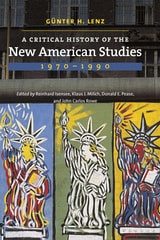
A Critical History of the New American Studies, 1970–1990
Günter H. Lenz
Dartmouth College Press, 2016
Starting in 2005, Günter H. Lenz began preparing a book-length exploration of the transformation of the field of American Studies in the crucial years between 1970 and 1990. As a commentator on, contributor to, and participant in the intellectual and institutional changes in his field, Lenz was well situated to offer a comprehensive and balanced interpretation of that seminal era. Building on essays he wrote while these changes were ongoing, he shows how the revolution in theory, the emergence of postmodern socioeconomic conditions, the increasing globalization of everyday life, and postcolonial responses to continuing and new forms of colonial domination had transformed American Studies as a discipline focused on the distinctive qualities of the United States to a field encompassing the many different “Americas” in the Western Hemisphere as well as how this complex region influenced and was interpreted by the rest of the world. In tracking the shift of American Studies from its exceptionalist bias to its unmanageable global responsibilities, Lenz shows the crucial roles played by the 1930s’ Left in the U.S., the Frankfurt School in Germany and elsewhere between 1930 and 1960, Continental post-structuralism, neo-Marxism, and post-colonialism. Lenz’s friends and colleagues, now his editors, present here his final backward glance at a critical period in American Studies and the birth of the Transnational.
[more]
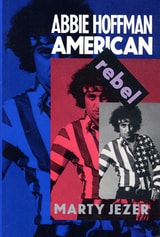
Abbie Hoffman
American RebelJezer, Marty
Rutgers University Press, 1993
In this sympathetic history of a maligned decade, Marty Jezer, a fellow antiwar activist, details Abbie Hoffman's humor, manic energy, depressive spells, political skills, & above all, his incurable & still contagious optimism. He presents a thoughtful, solidly researched biography of the wildly creative & iconoclastic Yippie, portraying Hoffman as a fresh force in American political culture. Jezer surveys in detail the politics, philosophies, & struggles of the antiwar movement.
"... Abbie, more than any other radical, showed potheads how to demonstrate and radicals how to dance." -- Chicago Tribune
"... deeply sympathetic and scrupulously detached-a triumph of judicious empathy." -- MARTIN DUBERMAN, Distinguished Professor of History, Lehman/The Graduate School, C.U.N.Y.
"... details Hoffman's humor, manic energy, depressive spells, political skills, and above all, his Incurable and still contagious optimism." -- Entertainment Weekly
"Here's the Abbie I knew and loved! Marty Jezer has captured him in all his complexity, dedication, humor, and heart." -- ANITA HOFFMAN
[more]
After The End
Representations Of Post-ApocalypseJames Berger
University of Minnesota Press, 1999
Explores the cultural function of the concept of “the end.”
Apocalyptic thought is hardly unique to the end of the twentieth century; it’s been a fixture of American culture for decades. Currently, the media are rife with omens and signs, and we’re bombarded with warnings that “the end is near.” But as James Berger argues here, the end never comes. There is always something left.
In this study of the cultural pursuit of the end and what follows, Berger contends that every apocalyptic depiction leaves something behind, some mixture of paradise and wasteland. Combining literary, psychoanalytic, and historical methods, Berger mines these depictions for their weight and influence on current culture. He applies wide-ranging evidence-from science fiction to Holocaust literature, from Thomas Pynchon to talk shows, from American politics to the fiction of Toni Morrison-to reveal how representations of apocalyptic endings are indelibly marked by catastrophic histories. These post-apocalyptic visions reveal as much about our perception of the past as they do about conceptions of the future. Berger examines the role of such historical crises as slavery, the Holocaust, and the Vietnam War and describes how these traumas continue to generate cultural symptoms. The shadow of impending apocalypse darkens today’s vision of the future, but it’s a familiar shadow: traumas we have already experienced as a culture are recycled into visions of new endings. Our “endings” are already after the end. Berger demonstrates that post-apocalyptic representations are both symptoms and therapies. Contemporary culture continually draws on these traumatic histories, trying to forget, remember, deny, and recover. After the End puts these visions in context, revealing them in some cases as dangerous evasions, in others as crucial tools for cultural survival. ISBN 0-8166-2932-3 Cloth £00.00 $47.95xxISBN 0-8166-2933-1 Paper £00.00 $18.95x248 Pages 5 7/8 x 9 MarchTranslation Inquiries: University of Minnesota Press[more]

Archival Fictions
Materiality, Form, and Media History in Contemporary LiteraturePaul Benzon
University of Massachusetts Press, 2021
Technological innovation has long threatened the printed book, but ultimately, most digital alternatives to the codex have been onscreen replications. While a range of critics have debated the benefits and dangers of this media technology, contemporary and avant-garde writers have offered more nuanced considerations.
Taking up works from Andy Warhol, Kevin Young, Don DeLillo, and Hari Kunzru, Archival Fictions considers how these writers have constructed a speculative history of media technology through formal experimentation. Although media technologies have determined the extent of what can be written, recorded, and remembered in the immediate aftermath of print's hegemony, Paul Benzon argues that literary form provides a vital means for critical engagement with the larger contours of media history. Drawing on approaches from media poetics, film studies, and the digital humanities, this interdisciplinary study demonstrates how authors who engage technology through form continue to imagine new roles for print literature across the late twentieth and early twenty-first centuries.
Taking up works from Andy Warhol, Kevin Young, Don DeLillo, and Hari Kunzru, Archival Fictions considers how these writers have constructed a speculative history of media technology through formal experimentation. Although media technologies have determined the extent of what can be written, recorded, and remembered in the immediate aftermath of print's hegemony, Paul Benzon argues that literary form provides a vital means for critical engagement with the larger contours of media history. Drawing on approaches from media poetics, film studies, and the digital humanities, this interdisciplinary study demonstrates how authors who engage technology through form continue to imagine new roles for print literature across the late twentieth and early twenty-first centuries.
[more]