Results by title
25 books match the query '1970s'
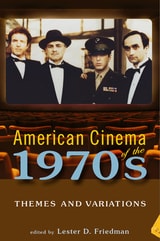
American Cinema of the 1970s
Themes and VariationsFriedman, Lester D
Rutgers University Press, 2007
Far from a placid era, the seventies was a decade of social upheavals. Events such as the killing of students at Kent State and Jackson State universities, the Watergate investigations, the legalization of abortion, and the end of the American involvement in Vietnam are only a few among the many landmark occurrences that challenged the foundations of American culture. The director-driven movies of this era reflect this turmoil, experimenting with narrative structures, offering a gallery of scruffy antiheroes, and revising traditional genre conventions.
Bringing together ten original essays, American Cinema of the 1970s examines the range of films that marked the decade, including Jaws, Rocky, Love Story, Shaft, Dirty Harry, The Godfather, Deliverance, The Exorcist, Shampoo, Taxi Driver, Star Wars, Saturday Night Fever, Kramer vs. Kramer,and Apocalypse Now .

Art Systems
Brazil and the 1970sBy Elena Shtromberg
University of Texas Press, 2016
From currency and maps to heavily censored newspapers and television programming, Art Systems explores visual forms of critique and subversion during the height of Brazilian dictatorship, drawing sometimes surprising connections between artistic production and broader processes of social exchange during a period of authoritarian modernization. Positioning the works beyond the prism of politics, Elena Shtromberg reveals subtle forms of subversion and critique that reinvented the artists’ political terrain.
Analyzing key examples from Cildo Meireles, Antonio Manuel, Artur Barrio, Anna Bella Geiger, Sonia Andrade, Geraldo Mello, and others, the book offers a new framework for theorizing artistic practice. By focusing on the core economic, media, technological, and geographic conditions that circumscribed artistic production during this pivotal era, Shtromberg excavates an array of art systems that played a role in the everyday lives of Brazilians. An examination of the specific historical details of the social systems that were integrated into artistic production, this unique study showcases works that were accessed by audiences far outside the confines of artistic institutions. Proliferating during one of Brazil’s most socially and politically fraught decades, the works—spanning cartography to video art—do not conform to an easily identifiable style, form, material use, or medium. As a result of this breadth, Art Systems gives voice to the multifaceted forces at play in a unique chapter of Latin American cultural history.

Artificial Women
The 1970s, Mass Culture, and FeminismVictoria Hesford
Duke University Press, 2027
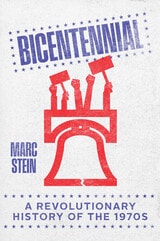
Bicentennial
A Revolutionary History of the 1970sMarc Stein
University of Chicago Press, 2026
“Utterly illuminating. . . . Just a really revelatory book.”—Jill Lepore, The New York Times, The “Book Review” Podcast • “As historian Stein traces in Bicentennial, a national birthday can launch a much broader, more inclusive, and ambitious national project.”—Rebecca Brenner Graham, The New Republic • “A comprehensive and critical look at the Spirit of 1976.”—Library Journal
As the United States marks its semiquincentennial in 2026, renowned historian Marc Stein looks back at the politics of another landmark celebration during a time of striking similarities and surprising differences: the US bicentennial in 1976.
In the aftermath of Vietnam and Watergate, the bicentennial sparked an extraordinary national conversation about the country’s past, present, and future. As patriots, planners, profiteers, and protesters argued about how to commemorate the national birthday, they collectively reimagined the promises and perils of democracy during a transformational decade.
From award-winning historian Marc Stein, Bicentennial: A Revolutionary History of the 1970s is an original, illuminating, and insightful study of that era. While focusing on festivities and fights in Philadelphia, the nation’s birthplace, the book also explores the many proposed and abandoned celebrations that percolated up around the country. It tells a broadly democratic story of both the “official” bicentennial and counter-bicentennial activism, offering revolutionary perspectives on national politics, social movements, and popular culture. From the queer courtship of President Richard Nixon and Philadelphia Mayor Frank Rizzo to parades and protests with millions of participants, and from a deadly outbreak of Legionnaires’ disease at Philadelphia’s most prestigious hotel to the establishment of groundbreaking African American, ethnic, and Jewish museums, the bicentennial reveals a kaleidoscope of American peculiarities, problems, and possibilities.
The lasting influence of 1976 on one of the nation’s great urban centers and the United States as a whole is undeniable. As the nation—once again enmeshed in political and social upheaval—marks its two-hundred-fiftieth birthday in 2026, there is no better time to look back at its two-hundredth and marvel at what has changed, and what has not.

Chinese Domestic Politics and Foreign Policy in the 1970s
Allen S. Whiting
University of Michigan Press, 1979

Cities Contested
Urban Politics, Heritage, and Social Movements in Italy and West Germany in the 1970sEdited by Martin Baumeister, Bruno Bonomo, and Dieter Schott
Campus Verlag, 2017
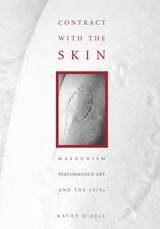
Contract With The Skin
Masochism, Performance Art, and the 1970sKathy O'Dell
University of Minnesota Press, 1998
Places masochistic performance within a social and historical context.
Having yourself shot. Putting out fires with your bare hands and feet. Biting your own body and photographing the marks. Sewing your own mouth shut. These seemingly aberrant acts were committed by performance artists during the 1970s. Why would anyone do these things? What do these kinds of masochistic performances tell us about the social and historical context in which they occurred? Fascinating and accessibly written, Contract with the Skin addresses such questions through a reconsideration of these acts in relation to psychoanalytic and legal concepts of masochism.
O’Dell argues that the growth of masochistic performance during the 1970s must be seen in the context of society’s response to the Vietnam War and contemporaneous changes in theories of contract. She contends that the dynamic that exists between audience and performer during these masochistic acts relates to tensions resulting from ruptures in the social contract. Indeed, as the war in Vietnam waned, so did masochistic performance, only to reemerge in the 1980s in relation to the “war on AIDS” and the censorious “culture wars.”Focusing on 1970s performance artists Vito Acconci, Chris Burden, Gina Pane, and collaborators Marina Abramovi´c/Ulay as well as those with similar sensibilities from the late 1980s onward (Bob Flanagan, David Wojnarowicz, Simon Leung, Catherine Opie, Ron Athey, Lutz Bacher, and Robby Garfinkel), O’Dell provides photographic documentation of performances and quotations from interviews with many of the artists. Throughout, O’Dell asks what we can do about the institutionalized forms of masochism for which these performances are metaphors. Contract with the Skin is a provocative guide to this little-studied area, and offers new ways of thinking about performance art and artistic production.
Cultures of Yusin
South Korea in the 1970sYoungju Ryu, Editor
University of Michigan Press, 2018

Don't Look Now
British Cinema in the 1970sEdited by Paul Newland
Intellect Books, 2010
While postwar British cinema and the British new wave have received much scholarly attention, the misunderstood period of the 1970s has been comparatively ignored. Don’t Look Now uncovers forgotten but richly rewarding films, including Nicolas Roeg’s Don’t Look Now and the films of Lindsay Anderson and Barney Platts-Mills. This volume offers insight into the careers of important filmmakers and sheds light on the genres of experimental film, horror, rock and punk films, as well as representations of the black community, shifts in gender politics, and adaptations of television comedies. The contributors ask searching questions about the nature of British film culture and its relationship to popular culture, television, and the cultural underground.
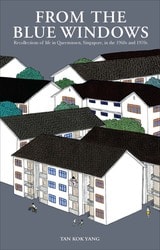
From the Blue Windows
Recollections of Life in Queenstown, Singapore, in the 1960s and 1970sTan Kok Yang
National University of Singapore Press, 2013
From the Blue Windows is a collection of Tan Kok Yang's memories of growing up in Queenstown back when the tallest residential building there was fourteen storeys, the Alexandra Canal flooded regularly, and wayang shows were a regular feature on Mei Ling Street. He stayed in Princess Estate, an area that was colloquially known as "the Blue Windows" because of its unique blue glass louvred windows.
With nostalgia and a sense of loss, this memoir is a personal tribute to and celebration of Queenstown and a simple but fulfilling way of life that has all but vanished from modern Singapore.
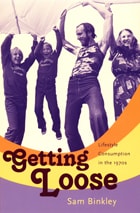
Getting Loose
Lifestyle Consumption in the 1970sSam Binkley
Duke University Press, 2007
Through a sociological analysis of the countercultural print culture of the 1970s, Sam Binkley investigates the dissemination of these self-loosening narratives and their widespread appeal to America’s middle class. He describes the rise of a genre of lifestyle publishing that emerged from a network of small offbeat presses, mostly located on the West Coast. Amateurish and rough in production quality, these popular books and magazines blended Eastern mysticism, Freudian psychology, environmental ecology, and romantic American pastoralism as they offered “expert” advice—about how to be more in touch with the natural world, how to release oneself into trusting relationships with others, and how to delve deeper into the body’s rhythms and natural sensuality. Binkley examines dozens of these publications, including the Whole Earth Catalog, Rainbook, the Catalog of Sexual Consciousness, Celery Wine, Domebook, and Getting Clear.
Drawing on the thought of Pierre Bourdieu, Zygmunt Bauman, and others, Binkley explains how self-loosening narratives helped the middle class confront the modernity of the 1970s. As rapid social change and political upheaval eroded middle-class cultural authority, the looser life provided opportunities for self-reinvention through everyday lifestyle choice. He traces this ethos of self-realization through the “yuppie” 1980s to the 1990s and today, demonstrating that what originated as an emancipatory call to loosen up soon evolved into a culture of highly commercialized consumption and lifestyle branding.

Hitchhiking Hitchhiking Twenty-Five Thousand Miles
Crisscrossing the USA for free in the 1960s and 1970sPeter Madcat Ruth
Parkhurst Brothers, Inc., 2026
Personal Travelogue with dates, ride lists, and commentary about the hitchhiking culture of the era.
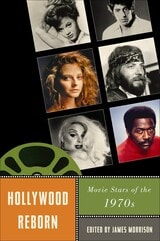
Hollywood Reborn
Movie Stars of the 1970sMorrison, James
Rutgers University Press, 2010
Hollywood Reborn examines this question, with contributors focusing on many of the era's key figures — noteworthy actors such as Jane Fonda, Al Pacino, Faye Dunaway, and Warren Beatty, and unexpected artists, among them Donald Sutherland, Shelley Winters, and Divine. Each essay offers new perspectives through the lens of an important star, illuminating in the process some of the most fascinating and provocative films of the decade.
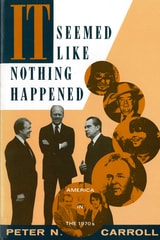
It Seemed Like Nothing Happened
America in the 1970sPeter N. Carroll
Rutgers University Press, 1990
"This is the single best book on the 1970s." -- Leo Ribuffo, George Washington University
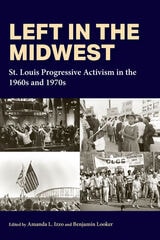
Left in the Midwest
St. Louis Progressive Activism in the 1960s and 1970sAmanda L. Izzo
University of Missouri Press, 2023
Despite St. Louis’s mid-twentieth-century reputation as a conservative and sleepy midwestern metropolis, the city and its surrounding region have long played host to dynamic forms of social-movement organizing. This was especially the case during the 1960s and 1970s, when a new generation of local activists lent their energies to the ongoing struggles for Black freedom, lesbian and gay liberation, feminist social transformations, environmental protection, an end to the Vietnam War, and more. This volume, the first of its kind, offers fifteen scholarly contributions that together bring into focus the exceptional range of progressive activist projects that took shape in a single midwestern city during these tumultuous decades.
In contrast to scholarship that seeks to interpret the era’s social-movement initiatives in a primarily national context, the works presented in this expansive collection emphasize the importance of locality, neighborhood, community institutions, and rooted social networks. Documenting wrenching forces of metropolitan change as well as grassroots resilience, Left in the Midwest shows us how place powerfully shaped agendas, worldviews, and opportunities for the disparate groups that dedicated themselves to progressive visions for their city. By revising our sense of the region’s past, this volume also expands our sense of the possibilities that the future may hold for activist movements seeking change in St. Louis and beyond.
Lesbian Potentiality and Feminist Media in the 1970s
Jed Samer
Duke University Press, 2022
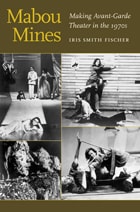
Mabou Mines
Making Avant-Garde Theater in the 1970sIris Smith Fischer
University of Michigan Press, 2012
The theater company Mabou Mines has for the past forty years created pathbreaking new theater by combining the latest concepts in music, visual arts, and technology with traditional forms of creative expression: puppetry, text, movement, theater design. From the beginning, the evanescence of performance and the dynamics of group work attracted the group. Most of their early pieces were never recorded, leaving little documentation of their foundational productions. Mabou Mines: Making Avant-Garde Theater in the 1970s provides this missing history, attempting to capture and describe the explorations of a group who set out to create indescribable performance. Iris Smith Fischer makes visible once again the celebrated company's least documented work, and offers accounts of the decisions and events that defined Mabou Mines' ideas and methods, particularly their creative collaborations with visual artists, musicians, writers, and dancers. Focusing on the heady days of the company's founding and first ten years, the book traces Mabou Mines' intellectual and artistic roots, frames them within the 1970s avant-garde, and outlines their significance in contemporary performance.
Meltdown Expected
Crisis, Disorder, and Upheaval at the end of the 1970sAaron J. Leonard
Rutgers University Press, 2024
Meltdown Expected tells the story of the power shifts from late 1978 through 1979 whose repercussions are still being felt. Iran’s revolution led to a hostage crisis while neighbouring Afghanistan became the site of a proxy war between the USSR and the US, who supplied aid to Islamic mujahideen fighters that would later form the Taliban. Meanwhile, as tragedies like the Jonestown mass suicide and the assassination of Harvey Milk captured the nation’s attention, the government quietly reasserted and expanded the FBI’s intelligence powers. Drawing from recently declassified government documents and covering everything from Three Mile Island to the rise of punk rock, Aaron J. Leonard paints a vivid portrait of a tumultuous yet pivotal time in American history.

Porno Chic and the Sex Wars
American Sexual Representation in the 1970sCarolyn Bronstein
University of Massachusetts Press, 2016
For many Americans, the emergence of a “porno chic” culture provided an opportunity to embrace the sexual revolution by attending a film like Deep Throat (1972) or leafing through an erotic magazine like Penthouse. By the 1980s, this pornographic moment was beaten back by the rise of Reagan-era political conservatism and feminist anti-pornography sentiment.
This volume places pornography at the heart of the 1970s American experience, exploring lesser-known forms of pornography from the decade, such as a new, vibrant gay porn genre; transsexual/female impersonator magazines; and pornography for new users, including women and conservative Christians. The collection also explores the rise of a culture of porn film auteurs and stars as well as the transition from film to video. As the corpus of adult ephemera of the 1970s disintegrates, much of it never to be professionally restored and archived, these essays seek to document what pornography meant to its producers and consumers at a pivotal moment.
In addition to the volume editors, contributors include Peter Alilunas, Gillian Frank, Elizabeth Fraterrigo, Lucas Hilderbrand, Nancy Semin Lingo, Laura Helen Marks, Nicholas Matte, Jennifer Christine Nash, Joe Rubin, Alex Warner, Leigh Ann Wheeler, and Greg Youmans.
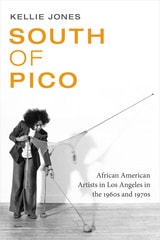
South of Pico
African American Artists in Los Angeles in the 1960s and 1970sKellie Jones
Duke University Press, 2017
In South of Pico Kellie Jones explores how the artists in Los Angeles's black communities during the 1960s and 1970s created a vibrant, productive, and engaged activist arts scene in the face of structural racism. Emphasizing the importance of African American migration, as well as L.A.'s housing and employment politics, Jones shows how the work of black Angeleno artists such as Betye Saar, Charles White, Noah Purifoy, and Senga Nengudi spoke to the dislocation of migration, L.A.'s urban renewal, and restrictions on black mobility. Jones characterizes their works as modern migration narratives that look to the past to consider real and imagined futures. She also attends to these artists' relationships with gallery and museum culture and the establishment of black-owned arts spaces. With South of Pico, Jones expands the understanding of the histories of black arts and creativity in Los Angeles and beyond.

Southern Neogothic
Literary and Cinematic Reckonings from the 1970s to the PresentLee Rozelle
University of Alabama Press, 2026
In Southern Neogothic, Lee Rozelle moves beyond familiar debates that have long dominated studies of the American South, proposing a new framework for understanding how contemporary writers, filmmakers, and artists have transformed the genre’s signature tropes to engage pressing cultural, political, and environmental concerns. Rather than revisiting narratives centered on white grievance, Confederate memory, or Lost Cause mythology, Rozelle examines works that expand Southern Gothic’s reach, connecting regional traditions to global audiences and contemporary struggles over identity, power, and belonging. By demonstrating how contemporary artists have reinvented one of America’s most enduring literary modes, Rozelle offers a fresh and timely account of the genre’s continuing cultural relevance.
Stamford '76
A True Story of Murder, Corruption, Race, and Feminism in the 1970sJoeAnn Hart
University of Iowa Press, 2019
Looking back at what might have happened in 1976, the author discovers a Bicentennial year steeped in recession, racism, and unrelenting violence. It was also a time of flourishing second-wave feminism, when young women were encouraged to do anything, if only they knew how. Stamford was in the midst of urban renewal, destroying historically black neighborhoods to create space for corporations escaping a bankrupt and dangerous New York City, just forty miles away. Organized crime followed the money, infiltrating Stamford at all levels. The author reveals how racism, misogyny, the economy, and corruption affected the young people’s daily lives, and helped lead Margo and Howie to their deaths.
The Neoliberal Age?
Britain Since the 1970sEdited by Aled Davies, Ben Jackson, and Florence Sutcliffe-Braithwaite
University College London, 2021
The rise of British neoliberalism—a renewed emphasis on privatization and market-oriented economics—over the last fifty years is often characterized as the product of right-wing political economists, think tanks, and politicians. The Neoliberal Age? argues that this pat narrative ignores broader forces in British left-wing culture that collaborated to transform twentieth-century social life. Through a variety of case studies, the authors demonstrate that our austere, individualistic age emerged from more complex sociopolitical negotiations than typically described.
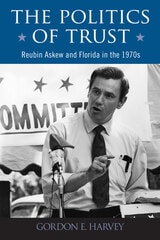
The Politics of Trust
Reubin Askew and Florida in the 1970sGordon E. Harvey
University of Alabama Press, 2015
Askew rose to power on a wave of “New South” leadership that hoped to advance the Democratic Party beyond the intransigent torpor of southern politics since the Civil War. He hoped to replace appeals to white supremacy with a vision of a more diverse and inclusive party. Following his election in Florida, other New South leaders such as Georgia’s Jimmy Carter, Arkansas’s Dale Bumpers, and South Carolina’s John C. West all came to power.
Audacious and gifted, Askew was one of six children raised by a single mother in Pensacola. As he worked his way up through the ranks of the state legislature, few in Florida except his constituents knew his name when he challenged Republic incumbent Claude R. Kirk Jr. on a populist platform promising higher corporate taxes. When he won, he inaugurated a series of reforms, including a new 5 percent corporate income tax; lower consumer, property, and school taxes; a review of penal statutes; environmental protections; higher welfare benefits; and workers’ compensation to previously uncovered migrant laborers.
Touting honesty, candor, and transparency, Askew dubbed his administration “government in the sunshine.” Harvey demonstrates that Askew’s success was not in spite of his penchant for bold, sometimes unpopular stances, but rather because his mix of unvarnished candor, sober ethics, and religious faith won the trust of the diverse peoples of his state.
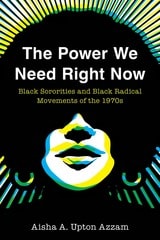
The Power We Need Right Now
Black Sororities and Black Radical Movements of the 1970sAisha A. Upton Azzam
Temple University Press, 2026
There is a long history of sororities such as Alpha Kappa Alpha (AKA) and Delta Sigma Theta (Delta) participating in activism and social justice efforts—from the Civil Rights Movement in the 1960s to Kamala Harris’s recent political campaigns. But radical movements like Black Lives Matter have posed more challenging questions for these organizations.
In The Power We Need Right Now, Aisha Upton Azzam investigates the legacies of AKA and Delta to understand the considerations that weigh on their engagement with present day Black movements. These organizations wield a significant amount of political power to mobilize in support of their causes. The response each sorority has had to movements fifty years apart is strikingly similar—even if their approaches are quite different.
Using a Black feminist theoretical framework, Upton Azzam brings context and meaning to the interactions of these sororities with Black radical movements. She highlights the costs communities bear from sororities’ adherence to respectability and racial uplift ideologies by tracing each sorority’s history and response to emerging Black feminist and Black Power movements during the tumultuous 1970s.
The Power We Need Right Now emphasizes that Black communities still have the ability to wield their political power and influence to further the struggle for Black liberation.