Results by title
6 books match the query '1973-'

Anti-Blackness and Human Monstrosity in Black American Horror Fiction
Jerry Rafiki Jenkins
The Ohio State University Press, 2024
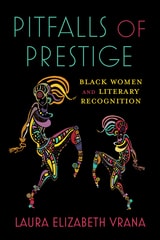
Pitfalls of Prestige
Black Women and Literary RecognitionLaura Elizabeth Vrana
The Ohio State University Press, 2024
Winner, 2025 College Language Association Book Award
From 1987, when Rita Dove won the Pulitzer Prize for Poetry, to 2021, when Amanda Gorman skyrocketed to celebrity status after performing during Biden’s inauguration and the Super Bowl, Black women have seemingly attained secure, stable positions at the forefront of American poetry. But this prominence comes at a price. As figures like Dove and Elizabeth Alexander have become well known, receiving endorsements and gaining visible platforms from major prizes, academic institutions, and publishing houses, the underlying terms of evaluation that greet Black women’s poetics often remain superficial, reflecting efforts to co-opt and contain rather than meaningfully consider new voices and styles. In Pitfalls of Prestige, Laura Elizabeth Vrana surveys how developments in American literary institutions since 1980 have shaped—and been shaped by—Black women poets. Grappling with the refulgent works of the most acclaimed contemporary figures alongside those of lesser-known poets, Vrana both elucidates how seeming gestures of inclusion can actually result in constraining Black women poets’ works and also celebrates how these writers draw on a rich lineage and forge alternative communities in order to craft continually innovative modes of transgressing such limits, on the page and in life.

Prisoner of Pinochet
My Year in a Chilean Concentration CampSergio Bitar
University of Wisconsin Press, 2017
Prisoner of Pinochet is the gripping first-person chronicle of Bitar's year as a political prisoner before being expelled from Chile; a poignant narrative of men held captive together in a labor camp under harsh conditions, only able to guess at their eventual fate; and an insightful memoir of the momentous events of the early 1970s that led to seventeen years of bloody authoritarian rule in Chile. Available in English for the first time, this edition includes maps and photos from the 1970s and contextual notes by historian Peter Winn.
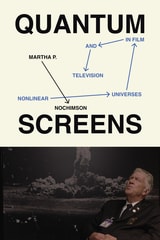
Quantum Screens
Nonlinear Universes in Film and TelevisionMartha P. Nochimson
University of Texas Press, 2026
An exploration of how nonlinear storytelling opens a post-Newtonian reality and changes both the hero’s journey and how we understand history in film and television.
Begin at the beginning and keep going until the end. That’s the cardinal rule of conventional storytelling. But ever since the modernists of the early twentieth century, popular narratives have occasionally eschewed this linear approach to temporality. It’s as though our stories, formerly unfolding in the stable, predictable universe of Newtonian physics, can now take place in multidimensional time where anything and anyone can be as incalculable as Schrödinger’s cat.
Quantum Screens is a journey through the past and present of nonlinear time in film and television. Moving beyond the early experiments of Luis Buñuel and the first nonlinear commercial films, such as 2001: A Space Odyssey, Martha Nochimson shows how risk-taking auteurs David Lynch, Damon Lindelof, and Terrence Malik have opened new horizons and a new concept of beauty in storytelling through their revelatory creations. Quantum Screens takes us deep into the audience’s experience of nonlinearity, exploring the emotional dislocations such storytelling creates, using television programs such as Twin Peaks, Westworld, and Watchmen, and films including The Tree of Life, BlacKkKlansman, and Arrival. Indeed, viewers are at the heart of a changing aesthetics of nonlinearity, Nochimson argues. Amid innovations like on-demand viewing, unlimited replay, and binge-watching, the experience of real time is more malleable than ever, and creators are responding by structuring their stories in compelling new ways.
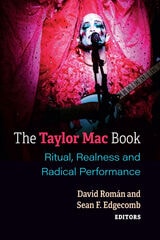
The Taylor Mac Book
Ritual, Realness and Radical PerformanceDavid Román and Sean F. Edgecomb, Editors
University of Michigan Press, 2023
Featuring essays, interviews, and commentaries by noted critics and artists, the volume examines the vastness of Mac’s theatrical imagination, the singularity of their voice, the inclusiveness of their cultural insights and critiques, and the creativity they display through stylistic and formal qualities and the unorthodoxies of their personal and professional trajectories. Contributors consider the range of Mac’s career as a playwright, performer, actor, and singer, expanding and enriching the conversation on this much-celebrated and deeply resonant body of work.
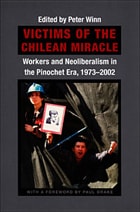
Victims of the Chilean Miracle
Workers and Neoliberalism in the Pinochet Era, 1973–2002Peter Winn, ed.
Duke University Press, 2004
Implemented in the 1970s at the point of the bayonet and in the shadow of the torture chamber, the neoliberal policies of Augusto Pinochet’s dictatorship reversed many of the gains in wages, benefits, and working conditions that Chile’s workers had won during decades of struggle and triggered a severe economic crisis. Later refined and softened, Pinochet’s neoliberal model began, finally, to promote economic growth in the mid-1980s, and it was maintained by the center-left governments that followed the restoration of democracy in 1990. Yet, despite significant increases in worker productivity, real wages stagnated, the expected restoration of labor rights faltered, and gaps in income distribution continued to widen. To shed light on this history and these ongoing problems, the contributors look at industries long part of the Chilean economy—including textiles and copper—and industries that have expanded more recently—including fishing, forestry, and agriculture. They not only show how neoliberalism has affected Chile’s labor force in general but also how it has damaged the environment and imposed special burdens on women. Painting a sobering picture of the two Chiles—one increasingly rich, the other still mired in poverty—these essays suggest that the Chilean miracle may not be as miraculous as it seems.
Contributors.
Paul Drake
Volker Frank
Thomas Klubock
Rachel Schurman
Joel Stillerman
Heidi Tinsman
Peter Winn