Results by title
28 books match the query '1975-'
An American Dilemma Revisited
Race Relations in a Changing WorldObie, Jr. Clayton
Russell Sage Foundation, 1996

An Insignificant Family
Da Ngan
Northwestern University Press, 2009

Anti-Arab Racism in the USA
Where It Comes From and What It Means For Politics TodaySteven Salaita
Pluto Press, 2006
Miriam Cooke, Professor, Duke University
"An impassioned and deeply compelling look at the origins, evolution, manifestations and implications of anti-Arab racism today. ... A tour-de-force."
Lisa Suhair Majaj, co-editor, Etel Adnan: Critical Reflections on the Arab-American Writer and Artist and Intersections: Gender, Nation, and Community in Arab Women¹s Novels
"Salaita dives head-first into the heart of racism in America and uses his personal experiences to help readers understand the mechanics of racism as it applies to Arabs, Muslims and people who look Middle Eastern in the post-Sept. 11 world."
Ray Hanania, journalist and filmmaker, author of I¹m Glad I Look Like a Terrorist: Growing up Arab in America and Arabs of Chicagoland
"A highly recommended read, not only for students of Middle East history, but for the average American who wants to know how we have become so intimately and yet so bitterly entwined with the people of the Middle East. ... Salaita has thoughtfully articulated a very regretful era of unabashed racism in American history."
Ramzy Baroud, editor, Palestine Chronicle and author of Searching Jenin
Today is a difficult time to be both Arab and American. Since 9/11 there has been a lot of criticism of America¹s involvement in the middle east. Yet there has been little analysis of how America treats citizens of Arab or middle eastern origin within its own borders.
Steven Salaita explores the reality of Anti-Arab racism in America. He blends personal narrative, theory and polemics to show how this deep-rooted racism affects everything from legislation to cultural life, shining a light on the consequences of Anti-Arab racism both at home and abroad.
Uniquely, the book shows how ingrained racist attitudes can be found within the progressive movements on the political left, as well as the right. Salaita argues that, under the guise of patriotism, Anti-Arab racism fuels support for policies such as the Patriot Act.
Salaita breaks down the façade of Anti-Arab racism with an insightful analysis, arguing for the urgency of a commitment to openness and inclusion in today¹s political climate.
Steven Salaita is Assistant Professor of English at the University of Wisconsin -Whitewater. He writes frequently about Arab America and the Arab World.
Becoming Educated
A Midwest StorySimone C. Drake
The Ohio State University Press, 2026
Becoming Educated is Simone C. Drake’s engaging and bold memoir about race, class, gender, and the meaning of education in the urban Midwest. Drake, a scholar of literature, culture, and law, uses her own story as a Black girl attending recently desegregated Columbus public schools in the 1980s and 1990s to explore the United States’ most entrenched social problems and how local systems have tried to combat them. From starting kindergarten the year after an Ohio court decision called for busing to end school segregation, to climbing the ranks of academia, to her decision to send her sons to highly rated but largely white suburban schools, Drake weaves a lively and erudite accounting of her identity formation as an “integration guinea pig.” She punctuates her story with rich evocations of the music, TV, and film that shaped her generation, powerful reflections on relevant works by Black writers and artists from Dawoud Bey to Jay-Z, and images of her own artwork. This prismatic book is a must-read for Gen Xers, Midwesterners, and Americans of any race wanting to think more deeply about how our nation’s educational systems—and by extension, all of us—must reckon with inequalities past and present.
Bomb Children
Life in the Former Battlefields of LaosLeah Zani
Duke University Press, 2019
Changing Lives in Laos
Society, Politics, and Culture in a Post-Socialist StateEdited by Vanina Bouté and Vatthana Pholsena
National University of Singapore Press, 2017
Coping With Poverty
The Social Contexts of Neighborhood, Work, and Family in the African-American CommunitySheldon Danziger and Ann Chih Lin, Editors
University of Michigan Press, 2000
Correctional
Ravi Shankar
University of Wisconsin Press, 2021
Shankar’s bold and complex self-portrait—and portrait of America—challenges us to rethink our complicity in the criminal justice system and mental health policies that perpetuate inequity and harm. Correctional dives into the inner workings of his mind and heart, framing his unexpected encounters with law and order through the lenses of race, class, privilege, and his bicultural upbringing as the first and only son of South Indian immigrants. Vignettes from his early life set the scene for his spectacular fall and subsequent struggle to come to terms with his own demons. Many of them, it turns out, are also our own.
Crossings
A White Man's Journey Into Black AmericaWalt Harrington
University of Missouri Press, 1999
One day in the dentist's office journalist Walt Harrington heard a casual racist joke that left him enraged. Married to a black woman, Harrington is the father of two biracial children. His experience in the dentist's office made him realize not only that the joke was about his own children but also that he really knew very little about what it was like to be a black person in America.
After this rude awakening, Harrington set off on a twenty- five-thousand-mile journey through black America, talking with scores of black and white people along the way, including an old sharecropper, a city police chief, a jazz trumpeter, a convicted murderer, a welfare mother, and a corporate mogul. In Crossings, winner of the Gustavus Myers Award for the Study of Human Rights, he relates what he learned as he listened.
Four Decades On
Vietnam, the United States, and the Legacies of the Second Indochina WarScott Laderman and Edwin A. Martini, eds.
Duke University Press, 2013
Contributors. Alex Bloom, Diane Niblack Fox, H. Bruce Franklin, Walter Hixson, Heonik Kwon, Scott Laderman, Mariam B. Lam, Ngo Vinh Long, Edwin A. Martini, Viet Thanh Nguyen, Christina Schwenkel, Charles Waugh
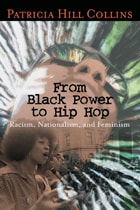
From Black Power to Hip Hop
Racism, Nationalism, and FeminismPatricia Hill Collins
Temple University Press, 2006
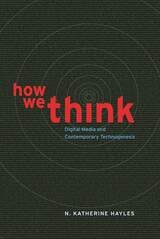
How We Think
Digital Media and Contemporary TechnogenesisN. Katherine Hayles
University of Chicago Press, 2012
“How do we think?” N. Katherine Hayles poses this question at the beginning of this bracing exploration of the idea that we think through, with, and alongside media. As the age of print passes and new technologies appear every day, this proposition has become far more complicated, particularly for the traditionally print-based disciplines in the humanities and qualitative social sciences. With a rift growing between digital scholarship and its print-based counterpart, Hayles argues for contemporary technogenesis—the belief that humans and technics are coevolving—and advocates for what she calls comparative media studies, a new approach to locating digital work within print traditions and vice versa.

Loss, A Love Story
Imagined Histories and Brief EncountersSophie Ratcliffe
Northwestern University Press, 2024
Part memoir, part imagined history, this unique personal essay depicts the intimate experience of childhood bereavement, lost love affairs, and the complicated realities of motherhood and marriage. Framed by an extended train journey, author Sophie Ratcliffe turns to the novels, novelists, and heroines who have shaped her emotional and romantic landscapes. She transports us with her to survey the messiness of everyday life, all while reflecting on steam propulsion and pop songs, handbags and honeymoons, Anna Karenina and Anthony Trollope, former lovers and forgotten muses. Frank, funny, tender, and transporting, Loss, A Love Story asks why we fall in, and out, of love—and how we might understand doing so amid the ongoing upheavals and unwritten futures of the twenty-first century.

Matt Saunders
Parallel PlotMatt Saunders
University of Chicago Press, 2013
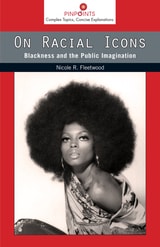
On Racial Icons
Blackness and the Public ImaginationFleetwood, Nicole R
Rutgers University Press, 2015
Nicole R. Fleetwood’s answers to these questions will change the way you think about the next photograph that you see depicting a racial event, black celebrity, or public figure. In On Racial Icons, Fleetwood focuses a sustained look on photography in documenting black public life, exploring the ways in which iconic images function as celebrations of national and racial progress at times or as a gauge of collective racial wounds in moments of crisis.
Offering an overview of photography’s ability to capture shifting race relations, Fleetwood spotlights in each chapter a different set of iconic images in key sectors of public life. She considers flash points of racialized violence in photographs of Trayvon Martin and Emmett Till; the political, aesthetic, and cultural shifts marked by the rise of pop stars such as Diana Ross; and the power and precarity of such black sports icons as Serena Williams and LeBron James; and she does not miss Barack Obama and his family along the way. On Racial Icons is an eye-opener in every sense of the phrase.
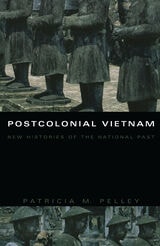
Postcolonial Vietnam
New Histories of the National PastPatricia M. Pelley
Duke University Press, 2002
Although she considers a variety of sources—government directives, census reports, statistics, poetry, civic festivities, ethnographies, and museum displays—Pelley focuses primarily on the work of official historians in Hanoi who argued about and tried to stabilize the meaning of topics ranging from prehistory to the Vietnam War. She looks at their strained and idiosyncratic attempts to plot the Vietnamese past according to Marxist and Stalinist paradigms and their ultimate abandonment of such models. She explores their struggle to redefine Vietnam in multiethnic terms and to normalize the idea of the family-state. Centering on the conversation that began in 1954 among historians in North Vietnam, her work identifies a threefold process of creating the new history: constituting historiographical issues, resolving problems of interpretation and narration, and conventionalizing various elements of the national narrative. As she tracks the processes that shaped the history of postcolonial Vietnam, Pelley dismantles numerous clichés of contemporary Vietnamese history and helps us to understand why and how its history-writing evolved.
Problem of the Century
Racial Stratification in the United StatesElijah Anderson
Russell Sage Foundation, 2001
Reflecting Black
African-American Cultural CriticismMichael Eric Dyson
University of Minnesota Press, 1993
From rap music to preaching, from Toni Morrison to Leonard Jeffries, from Michael Jackson to Michael Jordan, Reflecting Black explores as never before the varied and complex dimensions of African-American culture through personal reflection, expository journalism, scholarly investigation and even homily.
"A landmark text in Afro-American cultural criticism. There is simply nothing like it that exists. The level of theoretical sophistication and political engagement is rare-and badly needed." -Cornel West"As Reflecting Black so richly demonstrates, Michael Eric Dyson combines cutting-edge theoretical acuity with the passionate, engaged, and accessible stance of a public intellectual. His critical purview encompasses scholarly tomes and mass market periodicals, trends in theology and in hip-hop culture alike. This book is a splendid introduction to a singularly important voice." -Henry Louis Gates, Jr."Dyson is a young black cultural, political and religious critic whose new book directs its nastiest commentary at racism, sexism, capitalism and straight-up immorality. His is a fresh voice seemingly unfazed by Blackademe's battle royal. Dyson's project is very much in the tradition of recent work by a number of young African-American cultural critics like Tricia Rose, Hilton Als, bell hooks, Greg Tate, Wahneema Lubiano, Elizabeth Alexander and Herman Gray, to name but a few. Reflecting Black is much more than a cultural critique in the formal sense. It interrogates the political, social and moral crises confronting American society generally and African-American communities in particular. In the end, Dyson is not one of those cultural studies scholars concerned with debating the fine points of discourse theory. He is an 'oppositional' critic with a much higher purpose than developing analytical tools to make sense of African-American culture. The Reverend Dyson is not only operating within a rich Marxist tradition but within a very old and continuing African-American tradition. Black communities, through newspaper columns, church groups, street corner gatherings, beauty parlor and barber shop discussions, have always debated and taken responsibility for their culture(s). Dyson's constant lecturing, chiding and encouraging embodies what Antonio Gramsci and his own mama expected us to do all along: not just interpret culture but actively change it--through struggle." -The Nation"Where Michael Jackson meets spirituality, where Martin Luther King meets Malcolm X, where the consolidating 'narrative of racial unity' meets the 'perplexing and chaotic politics of racial identity': These are the border zones of Michael Eric Dyson's compassionate, postmodern, eclectic critical project. Reflecting Black is an invigorating reader for our perplexing and chaotic times." -Voice Literary Supplement"He shows an admirable breadth, ranging from issues such as racism and political correctness in the seminary to examinations of such icons of popular culture as filmaker Spike Lee, singer Michael Jackson and athlete Michael Jordan. One entire section of the book is devoted to black religion, and includes an examination of the lives and examples of Martin Luther King, Jr. and Malcom X." -Washington Post Book World"Yet, if Dyson stumbles in his discussions of black popular culture, he soars in his section titled 'Beyond the Mantra: Reflections on Race, Gender, and Class.' In 'Remembering Emmett Till,' Dyson writes not just with his mind, but with his heart." -Boston Globe"Yet his insights are just as often incisive and challenging, and they demand serious consideration. By insisting that we acknowledge the complexities of race in America and by refusing to accept easy answers, Reflecting Black forces us to think harder about how we can create alterna
Spain at the Polls, 1977, 1979 and 1982
Duke University Press, 1985
Spectacle and Topophilia
Reading Early Modern and Postmodern Hispanic CulturesDavid R. Castillo
Vanderbilt University Press, 2011
Still The Big News
Racial Oppression In AmericaBob Blauner
Temple University Press, 2001
Blauner launched his concept of internal colonialism in the turbulent 1960's, a period in which many Americans worried that racial conflicts would propel the country into another civil war. The notion that the systematic oppression of people of color in the United States resembles the situation of colonized populations in Third World countries still informs much of the academic research on race as well as public discourse. Indeed, today's critical race and whiteness studies are deeply indebted to Blauner's work on internal colonialism and the pervasiveness of white privilege. Offering a radical perspective on the United States' racial landscape, Bob Blauner forcefully argues that we ignore the persistence of oppression and our continuing failure to achieve equality at our own peril.
Stirrings In The Jug
Black Politics In The Post-Segregation EraAdolph Reed, Jr.
University of Minnesota Press, 1999

The Black Penguin
Andrew Evans
University of Wisconsin Press, 2018
Ejected from church and shunned by his family as a young man, Evans embarks on an ambitious overland journey halfway across the world. Riding public transportation, he crosses swamps, deserts, mountains, and jungles, slowly approaching his lifelong dream and ultimate goal: Antarctica. With each new mile comes laughter, pain, unexpected friendship, true weirdness, unsettling realities, and some hair-raising moments that eventually lead to a singular discovery on a remote beach at the bottom of the world.
Evans's 12,000-mile voyage becomes a soulful quest to balance faith, family, and self, reminding us that, in the end, our lives are defined by the roads we take, the places we touch, and those we hold nearest.

The Black Public Sphere
Edited by The Black Public Sphere Collective
University of Chicago Press, 1995
To think about the black public sphere we have to be willing to rethink the relationship between markets and freedom, commodity and identity, property and pleasure. This book provides more sophisticated approaches to matters historically consigned to inadequate rubrics—"the Negro problem," "subcultures," "minorities," "inner city," and "multicultural." While these rubrics constrict and stereotype, the analytic potential of the black public sphere is that it facilitates new ways to discuss democratic values and citizenship.
The Color Line and the Quality of Life in America
Reynolds Farley
Russell Sage Foundation, 1987
The Underclass Question
Bill Lawson
Temple University Press, 1992
Vietnam's Strategic Thinking during the Third Indochina War
Kosal Path
University of Wisconsin Press, 2023
In contrast to earlier studies, Path traces the moving target of these changing policy priorities, providing a vital addition to existing scholarship on asymmetric wartime decision-making and alliance formation among small states. The result uncovers how this critical period had lasting implications for the ways Vietnam continues to conduct itself on the global stage.
Where the Hood At?
Fifty Years of Change in Black NeighborhoodsMichael C. Lens
Russell Sage Foundation, 2024
Hip hop music was born out of Black neighborhoods in the 1970s and has evolved alongside them. In Where the Hood At? Lens uses rap’s growth and influence across the country to frame discussions about the development and conditions of Black neighborhoods. Lens finds that social and economic improvement in Black neighborhoods since the 1970s has been slow. However, how well Black neighborhoods are doing varies substantially by region. Overall, Black neighborhoods in the South are doing well and growing quickly. Washington D.C. and Atlanta, in particular, stand out as centers of Black affluence. Black neighborhoods in the Midwest and the Rust Belt, on the other hand, are particularly disadvantaged. The welfare of Black neighborhoods is related not only to factors within neighborhoods, such as the unemployment rate, but also to characteristics of the larger metropolitan area, such as overall income inequality. Lens finds that while gentrification is increasingly prevalent, it is growing slowly, and is not as pressing an issue as public discourse would make it seem. Instead, concentrated disadvantage is by far the most common and pressing problem in Black neighborhoods.
Lens argues that Black neighborhoods represent urban America’s greatest policy failures, and that recent housing policies have only had mild success. He provides several suggestions for policies with the goal of uplifting Black neighborhoods. One radical proposal is enacting policies and programs, such as tax breaks for entrepreneurs or other small business owners, that would encourage Black Americans to move back to the South. Black Americans migrating South would have a better chance at moving to an advantaged Black neighborhood as improving neighborhood location is higher when moving across regions. It would also help Black Americans expand their political and economic power. He also suggests a regional focus for economic development policies, particularly in the Midwest where Black neighborhoods are struggling the most. One way to boost economic development would be to move federal agencies to the area. He also calls for building more affordable housing in Black suburbs. Black poverty is lower in suburbs than in central cities, so increasing housing in Black suburbs would allow Black households to relocate to more advantaged neighborhoods, which research has shown leads to improved life outcomes.
Where the Hood At? is a remarkable and comprehensive account of Black neighborhoods that helps us to better understand the places and conditions that allow them flourish or impedes their advancement.