Results by title
14 books match the query '1979-1997'

A Voice in Their Own Destiny
Reagan, Thatcher, and Public Diplomacy in the Nuclear 1980sAnthony M. Eames
University of Massachusetts Press, 2023
On June 8, 1982, Ronald Reagan delivered a historic address to the British Parliament, promising that the United States would give people around the world “a voice in their own destiny” in the struggle against Soviet totalitarianism. While British Prime Minister Margaret Thatcher celebrated Reagan’s visit and thanked him for putting “freedom on the offensive,” over 100,000 Britons marched from Hyde Park to Trafalgar Square to protest his arrival and call for nuclear disarmament. Reagan’s homecoming was equally eventful, with 1,000,000 protesters marking his return with a rally for nuclear disarmament in Central Park—the largest protest in American history up to that point.
Employing a wide range of previously unexamined primary sources, Anthony M. Eames demonstrates how the Reagan and Thatcher administrations used innovations in public diplomacy to build back support for their foreign policy agendas at a moment of widespread popular dissent. A Voice in Their Own Destiny traces how competition between the governments of Reagan and Thatcher, the Anglo-American antinuclear movement, and the Soviet peace offensive sparked a revolution in public diplomacy.
Confidence Regained
Economics, Mrs. Thatcher, and the British VoterHelmut Norpoth
University of Michigan Press, 1992

Here to Stay, Here to Fight
A Race Today AnthologyPaul Field
Pluto Press, 2019

Here to Stay, Here to Fight
A Race Today AnthologyPaul Field
Pluto Press, 2019
Iran, Islam and Democracy
The Politics of Managing ChangeAli M. Ansari
Gingko, 2019
Major
Robert Taylor
Haus Publishing, 2006
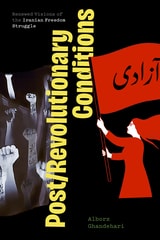
Post/Revolutionary Conditions
Renewed Visions of the Iranian Freedom StruggleAlborz Ghandehari
Northwestern University Press, 2025
An exploration of how the Iranian people have renewed their longtime struggle for freedom
The Woman, Life, Freedom uprising is only the latest manifestation of a century-long struggle for liberation in Iran. This ongoing movement for justice has encompassed two revolutions against domestic dictatorship and foreign imperialism, as well as a series of uprisings since the 1979 Iranian Revolution, which was followed by a new era of repression. Post/Revolutionary Conditions: Renewed Visions of the Iranian Freedom Struggle offers an intersectional analysis of how progressive and radical movement builders have reenvisioned liberation in the post-’79 era, despite new forms of oppression under the Islamic Republic and from US and other foreign imperial powers. Bringing together a diverse array of sources, including oral histories with Iranian labor, student, and gender justice organizers, as well as resistance literature and art, Alborz Ghandehari challenges narratives that treat working-class, feminist, queer, and oppressed ethnic minorities’ movements as separate from one another. Post/Revolutionary Conditions demonstrates how such potent reimaginings of collective liberation and a radically democratic future have been shaped by multiple generations of protest and kindred struggles globally.
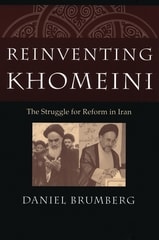
Reinventing Khomeini
The Struggle for Reform in IranDaniel Brumberg
University of Chicago Press, 2001
A complex figure, Khomeini was a fervent champion of Islam, but while he sought a Shi'ite vision of clerical rule under one Supreme Leader, he also strove to mesh that vision with an implicitly Western view of mass participatory politics. The intense magnetism and charisma of the ayatollah obscured this paradox. But reformers in Iran today, while rejecting his autocratic vision, are reviving the constitutional notions of government that he considered, and even casting themselves as the bearers of his legacy. In Reinventing Khomeini, Brumberg proves that the ayatollah is as much the author of modern Iran as he is the symbol of its fundamentalist past.
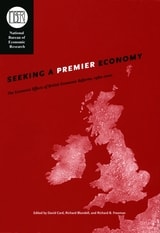
Seeking a Premier Economy
The Economic Effects of British Economic Reforms, 1980-2000Edited by David Card, Richard Blundell, and Richard B. Freeman
University of Chicago Press, 2004
Seeking a Premier Economy focuses on the labor and product market reforms that directly impacted productivity, employment, and inequality. The questions asked are provocative: How did the United Kingdom manage to stave off falling earnings for lower paid workers? What role did the reforms play in rising income inequality and trends in poverty? At the same time, what reforms also contributed to reduced unemployment and the accelerated growth of real wages? The comparative microeconomic approach of this book yields the most credible evaluation possible, focusing on closely associated outcomes of particular reforms for individuals, firms, and sectors.
Social Origins of the Iranian Revolution
Parsa, Misagh
Rutgers University Press, 1989
Existing theories of revolution explain earlier revolutions better than the Iranian revolution. In Iran most of the protest was in urban areas, the peasants never played a major role, and power was transferred to the clergy, not to an intelligentsia. In the 1970s, oil revenues increased, the economy developed rapidly but unevenly, and the state's expanded intervention undermined market forces and politicized capital accumulation. Systematic repression of workers, aid to the upper class, and attacks on secular and religious opposition showed that the state was serving the interests of particular groups. When the state tried to check high inflation by imposing price controls on bazaaris (merchants, shopkeepers, artisans), their protests forced the state to introduce reforms, providing an opportunity for industrial workers, white-collar workers, intellectuals, and the clergy to mobilize against the state. Thus, structural features rendered the state vulnerable to challenge and attack.
Parsa's thorough explanation of the collective actions of each major group in Iran in the three decades prior to the revolution shows how a coalition of classes and groups, using mosques as safe gathering places and led by a segment of the clergy, brought down the monarch of 1979. In the years since the revolution, the conflicts that existed before the revolution seem to be reemerging, in slightly altered form. The clergy now has control, and the state has become centrally and powerfully involved in the economy of the country.
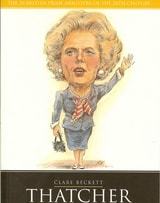
Thatcher
Clare Beckett
Haus Publishing, 2006

The Free Economy and the Strong State
Andrew Gamble
Duke University Press, 1988
By 1987, the Conservatives under Thatcher's leadership had won their third successive election victory over a divided opposition and enjoyed a degree of political and ideological dominance that led many commentators to speak of the end of the socialist era and the emergence of a new consensus in Britain. A new word—Thatcherism—had entered the political lexicon. It has come to signify a broad-ranging and distinctive program aimed at promoting economic recovery through the privatization of public enterprise and restoring the authority of the state. The Free Economy and the Strong State explores the roots of Thatcherism and its relationship to the Conservative tradition, to the economic liberal ideology of the New Right, and to the "new politics" which emerged from the recession and crisis of the world order in the mid 1970s.
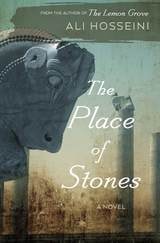
The Place of Stones
A NovelAli Hosseini
Northwestern University Press, 2017
The Place of Stones is Ali Hosseini’s newly translated first novel, his second book to appear in English. In it, he paints a vivid portrait of Sangriz, a village in the southern part of Iran where life has been disrupted by industrialization and the revolution of 1979.
Haydar and Jamal are best friends, and their families have always made their living from the land in the foothills of Iran’s Zagros Mountains. Haydar is a dreamer who searches the hills for an ancient treasure called the Black Globe. Jamal is in love with Haydar’s sister, Golandam, and he attempts to accommodate himself to modernization as a way to create a better life for the two of them. The rapacious conversion of farmland to brick factories draws the trio into escalating conflict with the village landlord.
As Jamal, Haydar, and their families confront land reform, industrialization, revolution, and war, their lives are pulled forcefully toward the explosive events that will change them all. In masterfully crafted prose that never sinks into sentimentality, The Place of Stones illuminates how a lost past continues to shape the present.

The Resurgence of Conservatism in Anglo-American Democracies
Barry Cooper, Allan Kornberg, and William Mishler, eds.
Duke University Press, 1987