Results by title
20 books match the query '1988-'
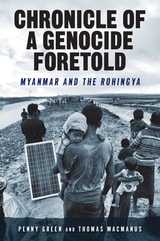
Chronicle of a Genocide Foretold
Myanmar and the RohingyaPenny Green
Rutgers University Press, 2027
Chronicle of a Genocide Foretold is a powerful account of one of the most devastating human crises of the 21st century. Drawing on firsthand research conducted in Burma (Myanmar) and neighboring countries, the book uncovers how the Rohingya Muslims have been systematically isolated, impoverished, and targeted in a state-led genocidal campaign. Through more than 150 interviews with survivors, local officials, religious leaders, and international actors, the authors reveal how discrimination, mass displacement, and organized brutality have created conditions that meet the legal, criminological, and moral definition of genocide. The book also challenges the silence and complicity of the international community. Accessible and grounded in rigorous research, this book speaks to scholars, activists, policymakers, and anyone concerned with justice, human rights, and the global failure to prevent genocide.
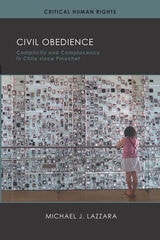
Civil Obedience
Complicity and Complacency in Chile since PinochetMichael J. Lazzara
University of Wisconsin Press, 2020
Michael J. Lazzara boldly argues that today's Chile is a product of both complicity and complacency. Combining historical analysis with deft literary, political, and cultural critique, he scrutinizes the post-Pinochet rationalizations made by politicians, artists, intellectuals, bystanders, former revolutionaries-turned-neoliberals, and common citizens. He looks beyond victims and perpetrators to unveil the ambiguous, ethically vexed realms of memory and experience that authoritarian regimes inevitably generate.
Cultural Residues
Chile In TransitionNelly Richard
University of Minnesota Press, 2004
A complex portrait of postdictatorial Chile by one of that country’s most incisive cultural critics, this book uses memoirs, photographs, the plastic arts, novels, and other texts—the “residues” of a culture—to analyze the political-cultural Chilean landscape in the wake of Augusto Pinochet’s seventeen-year military rule. Such residual areas reveal the flaws and lapses in Chile’s transition from violent military dictatorship to electoral democracy.
Nelly Richard's analysis ranges from an exploration of false memories of the recent past—especially memories of violence—to a discussion of the university under neoliberalism; from debates about the use of the word “gender” to an examination of refractory texts and cultural activities such as Diamela Eltit’s “testimonio” of a schizophrenic vagabond, Eugenio Dittborn’s use of photography in art installations, and transvestite performances. In Cultural Residues, each instance becomes a suggestive metaphor for understanding a rapidly modernizing Chile attempting to re-democratize its public life.

Democracy After Pinochet
Politics, Parties, and Elections in ChileAlan Angell
University of London Press, 2007
Dilemmas of Political Change in Mexico
Edited by Kevin J. Middlebrook
University of London Press, 2004
They examine: (1) changes affecting the party system, electoral institutions, and voting behavior; (2) the evolving role of the armed forces, organized labor, big business, and rural producers; (3) the new importance of civil society, the mass media, and cross-border social coalitions; (4) and key issues of political representation and governance, including executive-legislative relations, judicial performance, federalism, the constitutional rights of indigenous peoples, and the political role of Mexicans resident in the United States.
Economic Reforms in Chile
From Dictatorship to DemocracyRicardo Ffrench-Davis
University of Michigan Press, 2002
Written in accessible and readable prose, Economic Reforms in Chile begins with an overview of the Chilean economy during the last fifty years. This historical time frame is divided into three periods of economic reform. The first period covers the Pinochet regime, during which the more orthodox neoliberalism was implemented. The second period includes the Pinochet dictatorship, during which economic policy shifted toward pragmatism, particularly in the areas of trade and finance; it also includes the crisis of 1982 and its effects. The third period begins in 1990 with the return to democratic elections and the significant reforms to prior reforms. This section also examines the search for growth-with-equity, success in investment and growth performance, macroeconomic sustainability, and the reduction of poverty. Ffrench-Davis addresses several "paradoxes," or results that defy the expectations of policymakers, in order to analyze the significance of comprehensive macroeconomic equilibrium and its implications for sustainable stability, growth, and equity.
Economic Reforms in Chile will be of interest to economists, political scientists, and policymakers involved with the economies of emerging and developing countries.
Ricardo Ffrench-Davis is Principal Regional Advisor, ECLAC, Santiago, and Professor of Economics, University of Chile.
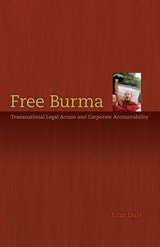
Free Burma
Transnational Legal Action and Corporate AccountabilityJohn G. Dale
University of Minnesota Press, 2010
Through the experience of the Free Burma movement, John G. Dale demonstrates how social movements create and appropriate legal mechanisms for generating new transnational political opportunities. He presents three corporate accountability campaigns waged by the Free Burma movement. The cases focus on the legislation of “Free Burma” laws in local governments throughout the United States; the effort to force the state of California to de-charter Unocal Oil Corporation for its flagrant abuse of human rights; and the first-ever use of the U.S. Alien Tort Claims Act to sue a corporation in a U.S. court for human rights abuses committed abroad. Dale’s work also raises the issue of how foreign policies of so-called constructive engagement actually pose a threat to the hope of Burma’s activists—and others worldwide—for more democratic economic development.

I Talk about It All the Time
Camara Lundestad Joof
University of Wisconsin Press, 2024
“I regularly decide to quit talking to white people about racism,” writes Joof. Such discussions often feel unproductive, the occasional spark of hope coming at enormous personal cost. But not talking about it is impossible, a betrayal of self. The book is a self-examination as well as societal indictment. It is an open challenge to readers, to hear her as she talks about it, all the time.
Mediating Gender in Post-Authoritarian South Korea
Michelle Cho and Jesook Song
University of Michigan Press, 2024
Mediating Gender in Post-Authoritarian South Korea maps the ways in which popular media and public discourse make the social dynamics of gender visible and open them up for debate and dismantling. In presenting innovative new research on the ways in which popular ideas about gender gain concrete form and political substance through mass mediation, the book’s contributors investigate the discursive production of gender in contemporary South Korea through trends, tropes, and thematics, as popular media become the domain in which new gendered subjectivities and relations transpire. The essays in this volume present cases and media objects that span multiple media and platforms, introducing new ways of thinking about gender as a platform and a conceptual infrastructure in the post-authoritarian era.
Memory Construction and the Politics of Time in Neoliberal South Korea
Namhee Lee
Duke University Press, 2022
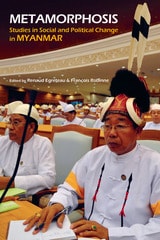
Metamorphosis
Studies in Social and Political Change in MyanmarEdited by Renaud Egreteau and François Robinne
National University of Singapore Press, 2015
But underlying recent political transitions are other wrenching social changes and shocks, a set of transformations less clearly mapped out. Relations between ethnic and religious groups, in the context of Burma’s political model of a state composed of ethnic groups, are a particularly important “unsolved equation”.
The editors use the notion of metamorphosis to look at Myanmar today and tomorrow—a term that accommodates linear change, stubborn persistence and the possibility of dramatic transformation. Divided into four sections, on politics, identity and ethnic relations, social change in fields like education and medicine, and the evolutions of religious institutions, the volume takes a broad view, combining an anthropological approach with views from political scientists and historians. This volume is an essential guide to the political and social challenges ahead for Myanmar.
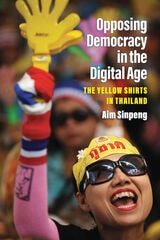
Opposing Democracy in the Digital Age
The Yellow Shirts in ThailandAim Sinpeng
University of Michigan Press, 2021
Opposing Democracy in the Digital Age is about why ordinary people in a democratizing state oppose democracy and how they leverage both traditional and social media to do so. Aim Sinpeng focuses on the people behind popular, large-scale antidemocratic movements that helped bring down democracy in 2006 and 2014 in Thailand. The yellow shirts (PAD—People’s Alliance for Democracy) that are the focus of the book are antidemocratic movements grown out of democratic periods in Thailand, but became the catalyst for the country’s democratic breakdown. Why, when, and how supporters of these movements mobilize offline and online to bring down democracy are some of the key questions that Sinpeng answers. While the book primarily uses a qualitative methodological approach, it also uses several quantitative tools to analyze social media data in the later chapters. This is one of few studies in the field of regime transition that focuses on antidemocratic mobilization and takes the role of social media seriously.
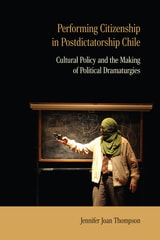
Performing Citizenship in Postdictatorship Chile
Cultural Policy and the Making of Political DramaturgiesJennifer Joan Thompson
Northwestern University Press, 2025
Offering a nuanced understanding of the performing arts’ relationship to politics
Through careful readings of key political performances in Chile's transition from military dictatorship to neoliberal democracy, Jennifer Joan Thompson examines how the production and aesthetics of theater are intertwined in processes of democratization, enactments of citizenship, and the development of cultural policy. Performing Citizenship in Postdictatorship Chile: Cultural Policy and the Making of Political Dramaturgies reveals how artists performed changing models of democratic citizenship. Thompson traces the ways artists confronted and resisted the military dictatorship of Augusto Pinochet, how they then reimagined the body politic during the early transitional period and challenged official constructions of history and memory as the transition to democracy progressed, how they critiqued Chile’s neoliberal economic model and its violence, and, finally, how they have made claims for feminist and Indigenous citizen subjectivities throughout Chile’s current social crisis. Incorporating archival and ethnographic research alongside readings of theatrical and political performances, this study offers a nuanced understanding of the performing arts’ relationship to politics, one that accounts for the ways artists and the state collaborate in the production of the political imagination.
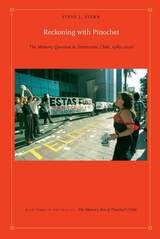
Reckoning with Pinochet
The Memory Question in Democratic Chile, 1989–2006Steve J. Stern
Duke University Press, 2010
Stern’s analysis integrates policymaking by elites, grassroots efforts by human rights victims and activists, and inside accounts of the truth commissions and courts where top-down and bottom-up initiatives met. Interpreting solemn presidential speeches, raucous street protests, interviews, journalism, humor, cinema, and other sources, he describes the slow, imperfect, but surprisingly forceful advance of efforts to revive democratic values through public memory struggles, despite the power still wielded by the military and a conservative social base including the investor class. Over time, resourceful civil-society activists and select state actors won hard-fought, if limited, gains. As a result, Chileans were able to face the unwelcome past more honestly, launch the world’s first truth commission to examine torture, ensnare high-level perpetrators in the web of criminal justice, and build a public culture of human rights. Stern provides an important conceptualization of collective memory in the wake of national trauma in this magisterial work of history.

Social Change and the Family in Taiwan
Arland Thornton and Hui-Sheng Lin
University of Chicago Press, 1994
This interdisciplinary study explores the patterns and causes of change in education, work, income, leisure time, marriage, living arrangements, and interactions among extended kin. Theoretical chapters enunciate a theory of family and social change centered on the life course and modes of social organization. Other chapters look at the shift from arranged marriages toward love matches, as well as changes in dating practices, premarital sex, fertility, and divorce.
Contributions to the book are made by Jui-Shan Chang, Ming-Cheng Chang, Deborah S. Freedman, Ronald Freedman, Thomas E. Fricke, Albert Hermalin, Mei-Lin Lee, Paul K. C. Liu, Hui-Sheng Lin, Te-Hsiung Sun, Arland Thornton, Maxine Weinstein, and Li-Shou Yang.
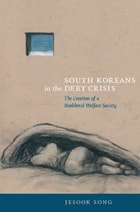
South Koreans in the Debt Crisis
The Creation of a Neoliberal Welfare SocietyJesook Song
Duke University Press, 2009
Drawing on her experience during the crisis as an employee in a public works program in Seoul, Song provides an ethnographic assessment of the efforts of the state and civilians to regulate social insecurity, instability, and inequality through assistance programs. She focuses specifically on efforts to help two populations deemed worthy of state subsidies: the “IMF homeless,” people temporarily homeless but considered employable, and the “new intellectuals,” young adults who had become professionally redundant during the crisis but had the high-tech skills necessary to lead a transformed post-crisis South Korea.
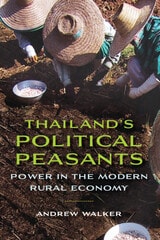
Thailand’s Political Peasants
Power in the Modern Rural EconomyAndrew Walker
University of Wisconsin Press, 2012
When a populist movement elected Thaksin Shinawatra as prime minister of Thailand in 2001, many of the country’s urban elite dismissed the outcome as just another symptom of rural corruption, a traditional patronage system dominated by local strongmen pressuring their neighbors through political bullying and vote-buying. In Thailand’s Political Peasants, however, Andrew Walker argues that the emergence of an entirely new socioeconomic dynamic has dramatically changed the relations of Thai peasants with the state, making them a political force to be reckoned with. Whereas their ancestors focused on subsistence, this generation of middle-income peasants seeks productive relationships with sources of state power, produces cash crops, and derives additional income through non-agricultural work. In the increasingly decentralized, disaggregated country, rural villagers and farmers have themselves become entrepreneurs and agents of the state at the local level, while the state has changed from an extractor of taxes to a supplier of subsidies and a patron of development projects.
Thailand’s Political Peasants provides an original, provocative analysis that encourages an ethnographic rethinking of rural politics in rapidly developing countries. Drawing on six years of fieldwork in Ban Tiam, a rural village in northern Thailand, Walker shows how analyses of peasant politics that focus primarily on rebellion, resistance, and evasion are becoming less useful for understanding emergent forms of political society.
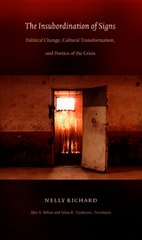
The Insubordination of Signs
Political Change, Cultural Transformation, and Poetics of the CrisisNelly Richard
Duke University Press, 2004
In The Insubordination of Signs Richard theorizes the cultural reactions—particularly within the realms of visual arts, literature, and the social sciences—to the oppression of the Chilean dictatorship. She reflects on the role of memory in the historical shadow of the military regime and on the strategies offered by marginal discourses for critiquing institutional systems of power. She considers the importance of Walter Benjamin for the theoretical self-understanding of the Latin American intellectual left, and she offers revisionary interpretations of the Chilean neo-avantgarde in terms of its relationships with the traditional left and postmodernism. Exploring the gap between Chile’s new left social sciences and its “new scene” aesthetic and critical practices, Richard discusses how, with the return of democracy, the energies that had set in motion the democratizing process seemed to exhaust themselves as cultural debate was attenuated in order to reduce any risk of a return to authoritarianism.

The Labor of Literature
Democracy and Literary Culture in Modern ChileJane D. Griffin
University of Massachusetts Press, 2016
By examining alternative literary publications, Griffin recasts the seventeen-year Pinochet dictatorship as a time of editorial experimentation despite widespread cultural oppression and shows how grassroots cultural activism has challenged government-approved corporate publishing models throughout the postdictatorship period. Griffin's work also points to the growing importance of autogestión, or do-it-yourself cultural production, where individuals combine artisanal forms with new technologies to make and share creative work on a global scale.
The Military and Politics in Postauthoritarian Chile
Gregory Weeks
University of Alabama Press, 2003
"The Military and Politics in Post-Authoritarian Chile should be read by everyone concerned with the relation between democracy and the armed forces. It is a well-researched, well-written volume that should prove both interesting and useful to scholars and students alike." —Perspectives on Politics
Why have political leaders of developing and authoritarian nations run into so many obstacles as they attempt to establish civilian supremacy over armed forces in the democratization of their countries? This is the question Gregory Weeks poses in his study of Chile from 1990 onward. He explains how the Chilean military has maintained a high level of political influence in the tumultuous aftermath of dictatorial rule by Army General Augusto Pinochet, thus confounding a smooth transition to civilian authority.
Even after the reins of power were officially handed over in 1990, Pinochet continued as commander in chief of the army until 1998, when he took a lifetime seat in the Senate and led the military’s efforts to retain its legal and constitutional prerogatives while limiting civilian oversight of military affairs. This assertion of guardianship by the military has produced a political tug-of-war between it and civilian authorities the two contenders for political primacy in Chile. In addition to recounting the historical background of this situation, Weeks’s study examines where conflict between these two contenders has been most productive and accord has been highest. His findings suggest that formal contacts, conducted through formal institutions, have been the most conducive to civil supremacy and, therefore, the consolidation of democracy.
Based on interviews, government documents, military journals, newspapers, and other archival sources, The Military and Politics in Postauthoritarian Chile describes how presidents, military officers, members of Congress, and judges have interacted since the end of the military regime. With implications for conflict resolution studies, this book will be valuable for Chileanists and policymakers and analysts of Latin American regimes, as well as academic libraries, military historians, social scientists, and students and scholars of Latin American history and politics.