Results by title
16 books match the query '1992-'
A Thousand Steps to Parliament
Constructing Electable Women in MongoliaManduhai Buyandelger
University of Chicago Press, 2022
Mongolia has often been deemed an “island of democracy,” commended for its rapid adoption of free democratic elections in the wake of totalitarian socialism. The democratizing era, however, brought alongside it a phenomenon that Manduhai Buyandelger terms “electionization”—a restructuring of elections from time-grounded events into a continuous neoliberal force that governs everyday life beyond the electoral period. In this way, electoral campaigns have come to substitute for the functions of governing, from social welfare to the private sector, requiring an accumulation of wealth and power beyond the reach of most women candidates. In A Thousand Steps to Parliament, Buyandelger shows how successful women candidates instead use strategies of self-polishing to cultivate charisma and a reputation for being oyunlag, or intellectful. This carefully crafted identity can be called the “electable self”: treating their bodies and minds as pliable and renewable, women candidates draw from the same practices of neoliberalism that have unsustainably commercialized elections. By tracing the complicated, contradictory paths to representation that women in Mongolia must walk, A Thousand Steps to Parliament holds a mirror up to democracies the world over, revealing an urgent need to grapple with the encroaching effects of neoliberalism in our global political systems.

Bosnia
Faking Democracy After DaytonDavid Chandler
Pluto Press, 2000
Bosnian Studies
Perspectives from an Emerging FieldDzeneta Karabegovic
University of Missouri Press, 2023
Diaspora communities have formed in North America (especially in St. Louis), Europe, and Australia because of war and displacement, and have themselves become a considerable topic of study spanning the disciplines of anthropology, migration studies, political science, memory studies, conflict and security studies, psychology, and geography.
This volume seeks to illuminate how Bosnian migrant and diaspora scholars are contributing to the development of Bosnian Studies. The authors included in this volume are either writing from their (new) home bases in Australia, Austria, Canada, Switzerland, the United Kingdom, and the United States, among others, or they have returned to Bosnia after a period of migration. Their chapters have distinct entry points of inquiry, demonstrating how scholars have integrated Bosnia as a theme across the range of disciplines in which they are situated. The selections included in the volume range from literary analysis to personal memoirs of the conflict, from studies of heritage and identity to political science analysis of diaspora voting, to genocide studies and questions of (or lack of) ethics in the growing field of Bosnian Studies.
Captured Peace
Elites and Peacebuilding in El SalvadorChristine J. Wade
Ohio University Press, 2015
El Salvador is widely considered one of the most successful United Nations peacebuilding efforts, but record homicide rates, political polarization, socioeconomic exclusion, and corruption have diminished the quality of peace for many of its citizens. In Captured Peace: Elites and Peacebuilding in El Salvador, Christine J. Wade adapts the concept of elite capture to expand on the idea of “captured peace,” explaining how local elites commandeered political, social, and economic affairs before war’s end and then used the peace accords to deepen their control in these spheres.
While much scholarship has focused on the role of gangs in Salvadoran unrest, Wade draws on an exhaustive range of sources to demonstrate how day-to-day violence is inextricable from the economic and political dimensions. In this in-depth analysis of postwar politics in El Salvador, she highlights the local actors’ primary role in peacebuilding and demonstrates the political advantage an incumbent party—in this case, the Nationalist Republican Alliance (ARENA—has throughout the peace process and the consequences of this to the quality of peace that results.
Civic and Uncivic Values
Serbia in the Post-Miloševic EraOla Listhaug
Central European University Press, 2011

Dubious Mandate
A Memoir of the UN in Bosnia, Summer 1995Phillip Corwin
Duke University Press, 1999
Sympathetic to the UN’s achievements, yet skeptical of its acquiescence to the use of military force, Corwin is critical both of the Bosnian government’s tactics for drawing NATO into the conflict and of NATO’s eagerness to make peace by waging war. He challenges the popular depiction of the Bosnian government as that of noble victim, arguing that the leaders of all three sides in the conflict were “gangsters wearing coats and ties.” Highly caustic about Western reportage, he examines the policies of various Western political and military leaders and gives a detailed account of a pivotal phase of the war in Bosnia, a period that culminated with NATO’s massive bombing of Bosnian Serb targets and ultimately led to the Dayton Peace Agreement. Without a proper understanding of this critical period, he argues, it is difficult to understand the greater scope of the conflict. Corwin also offers insightful portraits of some of the leading players in the Bosnian drama, including Yasushi Akashi, the UN’s top official in the former Yugoslavia in 1994–95; General Rupert Smith, the British commander in Sarajevo in 1995; and Hasan Muratovic, a future Bosnian prime minister.
Capturing the essence of a tense and difficult time, Dubious Mandate will interest diplomats, politicians, military personnel, scholars, and those still trying to fathom the continuing mission of the United Nations and the unfolding of events in the former Yugoslavia during the 1990s.
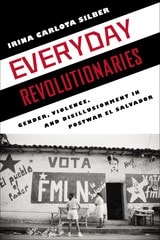
Everyday Revolutionaries
Gender, Violence, and Disillusionment in Postwar El SalvadorIrina Carlota Silber
Rutgers University Press, 2011
Winner of the 2013 International Latino Book Awards in the Best First Book, Nonfiction category
Everyday Revolutionaries provides a longitudinal and rigorous analysis of the legacies of war in a community racked by political violence. By exploring political processes in one of El Salvador's former war zones-a region known for its peasant revolutionary participation-Irina Carlota Silber offers a searing portrait of the entangled aftermaths of confrontation and displacement, aftermaths that have produced continued deception and marginalization.
Silber provides one of the first rubrics for understanding and contextualizing postwar disillusionment, drawing on her ethnographic fieldwork and research on immigration to the United States by former insurgents. With an eye for gendered experiences, she unmasks how community members are asked, contradictorily and in different contexts, to relinquish their identities as "revolutionaries" and to develop a new sense of themselves as productive yet marginal postwar citizens via the same "participation" that fueled their revolutionary action. Beautifully written and offering rich stories of hope and despair, Everyday Revolutionaries contributes to important debates in public anthropology and the ethics of engaged research practices.
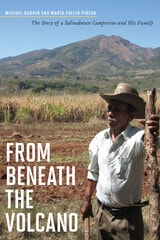
From Beneath the Volcano
The Story of a Salvadoran Campesino and His FamilyMichael Gorkin and Marta Evelyn Pineda
University of Arizona Press, 2011
Luis, his mother, his wife, his in-laws, his children, and some neighbors recall in a simple and often eloquent manner their experiences of everyday life before, during, and after the civil war. Nina Bonafacia, Luis’s mother, tells of the days before the war when two of her daughters were murdered and she fled with her family to a refugee camp. Julia, Luis’s wife, recounts her life as a guerrillera during which, incidentally, she gave birth to the first two of her eight children. Joaquin, a neighbor and comrade-in-arms, discusses how he and others took control of the land of Comunidad Guazapa and began rebuilding in those turbulent days and months right after the war. Margarita and Francisco, the two oldest children, with candor and insight discuss the trajectory of their lives and that of the postwar generation. And at the center of all these stories stands Luis, the guerrillero, farmer, neighbor, husband, father—and raconteur par excellence.
In sum, the multiple voices in From Beneath the Volcano combine to form a rich tapestry displaying a story of war, family, and community and provide a never-before-seen view of both the past and present El Salvador.
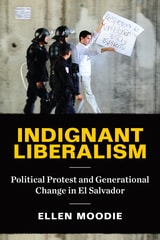
Indignant Liberalism
Political Protest and Generational Change in El SalvadorEllen Moodie
University of Texas Press, 2026
Documenting the rise and disillusionment of El Salvador’s postwar activists in the face of populist authoritarian politics.
The conclusion of El Salvador’s long civil war, in 1992, was supposed to bring about equality and political freedom. Leftist insurgents laid down arms, and the government formally embraced liberal ideals. Yet today, El Salvador is ruled by an authoritarian president who was reelected via unconstitutional means. What went wrong?
Anthropologist and journalist Ellen Moodie embedded with indignados—young middle-class protestors, demanding that the government live up to its liberal commitments—to better understand the course of political change since the civil war. Yet the “post-postwar” generation is only the latest demographic disappointed with liberalism in practice. Moodie examines a nineteenth-century “racial liberalism” that saw descendants of colonists “civilizing” Indigenous people while dispossessing them of lands and mobilizing them for labor. Today, the failure to make good on the promises of postwar liberalism has inspired robust support for strongman Nayib Bukele. Moodie argues that El Salvador’s case, though inflected by local concerns, is not unique. Rather, it is another stark demonstration of how liberalism’s imaginary social contract gives rise to populist authoritarianism.
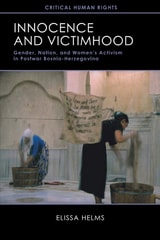
Innocence and Victimhood
Gender, Nation, and Women’s Activism in Postwar Bosnia-HerzegovinaElissa Helms
University of Wisconsin Press, 2013

Night Mother
A Personal and Cultural History of The ExorcistMarlena Williams
The Ohio State University Press, 2023
Peace as War
Bosnia-Herzegovina Post-DaytonDrazen Pehar
Central European University Press, 2019
Reimagining National Belonging
Post-Civil War El Salvador in a Global ContextRobin Maria DeLugan
University of Arizona Press, 2012
Examining events that unfolded between 1992 and 2011, DeLugan both illustrates the idiosyncrasies of state and society in El Salvador and opens a larger portal into conditions of constructing a state in the present day around the globe—particularly the process of democratization in an age of neoliberalism. She demonstrates how academics, culture experts, popular media, and the United Nations and other international agencies have all helped shape ideas about national belonging in El Salvador. She also reveals the efforts that have been made to include populations that might have been overlooked, including indigenous people and faraway citizens not living inside the country’s borders. And she describes how history and memory projects have begun to recall the nation’s violent past with the goal of creating a more just and equitable nation.
This illuminating case study fills a gap in the scholarship about culture and society in contemporary El Salvador, while offering an “ethnography of the state” that situates El Salvador in a global context.
Surviving the Peace
The Struggle for Postwar Recovery in Bosnia-HerzegovinaPeter Lippman
Vanderbilt University Press, 2019
Essential reading for students of the former Yugoslavia and anyone interested in postwar or post-genocide studies, Surviving the Peace is an instant classic of long-form reporting, an impossible accomplishment without a lifetime of dedication to a place and people.
Peter Lippman's website is http://survivingthepeace.org/.
The Revolution Question
Feminisms in El Salvador, Chile, and CubaShayne, Julie D.
Rutgers University Press, 2004
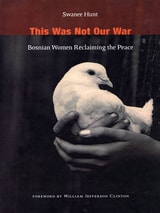
This Was Not Our War
Bosnian Women Reclaiming the PeaceSwanee Hunt
Duke University Press, 2004
This Was Not Our War shares amazing first-person accounts of twenty-six Bosnian women who are reconstructing their society following years of devastating warfare. A university student working to resettle refugees, a paramedic who founded a veterans’ aid group, a fashion designer running two nonprofit organizations, a government minister and professor who survived Auschwitz—these women are advocates, politicians, farmers, journalists, students, doctors, businesswomen, engineers, wives, and mothers. They are from all parts of Bosnia and represent the full range of ethnic traditions and mixed heritages. Their ages spread across sixty years, and their wealth ranges from expensive jewels to a few chickens. For all their differences, they have this much in common: all survived the war with enough emotional strength to work toward rebuilding their country. Swanee Hunt met these women through her diplomatic and humanitarian work in the 1990s. Over the course of seven years, she conducted multiple interviews with each one. In presenting those interviews here, Hunt provides a narrative framework that connects the women’s stories, allowing them to speak to one another.
The women describe what it was like living in a vibrant multicultural community that suddenly imploded in an onslaught of violence. They relate the chaos; the atrocities, including the rapes of many neighbors and friends; the hurried decisions whether to stay or flee; the extraordinary efforts to care for children and elderly parents and to find food and clean drinking water. Reflecting on the causes of the war, they vehemently reject the idea that age-old ethnic hatreds made the war inevitable. The women share their reactions to the Dayton Accords, the end of hostilities, and international relief efforts. While they are candid about the difficulties they face, they are committed to rebuilding Bosnia based on ideals of truth, justice, and a common humanity encompassing those of all faiths and ethnicities. Their wisdom is instructive, their courage and fortitude inspirational.