Results by title
19 books match the query '2000-'
A Concise Field Guide to Post-Communist Regimes
Actors, Institutions, and DynamicsBálint Madlovics
Central European University Press, 2022
While the literature of hybrid regimes has given up the presumption that post-communist countries must democratize, its language and concepts still mostly relate to Western democracies. Magyar and Madlovics strongly argue for a vocabulary and grammar tailored to the specifics of the region. In 120 theses they unfold a conceptual framework with (1) a typology of post-communist regimes and (2) a detailed presentation of ideal-type actors and the political, economic, and social phenomena in these regimes. The book is a more digestible companion to the 800-page The Anatomy of Post-Communist Regimes (CEU Press, 2020), which was a detailed theoretical study with plenty of empirical illustrations.
Each of the 120 theses contains a statement and its concise discussion supported by illustrative tables, figures, and QR-codes that connect the interested reader to the more detailed analysis in the Anatomy. In a condensed variety, this book has kept the holistic approach of the Anatomy and treats the spheres of political, market, and communal action as parts of a single, coherent whole. The endeavor to synthesize a vast range of ideas does not, however, result in a too complicated text. On the contrary, freed from the implicit presumptions of democracy theory, the new terminology yields a readily usable toolkit of unambiguous means of expression to speak about post-communism.

A Woman in the Crossfire
Diaries of the Syrian RevolutionSamar Yazbek
Haus Publishing, 2012
Capitalizing China
Edited by Joseph P. H. Fan and Randall Morck
University of Chicago Press, 2012
China and the Twenty-first-Century Crisis
Minqi Li
Pluto Press, 2015
By looking at the big questions of class struggle, global economic imbalances, peak oil, climate change and political power play, Minqi Li argues that by the time of the next crisis, China will be at the epicentre of these contradictions.
China is the last large region, and source of cheap labour, into which capital could expand: the system is at its limits. By combining this argument with issues surrounding the planet’s ecological limits and the internal politics of the Chinese Communist Party, Li commands a narrative of China at a pivotal, and possibly apocalyptic stage.
China as Number One?
The Emerging Values of a Rising PowerYang Zhong and Ronald F. Inglehart
University of Michigan Press, 2024
One of the most significant global events in the last forty years has been the rise of China— economically, technologically, politically, and militarily. The question on people's minds for decades has been whether China will replace the United States as a superpower in the near future. But for China, this power must be comprehensive — having strong economic and militant forces are only two pieces of the puzzle. China must also possess soft power, such as attractive ideologies, values, and culture.
China as Number One? explores China’s soft powers through the eyes of Chinese citizens. Utilizing data from the World Values Survey, the contributors to this collection analyze the potential soft power of a rising China by examining its residents' social values. A comprehensive study of changes and continuities in the political and social values of Chinese citizens, the book examines findings in the context of evolutionary modernization theory and cross-national comparison.
China's Urban Transition
John Friedmann
University of Minnesota Press, 2005
Creating Market Socialism
How Ordinary People Are Shaping Class and Status in ChinaCarolyn L. Hsu
Duke University Press, 2007
Hsu’s ethnographic research, conducted in the city of Harbin in northwestern China, included participant observation at twenty workplaces and interviews with working adults from a range of professions. By analyzing the shared stories about status and class, jobs and careers, and aspirations and hopes that circulate among Harbiners from all walks of life, Hsu reveals the logic underlying the emerging stratification system. In the post-socialist era, Harbiners must confront a fast-changing and bewildering institutional landscape. Their collective narratives serve to create meaning and order in the midst of this confusion. Harbiners collectively agree that “intellectuals” (scientists, educators, and professionals) are the most respected within the new social order, because they contribute the most to Chinese society, whether that contribution is understood in terms of traditional morality, socialist service, or technological and economic progress. Harbiners understand human capital as an accurate measure of a person’s status. Their collective narratives about suzhi shape their career choices, judgments, and child-rearing practices, and therefore the new practices and institutions developing in post-socialist China.

Democracy in Mexico
Attitudes and Perceptions of Citizens at National and Local LevelEdited by Salvador Marti i Puig, Reynaldo Yunuen Ortega Ortiz, M. Fernanda Somuano Ventura, and Claire Wright
University of London Press, 2014
Desiring China
Experiments in Neoliberalism, Sexuality, and Public CultureLisa Rofel
Duke University Press, 2007
Drawing on her research over the past two decades among urban residents and rural migrants in Hangzhou and Beijing, Rofel analyzes the meanings that individuals attach to various public cultural phenomena and what their interpretations say about their understandings of post-socialist China and their roles within it. She locates the first broad-based public debate about post-Mao social changes in the passionate dialogues about the popular 1991 television soap opera Yearnings. She describes how the emergence of gay identities and practices in China reveals connections to a transnational network of lesbians and gay men at the same time that it brings urban/rural and class divisions to the fore. The 1999–2001 negotiations over China’s entry into the World Trade Organization; a controversial women’s museum; the ways that young single women portray their longings in relation to the privations they imagine their mothers experienced; adjudications of the limits of self-interest in court cases related to homoerotic desire, intellectual property, and consumer fraud—Rofel reveals all of these as sites where desiring subjects come into being.
Governing and Ruling
The Political Logic of Taxation in ChinaChangdong Zhang
University of Michigan Press, 2021
Rapid social economic changes, the transition from a planned economy to a market economy, or even economic liberalization can lead to political instability and the collapse of authoritarian regimes. Despite experiencing all of these unprecedented changes in the past forty years, China under the Chinese Communist Party’s leadership has so far successfully transformed and improved both its governance capacity and its ruling capacity. Governing and Ruling: The Political Logic of Taxation in China addresses this regime resilience puzzle by examining the political logic of its taxation system, especially the ways in which taxation helps China handle three governance problems: maneuvering social control, improving agent discipline, and eliciting cooperation. Changdong Zhang argues that a taxation system plays an important role in sustaining authoritarian rule, in China and elsewhere, by combining co-optation and repression functions. The book collects valuable firsthand and secondhand data; studies China’s taxation system, intergovernmental fiscal relationships, composition of fiscal revenue sources, and tax administration; and discusses how each dimension influences the three governance problems.
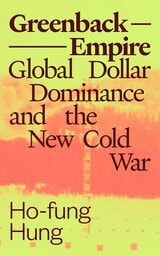
Greenback Empire
Global Dollar Dominance and the New Cold WarHo-fung Hung
University of Chicago Press, 2026
A critical history of the US dollar’s dominance in the world economy—and what has kept China’s currency from overtaking it.
The dollar is the primary currency of the world economy. With China now rivaling the United States on the world stage, a critical question hangs in the balance: will the Chinese renminbi challenge the status of the dollar and, in doing so, deprive America of its “exorbitant privilege”?
In GreenbackEmpire, Ho-fung Hung offers a powerful account of why, even as American shares of global production, ownership, and trade continue to decline, its currency has retained the support of governments and investors around the world. For six decades, Hung shows, the dominance of the dollar has rested on the security umbrella that the US offers to the world’s wealthiest countries—including oil producers. To these countries, support for the value of the dollar is tantamount to maintaining US protection. While China has become a serious geopolitical and economic rival to the US, the Chinese state’s airtight control of its financial system has delayed the free trading of the renminbi, limiting the currency’s internationalization. In short, the same strategy that engineered growth in China’s economy is restraining its currency's rise in opposition to the dollar. Hung’s Greenback Empire is an essential history of the dollar’s prowess, indispensable for understanding the future of the global monetary system.
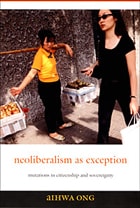
Neoliberalism as Exception
Mutations in Citizenship and SovereigntyAihwa Ong
Duke University Press, 2006
Ong traces how these and other neoliberal exceptions to business as usual are reconfiguring relationships between governing and the governed, power and knowledge, and sovereignty and territoriality. She argues that an interactive mode of citizenship is emerging, one that organizes people—and distributes rights and benefits to them—according to their marketable skills rather than according to their membership within nation-states. Those whose knowledge and skills are not assigned significant market value—such as migrant women working as domestic maids in many Asian cities—are denied citizenship. Nevertheless, Ong suggests that as the seam between sovereignty and citizenship is pried apart, a new space is emerging for NGOs to advocate for the human rights of those excluded by neoliberal measures of human worthiness.
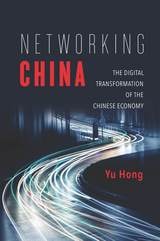
Networking China
The Digital Transformation of the Chinese EconomyYu Hong
University of Illinois Press, 2017
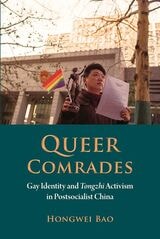
Queer Comrades
Gay Identity and Tongzhi Activism in Postcolonial ChinaHongwei Bao
National University of Singapore Press, 2018
Sovereignty and Extortion
A New State Form in MexicoClaudio Lomnitz
Duke University Press, 2024
The Book of Politics
China in TheoryMichael Dutton
Duke University Press, 2024
The Death and Life of Chinese Civil Society
Mujun Zhou
University of Michigan Press, 2026
Mujun Zhou employs the concept of interstitial space, or the space where the exercise of power has not been fully institutionalized, to examine the history of the civil society project over the past three decades and its changing relationship with other social movements. Zhou suggests that by advocating for civil society the liberals gained allies and thematized many social problems rising during China’s economic reform; however, liberals’ activism also produced new forms of power inequalities.
The Syrian Revolution
Between the Politics of Life and the Geopolitics of DeathYasser Munif
Pluto Press, 2020
Having lived in Syria for over fifteen years, Yasser Munif is expert in exploring the micropolitics of revolutionary forces. He uncovers how cities are managed, how precious food is distributed and how underground resistance thrives in regions controlled by regime forces. In contrast, the macropolitics of the elite Syrian regime are undemocratic, destructive and counter-revolutionary. Regional powers, Western elites, as well as international institutions choose this macropolitical lens to apprehend the Syrian conflict. By doing so, they also choose to ignore the revolutionaries' struggles.
By looking at the interplay between the two sides, case studies of Aleppo and Manbij and numerous firsthand interviews, Yasser Munif shows us that this macro and geopolitical authoritarianism only brings death, and that by looking at the smaller picture - the local, the grassroots, the revolutionaries - we can see the politics of life emerge.
iChina
The Rise of the Individual in Modern Chinese SocietyEdited by Mette Halskov Hansen and Rune Svarverud
National University of Singapore Press, 2010