Results by title

17 books match the query '2009-'
cover of A Tolerance for Inequality: American Public Opinion and Economic Policy

A Tolerance for Inequality

American Public Opinion and Economic Policy

Andrew J. Taylor

University of Chicago Press, 2025

A nuanced reassessment of US democratic responsiveness and public opinion on economic policy that explores the real reasons government does not do more to mitigate inequality.

Many believe that the United States’ growing economic inequality is the result of a political system that has been captured by wealthy elites. But is economic capture actually the problem? In A Tolerance for Inequality, Andrew J. Taylor examines this question from multiple angles, drawing on public opinion data and analyses of representation in Congress. Taylor finds that economic policy outcomes are more reflective of public opinion than the common wisdom suggests.

Broadly, less-affluent Americans’ policy preferences are not meaningfully different from the preferences of other Americans, and Washington is responsive to these preferences. Although politicians are more affluent, on average, than most Americans, this does not prevent them from representing the economic views of their poorer constituents. Today’s Democratic Party is more interested in regulation and supplying public goods than redistributing wealth downwards, and political reforms designed to provide more equal outcomes are largely misguided. In short, Americans get the kind of economy they at least say they want.
[more]
cover of Down and Out in the New Economy: How People Find (or Don’t Find) Work Today

Down and Out in the New Economy

How People Find (or Don’t Find) Work Today

Ilana Gershon

University of Chicago Press, 2017

What does it mean to market yourself as a business in today's job search world?

Finding a job used to be simple.  Now . . . well, it’s complicated. In today’s economy, you can’t just be an employee looking to get hired—you have to market yourself as a business, one that can help another business achieve its goals.
 
That’s a radical transformation in how we think about work and employment, says Ilana Gershon. And with Down and Out in the New Economy, she digs deep into that change and what it means, not just for job seekers, but for businesses and our very culture. In telling this story, Gershon covers all parts of the employment spectrum: she interviews hiring managers about how they assess candidates; attends personal branding seminars; talks with managers at companies around the United States to suss out regional differences—like how Silicon Valley firms look askance at the lengthier employment tenures of applicants from the Midwest. And she finds that not everything has changed: though the technological trappings may be glitzier, in a lot of cases, who you know remains more important than what you know.
 
Rich in the voices of people deeply involved with all parts of the employment process, Down and Out in the New Economy offers a snapshot of the quest for work today—and a pointed analysis of its larger meaning.
[more]
cover of Gender in Campaigns for the U.S. House of Representatives

Gender in Campaigns for the U.S. House of Representatives

Barbara Burrell

University of Michigan Press, 2014
Barbara Burrell presents a comprehensive comparative examination of men's and women’s candidacies for the U.S. House of Representatives in elections from 1994 through 2012. Analyzing extensive data sets on all major party candidates for 10 elections—covering candidate status, party affiliation, fund-raising, candidate background variables, votes obtained, and success rates for both primary and general elections—Burrell finds little evidence of categorical discrimination against women candidates. Women compete equally with men and often outpace them in raising money, gaining interest group and political party support, and winning elections.

Yet the number of women elected to the U.S. House has expanded only incrementally. The electoral structure limits opportunities for newcomers to win congressional seats and there remains a lower presence of women in winnable contests despite growing recruitment efforts. Burrell suggests that congressional dysfunction discourages potential candidates from pursuing legislative careers and that ambitious women are finding alternative paths to influence and affect public policy.
[more]
cover of Narcissist Nation: Reflections of a Blue-State Conservative

Narcissist Nation

Reflections of a Blue-State Conservative

George J. Marlin

St. Augustine's Press, 2011
[more]
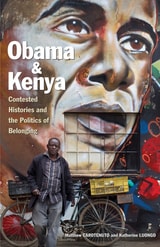
cover of Obama and Kenya: Contested Histories and the Politics of Belonging

Obama and Kenya

Contested Histories and the Politics of Belonging

Matthew Carotenuto

Ohio University Press, 2016

Barack Obama’s political ascendancy has focused considerable global attention on the history of Kenya generally and the history of the Luo community particularly. From politicos populating the blogosphere and bookshelves in the U.S and Kenya, to tourists traipsing through Obama’s ancestral home, a variety of groups have mobilized new readings of Kenya’s past in service of their own ends.

Through narratives placing Obama into a simplified, sweeping narrative of anticolonial barbarism and postcolonial “tribal” violence, the story of the United States president’s nuanced relationship to Kenya has been lost amid stereotypical portrayals of Africa. At the same time, Kenyan state officials have aimed to weave Obama into the contested narrative of Kenyan nationhood.

Matthew Carotenuto and Katherine Luongo argue that efforts to cast Obama as a “son of the soil” of the Lake Victoria basin invite insights into the politicized uses of Kenya’s past. Ideal for classroom use and directed at a general readership interested in global affairs, Obama and Kenya offers an important counterpoint to the many popular but inaccurate texts about Kenya’s history and Obama’s place in it as well as focused, thematic analyses of contemporary debates about ethnic politics, “tribal” identities, postcolonial governance, and U.S. African relations.
[more]
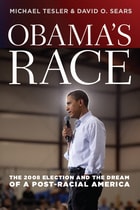
cover of Obama's Race: The 2008 Election and the Dream of a Post-Racial America

Obama's Race

The 2008 Election and the Dream of a Post-Racial America

Michael Tesler and David O. Sears

University of Chicago Press, 2010

Barack Obama’s presidential victory naturally led people to believe that the United States might finally be moving into a post-racial era. Obama’s Race—and its eye-opening account of the role played by race in the election—paints a dramatically different picture.

The authors argue that the 2008 election was more polarized by racial attitudes than any other presidential election on record—and perhaps more significantly, that there were two sides to this racialization: resentful opposition to and racially liberal support for Obama. As Obama’s campaign was given a boost in the primaries from racial liberals that extended well beyond that usually offered to ideologically similar white candidates, Hillary Clinton lost much of her longstanding support and instead became the preferred candidate of Democratic racial conservatives. Time and again, voters’ racial predispositions trumped their ideological preferences as John McCain—seldom described as conservative in matters of race—became the darling of racial conservatives from both parties. Hard-hitting and sure to be controversial, Obama’s Race will be both praised and criticized—but certainly not ignored.
[more]
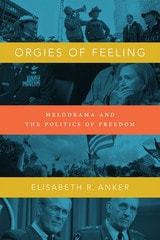
cover of Orgies of Feeling: Melodrama and the Politics of Freedom

Orgies of Feeling

Melodrama and the Politics of Freedom

Elisabeth R. Anker

Duke University Press, 2014
Melodrama is not just a film or literary genre but a powerful political discourse that galvanizes national sentiment to legitimate state violence. Finding virtue in national suffering and heroism in sovereign action, melodramatic political discourses cast war and surveillance as moral imperatives for eradicating villainy and upholding freedom. In Orgies of Feeling, Elisabeth R. Anker boldly reframes political theories of sovereignty, freedom, and power by analyzing the work of melodrama and affect in contemporary politics. Arguing that melodrama animates desires for unconstrained power, Anker examines melodramatic discourses in the War on Terror, neoliberal politics, anticommunist rhetoric, Hollywood film, and post-Marxist critical theory. Building on Friedrich Nietzsche's notion of "orgies of feeling," in which overwhelming emotions displace commonplace experiences of vulnerability and powerlessness onto a dramatic story of injured freedom, Anker contends that the recent upsurge in melodrama in the United States is an indication of public discontent. Yet the discontent that melodrama reflects is ultimately an expression of the public's inability to overcome systemic exploitation and inequality rather than an alarmist response to inflated threats to the nation.
 
[more]
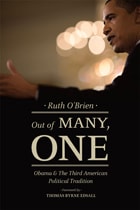
cover of Out of Many, One: Obama and the Third American Political Tradition

Out of Many, One

Obama and the Third American Political Tradition

Ruth O'Brien

University of Chicago Press, 2013

Feared by conservatives and embraced by liberals when he entered the White House, Barack Obama has since been battered by criticism from both sides. In Out of Many, One, Ruth O’Brien explains why. We are accustomed to seeing politicians supporting either a minimalist state characterized by unfettered capitalism and individual rights or a relatively strong welfare state and regulatory capitalism. Obama, O’Brien argues, represents the values of a lesser-known third tradition in American political thought that defies the usual left-right categorization.

Bearing traces of Baruch Spinoza, John Dewey, and Saul Alinsky, Obama’s progressivism embraces the ideas of mutual reliance and collective responsibility, and adopts an interconnected view of the individual and the state. So, while Obama might emphasize difference, he rejects identity politics, which can create permanent minorities and diminish individual agency. Analyzing Obama’s major legislative victories—financial regulation, health care, and the stimulus package—O’Brien shows how they reflect a stakeholder society that neither regulates in the manner of the New Deal nor deregulates. Instead, Obama focuses on negotiated rule making and allows executive branch agencies to fill in the details when dealing with a deadlocked Congress. Similarly, his commitment to difference and his resistance to universal mandates underlies his reluctance to advocate for human rights as much as many on the Democratic left had hoped.
By establishing Obama within the context of a much longer and broader political tradition, this book sheds critical light on both the political and philosophical underpinnings of his presidency and a fundamental shift in American political thought.
 

[more]
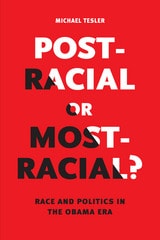
cover of Post-Racial or Most-Racial?: Race and Politics in the Obama Era

Post-Racial or Most-Racial?

Race and Politics in the Obama Era

Michael Tesler

University of Chicago Press, 2016

When Barack Obama won the presidency, many posited that we were entering into a post-racial period in American politics. Regrettably, the reality hasn’t lived up to that expectation. Instead, Americans’ political beliefs have become significantly more polarized by racial considerations than they had been before Obama’s presidency—in spite of his administration’s considerable efforts to neutralize the political impact of race.
           
Michael Tesler shows how, in the years that followed the 2008 election—a presidential election more polarized by racial attitudes than any other in modern times—racial considerations have come increasingly to influence many aspects of political decision making. These range from people’s evaluations of prominent politicians and the parties to issues seemingly unrelated to race like assessments of public policy or objective economic conditions. Some people even displayed more positive feelings toward Obama’s dog, Bo, when they were told he belonged to Ted Kennedy. More broadly, Tesler argues that the rapidly intensifying influence of race in American politics is driving the polarizing partisan divide and the vitriolic atmosphere that has come to characterize American politics.

One of the most important books on American racial politics in recent years, Post-Racial or Most-Racial? is required reading for anyone wishing to understand what has happened in the United States during Obama’s presidency and how it might shape the country long after he leaves office.
[more]
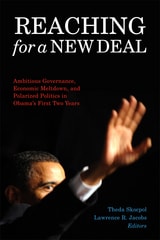
cover of Reaching for a New Deal: Ambitious Governance, Economic Meltdown, and Polarized Politics in Obama's First Two Years

Reaching for a New Deal

Ambitious Governance, Economic Meltdown, and Polarized Politics in Obama's First Two Years

Theda Skocpol

Russell Sage Foundation, 2011
During his winning presidential campaign, Barack Obama promised to counter rising economic inequality and revitalize America's middle-class through a series of wide-ranging reforms. His transformational agenda sought to ensure affordable healthcare; reform the nation's schools and make college more affordable; promote clean and renewable energy; reform labor laws and immigration; and redistribute the tax burden from the middle class to wealthier citizens. The Wall Street crisis and economic downturn that erupted as Obama took office also put U.S. financial regulation on the agenda. By the middle of President Obama's first term in office, he had succeeded in advancing major reforms by legislative and administrative means. But a sluggish economic recovery from the deep recession of 2009, accompanied by polarized politics and governmental deadlock in Washington, DC, have raised questions about how far Obama's promised transformations can go. Reaching for a New Deal analyzes both the ambitious domestic policy of Obama's first two years and the consequent political backlash—up to and including the 2010 midterm elections. Reaching for a New Deal opens by assessing how the Obama administration overcame intense partisan struggles to achieve legislative victories in three areas—health care reform, federal higher education loans and grants, and financial regulation. Lawrence Jacobs and Theda Skocpol examine the landmark health care bill, signed into law in spring 2010, which extended affordable health benefits to millions of uninsured Americans after nearly 100 years of failed legislative attempts to do so. Suzanne Mettler explains how Obama succeeded in reorienting higher education policy by shifting loan administration from lenders to the federal government and extending generous tax tuition credits. Reaching for a New Deal also examines the domains in which Obama has used administrative action to further reforms in schools and labor law. The book concludes with examinations of three areas—energy, immigration, and taxes—where Obama's efforts at legislative compromises made little headway. Reaching for a New Deal combines probing analyses of Obama's domestic policy achievements with a big picture look at his change-oriented presidency. The book uses struggles over policy changes as a window into the larger dynamics of American politics and situates the current political era in relation to earlier pivotal junctures in U.S. government and public policy. It offers invaluable lessons about unfolding political transformations in the United States.
[more]
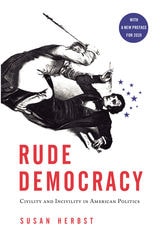
cover of Rude Democracy: Civility and Incivility in American Politics

Rude Democracy

Civility and Incivility in American Politics

Authored by Susan Herbst

Temple University Press, 2020

Democracy is, by its very nature, often rude. But there are limits to how uncivil we should be. In her timely and important book, Rude Democracy, Susan Herbst explores the ways we discuss public policy, how we treat each other as we do, and how we can create a more civil national culture.

Herbst uses the examples of Sarah Palin and Barack Obama to illustrate her case. She scrutinizes Palin as both victim and perpetrator of incivility, including close analysis of her speeches on the 2008 campaign trail, the tone at her rallies, and her interactions with her audience.   Turning to Barack Obama, Herbst argues that a key 2009 speech reveals much about his own perspective on American civility as it pertains to contentious issues such as abortion, and notes, too, what the controversy surrounding the speech reveals about the nature of public opinion in the United States. She also dissects Palin’s and Obama’s roles in the 2009 health care debate.   Finally, in a fascinating chapter, Herbst examines how young people come to form their own attitudes about civility and political argument.

In Rude Democracy, Susan Herbst insists that Americans need to recognize the bad tendencies and habits we have developed, use new media for more effective debate, and develop a tougher and more strategic political skin.  She urges us to boost both the intelligence and productivity of our debates, noting that the effort demands a commitment to the nature of argument itself. Rude Democracy outlines a plan for moving forward and creating a more civil climate for American politics.
[more]
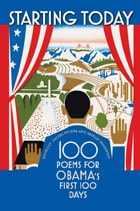
cover of Starting Today: 100 Poems for Obama’s First 100 Days

Starting Today

100 Poems for Obama’s First 100 Days

Rachel Zucker

University of Iowa Press, 2010
Normal.dotm 0 0 1 89 512 The University of Iowa 4 1 628 12.0 0 false 18 pt 18 pt 0 0 false false false /* Style Definitions */ table.MsoNormalTable {mso-style-name:"Table Normal"; mso-tstyle-rowband-size:0; mso-tstyle-colband-size:0; mso-style-noshow:yes; mso-style-parent:""; mso-padding-alt:0in 5.4pt 0in 5.4pt; mso-para-margin:0in; mso-para-margin-bottom:.0001pt; mso-pagination:widow-orphan; font-size:12.0pt; font-family:"Times New Roman"; mso-ascii-font-family:Cambria; mso-ascii-theme-font:minor-latin; mso-fareast-font-family:"Times New Roman"; mso-fareast-theme-font:minor-fareast; mso-hansi-font-family:Cambria; mso-hansi-theme-font:minor-latin; mso-bidi-font-family:"Times New Roman"; mso-bidi-theme-font:minor-bidi;} Starting Today contains 100 poems written during—and responding to—Barack Obama’s first 100 days in office. The poems included in this anthology, except for Elizabeth Alexander’s inauguration poem, were all written no more than a day before they appeared on the popular blog “Starting Today: Poems for the First 100 Days” http://100dayspoems.blogspot.com. The result is a work that documents the political and personal events of those crucial days through a variety of contemporary poetic voices, from the ebullient to the admiring, from the pithy to the loquacious.
[more]
cover of Strategic Party Government: Why Winning Trumps Ideology

Strategic Party Government

Why Winning Trumps Ideology

Gregory Koger and Matthew J. Lebo

University of Chicago Press, 2017

Why is Congress mired in partisan polarization? The conventional answer is that members of Congress and their constituencies fundamentally disagree with one other along ideological lines. But Gregory Koger and Matthew J. Lebo uncover a more compelling reason that today’s political leaders devote so much time to conveying their party’s positions, even at the expense of basic government functions: Both parties want to win elections.
In Strategic Party Government, Koger and Lebo argue that Congress is now primarily a forum for partisan competition. In order to avoid losing, legislators unite behind strong party leaders, even when they do not fully agree with the policies their party is advocating. They do so in the belief that party leaders and voters will reward them for winning—or at least trying to win—these legislative contests. And as the parties present increasingly united fronts, partisan competition intensifies and pressure continues to mount for a strong party-building strategy—despite considerable disagreement within the parties.

By bringing this powerful but underappreciated force in American politics to the forefront, Koger and Lebo provide a new interpretation of the problems facing Congress that is certain to reset the agenda for legislative studies.
 
[more]
cover of The Great Recession

The Great Recession

David B. Grusky

Russell Sage Foundation, 2012
Officially over in 2009, the Great Recession is now generally acknowledged to be the most devastating global economic crisis since the Great Depression. As a result of the crisis, the United States lost more than 7.5 million jobs, and the unemployment rate doubled—peaking at more than 10 percent. The collapse of the housing market and subsequent equity market fluctuations delivered a one-two punch that destroyed trillions of dollars in personal wealth and made many Americans far less financially secure. Still reeling from these early shocks, the U.S. economy will undoubtedly take years to recover. Less clear, however, are the social effects of such economic hardship on a U.S. population accustomed to long periods of prosperity. How are Americans responding to these hard times? The Great Recession is the first authoritative assessment of how the aftershocks of the recession are affecting individuals and families, jobs, earnings and poverty, political and social attitudes, lifestyle and consumption practices, and charitable giving. Focused on individual-level effects rather than institutional causes, The Great Recession turns to leading experts to examine whether the economic aftermath caused by the recession is transforming how Americans live their lives, what they believe in, and the institutions they rely on. Contributors Michael Hout, Asaf Levanon, and Erin Cumberworth show how job loss during the recession—the worst since the 1980s—hit less-educated workers, men, immigrants, and factory and construction workers the hardest. Millions of lost industrial jobs are likely never to be recovered and where new jobs are appearing, they tend to be either high-skill positions or low-wage employment—offering few opportunities for the middle-class. Edward Wolff, Lindsay Owens, and Esra Burak examine the effects of the recession on housing and wealth for the very poor and the very rich. They find that while the richest Americans experienced the greatest absolute wealth loss, their resources enabled them to weather the crisis better than the young families, African Americans, and the middle class, who experienced the most disproportionate loss—including mortgage delinquencies, home foreclosures, and personal bankruptcies. Lane Kenworthy and Lindsay Owens ask whether this recession is producing enduring shifts in public opinion akin to those that followed the Great Depression. Surprisingly, they find no evidence of recession-induced attitude changes toward corporations, the government, perceptions of social justice, or policies aimed at aiding the poor. Similarly, Philip Morgan, Erin Cumberworth, and Christopher Wimer find no major recession effects on marriage, divorce, or cohabitation rates. They do find a decline in fertility rates, as well as increasing numbers of adult children returning home to the family nest—evidence that suggests deep pessimism about recovery. This protracted slump—marked by steep unemployment, profound destruction of wealth, and sluggish consumer activity—will likely continue for years to come, and more pronounced effects may surface down the road. The contributors note that, to date, this crisis has not yet generated broad shifts in lifestyle and attitudes. But by clarifying how the recession’s early impacts have—and have not—influenced our current economic and social landscape, The Great Recession establishes an important benchmark against which to measure future change.
[more]
cover of The Obama Phenomenon: Toward a Multiracial Democracy

The Obama Phenomenon

Toward a Multiracial Democracy

Edited by Charles P. Henry, Robert L. Allen, and Robert Chrisman

University of Illinois Press, 2011
Barack Obama's campaign and electoral victory demonstrated the dynamic nature of American democracy. Beginning as a special issue of The Black Scholar, this probing collection illustrates the impact of "the Obama phenomenon" on the future of U.S. race relations through readings on Barack Obama's campaign as well as the idealism and pragmatism of the Obama administration. Some of the foremost scholars of African American politics and culture from an array of disciplines--including political science, theology, economics, history, journalism, sociology, cultural studies, and law--offer critical analyses of topics as diverse as Obama and the media, Obama’s connection with the hip hop community, the public's perception of first lady Michelle Obama, voter behavior, and the history of racial issues in presidential campaigns since the 1960s.
 
Contributors are Josephine A. V. Allen, Robert L. Allen, Herb Boyd, Donald R. Deskins Jr., Cheryl I. Harris, Charles P. Henry, Dwight N. Hopkins, John L. Jackson, Maulana Karenga, Robin D. G. Kelley, Martin Kilson, Clarence Lusane, Julianne Malveaux, Shaun Ossei-Owusu, Dianne M. Pinderhughes, Sherman C. Puckett, Scharn Robinson, Ula Y. Taylor, Alice Walker, Hanes Walton Jr., and Ronald Williams II.
[more]
cover of The Value of Homelessness: Managing Surplus Life in the United States

The Value of Homelessness

Managing Surplus Life in the United States

Craig Willse

University of Minnesota Press, 2015

It is all too easy to assume that social service programs respond to homelessness, seeking to prevent and understand it. The Value of Homelessness, however, argues that homelessness today is an effect of social services and sciences, which shape not only what counts as such but what will?or ultimately won’t?be done about it. 

Through a history of U.S. housing insecurity from the 1930s to the present, Craig Willse traces the emergence and consolidation of a homeless services industry. How to most efficiently allocate resources to control ongoing insecurity has become the goal, he shows, rather than how to eradicate the social, economic, and political bases of housing needs. Drawing on his own years of work in homeless advocacy and activist settings, as well as interviews conducted with program managers, counselors, and staff at homeless services organizations in New York, Los Angeles, San Francisco, and Seattle, Willse provides the first analysis of how housing insecurity becomes organized as a governable social problem.

An unprecedented and powerful historical account of the development of contemporary ideas about homelessness and how to manage homelessness, The Value of Homelessness offers new ways for students and scholars of social work, urban inequality, racial capitalism, and political theory to comprehend the central role of homelessness in governance and economy today.

[more]
cover of Why Washington Won't Work: Polarization, Political Trust, and the Governing Crisis

Why Washington Won't Work

Polarization, Political Trust, and the Governing Crisis

Marc J. Hetherington and Thomas J. Rudolph

University of Chicago Press, 2015

Polarization is at an all-time high in the United States. But contrary to popular belief, Americans are polarized not so much in their policy preferences as in their feelings toward their political opponents: To an unprecedented degree, Republicans and Democrats simply do not like one another. No surprise that these deeply held negative feelings are central to the recent (also unprecedented) plunge in congressional productivity. The past three Congresses have gotten less done than any since scholars began measuring congressional productivity.
           
In Why Washington Won’t Work, Marc J. Hetherington and Thomas J. Rudolph argue that a contemporary crisis of trust—people whose party is out of power have almost no trust in a government run by the other side—has deadlocked Congress. On most issues, party leaders can convince their own party to support their positions. In order to pass legislation, however, they must also create consensus by persuading some portion of the opposing party to trust in their vision for the future. Without trust, consensus fails to develop and compromise does not occur. Up until recently, such trust could still usually be found among the opposition, but not anymore. Political trust, the authors show, is far from a stable characteristic. It’s actually highly variable and contingent on a variety of factors, including whether one’s party is in control, which part of the government one is dealing with, and which policies or events are most salient at the moment.

Political trust increases, for example, when the public is concerned with foreign policy—as in times of war—and it decreases in periods of weak economic performance. Hetherington and Rudolph do offer some suggestions about steps politicians and the public might take to increase political trust. Ultimately, however, they conclude that it is unlikely levels of political trust will significantly increase unless foreign concerns come to dominate and the economy is consistently strong.
[more]