Results by title
30 books match the query '2nd edition'

A Field Guide to the Natural Communities of Michigan, 2nd edition
Joshua G. Cohen
Michigan State University Press, 2027
Discover Michigan’s rich ecological diversity with this indispensable field guide. Updated to reflect a decade of additional ecological surveys, continued learning, and new scientific discoveries, the second edition of A Field Guide to the Natural Communitiesof Michigan incorporates the latest understanding of the state’s natural landscapes. This revised edition adds three newly recognized natural community types; updates scientific nomenclature, photographs, distribution maps, species lists, and community descriptions; and refines the dichotomous keys to make field identification more accessible than ever. Drawing on more than four decades of intensive research by ecologists at the Michigan Natural Features Inventory, this essential guidebook introduces readers to Michigan’s remarkable ecological biodiversity. Compact enough to carry in a backpack, this field guide provides a practical framework for dividing Michigan’s complex natural landscape into easily understood and describable components called natural communities. Providing an enlightening way to explore Michigan’s many environments, this book details natural communities ranging from patterned fen to volcanic bedrock glade and beyond. The descriptions are supplemented with distribution maps, vibrant photographs, and comprehensive lists of characteristic plant species. The authors suggest places to visit to further study each natural community type and provide a comprehensive glossary of ecological terms, as well as dichotomous keys for aiding on-site classification. An invaluable resource, this book is meant to serve as a tool for those seeking to understand, describe, document, conserve, and restore the diversity of natural communities native to Michigan.
A History of Horror, 2nd Edition
Wheeler Winston Dixon
Rutgers University Press, 2023
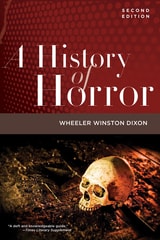
Ever since horror leapt from popular fiction to the silver screen in the late 1890s, viewers have experienced fear and pleasure in exquisite combination. Wheeler Winston Dixon's fully revised and updated A History of Horror is still the only book to offer a comprehensive survey of this ever-popular film genre.
Arranged by decades, with outliers and franchise films overlapping some years, this one-stop sourcebook unearths the historical origins of characters such as Dracula, Frankenstein, and the Wolfman and their various incarnations in film from the silent era to comedic sequels. In covering the last decade, this new edition includes coverage of the resurgence of the genre, covering the swath of new groundbreaking horror films directed by women, Black and queer horror films, and a new international wave in body horror films.
A History of Horror explores how the horror film fits into the Hollywood studio system, how the distribution and exhibition of horror films have changed in a post-COVID world, and how its enormous success in American and European culture expanded globally over time.
Dixon examines key periods in the horror film-in which the basic precepts of the genre were established, then banished into conveniently reliable and malleable forms, and then, after collapsing into parody, rose again and again to create new levels of intensity and menace. A History of Horror, supported by rare stills from classic films, brings over sixty timeless horror films into frightfully clear focus, zooms in on today's top horror Web sites, and champions the stars, directors, and subgenres that make the horror film so exciting and popular with contemporary audiences.
A Manual of Intensional Logic
2nd EditionJohan van Benthem
CSLI, 1988
American Legal English, 2nd Edition
Using Language in Legal ContextsDebra S. Lee, J.D., Charles Hall, and Susan M. Barone
University of Michigan Press, 2012
Law is a profession that requires the ability to read critically, write well, synthesize sources from research, and speak concisely and clearly. American Legal English was developed to help non-native speakers improve their ability to understand and communicate in English with their legal counterparts around the world. The text is an introduction to basic legal information and the U.S. legal system that addresses the major areas of law and provides actual cases and statutes so that students can become familiar with legal syntax and legal vocabulary.
Each chapter addresses a particular area of the law and has three parts:
- Discovering Connections is a warm-up activity that focuses on non-legal concepts that lead into a discussion of the law.
- Legal Listening and Legally Speaking offer the opportunity to practice new vocabulary terms before they are used in context later in the chapter.
- Legal Thumbnail provides a simplified summary of the law with actual statutory and case materials.
In the second edition, the language development activities have been moved to the back of the book and are organized in the categories of writing, reading, oral communication, grammar, and culture.
Supplemental listening activities (21 tracks) are available via an audio CD (978-0-472-00325-9) or MP3 download (978-0-472-00360-0) is available for use in conjunction with this textbook. Running time: 000:40:02.
Basics of Language for Language Learners, 2nd Edition
Peter W. Culicover and Elizabeth V. Hume
The Ohio State University Press, 2017
Learning a language involves so much more than just rote memorization of rules. Basics of Language for Language Learners, 2nd edition, by Peter W. Culicover and Elizabeth V. Hume, systematically explores all the aspects of language central to second language learning: the sounds of language, the different grammatical structures, the social functions of communication, and the psychology of language learning and use.
Unlike books specific to one single language, Basics of Language will help students of all languages. Readers will gain insight into the structure and use of their own language and will therefore see more clearly how the language they are learning differs from their first language. Language instructors will find the approach provocative, and the book will stimulate many new and effective ideas for teaching. Both a textbook and a reference work, Basics of Language will enhance the learning experience for anyone taking a foreign language course as well as the do-it-yourself learner.
A new section, “Tools and Strategies for Language Learning,” has been added to this second edition. It comprises three chapters that focus on brain training, memory and using a dictionary. In addition, the section “Thinking Like a Native Speaker” has been substantially updated to include more discussion of errors made by language learners.
Clear Grammar 2, 2nd Edition
Keys to Grammar for English Language LearnersKeith S. Folse
University of Michigan Press, 2012
Clear Grammaris a four-level grammar series that features a unique combination of useful grammar information written in clear language with activities that promote more accurate and fluent vocabulary usage, writing, speaking, and reading.
Important features of all four new editions of Clear Grammarinclude:
- More user-friendly charts to accompany grammar explanations
- High-frequency, corpus-based vocabulary related to each grammar point
- Grammar discovery tasks using students’ inductive learning skills
- A greater variety and increased number of activities, including more practice online
- Many more activities at the longer discourse level
- The addition of reading practice at the end of the unit, as well a critical-reading task
- More writing practice, including one on editing student writing and another for original student writing
- Two vocabulary practice activities, including a focus on collocations, in each unit, as well as many one-minute mini lessons showing the connection between grammar and vocabulary
- More speaking practice, with activities that require students to speak and listen to each other while using the target grammar
Support for teachers in the form of indicators that reference how to teach the grammar points in the Clear Grammar series from Keys to Teaching Grammar for English Language Learners by Keith S. Folse (978-0-472-03220-4).
Clear Grammar 2offers students and teachers a solid introduction to low-intermediate grammar.
Clear Grammar 2, 2nd Ed., includes
* Articles
* Past tense of irregular verbs
* Present perfect tense
* Adverbs of frequency
* Nouns used as adjectives
* Object pronouns
* Past progressive tense
* One and Other
* Possessives
*Comparatives and superlatives
*Modals
The book's companion website includes the additional grammar/vocabulary activities that are referenced in the textbook.
Clear Grammar 3, 2nd Edition
Keys to Grammar for English Language LearnersKeith S. Folse
University of Michigan Press, 2015
Clear Grammar 3 introduces high-intermediate grammar. Clear Grammar 3, 2nd Ed., includes
- phrasal verbs
- infinitives and gerunds
- participial adjectives: -ing and -ed
- prepositions after verbs, adjectives, and nouns
- passive voice
- adjective clauses
- adverbs
- connectors
- review of verb tenses
Clear Grammar 3 concludes with a review of this volume’s contents of high-intermediate grammar points.
Clear Grammar is a four-level grammar series that features a unique combination of useful grammar information written inclearlanguage with activities that promote more accurate and fluent writing, speaking, reading, and vocabulary usage. Important features of the new editions of Clear Grammar include:
- More user-friendly charts to accompany grammar explanations
- High-frequency, corpus-informed vocabulary related to each grammar point
- Grammar discovery tasks using students’ inductive learning skills
- A greater variety and more activities, including practice online (www.press.umich.edu/esl/compsite/cleargrammar/)
- Many more activities at the longer discourse level
- The addition of reading practice at the end, plus a critical-reading task
- More writing practice, including one on editing student writing and another for original student writing
- Two vocabulary practice activities per unit, with one on collocations; plus many one-minute lessons showing the connection between grammar and vocabulary
- More speaking practice, with activities that require students to speak and listen to each other while using the target grammar
- Support for teachers in the form of indicators that reference how to teach the grammar points in the Clear Grammar series from Keys to Teaching Grammar for English Language Learners by Keith S. Folse (978-0-472-03220-4).
Clear Grammar 4, 2nd Edition
Keys to Advanced ESL GrammarKeith S. Folse, Deborah Mitchell, Barbara Smith-Palinkas, and Donna Tortorella
University of Michigan Press, 2013
Clear Grammar 4 introduces advanced grammar. Clear Grammar 4, 2nd Ed., includes
- Subject-verb agreement
- Word forms
- Past perfect tense
- Conditionals
- Adverb clauses
- Noun clauses
- Reduction of adjective and adverb clauses (including appositives)
- Past modals
- Review of verb tenses
Clear Grammar 4 concludes with a review of this volume’s contents of advanced grammar points.
Clear Grammar is a four-level grammar series that features a unique combination of useful grammar information written in clear language with activities that promote more accurate and fluent writing, speaking, reading, and vocabulary usage. Important features of the new editions of Clear Grammar include:
- More user-friendly charts to accompany grammar explanations
- High-frequency, corpus-informed vocabulary related to each grammar point
- Grammar discovery tasks using students’ inductive learning skills
- A greater variety and more activities, including practice online (www.press.umich.edu/esl/compsite/cleargrammar/)
- Many more activities at the longer discourse level
- The addition of reading practice at the end, plus a critical-reading task
- More writing practice, including one on editing student writing and another for original student writing
- Two vocabulary practice activities per unit, with one on collocations; plus many one-minute lessons showing the connection between grammar and vocabulary
- More speaking practice, with activities that require students to speak and listen to each other while using the target grammar
- Support for teachers in the form of indicators that reference how to teach the grammar points in the Clear Grammar series from Keys to Teaching Grammar for English Language Learners by Keith S. Folse (978-0-472-03220-4).
Digging and Discovery, 2nd edition
Wisconsin ArchaeologyDiane Holliday
Wisconsin Historical Society Press, 2006
Eat Not This Flesh, 2nd Edition
Food Avoidances from Prehistory to the PresentFrederick J. Simoons
University of Wisconsin Press, 1994
Hailed as a classic when initially published in 1961, Eat Not This Flesh was the first book that explored, from a historical and cultural perspective, taboos against eating certain kinds of flesh. Frederick J. Simoons's research remains original and invaluable, the only attempt of its kind to reconstruct the origin and spread of food avoidances while challenging current Western explanations. In this expanded and updated edition, Simoons integrates new research as he examines the use and avoidance of flesh foods—including beef, pork, chicken, and eggs, camel, dog, horse, and fish—from antiquity to the present day.
Simoons suggests that Westerners are too ready, even in the absence of supporting evidence, to cite contemporary thinking about disease and environmental factors to explain why certain cultures avoid particular kinds of meat. He demonstrates how historical and archaeological evidence fails to support such explanations. He examines the origin of pork rejection in the Near East, explores the concept of the sacred cow in India and the ensuing ban on beef, and reveals how some African women abstain from chicken and eggs, fearing infertility.
While no single explanation exists for food taboos, Simoons finds that the powerful, recurrent theme of maintaining ritual purity, good health, and well-being underlies diet habits. He emphasizes that only a full range of factors can explain eating patterns, and he stresses the interplay of religious, moral, hygienic, ecological, and economic factors in the context of human culture. Maps, drawings, and photos highlighting food avoidance patterns in Africa, Asia, Europe, and the Pacific provide additional information throughout the book.
Encyclopedia of the Blues, 2nd Edition
Gerard Herzhaft
University of Arkansas Press, 1997
Everyone's Apocalypse
A Reflection Guide, 2nd EditionDonal A. McIlraith
Saint Paul Seminary Press, 2024

Financial Basics
A Money-Management Guide for Students, 2nd EditionSusan Knox
The Ohio State University Press, 2016
This 2nd edition updates changes in online banking, smartphone apps, credit cards, and student loans but retains basic financial information that ensures students won’t learn about money the hard way. A chapter for parents has been added so they can help their students become financially knowledgeable, and it includes advice for parents about making decisions related to college costs. In addition, a chapter for grandparents contains suggestions on how to help college-bound grandchildren—financially and in other ways—without endangering their own financial security. A basic investments chapter is included for first-time investors.
The intent of Financial Basics is to enhance student readers’ financial knowledge and provide money-management options for finding their own best way to become masters of their money.
Forgive and Remember
Managing Medical Failure, 2nd EditionCharles L. Bosk
University of Chicago Press, 2003

Getting It Published, 2nd Edition
A Guide for Scholars and Anyone Else Serious about Serious BooksWilliam Germano
University of Chicago Press, 2008
But a lot has changed in the past seven years. With the publishing world both more competitive and more confusing—especially given the increased availability of electronic resources—this second edition of Germano’s best-selling guide has arrived at just the right moment. As he writes in a new chapter, the “via electronica” now touches every aspect of writing and publishing. And although scholars now research, write, and gain tenure in a digital world, they must continue to ensure that their work meets the requirements of their institutions and the needs of their readers.

Learning from the Land
Wisconsin Land Use; 2nd EditionBobbie Malone
Wisconsin Historical Society Press, 2011
How has the landscape of Wisconsin affected its history? How have people living here changed that landscape over time? What are the implications for the future? The second edition of Learning from the Land addresses these and other questions, asking elementary and middle school readers to think about land use issues throughout Wisconsin's history. This revised edition includes expanded chapters on logging and the lumber industry, land use and planning, and agriculture in the 20th century from farmers' markets to organic farming. New profiles of Gaylord Nelson, pioneer of Earth Day, and Will Allen, founder of Growing Power in Milwaukee, round out this history of land use in Wisconsin.
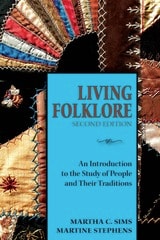
Living Folklore, 2nd Edition
An Introduction to the Study of People and Their TraditionsMartha Sims and Martine Stephens
Utah State University Press, 2011
Living Folklore is a comprehensive, straightforward introduction to folklore as it is lived, shared and practiced in contemporary settings. Drawing on examples from diverse American groups and experiences, this text gives the student a strong foundation—from the field's history and major terms to theories and interpretive approaches.
Living Folklore moves beyond genres and classifications, and encourages students who are new to the field to see the study of folklore as a unique approach to understanding people, communities, and day-to-day artistic communication.
This revised edition incorporates new examples, research, and theory along with added discussion of digital and online folklore.
Michigan Supreme Court Historical Reference Guide, 2nd Edition
David Chardavoyne
Michigan State University Press, 2015
Microwave and RF Design
A Systems Approach, 2nd EditionMichael Steer
The Institution of Engineering and Technology, 2013

Nevada
A History of the Silver State, 2nd editionMichael S. Green
University of Nevada Press, 2024
Michael S. Green, a leading Nevada historian, provides a detailed survey of the Silver State’s past, from the arrival of the early European explorers, to the predominance of mining in the 1800s, to the rise of world-class tourism in the twentieth century, and to more recent attempts to diversify the economy.
Of the numerous themes central to Green’s analysis of Nevada’s history, luck plays a significant role in the state’s growth. The miners and gamblers who first visited the state all bet on luck. Today, the biggest contributor to Nevada’s tourist economy, gaming, still relies on that same belief in luck. Nevada’s financial system has generally been based on a “one industry” economy, first mining and, more recently, gaming. Green delves deeply into the limitations of this structure, while also exploring the theme of exploitation of the land and the overuse of the state’s natural resources. Green covers many more aspects of the Silver State’s narrative, including the dominance of one region of the state over another, political forces and corruption, and the citizens’ often tumultuous relationship with the federal government. The book will appeal to scholars, students, and other readers interested in Nevada history.
Practical Guide to Syntactic Analysis, 2nd Edition
Georgia M. Green and Jerry L. Morgan
CSLI, 2001

Protection of Electricity Distribution Networks, 2nd Edition
Juan M. Gers
The Institution of Engineering and Technology, 2004
A properly coordinated protection system is vital to ensure that an electricity distribution network can operate within preset requirements for safety for individual items of equipment, staff and public, and the network overall. Suitable and reliable equipment should be installed on all circuits and electrical equipment and to do this, protective relays are used to initiate the isolation of faulted sections of a network in order to maintain supplies elsewhere on the system. This then leads to an improved electricity service with better continuity and quality of supply.
Reference and Reflexivity
2nd EditionJohn Perry
CSLI, 2012
Rescuing the Subject, 2nd Edition
A Critical Introduction to Rhetoric and the WriterSusan Miller. Foreword by Thomas P. Miller
Southern Illinois University Press, 2004
When it was first published in 1989, Susan Miller’s Rescuing the Subject: A Critical Introduction to Rhetoric and the Writer established a landmark pedagogical approach to composition based on the importance of the writer and the act of writing in the history of rhetoric. Widely used as an introduction to rhetoric and composition theory for graduate students, the volume was the first winner of the W. Ross Winterowd Award from JAC and is still one of the most frequently cited books in the field.
This first paperback edition includes a new introductory chapter in which Miller addresses changes in the field since the first edition, outlines new research, and surveys positions she no longer supports. A new foreword by Thomas P. Miller assesses the proven impact of Rescuing the Subject on the field of rhetoric and composition.
Situating modern composition theory in the historical context of rhetoric, Miller notes that throughout the eighteenth century, rhetoric referred to oral, not written, discourse. By contrast, her history of rhetoric contends oral and written discourse were related from the beginning. Taking a thematic rather than chronological approach, she shows how actual acts of writing comment on both rhetoric and composition.
Miller also asserts that contemporary composition study is the necessary cultural outcome of changing conditions for producing discourse, describing the history of rhetoric as the gradual and unstable relocation of discourse in conventions that only written language can create. She maintains teachers and historians of rhetoric must recognize that the contemporary writing they analyze and teach demands their attention to a “textual rhetoric” that allows theorizing the writer as always symbolically a student of situated meanings.
Syntactic Theory
A Formal Introduction, 2nd EditionIvan A. Sag, Thomas Wasow, and Emily M. Bender
CSLI, 2003
The book covers the core areas of English syntax from the last quarter century, including complementation, control, "raising constructions," passives, the auxiliary system, and the analysis of long distance dependency constructions. Syntactic Theory's step-by-step introduction to a consistent grammar in these core areas is complemented by extensive problem sets drawing from a variety of languages.
The book's theoretical perspective is presented in the context of current models of language processing, and the practical value of the constraint-based, lexicalist grammatical architecture proposed has already been demonstrated in computer language processing applications. This thoroughly reworked second edition includes revised and extended problem sets, updated analyses, additional examples, and more detailed exposition throughout.
Praise for the first edition:
"Syntactic Theory sets a new standard for introductory syntax volumes that all future books should be measured against."—Gert Webelhuth, Journal of Linguistics
The Craft of Research, 2nd edition
Wayne C. Booth, Gregory G. Colomb, and Joseph M. Williams
University of Chicago Press, 2003
Like its predecessor, this new edition reflects the way researchers actually work: in a complex circuit of thinking, writing, revising, and rethinking. It shows how each part of this process influences the others and how a successful research report is an orchestrated conversation between a researcher and a reader. Along with many other topics, The Craft of Research explains how to build an argument that motivates readers to accept a claim; how to anticipate the reservations of thoughtful yet critical readers and to respond to them appropriately; and how to create introductions and conclusions that answer that most demanding question, "So what?"
Celebrated by reviewers for its logic and clarity, this popular book retains its five-part structure. Part 1 provides an orientation to the research process and begins the discussion of what motivates researchers and their readers. Part 2 focuses on finding a topic, planning the project, and locating appropriate sources. This section is brought up to date with new information on the role of the Internet in research, including how to find and evaluate sources, avoid their misuse, and test their reliability.
Part 3 explains the art of making an argument and supporting it. The authors have extensively revised this section to present the structure of an argument in clearer and more accessible terms than in the first edition. New distinctions are made among reasons, evidence, and reports of evidence. The concepts of qualifications and rebuttals are recast as acknowledgment and response. Part 4 covers drafting and revising, and offers new information on the visual representation of data. Part 5 concludes the book with an updated discussion of the ethics of research, as well as an expanded bibliography that includes many electronic sources.
The new edition retains the accessibility, insights, and directness that have made The Craft of Research an indispensable guide for anyone doing research, from students in high school through advanced graduate study to businesspeople and government employees. The authors demonstrate convincingly that researching and reporting skills can be learned and used by all who undertake research projects.
New to this edition:
Extensive coverage of how to do research on the internet, including how to evaluate and test the reliability of sources
New information on the visual representation of data
Expanded bibliography with many electronic sources

The Drama Therapy Decision Tree, 2nd Edition
Connecting Drama Therapy Interventions to TreatmentEdited by Paige Dickinson and Sally Bailey
Intellect Books, 2024
The Drama Therapy Decision Tree unites therapy interventions with diagnostic information, individual and group processes, psychological distance, the drama therapy pie, and global outcomes. Rather than using a standardized protocol that makes the decisions for the therapist, drama therapy is based on dynamic, embodied, creative action with participants in the here and now. Conscious planning on the part of the drama therapist before the session supports spontaneity and creativity, preparing them to make good therapeutic decisions in the moment during the session.
The authors strive to provide a common language for communicating what drama therapists do and how they do it in order to demystify drama therapy for other mental health and medical professionals. Using the decision tree as a guide, early career drama therapists can move forward confidently and ground their work with participants in an integrated system.
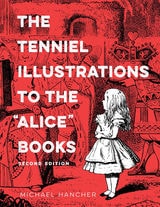
The Tenniel Illustrations to the “Alice” Books, 2nd edition
Michael Hancher
The Ohio State University Press, 2019
This new edition also pays special attention to the material circumstances that enabled and conditioned the printing of the illustrations. The original twelve chapters have been revised and updated throughout, drawing on archival and published resources made available in recent decades. Six chapters are entirely new, explaining how Tenniel’s drawings were professionally hand-engraved on wood blocks; how electrotype replicas were made from those blocks; and what problems could mar the commercial printing of such images—as notoriously happened in the first printing of Alice’s Adventures in Wonderland, which Carroll suppressed on Tenniel’s advice. Also considered for the first time here are the coloring of Tenniel’s black-and-white illustrations, by Tenniel and other artists, and the extraordinary treatment later given to Tenniel’s illustrations by the prestigious Limited Editions Club.
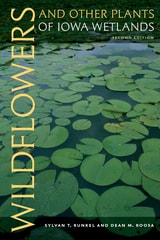
Wildflowers and Other Plants of Iowa Wetlands, 2nd edition
Sylvan T. Runkel, Dean M. Roosa, Thomas Rosburg
University of Iowa Press, 2015
In clear and accessible prose, authors Sylvan Runkel and Dean Roosa provide common, scientific, and family names; the Latin or Greek meaning of the scientific names; habitat and blooming times; and a complete description. Plants are presented by habitat (terrestrial or aquatic), then refined by habit (e.g., emergent, floating, or submerged) or taxonomic group (e.g., ferns and allies or trees, shrubs, and vines). Particularly interesting is the information on the many ways in which Native Americans and early pioneers used these plants for everything from pain relief to tonics to soup and the ways that wildlife today use them for food and shelter. Each of the more than 150 species accounts is accompanied by a brilliant full-page color photograph by botanist Thomas Rosburg, who has also updated the nomenclature and descriptions for certain species.
After decades of being considered an enemy of the settler, the farmer, and the citizen, Iowa’s wetlands have come into their own. We are finally caring for these important habitats. Runkel and Roosa’s updated field companion will be a valuable guide to today’s preservation and restoration initiatives.
Workbook for The ESL Writer's Handbook, 2nd Edition
Janine Carlock, Maeve Eberhardt, Jaime Horst, and Lionel Menasche
University of Michigan Press, 2018
The new edition of the Workbook includes 85 exercises to facilitate students’ understanding of some of the most complex or troublesome writing areas discussed in the Handbook. Exercises have been revised, and new exercises have been added to Sections 4 (Research Paper) and 5 (Grammar and Style).