Results by title
5 books match the query '600-1500'
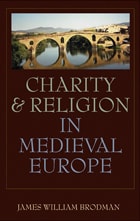
Charity and Religion in Medieval Europe
James William Brodman
Catholic University of America Press, 2009
Challenges conventional views of medieval piety by demonstrating how the ideology of charity and its vision of the active life provided an important alternative to the ascetical, contemplative tradition emphasized by most historians
[more]
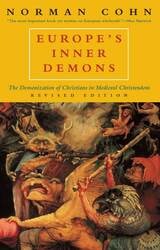
Europe's Inner Demons
The Demonization of Christians in Medieval ChristendomNorman Cohn
University of Chicago Press, 2000
Europe's Inner Demons is a fascinating history of the irrational need to imagine witches and an investigation of how those fantasies made the persecutions of the middle ages possible. In addition, Norman Cohn's discovery that some influential sources on European witch trials were forgeries has revolutionized the field of witchcraft, making this one of the most essential books ever written on the subject.
[more]
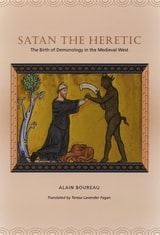
Satan the Heretic
The Birth of Demonology in the Medieval WestAlain Boureau
University of Chicago Press, 2006
Before the end of the thirteenth century, theologians had little interest in demons, but with Thomas Aquinas and his formidable “Treatise on Evil” in 1272, everything changed. In Satan the Heretic, Alain Boureau trains his skeptical eye not on Satan or Satanism, but on the birth of demonology and the sudden belief in the power of demons who inhabited Satan’s Court, setting out to understand not why people believed in demons, but why theologians—especially Pope John XXII—became so interested in the subject.
Depicting this new demonology, Satan the Heretic considers the period between the mid-thirteenth and mid-fourteenth centuries when demons, in the eyes of Church authorities, suddenly burst forth, more real and more terrifying than ever before in the history of Christianity. Boureau argues that the rise in this obsession with demons occurs at the crossroads of the rise of sovereignties and of the individual, a rise that, tellingly, also coincides with the emergence of the modern legal system in the European West.
Teeming with original insights and lively anecdotes, Satan the Heretic is a significant contribution to the history of Christian demonology from one of the most original minds in the field of medieval studies today.
[more]
The Hibernensis
Book 1: A Study and EditionRoy Flechner
Catholic University of America Press, 2019
The Hibernensis is the longest and most comprehensive canon-law text to have circulated in Carolingian Europe. Compiled in Ireland in the late seventh or early eighth century, it exerted a strong and long-lasting influence on the development of European canon law. The present edition offers—for the first time—a complete text of the Hibernensis combining the two main branches of its manuscript transmission. This is accompanied by an English translation and a commentary that is both historical and philological. The Hibernensis is an invaluable source for those interested in church history, the history of canon law, social-economic history, as well as intellectual history, and the history of the book.
Widely recognized as the single most important source for the history of the church in early medieval Ireland, the Hibernensis is also our best index for knowing what books were available in Ireland at the time of its compilation: it consists of excerpted material from the Bible, Church Fathers and doctors, hagiography, church histories, chronicles, wisdom texts, and insular normative material unattested elsewhere. This in addition to the staple sources of canonical collections, comprising the acta of church councils and papal letters. Altogether there are forty-two cited authors and 135 cited texts. But unlike previous canonical collections, the contents of the Hibernensis are not simply derivative: they have been modified and systematically organised, offering an important insight into the manner in which contemporary clerical scholars attempted to define, interpret, and codify law for the use of a growing Christian society.
Widely recognized as the single most important source for the history of the church in early medieval Ireland, the Hibernensis is also our best index for knowing what books were available in Ireland at the time of its compilation: it consists of excerpted material from the Bible, Church Fathers and doctors, hagiography, church histories, chronicles, wisdom texts, and insular normative material unattested elsewhere. This in addition to the staple sources of canonical collections, comprising the acta of church councils and papal letters. Altogether there are forty-two cited authors and 135 cited texts. But unlike previous canonical collections, the contents of the Hibernensis are not simply derivative: they have been modified and systematically organised, offering an important insight into the manner in which contemporary clerical scholars attempted to define, interpret, and codify law for the use of a growing Christian society.
[more]
The Hibernensis
Book 2: Translation, Commentary, and IndexesRoy Flechner
Catholic University of America Press, 2019
The Hibernensis is the longest and most comprehensive canon-law text to have circulated in Carolingian Europe. Compiled in Ireland in the late seventh or early eighth century, it exerted a strong and long-lasting influence on the development of European canon law. The present edition offers—for the first time—a complete text of the Hibernensis combining the two main branches of its manuscript transmission. This is accompanied by an English translation and a commentary that is both historical and philological. The Hibernensis is an invaluable source for those interested in church history, the history of canon law, social-economic history, as well as intellectual history, and the history of the book.
Widely recognized as the single most important source for the history of the church in early medieval Ireland, the Hibernensis is also our best index for knowing what books were available in Ireland at the time of its compilation: it consists of excerpted material from the Bible, Church Fathers and doctors, hagiography, church histories, chronicles, wisdom texts, and insular normative material unattested elsewhere. This in addition to the staple sources of canonical collections, comprising the acta of church councils and papal letters. Altogether there are forty-two cited authors and 135 cited texts. But unlike previous canonical collections, the contents of the Hibernensis are not simply derivative: they have been modified and systematically organised, offering an important insight into the manner in which contemporary clerical scholars attempted to define, interpret, and codify law for the use of a growing Christian society.
Widely recognized as the single most important source for the history of the church in early medieval Ireland, the Hibernensis is also our best index for knowing what books were available in Ireland at the time of its compilation: it consists of excerpted material from the Bible, Church Fathers and doctors, hagiography, church histories, chronicles, wisdom texts, and insular normative material unattested elsewhere. This in addition to the staple sources of canonical collections, comprising the acta of church councils and papal letters. Altogether there are forty-two cited authors and 135 cited texts. But unlike previous canonical collections, the contents of the Hibernensis are not simply derivative: they have been modified and systematically organised, offering an important insight into the manner in which contemporary clerical scholars attempted to define, interpret, and codify law for the use of a growing Christian society.
[more]