Results by title
9 books match the query '711-1516'
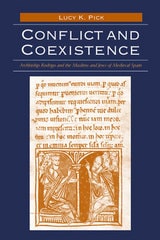
Conflict and Coexistence
Archbishop Rodrigo and the Muslims and Jews of Medieval SpainLucy K. Pick
University of Michigan Press, 2004
---J. N. Hillgarth, Professor Emeritus, University of Toronto
"By focusing on the diversified activities of the talented mid-thirteenth-century archbishop of Toledo, Lucy Pick brilliantly illuminates the complex relations between the Christian conquerors of Spain and the conquered Muslim and Jewish populations. Students of medieval Spain, of the medieval Roman Catholic Church, of medieval Muslims and Islam, and of medieval Jews and Judaism will benefit from this excellent study."
---Robert Chazan, New York University.
In Conflict and Coexistence, Lucy Pick sets out to explain how Christians, Muslims, and Jews lived alongside one another in medieval Spain. By examining the life and works of Rodrigo Jiménez de Rada, the Archbishop of Toledo (1209-47), Pick explains that the perceived threat of the non-Christian presence was managed through the subordination of Muslims and Jews.
Rodrigo stood at the center of a transformative period of history in the Iberian peninsula. During his long and varied career as archbishop, he acted as scholar, warrior, builder, and political leader. The wave of victories he helped initiate were instrumental in turning back the tide of Muslim attacks on Christian Spain and restarting the process of Christian territorial conquest. However, Toledo was still a multiethnic city in which Christians lived side by side with Jews and Muslims. As archbishop, he was faced with the considerable challenge of maintaining peace and prosperity in a city where religious passions and intolerance were a constant threat to stability.
This work seeks to examine Rodrigo's relations with the Muslims and Jews of his community both as he idealized them on paper and as he worked through them in real life. Though Rodrigo wrote an anti-Jewish polemic, and set out to conquer Muslim-held lands, he also used scholarly patronage and literary creation to combat internal and external, Christian and non-Christian threats alike. His intended and actual consequences of these varied techniques were to allow Christians, Muslims, and Jews to live together under Christian authority. Rodrigo was bound by practical necessity to find a means of accommodating these groups that was both effective and theologically satisfactory. Throughout this influential work, Pick examines the various aspects of Rodrigo's life and career that led to his policies and the consequences that his work and beliefs brought about in medieval Spain.
This book will be of interest to anyone who studies the history, religion, and literature of medieval Spain, to those interested in the transmission of learning from the Muslim to the Christian world, and to those who study intellectual life and development in medieval Europe.
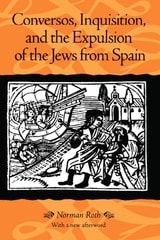
Conversos, Inquisition, and the Expulsion of the Jews from Spain
Norman Roth
University of Wisconsin Press, 2002
The Jewish community of medieval Spain was the largest and most important in the West for more than a thousand years, participating fully in cultural and political affairs with Muslim and Christian neighbors. This stable situation began to change in the 1390s, and through the next century hundreds of thousands of Jews converted to Christianity. Norman Roth argues here with detailed documentation that, contrary to popular myth, the conversos were sincere converts who hated (and were hated by) the remaining Jewish community. Roth examines in depth the reasons for the Inquisition against the conversos, and the eventual expulsion of all Jews from Spain.
“With scrupulous scholarship based on a profound knowledge of the Hebrew, Latin, and Spanish sources, Roth sets out to shatter all existing preconceptions about late medieval society in Spain.”—Henry Kamen, Journal of Ecclesiastical History
“Scholarly, detailed, researched, and innovative. . . . As the result of Roth’s writing, we shall need to rethink our knowledge and understanding of this period.”—Murray Levine, Jewish Spectator
“The fruit of many years of study, investigation, and reflection, guaranteed by the solid intellectual trajectory of its author, an expert in Jewish studies. . . . A contribution that will be particularly valuable for the study of Spanish medievalism.”—Miguel Angel Motis Dolader, Annuario de Estudios Medievales
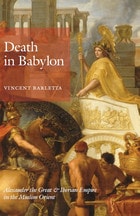
Death in Babylon
Alexander the Great and Iberian Empire in the Muslim OrientVincent Barletta
University of Chicago Press, 2010
Though Alexander the Great lived more than seventeen centuries before the onset of Iberian expansion into Muslim Africa and Asia, he loomed large in the literature of late medieval and early modern Portugal and Spain. Exploring little-studied chronicles, chivalric romances, novels, travelogues, and crypto-Muslim texts, Vincent Barletta shows that the story of Alexander not only sowed the seeds of Iberian empire but foreshadowed the decline of Portuguese and Spanish influence in the centuries to come.
Death in Babylon depicts Alexander as a complex symbol of Western domination, immortality, dissolution, heroism, villainy, and death. But Barletta also shows that texts ostensibly celebrating the conqueror were haunted by failure. Examining literary and historical works in Aljamiado, Castilian, Catalan, Greek, Latin, and Portuguese, Death in Babylon develops a view of empire and modernity informed by the ethical metaphysics of French phenomenologist Emmanuel Levinas. A novel contribution to the literature of empire building, Death in Babylon provides a frame for the deep mortal anxiety that has infused and given shape to the spread of imperial Europe from its very beginning.
Islamic Spain, 1250 to 1500
L. P. Harvey
University of Chicago Press, 1990
"Harvey not only examines the politics of the Nasrids, but also the Islamic communities in the Christian kingdoms of the peninsula. This innovative approach breaks new ground, enables the reader to appreciate the situation of all Spanish Muslims and is fully vindicated. . . . An absorbing and thoroughly informed narrative."—Richard Hitchcock, Times Higher Education Supplement
"L. P. Harvey has produced a beautifully written account of an enthralling subject."—Peter Linehan, The Observer
Jews, Christian Society, and Royal Power in Medieval Barcelona
Elka Klein
University of Michigan Press, 2006
Jews, Christian Society, and Royal Power in Medieval Barcelona traces the development of the Jewish community of Barcelona from 1050 to 1300. Elka Klein challenges the common perception that medieval Jews lived in relative isolation from the surrounding society, argues for the existence of significant cultural common ground between Jews and Christians, and proposes a new model for understanding Jewish communal autonomy and the relationship between Jews and their rulers.
Klein traces the development of the Jewish community of Barcelona in two contexts: the parallel development of the city of Barcelona and the changing relationship of the king to urban communities, Jewish and Christian. Until the later twelfth century, the Jewish community, like the Christian city of Barcelona, was left mostly to its own devices by the counts of Barcelona, who had neither the interest nor the power to interfere in internal affairs. Klein draws on both Hebrew and Latin sources to offer a picture of a communal elite whose power, mostly informal, derived from their influence within the community. This system changed in the later twelfth century as a result of the expansion of comitial-royal administration. Four Jewish families used their positions as bailiffs, accountants, and secretaries to consolidate power within their community. The rule of this courtier elite was short lived; two episodes of communal conflict in the early thirteenth century and increased royal activism led to the institution of a new regime of elected officials in 1241. The book concludes with an examination of the new elite and the implications of increased royal interference in internal affairs.
A central argument of Jews, Christian Society, and Royal Power in Medieval Barcelona is that it is necessary to distinguish between autonomy by default, resulting from the indifference of the ruler, who leaves a community to govern itself; and autonomy by design, guaranteed by selective royal interference. Against the view that royal interference undercut Jewish autonomy, Klein argues that autonomy by default left the community with insufficient power to enforce its decisions; because Catalan kings generally interfered in support of existing structures, autonomy by design in fact strengthened the community.
This book contributes to ongoing debates about the relationship between the cultures of the three religions in the Iberian peninsula. It joins a body of recent scholarship arguing that medieval European Jews and Christians shared considerable cultural common ground.
Knowing an Empire
Early Modern Chinese and Spanish Worlds in DialogueEdited by Mackenzie Cooley and Huiyi Wu
Lever Press, 2025
2026 NECLAS D. Scott Palmer Best Edited Book Prize Honorable Mention
Knowing an Empire: Early Modern Chinese and Spanish Worlds in Dialogue unveils how these two vast empires, separated by thousands of miles, developed comparable systems to gather, order, and wield knowledge about their local worlds in the process of empire-building. From the sixteenth to the eighteenth centuries, officials in both empires compiled large quantities of structured data on the climate, topography, natural products, languages, religions, and more of their locales, creating a vision of their empires as diverse yet unified. Through a new methodology of “juxtapositional comparison,” the book reads the difangzhi 地方志 (local gazetteers) of China and the relaciones geográficas of the Spanish world in parallel.
Knowing an Empire does not see the conveyance of information across an empire as a top-down process with an active center as a knowledge-maker. Instead, it amplifies a blend of voices that speak as much to imperial bureaucracy as to the rich local and Indigenous cultures, revealing these two early modern empires as diverse polities whose equilibria were constantly rebalanced among local powers. Comprised of 18 chapters, this edited collection reflects on the historical evolution and inner structures of the imperial epistemologies, as well as the many ways historians today read difangzhi and relaciones geográficas to understand the spatial, natural, and social order in both the Chinese and the Spanish empires. At once a comparative and a connected history, it places Chinese and Spanish imperial knowledge in the globalizing early modern world, highlighting the migration of people, goods, and ideas and revealing how these wide-ranging influences are reflected—or not—in the difangzhi and the relaciones. The book concludes by broadening our scope beyond China and Spain to reflect how other early modern empires, such as the Portuguese, failed to develop such systematized imperial genres.
With contributions from leading scholars across Latin American and Asian Studies, this book synthesizes political, environmental, and socio-economic history with historical anthropology to highlight parallel governance and knowledge structures. The contributors challenge conventional binaries of Western versus Eastern, and colonial versus non-colonial, presenting a nuanced perspective of early modern empires as dynamic, interconnected entities through the shared challenges of scale, diversity, and increasing globalization. Through these dialogues, Knowing an Empire illuminates the complex entanglement of ruling and understanding. This groundbreaking collection offers a highly innovative and dialogic approach to comparative studies of empires, with major implications for Asian, European, Latin American, transnational, and global history.
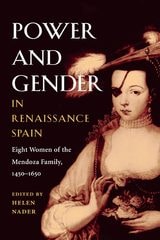
Power and Gender in Renaissance Spain
Eight Women of the Mendoza Family, 1450-1650Edited by Helen Nader
University of Illinois Press, 2003
These essays explore the lives of powerful women whose lineage gave them status within a patriarchal society designed to keep women from public life. Each of the influential and literary women discussed in this volume handled her status differently, and their concerns were not dissimilar from the concerns of feminists today: the blurring of the personal and the political, public versus private space, language and voice, and property.
Spanning the two centuries between Juana Pimentel, a widow who manipulated the patronage system to her own ends, and Luisa de Carvajal y Mendoza, who rejected both convent and marriage in favor of missionary work, Power and Gender in Renaissance Spain reveals a complex society in which women were limited by law, and yet their social status made those laws negotiable.
These women found that their personal agendas had a broad societal impact, challenging the laws of the land and patriarchal assumptions about women's inferiority.
The Most Noble of People
Religious, Ethnic, and Gender Identity in Muslim SpainJessica A. Coope
University of Michigan Press, 2017
The opening chapters define Arab and Muslim identity as those categories were understood in Muslim Spain, highlighting the unique aspects of this society as well as its similarities with other parts of the medieval Islamic world. The book goes on to discuss what it meant to be a Jew or Christian in Spain under Islamic rule, and the degree to which non-Muslims were full participants in society. Following this is a consideration of gender identity as defined by Islamic law and by less normative sources like literature and mystical texts. It concludes by focusing on internal rebellions against the government of Muslim Spain, particularly the conflicts between Muslims who were ethnically Arab and those who were Berber or native Iberian, pointing to the limits of Muslim solidarity.
Drawn from an unusually broad array of sources—including legal texts, religious polemic, chronicles, mystical texts, prose literature, and poetry, in both Arabic and Latin—many of Coope’s illustrations of life in al-Andalus also reflect something of the larger medieval world. Further, some key questions about gender, ethnicity, and religious identity that concerned people in Muslim Spain—for example, women’s status under Islamic law, or what it means to be a Muslim in different contexts and societies around the world—remain relevant today.
The Spacious Word
Cartography, Literature, and Empire in Early Modern SpainRicardo Padrón
University of Chicago Press, 2004
Padrón contends too that maps and geographic writings heavily influenced the Spanish imperial imagination. During the early modern period, the idea of "America" was still something being invented in the minds of Europeans. Maps of the New World, letters from explorers of indigenous civilizations, and poems dramatizing the conquest of distant lands, then, helped Spain to redefine itself both geographically and imaginatively as an Atlantic and even global empire. In turn, such literature had a profound influence on Spanish ideas of nationhood, most significantly its own.
Elegantly conceived and meticulously researched, The Spacious Word will be of enormous interest to historians of Spain, early modern literature, and cartography.