Results by title

11 books match the query '9 11'
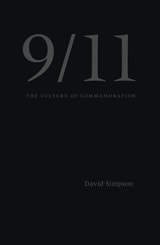
cover of 9/11: The Culture of Commemoration

9/11

The Culture of Commemoration

David Simpson

University of Chicago Press, 2006

After the terrorist attacks of September 11, 2001, a general sense that the world was different—that nothing would ever be the same—settled upon a grieving nation; the events of that day were received as cataclysmic disruptions of an ordered world. Refuting this claim, David Simpson examines the complex and paradoxical character of American public discourse since that September morning, considering the ways the event has been aestheticized, exploited, and appropriated,  while “Ground Zero” remains the contested site of an effort at adequate commemoration. 

In 9/11, Simpson argues that elements of the conventional culture of mourning and remembrance—grieving the dead, summarizing their lives in obituaries, and erecting monuments in their memory—have been co-opted for political advantage. He also confronts those who labeled the event an “apocalypse,” condemning their exploitation of 9/11 for the defense of torture and war. 

In four elegant chapters—two of which expand on essays originally published in the London Review of Books to great acclaim—Simpson analyzes the response to 9/11: the nationally syndicated “Portraits of Grief” obituaries in the New York Times; the debates over the rebuilding of the World Trade Center towers and the memorial design; the representation of American and Iraqi dead after the invasion of March 2003, along with the worldwide circulation of the Abu Ghraib torture photographs; and the urgent and largely ignored critique of homeland rhetoric from the domain of critical theory. 

Calling for a sustained cultural and theoretical analysis, 9/11 is the first book of its kind to consider the events of that tragic day with a perspective so firmly grounded in the humanities and so persuasive about the contribution they can make to our understanding of its consequences.
[more]
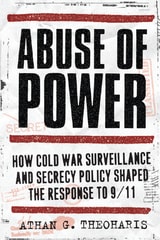
cover of Abuse of Power: How Cold War Surveillance and Secrecy Policy Shaped the Response to 9/11

Abuse of Power

How Cold War Surveillance and Secrecy Policy Shaped the Response to 9/11

Authored by Athan Theoharis

Temple University Press, 2011

Athan Theoharis, long a respected authority on surveillance and secrecy, established his reputation for meticulous scholarship with his work on the loyalty security program developed under Truman and McCarthy. In Abuse of Power, Theoharis continues his investigation of U.S. government surveillance and historicizes the 9/11 response.

Criticizing the U.S. government's secret activities and policies during periods of "unprecedented crisis," he recounts how presidents and FBI officials exploited concerns about foreign-based internal security threats.

Drawing on information sequestered until recently in FBI records, Theoharis shows how these secret activities in the World War II and Cold War eras expanded FBI surveillance powers and, in the process, eroded civil liberties without substantially advancing legitimate security interests.

Passionately argued, this timely book speaks to the costs and consequences of still-secret post-9/11 surveillance programs and counterintelligence failures. Ultimately, Abuse of Power makes the case that the abusive surveillance policies of the Cold War years were repeated in the government's responses to the September 11 attacks.
[more]
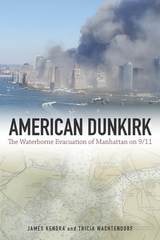
cover of American Dunkirk: The Waterborne Evacuation of Manhattan on 9/11

American Dunkirk

The Waterborne Evacuation of Manhattan on 9/11

James M Kendra

Temple University Press, 2016

When the terrorist attacks struck New York City on September 11, 2001, boat operators and waterfront workers quickly realized that they had the skills, the equipment, and the opportunity to take definite, immediate action in responding to the most significant destructive event in the United States in decades. For many of them, they were “doing what needed to be done.”

American Dunkirk shows how people, many of whom were volunteers, mobilized rescue efforts in various improvised and spontaneous ways on that fateful date. Disaster experts James Kendra and Tricia Wachtendorf examine the efforts through fieldwork and interviews with many of the participants to understand the evacuation and its larger implications for the entire practice of disaster management.

The authors ultimately explore how people—as individuals, groups, and formal organizations—pull together to respond to and recover from startling, destructive events. American Dunkirk asks, What can these people and lessons teach us about not only surviving but thriving in the face of calamity?
[more]
cover of Angry Public Rhetorics: Global Relations and Emotion in the Wake of 9/11

Angry Public Rhetorics

Global Relations and Emotion in the Wake of 9/11

Celeste Michelle Condit

University of Michigan Press, 2018

In Angry Public Rhetorics, Celeste Condit explores emotions as motivators and organizers of collective action—a theory that treats humans as “symbol-using animals” to understand the patterns of leadership in global affairs—to account for the way in which anger produced similar rhetorics in three ideologically diverse voices surrounding 9/11: Osama bin Laden, President George W. Bush, and Susan Sontag.

These voices show that anger is more effective for producing some collective actions, such as rallying supporters, reifying existing worldviews, motivating attack, enforcing shared norms, or threatening from positions of power; and less effective for others, like broadening thought, attracting new allies, adjudicating justice across cultural norms, or threatening from positions of weakness. Because social anger requires shared norms, collectivized anger cannot serve social justice. In order for anger to be a force for global justice, the world’s peoples must develop shared norms to direct discussion of international relations. Angry Public Rhetorics provides guidance for such public forums.
[more]
cover of Cloning Terror: The War of Images, 9/11 to the Present

Cloning Terror

The War of Images, 9/11 to the Present

W. J. T. Mitchell

University of Chicago Press, 2010

The  phrase “War on Terror” has quietly been retired from official usage, but it persists in the American psyche, and our understanding of it is hardly complete. Nor will it be, W. J. T Mitchell argues, without a grasp of the images that it spawned, and that spawned it.

Exploring the role of verbal and visual images in the War on Terror, Mitchell finds a conflict whose shaky metaphoric and imaginary conception has created its own reality. At the same time, Mitchell locates in the concept of clones and cloning an anxiety about new forms of image-making that has amplified the political effects of the War on Terror. Cloning and terror, he argues, share an uncanny structural resemblance, shuttling back and forth between imaginary and real, metaphoric and literal manifestations. In Mitchell’s startling analysis, cloning terror emerges as the inevitable metaphor for the way in which the War on Terror has not only helped recruit more fighters to the jihadist cause but undermined the American constitution with “faith-based” foreign and domestic policies.

Bringing together the hooded prisoners of Abu Ghraib with the cloned stormtroopers of the Star Wars saga, Mitchell draws attention to the figures of faceless anonymity that stalk the ever-shifting and unlocatable “fronts” of the War on Terror. A striking new investigation of the role of images from our foremost scholar of iconology, Cloning Terror will expand our understanding of the visual legacy of a new kind of war and reframe our understanding of contemporary biopower and biopolitics.

[more]
cover of Frustrated Empire: US Foreign Policy, 9/11 to Iraq

Frustrated Empire

US Foreign Policy, 9/11 to Iraq

David Ryan

Pluto Press, 2007

David Ryan examines the broad contexts of US foreign policy and the lingering aftermath of the Vietnam War that shaped the opportunistic framing of 9/11 and paved the way for the long-held neo-conservative desire for regime change and war in Iraq.
He explores the construction of the cultural framework for war following 9/11, the legitimacy of military force in Afghanistan, the rise of anti-Americanism, within the broader contexts of the struggle over legitimacy, identity and leadership.
Turning the "clash of civilizations" thesis on its head, Ryan presents a careful analysis of the evolution of US foreign policy and its engagement with Iraq through the 1980s. While 9/11 provided the opportunity, the post-Vietnam context provides a more pertinent framework for this reflection on the Gulf War, the Iraq War and the strategic implications for US foreign policy.
[more]
cover of History And 9/11

History And 9/11

Joanne Meyerowitz

Temple University Press, 2003
The contributors to this landmark collection set the attacks on the United States in historical perspective. They reject the simplistic notion of an age-old "clash of civilizations" and instead examine the particular histories of American nationalism, anti-Americanism, U.S. foreign policy, and Islamic fundamentalism among other topics. With renewed attention to Americans' sense of national identity, they focus on the United States in relation to the rest of the world. A collection of recent and historical documents—speeches, articles, and book excerpts—supplement the essays. Taken together, the essays and sources in this volume comment on the dangers of seeing the events of September 11 as splitting the nation's history into "before" and "after." They argue eloquently that no useful understanding of the present is possible without an unobstructed view of the past.
[more]
cover of Resilient City: The Economic Impact of 9/11

Resilient City

The Economic Impact of 9/11

Howard Chernick

Russell Sage Foundation, 2005

The strike against the World Trade Center on September 11, 2001, was a violent blow against the United States and a symbolic attack on capitalism and commerce. It shut down one of the world's busiest commercial centers for weeks, destroyed or damaged billions of dollars worth of property, and forced many New York City employers to slash their payrolls or move jobs to other areas. The immediate economic effect was substantial, but how badly did 9/11 affect New York City's economy in the longer term? In Resilient City, Howard Chernick and a team of economic experts examine the city's economic recovery in the three years following the destruction of the Twin Towers. Assessing multiple facets of the New York City economy in the years after 9/11, Resilient City discerns many hopeful signs among persistent troubles. Analysis by economist Sanders Korenman indicates that the value of New York–based companies did not fall relative to other firms, indicating that investors still believe that there are business advantages to operating in New York despite higher rates of terrorism insurance and concerns about future attacks. Cordelia Reimers separates the economic effect of 9/11 from the effects of the 2001 recession by comparing employment and wage trends for disadvantaged workers in New York with those in five major U.S. cities. She finds that New Yorkers fared at least as well as people in other cities, suggesting that the decline in earnings and employment for low-income New York workers in 2002 was due more to the recession than to the effects of 9/11. Still, troubles remain for New York City. Howard Chernick considers the substantial fiscal implications of the terrorist attacks on New York City, estimating that the attack cost the city about $3 billion in the first two years alone; a sum that the city now must make up through large tax increases, spending cuts, and substantial additional borrowing, which will inevitably be a burden on future budgets. The terrorist attacks of September 11 dealt a severe blow to the economy of New York City, but it was far from a knock-out punch. Resilient City shows that New York's dynamic, flexible economy has absorbed the hardships inflicted by the attacks, and provides a thorough, authoritative A Russell Sage Foundation September 11 Initiative Volume
[more]
cover of The Ground Below Zero: 9/11 to Burning Man, New Orleans to Darfur, Haiti to Occupy Wall Street

The Ground Below Zero

9/11 to Burning Man, New Orleans to Darfur, Haiti to Occupy Wall Street

Nicholas Powers

UpSet Press, 0

[more]
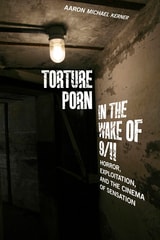
cover of Torture Porn in the Wake of 9/11: Horror, Exploitation, and the Cinema of Sensation

Torture Porn in the Wake of 9/11

Horror, Exploitation, and the Cinema of Sensation

Aaron Michael Kerner

Rutgers University Press, 2015
Saw, Hostel, The Devil’s Rejects: this wave of horror movies has been classed under the disparaging label “torture porn.” Since David Edelstein coined the term for a New York magazine article a few years after 9/11, many critics have speculated that these movies simply reflect iconic images, anxieties, and sadistic fantasies that have emerged from the War on Terror. In this timely new study, Aaron Kerner challenges that interpretation, arguing that “torture porn” must be understood in a much broader context, as part of a phenomenon that spans multiple media genres and is rooted in a long tradition of American violence. 
 
Torture Porn in the Wake of 9/11 tackles a series of tough philosophical, historical, and aesthetic questions: What does it mean to call a film “sadistic,” and how has this term been used to shut down critical debate? In what sense does torture porn respond to current events, and in what ways does it draw from much older tropes? How has torture porn been influenced by earlier horror film cycles, from slasher movies to J-horror? And in what ways has the torture porn aesthetic gone mainstream, popping up in everything from the television thriller Dexter to the reality show Hell’s Kitchen? 
 
Reflecting a deep knowledge and appreciation for the genre, Torture Porn in the Wake of 9/11 is sure to resonate with horror fans. Yet Kerner’s arguments should also strike a chord in anyone with an interest in the history of American violence and its current and future ramifications for the War on Terror. 


[more]
cover of Wounded City: The Social Impact of 9/11 on New York City

Wounded City

The Social Impact of 9/11 on New York City

Nancy Foner

Russell Sage Foundation, 2005

New York has eight million deeply personal and unique stories of pain and perseverance from September 11, 2001. But the toll of tragedy is greater than the anguish it inflicts on individuals—communities suffer as well. In Wounded City, editor Nancy Foner brings together an accomplished group of scholars to document how a broad range of communities—residential, occupational, ethnic, and civic—were affected and changed by the World Trade Center attacks. Using survey data and in-depth ethnographies, the book offers sophisticated analysis and gives voice to the human experiences behind the summary statistics, revealing how the nature of these communities shaped their response to the disaster. Sociologists Philip Kasinitz, Gregory Smithsimon, and Binh Pok highlight the importance of physical space in the recovery process by comparing life after 9/11 in two neighborhoods close to ground zero—Tribeca, which is nestled close to the city's downtown, and Battery Park City, which is geographically and structurally separated from other sections of the city. Melanie Hildebrandt looks at how social solidarity changed in a predominantly Irish, middle class community that was struck twice with tragedy: the loss of many residents on 9/11 and a deadly plane crash two months later. Jennifer Bryan shows that in the face of hostility and hate crimes, many Arab Muslims in Jersey City stressed their adherence to traditional Islam. Contributor Karen Seeley interviews psychotherapists who faced the challenge of trying to help patients deal with a tragedy that they themselves were profoundly affected by. Economist Daniel Beunza and sociologist David Stark paint a picture of organizational resilience as they detail how securities traders weathered successive crises after evacuating their downtown office and moving temporarily to New Jersey. Francesca Polletta and Lesley Wood look at a hopeful side of a horrible tragedy: civic involvement in town meetings and public deliberations to discuss what should be done to rebuild at ground zero and help New Yorkers create a better future in the footprints of disaster. New Yorkers suffered tremendous losses on September 11, 2001: thousands of lives, billions of dollars, the symbols of their skyline, and their peace of mind. But not lost in the rubble of the World Trade Center were the residential, ethnic, occupational, and organizational communities that make up New York's rich mosaic. Wounded City gives voice to some of those communities, showing how they dealt with unforeseen circumstances that created or deepened divisions, yet at the same brought them together in suffering and hope. It is a unique look at the aftermath of a devastating day and the vitality of a diverse city. A Russell Sage Foundation September 11 Initiative Volume
[more]