Results by title

8 books match the query 'AIDS activists'
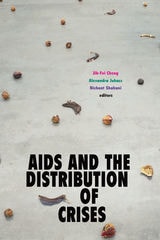
cover of AIDS and the Distribution of Crises

AIDS and the Distribution of Crises

Jih-Fei Cheng, Alexandra Juhasz, and Nishant Shahani, editors

Duke University Press, 2020

AIDS and the Distribution of Crises engages with the AIDS pandemic as a network of varied historical, overlapping, and ongoing crises born of global capitalism and colonial, racialized, gendered, and sexual violence. Drawing on their investments in activism, media, anticolonialism, feminism, and queer and trans of color critiques, the scholars, activists, and artists in this volume outline how the neoliberal logic of “crisis” structures how AIDS is aesthetically, institutionally, and politically reproduced and experienced. Among other topics, the authors examine the writing of the history of AIDS; settler colonial narratives and laws impacting risk in Indigenous communities; the early internet regulation of both content and online AIDS activism; the Black gendered and sexual politics of pleasure, desire, and (in)visibility; and how persistent attention to white men has shaped AIDS as intrinsic to multiple, unremarkable crises among people of color and in the Global South.

Contributors. Cecilia Aldarondo, Pablo Alvarez, Marlon M. Bailey, Emily Bass, Darius Bost, Ian Bradley-Perrin, Jih-Fei Cheng, Bishnupriya Ghosh, Roger Hallas, Pato Hebert, Jim Hubbard, Andrew J. Jolivette, Julia S. Jordan-Zachery, Alexandra Juhasz, Dredge Byung'chu Kang-Nguyễn, Theodore (Ted) Kerr, Catherine Yuk-ping Lo, Cait McKinney, Viviane Namaste, Elton Naswood, Cindy Patton, Margaret Rhee, Juana María Rodríguez, Sarah Schulman, Nishant Shahani, C. Riley Snorton, Eric A. Stanley, Jessica Whitbread, Quito Ziegler
[more]
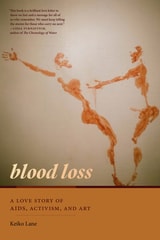
cover of Blood Loss: A Love Story of AIDS, Activism, and Art

Blood Loss

A Love Story of AIDS, Activism, and Art

Keiko Lane

Duke University Press, 2024

In 1991, sixteen-year-old activist Keiko Lane joined the Los Angeles chapters of Queer Nation and ACT UP. Their members protested legislation aimed at dismantling rights for LGBTQ people, people living with HIV, and immigrants while fighting for needle-exchange programs, reproductive justice, safer-sex education, hospice funding, and the right to die with dignity. At the same time, the activists were a queer chosen family of friends and lovers who took care of one another in sickness and in health. Sometimes they helped each other die. By the time Lane turned twenty-two, most had died of AIDS. In her evocative memoir, Lane weaves together love stories and afterlives of queer resistance and survival against the landscape of the Rodney King Rebellion, the movement for queer rights, and the censorship of queer artists and sexualities. Lane interrogates the social construction of power against and in queer communities of color and the recovery of sexual agency in the midst and aftermath of violence. Luminous and powerfully moving, Blood Loss explores survival after those we love have died.
[more]
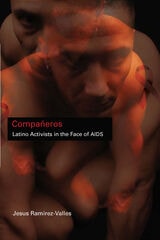
cover of Compañeros: Latino Activists in the Face of AIDS

Compañeros

Latino Activists in the Face of AIDS

Jesus Ramirez-Valles

University of Illinois Press, 2011

 
Telling the affecting stories of eighty gay, bisexual, and transgender (GBT) Latino activists and volunteers living in Chicago and San Francisco, Compañeros: Latino Activists in the Face of AIDS closely details how these individuals have been touched or transformed by the AIDS epidemic. Weaving together activists' responses to oppression and stigma, their encounters with AIDS, and their experiences as GBTs and Latinos in North America and Latin America, Jesus Ramirez-Valles explores the intersection of civic involvement with ethnic and sexual identity. Even as activists battle multiple sources of oppression, they are able to restore their sense of family connection and self-esteem through the creation of an alternative space in which community members find value in their relationships with one another. In demonstrating the transformative effects of a nurturing community environment for GBT Latinos affected by the AIDS epidemic, Ramirez-Valles illustrates that members find support in one another, as compañeros, in their struggles with homophobia, gender discrimination, racism, poverty, and forced migration.
[more]
cover of Erotic Islands: Art and Activism in the Queer Caribbean

Erotic Islands

Art and Activism in the Queer Caribbean

Lyndon K. Gill

Duke University Press, 2018

In Erotic Islands, Lyndon K. Gill maps a long queer presence at a crossroads of the Caribbean. This transdisciplinary book foregrounds the queer histories of Carnival, calypso, and HIV/AIDS in the Republic of Trinidad and Tobago. At its heart is an extension of Audre Lorde's use of the erotic as theory and methodology. Gill turns to lesbian/gay artistry and activism to insist on eros as an intertwined political-sensual-spiritual lens through which to see self and society more clearly. This analysis juxtaposes revered musician Calypso Rose, renowned mas man Peter Minshall, and resilient HIV/AIDS organization Friends For Life. Erotic Islands traverses black studies, queer studies, and anthropology toward an emergent black queer diaspora studies.
[more]
cover of Exile within Exiles: Herbert Daniel, Gay Brazilian Revolutionary

Exile within Exiles

Herbert Daniel, Gay Brazilian Revolutionary

James N. Green

Duke University Press, 2018

Herbert Daniel was a significant and complex figure in Brazilian leftist revolutionary politics and social activism from the mid-1960s until his death in 1992. As a medical student, he joined a revolutionary guerrilla organization but was forced to conceal his sexual identity from his comrades, a situation Daniel described as internal exile. After a government crackdown, he spent much of the 1970s in Europe, where his political self-education continued. He returned to Brazil in 1981, becoming engaged in electoral politics and social activism to champion gay rights, feminism, and environmental justice, achieving global recognition for fighting discrimination against those with HIV/AIDS. In Exile within Exiles, James N. Green paints a full and dynamic portrait of Daniel's deep commitment to leftist politics, using Daniel's personal and political experiences to investigate the opposition to Brazil's military dictatorship, the left's construction of a revolutionary masculinity, and the challenge that the transition to democracy posed to radical movements. Green positions Daniel as a vital bridge linking former revolutionaries to the new social movements, engendering productive dialogue between divergent perspectives in his writings and activism.
[more]
cover of Moving Politics: Emotion and ACT UP's Fight against AIDS

Moving Politics

Emotion and ACT UP's Fight against AIDS

Deborah B. Gould

University of Chicago Press, 2009

In the late 1980s, after a decade spent engaged in more routine interest-group politics, thousands of lesbians and gay men responded to the AIDS crisis by defiantly and dramatically taking to the streets. But by the early 1990s, the organization they founded, ACT UP, was no more—even as the AIDS epidemic raged on. Weaving together interviews with activists, extensive research, and reflections on the author’s time as a member of the organization, Moving Politics is the first book to chronicle the rise and fall of ACT UP, highlighting a key factor in its trajectory: emotion.

Surprisingly overlooked by many scholars of social movements, emotion, Gould argues, plays a fundamental role in political activism. From anger to hope, pride to shame, and solidarity to despair, feelings played a significant part in ACT UP’s provocative style of protest, which included raucous demonstrations, die-ins, and other kinds of street theater. Detailing the movement’s public triumphs and private setbacks, Moving Politics is the definitive account of ACT UP’s origin, development, and decline as well as a searching look at the role of emotion in contentious politics.

[more]
cover of The Pox Lover: An Activist's Decade in New York and Paris

The Pox Lover

An Activist's Decade in New York and Paris

Anne-christine d'Adesky

University of Wisconsin Press, 2017

The Pox Lover is a personal history of the turbulent 1990s in New York City and Paris by a pioneering American AIDS journalist, lesbian activist, and daughter of French-Haitian elites. In an account that is by turns searing, hectic, and funny, Anne-christine d'Adesky remembers "the poxed generation" of AIDS—their lives, their battles, and their determination to find love and make art in the heartbreaking years before lifesaving protease drugs arrived.

D'Adesky takes us through a fast-changing East Village: squatter protests and civil disobedience lead to all-night drag and art-dance parties, the fun-loving Lesbian Avengers organize dyke marches, and the protest group ACT UP stages public funerals. Traveling as a journalist to Paris, an insomniac d'Adesky trolls the Seine, encountering waves of exiles fleeing violence in the Balkans, Haiti, and Rwanda. As the last of the French Nazis stand trial and the new National Front rises in the polls, d'Adesky digs into her aristocratic family's roots in Vichy France and colonial Haiti. This is a testament with a message for every generation: grab at life and love, connect with others, fight for justice, keep despair at bay, and remember.
[more]
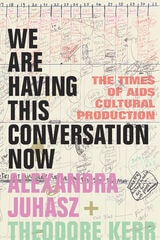
cover of We Are Having This Conversation Now: The Times of AIDS Cultural Production

We Are Having This Conversation Now

The Times of AIDS Cultural Production

Alexandra Juhasz and Theodore Kerr

Duke University Press, 2022

We Are Having This Conversation Now offers a history, present, and future of AIDS through thirteen short conversations between Alexandra Juhasz and Theodore Kerr, scholars deeply embedded in HIV responses. They establish multiple timelines of the epidemic, offering six foundational periodizations of AIDS culture, tracing how attention to the crisis has waxed and waned from the 1980s to the present. They begin the book with a 1990 educational video produced by a Black health collective, using it to consider organizing intersectionally, theories of videotape, empowerment movements, and memorialization. This video is one of many powerful yet overlooked objects that the pair focus on through conversation to understand HIV across time. Along the way, they share their own artwork, activism, and stories of the epidemic. Their conversations illuminate the vital role personal experience, community, cultural production, and connection play in the creation of AIDS-related knowledge, archives, and social change. Throughout, Juhasz and Kerr invite readers to reflect and find ways to engage in their own AIDS-related culture and conversation.
[more]