Results by title

5 books match the query 'Abel, Emily K.'
cover of Prelude to Hospice: Florence Wald, Dying People, and their Families

Prelude to Hospice

Florence Wald, Dying People, and their Families

Abel, Emily K.

Rutgers University Press, 2018
Hospices have played a critical role in transforming ideas about death and dying. Viewing death as a natural event, hospices seek to enable people approaching mortality to live as fully and painlessly as possible. Award-winning medical historian Emily K. Abel provides insight into several important issues surrounding the growth of hospice care. Using a unique set of records, Prelude to Hospice expands our understanding of the history of U.S. hospices. Compiled largely by Florence Wald, the founder of the first U.S. hospice, the records provide a detailed account of her experiences studying and caring for dying people and their families in the late 1960s and early 1970s. Although Wald never published a report of her findings, she often presented her material informally. Like many others seeking to found new institutions, she believed she could garner support only by demonstrating that her facility would be superior in every respect to what currently existed. As a result, she generated inflated expectations about what a hospice could accomplish. Wald’s records enable us to glimpse the complexities of the work of tending to dying people. 
[more]
cover of Suffering in the Land of Sunshine: A Los Angeles Illness Narrative

Suffering in the Land of Sunshine

A Los Angeles Illness Narrative

Abel, Emily K.

Rutgers University Press, 2006

The history of medicine is much more than the story of doctors, nurses, and hospitals. Seeking to understand the patient’s perspective, historians scour the archives, searching for rare personal accounts. Bringing together a trove of more than 400 family letters by Charles Dwight Willard, Suffering in the Land of Sunshine provides a unique window into the experience of sickness.

A Los Angeles civic leader at the turn of the twentieth century, Willard is well known to historians of the West, but exclusively for his public life as a booster and reformer. Willard’s evocative story offers fresh insights into several critical issues, including how concepts of gender, class, and race shape patients’ representations of their illness, how expectations of cure affect the illness experience, how different cultures constrain the coping strategies of the sick, and why robust health is such an exalted value in certain societies.
[more]
cover of The Farm & Wilderness Summer Camps: Progressive Ideals in the Twentieth Century

The Farm & Wilderness Summer Camps

Progressive Ideals in the Twentieth Century

Emily K. Abel

Rutgers University Press, 2024
Although summer camps profoundly impact children, they have received little attention from scholars. The well-known Farm & Wilderness (F&W) camps, founded in 1939 by Ken and Susan Webb, resembled most other private camps of the same period in many ways, but F&W also had some distinctive features. Campers and staff took pride in the special ruggedness of the surrounding environment, and delighted in the exceptional rigor of the camping trips and the work projects. Importantly, the Farm & Wilderness camps were some of the first private camps to become racially integrated.The Farm & Wilderness Summer Camps: Progressive Ideals in the Twentieth Century traces these camps, both unique and emblematic of American youth culture of the twentieth century, from their establishment in the late 1930s to the end of the twentieth century. Emily K. Abel and Margaret K. Nelson explore how ideals considered progressive in the 1940s and 1950s had to be reconfigured by the camps to respond to shifts in culture and society as well as to new understandings of race and ethnicity, social class, gender, and sexual identity. To illustrate this change, the authors draw on over forty interviews with former campers, archival materials, and their own memories. This book tells a story of progressive ideals, crises of leadership, childhood challenges, and social adaptation in the quintessential American summer camp.
[more]
cover of The Signs Reader: Women, Gender, and Scholarship

The Signs Reader

Women, Gender, and Scholarship

Edited by Elizabeth Abel and Emily K. Abel

University of Chicago Press, 1983
Selected from the first thirty issues of Signs: Journal of Women in Culture and Society, the thirteen articles in this volume indicate salient trends in feminist scholarship since 1975. Covering a wide variety of disciplines, this collection is representative of that scholarship, which has permanently altered accustomed patterns of thought by challenging basic theoretical frameworks in many academic disciplines. The contributors to this volume are Joan Kelly-Gadol, Carroll Smith-Rosenberg, Fatima Mernissi, Myra Jehlen, Elaine H. Pagels, Evelyn Fox Keller, Donna Haraway, Adrienne Rich, Diane K. Lewis, Heidi Hartmann, Catharine A. MacKinnon, Judith Herman, and Lisa Hirchman, and Helene Cixous.
[more]
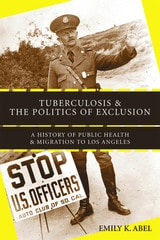
cover of Tuberculosis and the Politics of Exclusion: A History of Public Health and Migration to Los Angeles

Tuberculosis and the Politics of Exclusion

A History of Public Health and Migration to Los Angeles

Abel, Emily K.

Rutgers University Press, 2007

Winner of the 2008 Arthur J. Viseltear Prize from the American Public Health Association and Nominated for the 2008 William H. Welch Medal, AAHM

Though notorious for its polluted air today, the city of Los Angeles once touted itself as a health resort. After the arrival of the transcontinental railroad in 1876, publicists launched a campaign to portray the city as the promised land, circulating countless stories of miraculous cures for the sick and debilitated. As more and more migrants poured in, however, a gap emerged between the city’s glittering image and its dark reality.

            Emily K. Abel shows how the association of the disease with “tramps” during the 1880s and 1890s and Dust Bowl refugees during the 1930s provoked exclusionary measures against both groups. In addition, public health officials sought not only to restrict the entry of Mexicans (the majority of immigrants) during the 1920s but also to expel them during the 1930s. 

            Abel’s revealing account provides a critical lens through which to view both the contemporary debate about immigration and the U.S. response to the emergent global tuberculosis epidemic.

[more]