Results by title
13 books match the query 'Ability testing'
Assessing Deaf Adults
Critical Issues in Testing and EvaluationJudith L. Mounty
Gallaudet University Press, 2005
Section I frames the contexts facing deaf and hard of hearing individuals and those who test them, including a telling historical perspective. In Section II, chapters explore how deaf and hard of hearing candidates can meet the rigors of test-taking, how to level the playing field with a new approach to assessment, and what to consider to develop fully accessible licensing tests. The final chapter in this part examines the psychometric properties of intellectual assessments when used with deaf and hard of hearing people. Administrative Issues constitute Section III, beginning with legal considerations related to equity testing for deaf adults. An exploration of the potential of sign language interpretation in the testing environment follows.
Section IV provides case studies of deaf and hard of hearing adults from a variety of professions, including certification testing for therapeutic recreation, preparation strategies for university students, and ways to maximize access to licensure for social workers. A separate chapter addresses the impact of recent federal mandates on assessment of deaf and hard of hearing teachers and teaching candidates. The final section summarizes the current situation and presents recommendations to manage it, concluding with an epilogue on directions for the future.

Classroom Assessment Techniques For Librarians
Melissa Bowles-Terry
Assoc of College & Research Libraries, 2015
Desegregation State
College Writing Programs after the Civil Rights MovementAnnie S. Mendenhall
Utah State University Press, 2021
Formerly segregated state university systems crafted desegregation plans that gave them more control over policies for admissions, remediation, and retention. These plans created literacy requirements—admissions and graduation tests, remedial classes, and even writing centers and writing across the curriculum programs—that reshaped the landscape of college writing instruction and denied the demands of Black students, civil rights activists, and historically Black colleges and universities for major changes to university systems. This history details the profound influence of desegregation—and resistance to desegregation—on the ways that writing is taught and assessed in colleges today.
Desegregation State provides WPAs and writing teachers with a disciplinary history for understanding racism in writing assessment and writing programs. Mendenhall brings emerging scholarship on the racialization of institutions into the field, showing why writing studies must pay more attention to how writing programs have institutionalized racist literacy ideologies through arguments about student placement, individualized writing instruction, and writing assessment.
Early Holistic Scoring of Writing
A Theory, a History, a ReflectionRichard Haswell
Utah State University Press, 2019
Early Holistic Scoring of Writing addresses the history of holistic essay assessment in the United Kingdom and the United States from the mid-1930s to the mid-1980s—and newly conceptualizes holistic scoring by philosophically and reflectively reinterpreting the genre’s origin, development, and significance.
The book chronicles holistic scoring from its initial origin in the United Kingdom to the beginning of its heyday in the United States. Chapters cover little-known history, from the holistic scoring of school certificate examination essays written by Blitz evacuee children in Devon during WWII to teacher adaptations of holistic scoring in California schools during the 1970s. Chapters detail the complications, challenges, and successes of holistic scoring from British high-stakes admissions examinations to foundational pedagogical research by Bay Area Writing Project scholars. The book concludes with lessons learned, providing a guide for continued efforts to assess student writing through evidence models.
Exploring the possibility of actionable history, Early Holistic Scoring of Writing reconceptualizes writing assessment. Here is a new history that retells the origins of our present body of knowledge in writing studies.
Failing Sideways
Queer Possibilities for Writing AssessmentStephanie West-Puckett
Utah State University Press, 2023
A failure-oriented assessment model unsettles some of the most common practices, like rubrics and portfolios, and challenges many deeply held assumptions about validity and reliability in order to ask what could happen if assessment was oriented toward possibility and potential. Working to engage a more capacious writing construct, the authors propose queer validity inquiry (QVI) as a model for assessment that values failure, affect, identity, and materiality. These overlapping lenses help teachers honor parts of writing and learning that writing studies faculty have struggled to hold onto in a world overly focused on quickness and efficiency in schools.
Through programmatic and classroom examples, Failing Sideways privileges what is valued in the classroom but traditionally ignored in assessments. Reimagining what matters in the teaching and learning of writing and using assessment data differently, this book demonstrates what writing can be and could do in a more diverse and just world.
Hidden Inequities in Labor-Based Contract Grading
Ellen C. Carillo
Utah State University Press, 2021
Current Arguments in Composition Series
The Hidden Inequities in Labor-Based Contract Grading intervenes in the increasingly popular practice of labor-based grading by expanding the scope of this assessment practice to include students who are disabled and multiply marginalized. Through the lens of disability studies, the book critiques the assumption that labor is a neutral measure by which to assess students and explores how labor-based grading contracts put certain groups of students at a disadvantage. Ellen C. Carillo offers engagement-based grading contracts as an alternative that would provide a more equitable assessment model for students of color, those with disabilities, and students who are multiply marginalized.
This short book explores the history of labor-based grading contracts, reviews the scholarship on this assessment tool, highlights the ways in which it normalizes labor as an unbiased tool, and demonstrates how to extend the conversation in new and generative ways both in research and in classrooms. Carillo encourages instructors to reflect on their assessment practices by demonstrating how even assessment methods that are designed through a social-justice lens may unintentionally privilege some students over others.

Information Literacy Assessment
Standards-Based Tools and AssignmentsTeresa Y. Neely
American Library Association, 2006
Navigating The Future With Sce Nario Planning
A Guidebook FoJoan Giesecke
Assoc of College & Research Libraries, 2015
Rhyme and Reason in Reading and Spelling
Lynette Bradley
University of Michigan Press, 1985
Situating Portfolios
edited by Kathleen Blake Yancey & Irwin Weiser
Utah State University Press, 1997
Yancey and Weiser bring together thirty-one writing teachers from diverse levels of instruction, institutional settings, and regions to create a stimulating volume on the current practice in portfolio writing assessment. Contributors reflect on the explosion in portfolio practice over the last decade, why it happened, what comes next; discuss portfolios in hypertext, the web, and other electronic spaces; and consider emerging trends and issues that are involving portfolios in teacher assessment, faculty development, and graduate student experience.
Contributors: Peter Elbow, Pat Belanoff, Gail Hawisher, Cynthia Selfe, Brian Huot, Sandra Murphy, William Condon
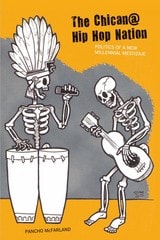
The Chican@ Hip Hop Nation
Politics of a New Millennial MestizajePancho McFarland
Michigan State University Press, 2013
What We Really Value
Beyond Rubrics in Teaching and Assessing WritingBob Broad
Utah State University Press, 2003
What We Really Value traces the origins of traditional rubrics within the theoretical and historical circumstances out of which they emerged, then holds rubrics up for critical scrutiny in the context of contemporary developments in the field. As an alternative to the generic character and decontextualized function of scoring guides, he offers dynamic criteria mapping, a form of qualitative inquiry by which writing programs (as well as individual instructors) can portray their rhetorical values with more ethical integrity and more pedagogical utility than rubrics allow.
To illustrate the complex and indispensable insights this method can provide, Broad details findings from his study of eighty-nine distinct and substantial criteria for evaluation at work in the introductory composition program at "City University." These chapters are filled with the voices of composition instructors debating and reflecting on the nature, interplay, and relative importance of the many criteria by which they judged students' texts. Broad concludes his book with specific strategies that can help writing instructors and programs to discover, negotiate, map, and express a more robust truth about what they value in their students' rhetorical performances.
Writing Assessment, Social Justice, and the Advancement of Opportunity
Mya Poe
University Press of Colorado, 2018