Results by title
7 books match the query 'About'
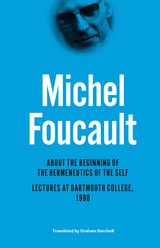
About the Beginning of the Hermeneutics of the Self
Lectures at Dartmouth College, 1980Michel Foucault
University of Chicago Press, 2015
Foucault analyzes the practices of self-examination and confession in Greco-Roman antiquity and in the first centuries of Christianity in order to highlight a radical transformation from the ancient Delphic principle of “know thyself” to the monastic precept of “confess all of your thoughts to your spiritual guide.” His aim in doing so is to retrace the genealogy of the modern subject, which is inextricably tied to the emergence of the “hermeneutics of the self”—the necessity to explore one’s own thoughts and feelings and to confess them to a spiritual director—in early Christianity. According to Foucault, since some features of this Christian hermeneutics of the subject still determine our contemporary “gnoseologic” self, then the genealogy of the modern subject is both an ethical and a political enterprise, aiming to show that the “self” is nothing but the historical correlate of a series of technologies built into our history. Thus, from Foucault’s perspective, our main problem today is not to discover what “the self” is, but to try to analyze and change these technologies in order to change its form.
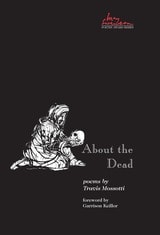
About the Dead
Travis Mossotti
Utah State University Press, 2011
Travis Mossotti writes with humor, gravity, and humility about subjects grounded in a world of grit, where the quiet mortality of working folk is weighed. To Mossotti, the love of a bricklayer for his wife is as complex and simple as life itself: “ask him to put into words what that sinking is, / that shudder in his chest, as he notices / the wrinkles gathering at the corners of her mouth.” But not a whiff of sentiment enters these poems, for Mossotti has little patience for ideas of the noble or for sympathetic portraits of hard-used saints. His vision is clear, as clear as the memory of how scarecrows in the rearview, “each of them, stuffed / into a body they didn’t choose, resembled / your own plight.” His poetry embraces unsanctimonious life with all its wonder, its levity, and clumsiness. About the Dead is an accomplished collection by a writer in control of a wide range of experience, and it speaks to the heart of any reader willing to catch his “drift, and ride it like the billowed / end of some cockamamie parachute all the way / back to the soft, dysfunctional, waiting earth.”
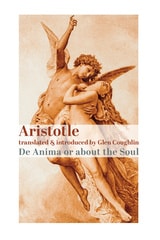
De Anima, or About the Soul
Glen Aristotle
St. Augustine's Press, 2021
In this text, Aristotle discusses his predecessors’ views of life, defines the principle of life (“soul”), discusses the principle sorts of living things (plants, animals, and human beings), and analyzes the chief activities of each sort of life. In the case of rational life, he shows that the ability to think implies an immaterial aspect to the human soul.
The De Anima is necessary not only to the study of biology, but also advances the understanding of metaphysics, of ethics and of politics, and even of logic, insofar as logic directs the acts of the human mind.
Like Coughlin’s translation of Aristotle’s Physics (also published by St. Augustine Press), this translation attempts to be literal and concrete. The edition includes the translation, introduction, glossary, index, and explanatory notes.
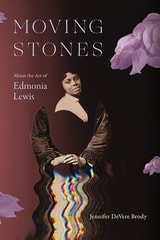
Moving Stones
About the Art of Edmonia LewisJennifer DeVere Brody
Duke University Press, 2026

Of Interest to the General Public
About a Coronation Cloak from EthiopiaMaaza Mengiste
Diaphanes, 2026
The work of Maaza Mengiste draws from voices and stories that have been excluded, from gaps that seem inexplicable, from images, objects, and places that pulse with pasts unresolved. While exploring the African collections at the Ethnological Museum of Berlin, she was struck by an elaborate coronation cloak from Ethiopia on display. Inspired by the history of the 1868 British Expedition to Abyssinia (now Ethiopia) and the burning of the palace fortress at Magdala, Of Interest to the General Public uses photography and words to reimagine the journey of the royal mantle—out of battle, through fire, over mountains, to cross the waters into Berlin.
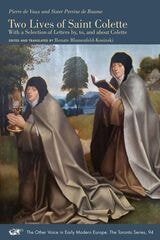
Two Lives of Saint Colette
With a Selection of Letters by, to, and about ColettePierre de Vaux and Sister Perrine de Baume
Iter Press, 2022
Saint Colette of Corbie (1381–1447) was a French reformer of the Franciscan Order and the founder of seventeen convents. Though of humble origin, she attracted the support of powerful patrons and important Church officials. The two biographies translated here were authored by Pierre de Vaux, her confessor and mentor, and Perrine de Baume, a nun who for decades was Colette’s companion and confidant. Both accounts offer fascinating portraits of the saint as a pious ascetic assailed by demons and performing miracles, as well as in her role as skillful administrator and caring mother of her nuns. This is the first English translation of two biographies in Middle French of the most important female figures of the Middle Ages.
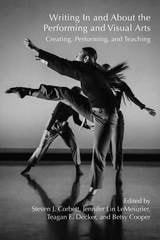
Writing in and about the Performing and Visual Arts
Creating, Performing, and TeachingSteven J. Corbett
University Press of Colorado, 2020