Results by title
13 books match the query 'Abundance'
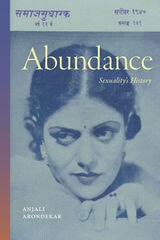
Abundance
Sexuality’s HistoryAnjali Arondekar
Duke University Press, 2023
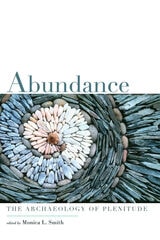
Abundance
The Archaeology of PlenitudeMonica L. Smith
University Press of Colorado, 2020
Using case studies from around the globe—including Mesoamerica, North and South America, Africa, China, and the Greco-Roman world—and across multiple time periods, the authors in this volume make the case that abundance provides an essential explanatory perspective on ancient peoples’ choices and activities. Economists frequently focus on scarcity as a driving principle in the development of social and economic hierarchies, yet focusing on plenitude enables the understanding of a range of cohesive behaviors that were equally important for the development of social complexity.
Our earliest human ancestors were highly mobile hunter-gatherers who sought out places that provided ample food, water, and raw materials. Over time, humans accumulated and displayed an increasing quantity and variety of goods. In households, shrines, tombs, caches, and dumps, archaeologists have discovered large masses of materials that were deliberately gathered, curated, distributed, and discarded by ancient peoples. The volume’s authors draw upon new economic theories to consider the social, ideological, and political implications of human engagement with abundant quantities of resources and physical objects and consider how individual and household engagements with material culture were conditioned by the quest for abundance.
Abundance shows that the human propensity for mass consumption is not just the result of modern production capacities but fulfills a longstanding focus on plenitude as both the assurance of well-being and a buffer against uncertainty. This book will be of great interest to scholars and students in economics, anthropology, and cultural studies.
Contributors: Traci Ardren, Amy Bogaard, Elizabeth Klarich, Abigail Levine, Christopher R. Moore, Tito E. Naranjo, Stacey Pierson, James M. Potter, François G. Richard, Christopher W. Schmidt, Carol Schultze, Payson Sheets, Monica L. Smith, Katheryn C. Twiss, Mark D. Varien, Justin St. P. Walsh, María Nieves Zedeño
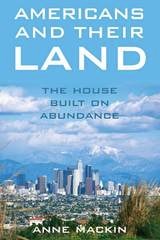
Americans and Their Land
The House Built on AbundanceAnne Mackin
University of Michigan Press, 2006
—James Carroll, author of House of War and An American Requiem, winner of the National Book Award
“Anne Mackin has taken a fresh and provocative look at that most fascinating of relationships: the one between the American people and the American land.”
—Michael Pollan, Knight Professor of Journalism and Director of the Knight Program in Science and Environmental Journalism at University of California Berkeley, contributing writer to the New York Times Magazine, and author of The Omnivore's Dilemma and The Botany of Desire
“Anne Mackin has given us a valuable and less-used lens to view the development of our neighborhoods, towns and cities: the land itself. Our relationship to the earth beneath our feet—how we dig it, buy it, sell it, zone it, pave it, spoil it or pamper it—helps explain what is produced on top of the land in our nation, from farms to homes to skyscrapers. All in all, Mackin takes us on a novel and erudite journey, from one coast to the other, and from Colonial times to the present. This valuable book marks a significant and lasting contribution to the way we see and understand our landscape and ourselves.”
—Alex Marshall, author of How Cities Work: Suburbs, Sprawl, and the Roads Not Taken
“To really understand the origins of the range war now raging between smart growth and property rights advocates over the future of the American land, you need to read this exceptional book.”
—Robert D. Yaro, President Regional Plan Association and Professor in Practice, University of Pennsylvania
Thomas Malthus once said, “The happiness of the Americans depended much less upon their peculiar degree of civilization than . . . upon their having a great plenty of fertile uncultivated land.”
Malthus knew. Lord MacCaulay knew. Albert Gallatin knew. America and its people would change as a growing population whittled away the supply of land.
Nothing has shaped the American character like the abundance of land that met the colonist, the pioneer, and the early suburbanite. With today’s political and economic institutions shaped by the largesse of yesteryear, how will Americans fare in the new landscape of water wars, expensive housing, rising fuel prices, environmental and property rights battles, and powerful industrial lobbies?
Why is land the key to American democracy? How can we protect our democracy as more people and industries compete more intensively for our remaining resources? Americans and Their Land begins an important, overdue discussion of these questions. Anne Mackin takes the reader story by story from frontier history to the present and shows how land shaped the American political landscape. She shows how our evolving traditions of apportioning resources have allowed diminished supplies to create our present, increasingly unequal society, and she asks how 300 million Americans living in the new American landscape of growing competition can better share those resources.
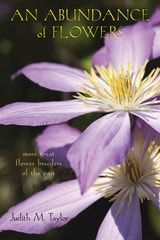
An Abundance of Flowers
More Great Flower Breeders of the PastJudith M. Taylor
Ohio University Press, 2018
Walk into any nursery, florist, or supermarket, and you’ll encounter displays of dozens of gorgeous flowers, from chrysanthemums to orchids. At one time these fanciful blooms were the rare trophies of the rich and influential—even the carnation, today thought of as one of the humblest cut flowers. Every blossom we take for granted now is the product of painstaking and imaginative planning, breeding, horticultural ingenuity, and sometimes chance. The personalities of the breeders, from an Indiana farmer to Admiral Lord Gambier’s gardener, were as various and compelling as the beauty they conjured from skilled hybridization.
In Visions of Loveliness: Great Flower Breeders of the Past, Judith Taylor wrote engagingly about the vivid history and characters behind eighteen types of popular flowers. In this companion volume she uncovers information about another eight familiar flowers: poinsettias, chrysanthemums, gladioli, pansies, carnations, water lilies, clematis, and penstemons.
Taylor has tapped into an enormous trove of stories about extraordinary people with vision and skill who added to our enjoyment piece by piece, starting about 150 years ago. This beautifully illustrated book will please flower enthusiasts, gardeners, and history buffs alike.
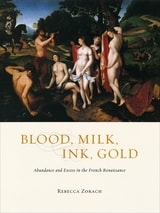
Blood, Milk, Ink, Gold
Abundance and Excess in the French RenaissanceRebecca Zorach
University of Chicago Press, 2005
Throughout the book, abundance and excess flow in liquids-blood, milk, ink, and gold-that highlight the materiality of objects and the human body, and explore the value (and values) accorded to them. The arts of the lavish royal court at Fontainebleau and in urban centers are here explored in a vibrant tableau that illuminates our own contemporary relationship to excess and desire.
From marvelous works by Francois Clouet to oversexed ornamental prints to Benvenuto Cellini's golden saltcellar fashioned for Francis I, Blood, Milk, Ink, Gold covers an astounding range of subjects with precision and panache, producing the most lucid, well-rounded portrait of the cultural politics of the French Renaissance to date.
Conquest of Abundance
A Tale of Abstraction versus the Richness of BeingPaul Feyerabend
University of Chicago Press, 1999
Prepared from drafts of the manuscript left at his death, working notes, and lectures and articles Feyerabend wrote while the larger work was in progress, Conquest of Abundance offers up rich exploration and startling insights with the charm, lucidity, and sense of mischief that are his hallmarks. Feyerabend is fascinated by how we attempt to explain and predict the mysteries of the natural world, and he looks at the ways in which we abstract experience, explain anomalies, and reduce wonder to formulas and equations. Through his exploration of the positive and negative consequences of these efforts, Feyerabend reveals the "conquest of abundance" as an integral part of the history and character of Western civilization.
"Paul Feyerabend . . . was the Norman Mailer of philosophy. . . . brilliant, brave, adventurous, original and quirky."—Richard Rorty, New Republic
"As much a smudged icon as a philosophical position holder, [Feyerabend] was alluring and erotic, a torch singer for philosophical anarchy."—Nancy Maull, New York Times Book Review
"[A] kind of final testament of Feyerabend's thought . . . Conquest of Abundance is as much the product of a brilliant, scintillating style as of an immense erudition and culture. . . . This book is as abundant and rich as the world it envisions."—Arkady Plotnitsky, Chicago Tribune
Milk Shake
Abundance and Loss in America’s DairylandGarbo Wedde
Wisconsin Historical Society Press, 2027
The story of how today’s dairy farmers are navigating a historic crossroads of agriculture and rural life in a rapidly changing world.
For generations, the dairy farmer has embodied the character, resilience, and values of the Midwest. Yet between 2005 and 2020, Wisconsin—known as America’s Dairyland—lost half of its dairy farms, marking one of the most profound economic and cultural transformations in its history. In Milk Shake: Abundance and Loss in America’s Dairyland, journalist Garbo Wedde delivers a thorough and emotionally resonant portrait of the farm families living through this time of change in rural life.
Drawing on extensive research and candid conversations with dozens of dairy farmers and industry stakeholders, Wedde looks beyond statistics to reveal the human stories behind the decline of the small family dairy farm. At the heart of the book are four Wisconsin farm families grappling with an uncertain future and how to respond: one leaves the industry, one embraces automation, one finds hope in a new generation willing to carry on the work, and one faces mounting financial strain that culminates in tragedy.
Interwoven among these narratives is a penetrating examination of the rise of large-scale industrial farms, their economic and environmental impacts, and the ways communities are responding. Wedde also explores the political, economic, demographic, and cultural forces reshaping dairy farming, from environmental regulation and labor shortages to gerrymandering, changing consumer preferences, and growing consolidation of small farms into agribusiness.
Richly observed scenes—from dairy breakfasts and farm auctions to public hearings on concentrated animal feeding operations (CAFOs)—bring readers inside a world that is both quintessentially American and increasingly endangered. Part social history and part elegy, Milk Shake captures a pivotal moment in America’s Dairyland while exploring questions that reach far beyond Wisconsin: What is lost when family farms disappear, and what does that loss mean for the communities, traditions, and values they sustain?

Selections from The Distribution and Abundance of Animals
H. G. Andrewartha and L. C. Birch
University of Chicago Press, 1982
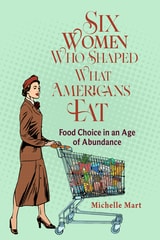
Six Women Who Shaped What Americans Eat
Food Choice in an Age of AbundanceMichelle Mart, Foreword by Mark D. Hersey
University of Alabama Press, 2025
How six groundbreaking women redefined American food—what we eat, how we eat it, and why it matters.
From wartime nutrition science to modern food activism, Six Women Who Shaped What Americans Eat examines the pivotal roles six women played in rewriting the rules of American cuisine. Michelle Mart offers a rich and accessible narrative that connects dietary trends, food marketing, and public health movements to the voices of the women who helped drive them.
Part one highlights Hazel Stiebeling’s development of dietary guidelines and RDAs, Poppy Cannon’s promotion of processed foods for convenience and gourmet meals, and Julia Child’s introduction of French cuisine with an emphasis on fresh ingredients and culinary techniques. Part two shifts the focus to women who challenged the food system itself: Frances Moore Lappé’s advocacy for vegetarianism and sustainable practices, Marion Nestle’s exposure of food corporations’ manipulative practices, and Alice Waters’s emphasis on locally sourced, organic ingredients and sustainable food systems. Thoughtful and timely, this book explores how culture, politics, and personal vision collided in the kitchens and campaigns of six food pioneers—leaving a lasting imprint on what America eats today.
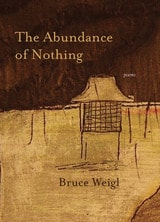
The Abundance of Nothing
PoemsBruce Weigl
Northwestern University Press, 2012
Finalist, 2013 Pulitzer Prize for Poetry
Throughout his award-winning career, Bruce Weigl has proven himself to be a poet of extraordinary emotional acuity and consummate craftsmanship. In The Abundance of Nothing, these qualities are on full display, animating and informing poems that combine rich, metaphoric imagery with direct, powerful language. Deftly weaving history and everyday experience, Weigl transports readers from the front lines of the Vietnam War and all the tangled cultural and emotional scenes of that time to the slow winds of the American Midwest that softly ease the voice of the veteran returning home. Though the poems struggle with themes of mortality and illness, violence and forgiveness, the poet’s voice never wavers in its meditative calm, poise, and compassion. Elegiac yet agile, ethereal yet embodied, The Abundance of Nothing is a work of searching openness, generous insight, and remarkable grace.
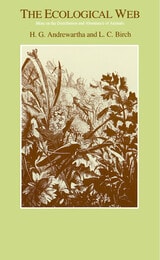
The Ecological Web
More on the Distribution and Abundance of AnimalsH. G. Andrewartha and L. C. Birch
University of Chicago Press, 1984
"The Ecological Web presents an entirely fresh look at ecology from the autecological perspective, and is a worthy successor to the authors' classic work, The Distribution and Abundance of Animals. The work is original—indeed unique—and the detailed coverage of case histories is unprecedented. The point of view will be controversial, but every ecologist will be impressed with the competence and completeness with which the arguments are mustered. A 'must' for every ecologist and environmental scientist."—Paul R. Ehrlich
"This book is the naturalist's vision of population ecology. The authors do not intend a formal description of the environment, but are seeking a way of functional analysis, a workable framework of theory within which to ask questions that will help us understand the distribution and abundance of animals in natural populations. The Ecological Web should be studied carefully by every population ecologist and should take a prominent place in the teaching of ecology. It marks a very significant period in our science as we change from one paradigm to another."—P. J. den Boer
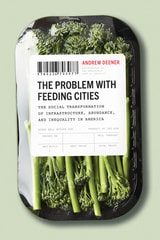
The Problem with Feeding Cities
The Social Transformation of Infrastructure, Abundance, and Inequality in AmericaAndrew Deener
University of Chicago Press, 2020
The Problem with Feeding Cities is a sociological and historical examination of how this remarkable network of abundance and convenience came into being over the last century. It looks at how the US food system transformed from feeding communities to feeding the entire nation, and it reveals how a process that was once about fulfilling basic needs became focused on satisfying profit margins. It is also a story of how this system fails to feed people, especially in the creation of food deserts. Andrew Deener shows that problems with food access are the result of infrastructural failings stemming from how markets and cities were developed, how distribution systems were built, and how organizations coordinate the quality and movement of food. He profiles hundreds of people connected through the food chain, from farmers, wholesalers, and supermarket executives, to global shippers, logistics experts, and cold-storage operators, to food bank employees and public health advocates. It is a book that will change the way we see our grocery store trips and will encourage us all to rethink the way we eat in this country.
Waste and Abundance
The Measure of Consumption: Special Issue of SubStance, Issue 116, 37:2 (2008)Susan Cahill
University of Wisconsin Press, 2008
This collection of articles relates to a research area currently developing in the Humanities, which calls for philosophical and historical approaches to questions of sustainable development and waste management. The title of the issue reflects the central questions raised by all contributors: how are waste and abundance represented, how may we conceptualize these representations, and what ethical problems do they raise?
Particular attention is paid to the cultural and moral factors that condition our attitudes to waste and the ways in which literature addresses the problematic relationship that binds production, consumption and waste to social and political systems.