Results by title
3 books match the query 'Abuses'
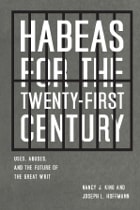
Habeas for the Twenty-First Century
Uses, Abuses, and the Future of the Great WritNancy J. King and Joseph L. Hoffmann
University of Chicago Press, 2011
For centuries, the writ of habeas corpus has served as an important safeguard against miscarriages of justice, and today it remains at the center of some of the most contentious issues of our time—among them terrorism, immigration, crime, and the death penalty. Yet, in recent decades, habeas has been seriously abused. In this book, Nancy J. King and Joseph L. Hoffmann argue that habeas should be exercised with greater prudence.
Through historical, empirical, and legal analysis, as well as illustrative case studies, the authors examine the current use of the writ in the United States and offer sound reform proposals to help ensure its ongoing vitality in today’s justice system. Comprehensive and thoroughly grounded in a modern understanding of habeas corpus, this informative book will be an insightful read for legal scholars and anyone interested in the importance of habeas corpus for American government.
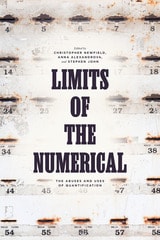
Limits of the Numerical
The Abuses and Uses of QuantificationEdited by Christopher Newfield, Anna Alexandrova, and Stephen John
University of Chicago Press, 2022
Numbers are both controlling and fragile. They drive public policy, figuring into everything from college rankings to vaccine efficacy rates. At the same time, they are frequent objects of obfuscation, manipulation, or outright denial. This timely collection by a diverse group of humanists and social scientists challenges undue reverence or skepticism toward quantification and offers new ideas about how to harmonize quantitative with qualitative forms of knowledge.
Limits of the Numerical focuses on quantification in several contexts: climate change; university teaching and research; and health, medicine, and well-being more broadly. This volume shows the many ways that qualitative and quantitative approaches can productively interact—how the limits of the numerical can be overcome through equitable partnerships with historical, institutional, and philosophical analysis. The authors show that we can use numbers to hold the powerful to account, but only when those numbers are themselves democratically accountable.
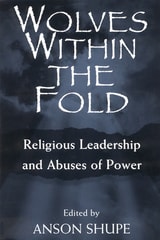
Wolves within the Fold
Religious Leadership and Abuses of PowerShupe, Anson
Rutgers University Press, 1998
The power of religion as a symbolic, salvationÐpromising enterprise resides in its authority to create and shape reality for believers and command their obedience. This power can inspire tremendous acts of human kindness, charity, compassion, and hope. But witch hunts, inquisitions, crusades, and pogroms show us how religious authority can be used for far darker purposes. This abuse of power by religious authorities at the expense of their followers is termed clergy malfeasance by editor Anson Shupe and examined by the contributors to Wolves within the Fold.
The essays provide an innovative examination of behavior that is sometimes illegal and always unethical, sometimes punished but often not. Topics range from a cultural study of Aum Shinrikyo, the Japanese apocalyptic group now infamous for releasing lethal gas into the Tokyo subway system, to a sociological analysis of financial scandals among evangelical religious groups. Groups analyzed include the Roman Catholic Church, Protestant denominations, televangelists, and the Hare Krishnas.