Results by title
10 books match the query 'Academic Development'
Academic Pipeline Programs
Diversifying Pathways from the Bachelor's to the ProfessoriateCurtis D. Byrd
Lever Press, 2021
All before Them
Student Opportunities and Nationally Competitive FellowshipsSuzanne McCray
University of Arkansas Press, 2015
This collection of essays helps advisors by providing information about major changes in the fellowship and scholarship landscape. Included is guidance on the new Schwarzman scholarship for study in China, the recently added video interview for the Mitchell scholarship, and the new rules for the Rhodes personal statement (an advisor’s take). Additionally, seasoned advisors share practical advice, ranging from workshops that engage students and faculty to helpful technological tools to personal statements and office assessments. Keeping the focus on the scholar in the scholarship process is a central theme. All before Them is an important addition to any faculty mentor’s or scholarship advisor’s toolkit.
Bridging the Gap
Perspectives on Nationally Competitive ScholarshipsSuzanne McCray
University of Arkansas Press, 2019
Climbing a Broken Ladder
Contributors of College Success for Youth in Foster CareNathanael J. Okpych
Rutgers University Press, 2021
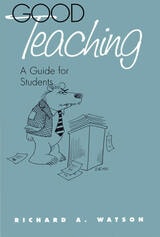
Good Teaching
A Guide for StudentsRichard A. Watson
Southern Illinois University Press, 1997
From junior college to Ivy League university, the level of teaching ranges from "great to awful," according to Richard A. Watson, who explains not only how to survive but how to profit from and enjoy your college experience.
To help students make important personal choices—what school? what major? what classes?—Watson explains such broad areas as administrative structure, institutional goals, and faculty aspirations.
Charging the student with the ultimate responsibility for learning, Watson presents certain academic facts of life: teaching is not the primary concern of either the faculty or the administration in most institutions; few professors on the university level have had any training in teaching, and even fewer started out with teaching as their goal; senior professors do not teach much (the higher the rank and salary, the less time in the classroom), and those seeking tenure must emphasize research to survive; and almost certainly, the bad teacher who is a good researcher will get paid more than the good teacher who does not publish.
This is a book about good teaching and how to find it. Rejecting the conventional wisdom that a professor devoted to research will not be effective in the classroom, Watson advises that you take classes from the professor you may have been cautioned to avoid.
Potential on the Periphery
College Access from the Ground UpOmari Scott Simmons
Rutgers University Press, 2019
Premed Prep
Advice from a Medical School Admissions DeanSunny Nakae
Rutgers University Press, 2021
Premed Prep answers all these questions and more, with detailed case studies and insider tips that can help premed students authentically prepare and enjoy the journey from the very beginning. Sunny Nakae draws from her many years of experience as a medical school admissions dean to offer wise and compassionate advice that can help premed students of all backgrounds. She also has specific tips for students who are first-generation, minority, non-traditional, and undocumented.
Both forthright and supportive, Nakae’s advice is offered in a keep-it-real style that gives premed students a unique window into how admissions committees view and assess them. Premed Prep covers how to approach preparation with a focus on exploration and growth, and how to stop obsessing over med school application checklists. This book will do more than help you get a seat in medical school; it will start you on the process of becoming a successful future physician.
Roads Less Traveled and Other Perspectives on Nationally Competitive Scholarships
Suzanne McCray
University of Arkansas Press, 2017
For many, the applications present an unfamiliar territory, so students seek out informed advisors who can help them navigate the terrain. This volume of essays is a great way for anyone advising students through an application to become an expert. Roads Less Traveled and Other Perspectives on Nationally Competitive Scholarships provides critical information from scholarship foundations about the best ways to guide students—from considering a career path, to completing the application, to preparing for an interview. Experienced advisors also share helpful tips on practical topics like writing letters of endorsement or assisting those who want to study abroad, and they provide programmatic advice on how to broaden the pool of applicants, address those with financial needs, and make all who apply feel the process has value beyond winning. Roads Less Traveled and Other Perspectives on Nationally Competitive Scholarships is a must for anyone advising students on scholarships.
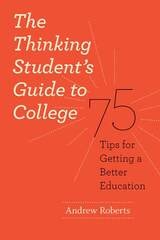
The Thinking Student's Guide to College
75 Tips for Getting a Better EducationAndrew Roberts
University of Chicago Press, 2010
Each fall, thousands of eager freshmen descend on college and university campuses expecting the best education imaginable: inspiring classes taught by top-ranked professors, academic advisors who will guide them to a prestigious job or graduate school, and an environment where learning flourishes outside the classroom as much as it does in lecture halls. Unfortunately, most of these freshmen soon learn that academic life is not what they imagined. Classes are taught by overworked graduate students and adjuncts rather than seasoned faculty members, undergrads receive minimal attention from advisors or administrators, and potentially valuable campus resources remain outside their grasp.
Andrew Roberts’ Thinking Student’s Guide to College helps students take charge of their university experience by providing a blueprint they can follow to achieve their educational goals—whether at public or private schools, large research universities or small liberal arts colleges. An inside look penned by a professor at Northwestern University, this book offers concrete tips on choosing a college, selecting classes, deciding on a major, interacting with faculty, and applying to graduate school. Here, Roberts exposes the secrets of the ivory tower to reveal what motivates professors, where to find loopholes in university bureaucracy, and most importantly, how to get a personalized education. Based on interviews with faculty and cutting-edge educational research, The Thinking Student’s Guide to College is a necessary handbook for students striving to excel academically, creatively, and personally during their undergraduate years.
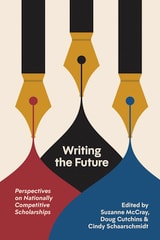
Writing the Future
Perspectives on Nationally Competitive ScholarshipsSuzanne McCray
University of Arkansas Press, 2025
Writing the Future: Perspectives on Nationally Competitive Scholarships offers a timely and nuanced exploration of fellowships advising. This volume brings together experienced practitioners, scholars, and scholarship foundation representatives to reflect on a rapidly evolving landscape—one shaped by shifting student demographics, emergent technologies, and renewed commitments to student success across a broad spectrum.
The essays in this collection engage deeply with the developmental, rhetorical, and institutional dimensions of nationally competitive awards advising. Topics include appreciative advising, writing strategies, and the complexities of guiding students as they envision and articulate aspirational futures. Contributors examine how fellowship applications serve as tools for student growth, knowledge transfer, and reflection. They also explore how advisors can navigate the tensions between authenticity, institutional representation, and the demands of prestige-based selection processes. Several chapters offer practical guidance on writing effective nomination letters, engaging in selection processes as external reviewers, and cultivating advising practices that are both ethical and empowering. A concluding chapter on NAFA’s history situates these contributions within a broader narrative of professionalization and purpose in the field.
Ideal for new and seasoned advisors alike—as well as faculty, administrators, and foundation partners—this volume affirms the transformative potential of a fellowships advising process that centers on student agency, fosters critical reflection, and reimagines what access to competitive awards can and should mean.